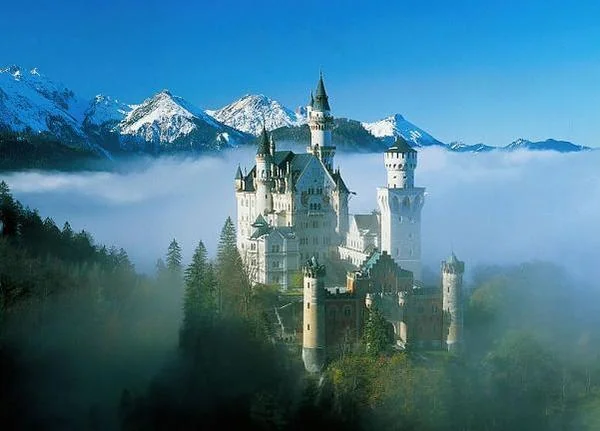
2001.04.18. Germany travel diary: Schloss Neuschwanstein.
This visit to Neuschwanstein actually began with a forwarded email.
Back when email had just become popular in Taiwan, people loved forwarding all kinds of messages: inspirational quotes, self-improvement notes, life tips, world scenery, and those dramatic subject lines like "places you must visit once in your life." I once received one that genuinely shocked me. Inside were probably photos like the hero image above and the next few below: a castle wrapped in mist, so beautiful that it looked almost too unreal to belong to the real world.
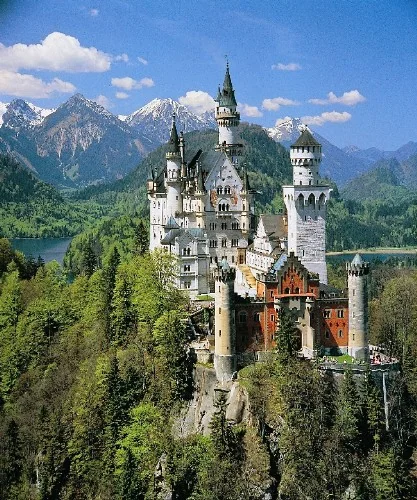
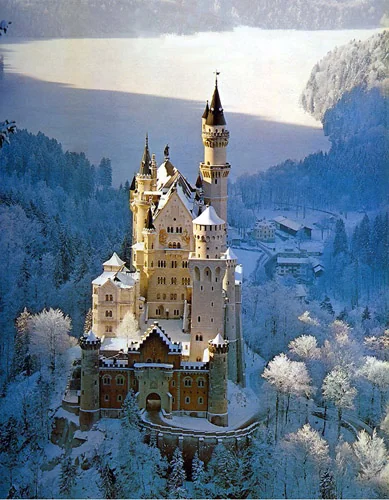
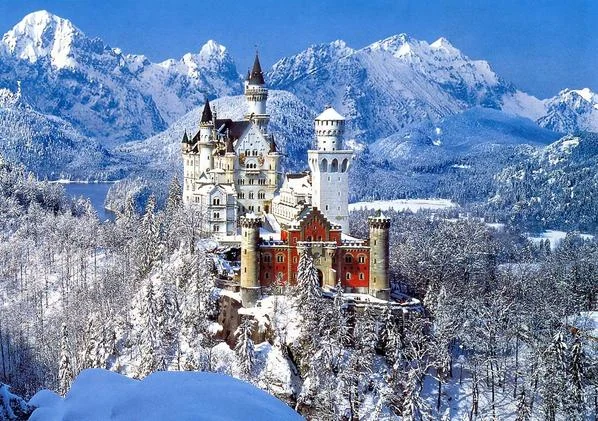
My first thought was: so beautiful...like a fairyland...
Then I closed the email and thought, "Fake!!" How could a place like this exist? It must have been something a painter imagined. ~.~'"
Not long after that, work sent me to Europe. Before then, the parts of the world most familiar in my head were probably the United States and China. Once I actually reached Europe, the map suddenly became much more three-dimensional, and that "Fake!!" forwarded email slowly turned into a real trip.
Turning A Dreamy Photo Into A Real Itinerary
From Munich, it took about two hours by train to reach Fussen, the town near Neuschwanstein Castle. We did not want to spend the next morning rushing from Munich, buying tickets, going up the hill, and chasing the whole day like a timetable exercise. So we arrived in Fussen the night before, stayed at a local guesthouse, and took the bus toward the castles the next morning. That made the day feel more like slowly approaching a long-awaited place, not just checking off a famous sight.
That was how we did it in 2001. Anyone planning the trip now should, of course, check current official information for trains, buses, tickets, and access instead of copying a twenty-something-year-old itinerary.
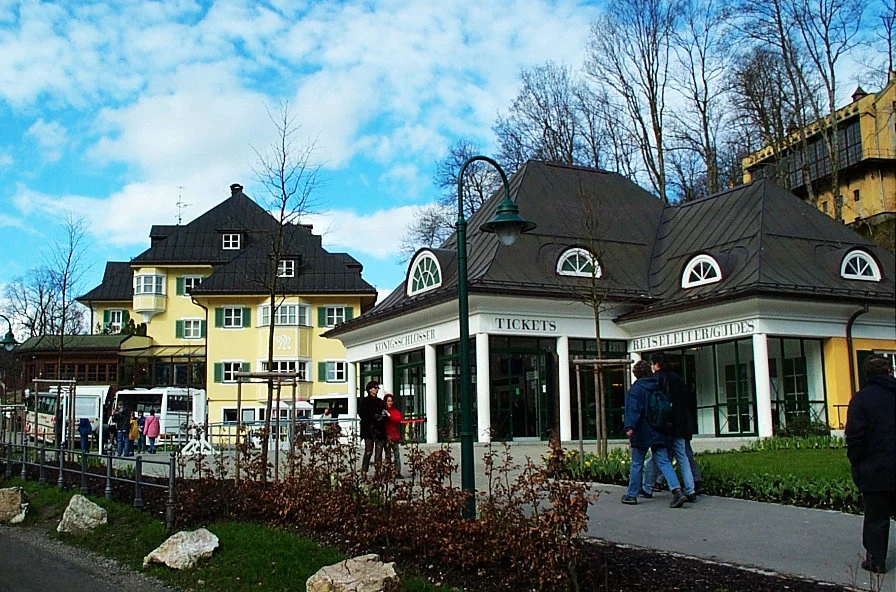
Remember the European travel tip I mentioned in the England posts? "If you see a bus, take the bus; if you see a horse carriage, get on the carriage..."
The bus brought us near the foot of the hill, and once we saw the horse carriage, of course we had to put that travel tip into action. After all, if you are going to see a fairytale castle, riding up by carriage sounds perfectly reasonable.
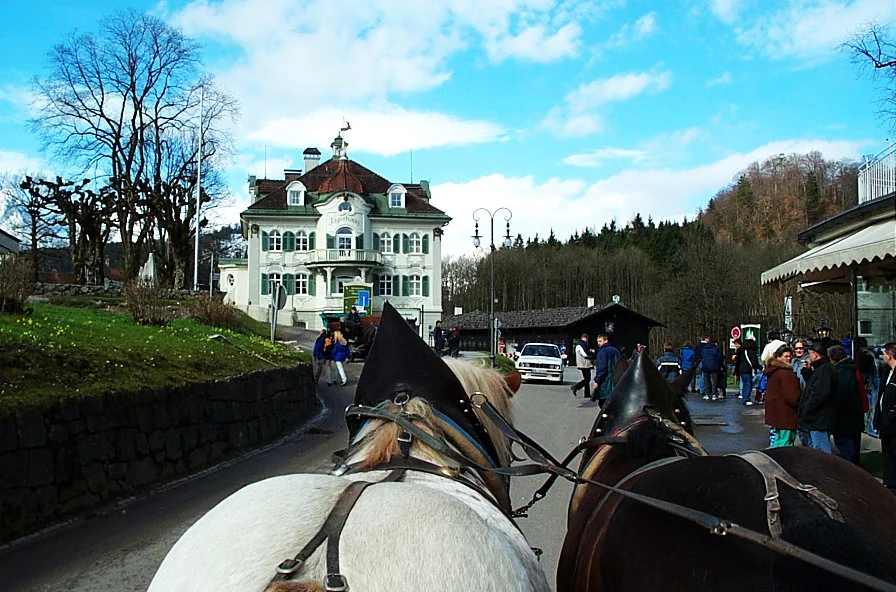
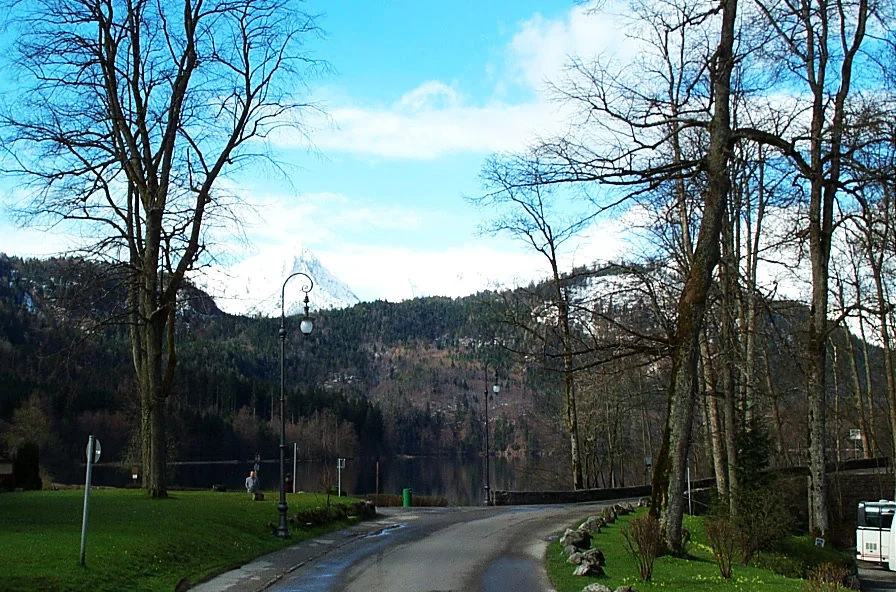
Reality, however, pulled the fairytale mood right back to the ground. For some reason, the two horses kept passing gas all the way up...so there was not even the slightest romantic atmosphere left in that carriage ride >.<'"
First, The Old King's Hohenschwangau
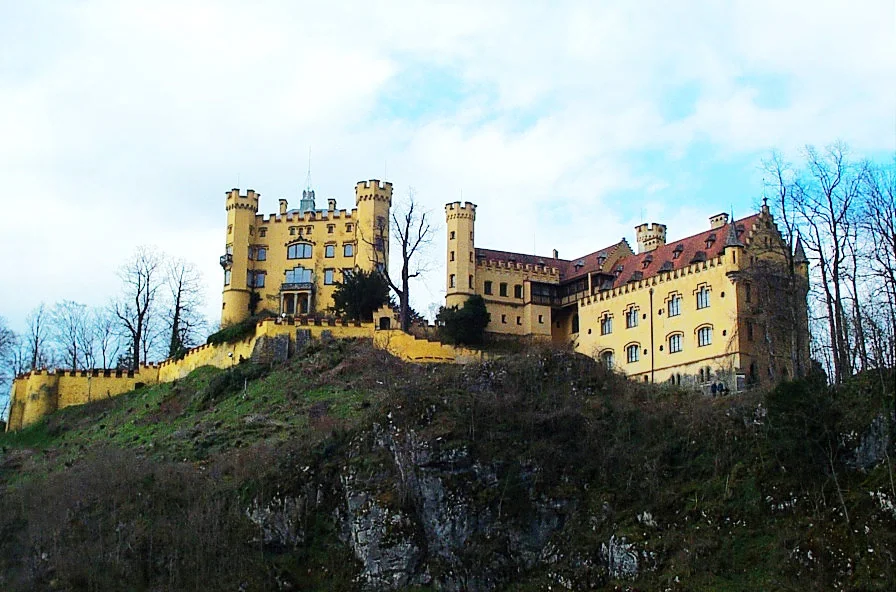
The carriage first brought us near Hohenschwangau Castle, also known as the old Swan Castle. I had come mainly for Neuschwanstein, but once we reached this area, it was clear that this was not just one isolated famous building. The valley had a whole father-and-son castle story. Hohenschwangau was the castle of King Maximilian II, father of Ludwig II.
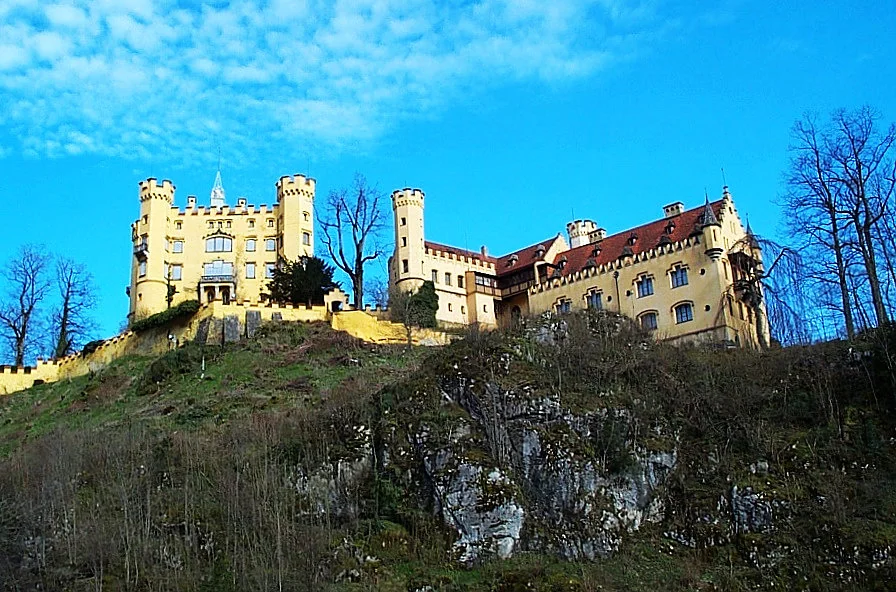
Hohenschwangau uses many swan motifs in its decoration, which is where the swan name comes from. From here, the whole valley already felt like a story setting: the old king's castle on one side, and the son's dream castle on the other. Before even reaching the main attraction, I started to understand that this was not simply a "beautiful castle" stop. It was a stage built out of royal family history and romantic imagination.
After leaving the old king's Hohenschwangau, we kept moving toward Neuschwanstein.
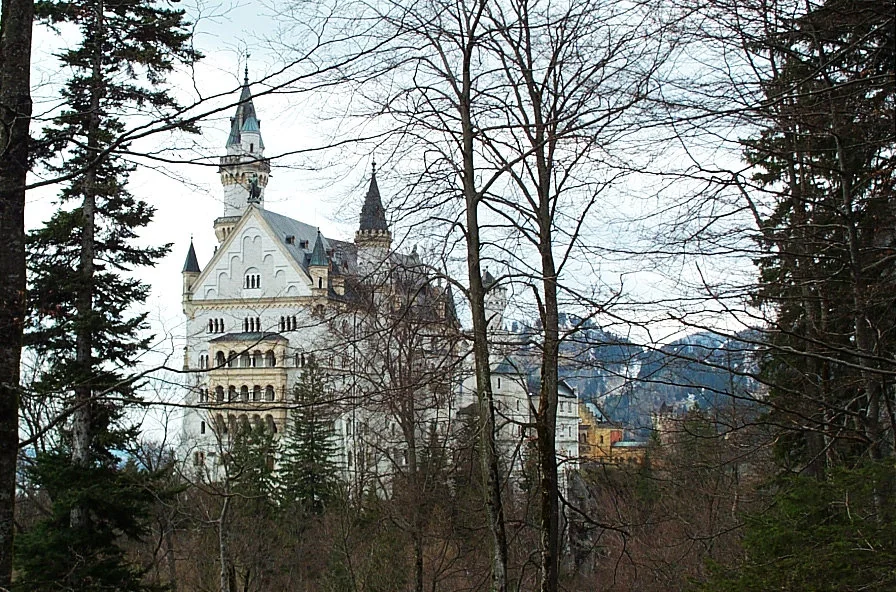
The long-awaited Neuschwanstein had begun to appear in the distance ^.^ It felt a little like the castle from that forwarded email was slowly stepping out of the computer screen. It did not have the perfect misty drama of those old images, but with each turn in the mountain road, it came a little closer.
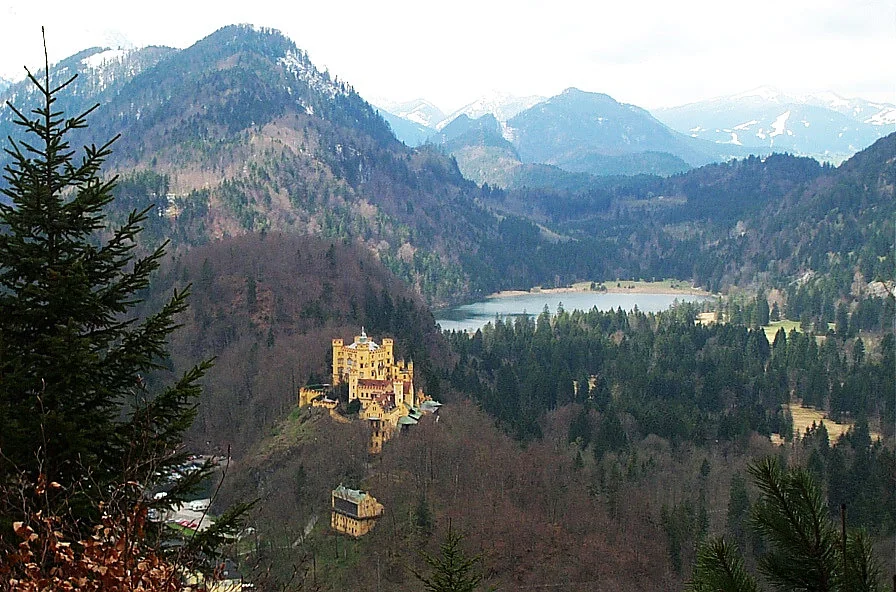
Looking back at Hohenschwangau from higher up...what a father-and-son pair, both enjoying royal glory in full...
Ladies And Gentlemen: Neuschwanstein Appears
Ladies and gentlemen...Neu~schwan~stein~~~~
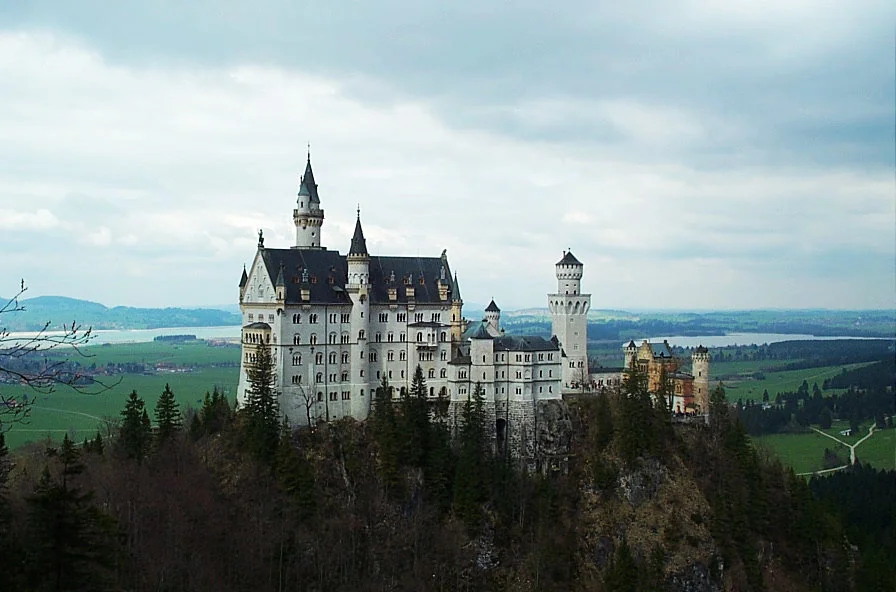
The weather that day was not bright and sunny, so there was no blue sky and white clouds. I could not capture the unreal glamour of those old forwarded email photos. But standing in front of the castle in person still brought that "seeing it once is better than hearing about it a hundred times" feeling. It was not something a painter had invented after all, and it was not only a fantasy from an internet forward. It was a real castle, standing on the mountain.
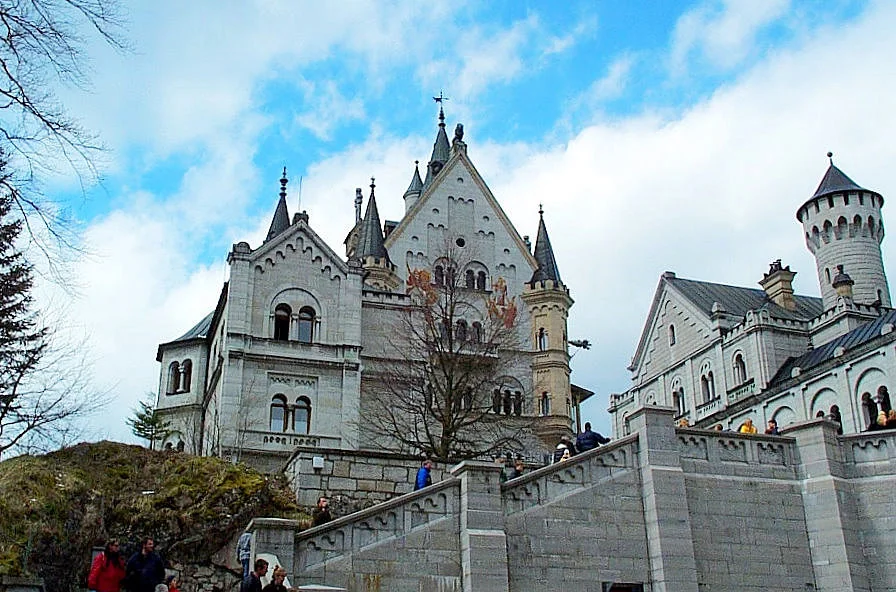
Inside the castle, photography was still not allowed.
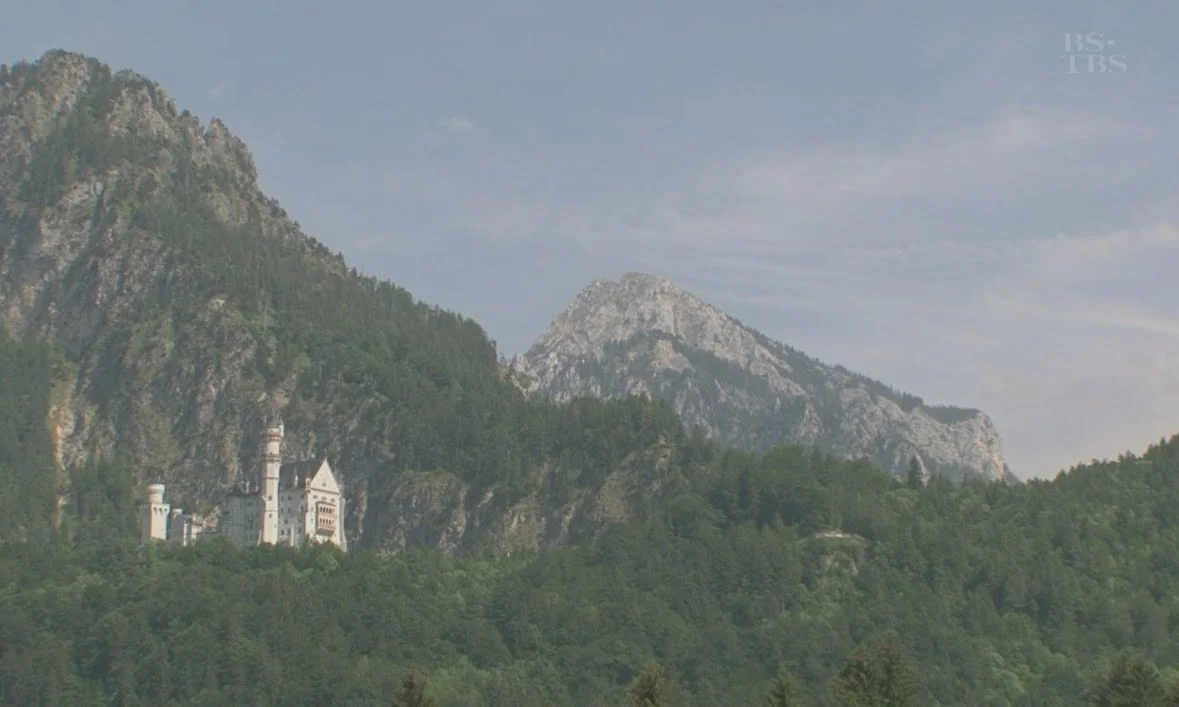
But just like Leeds Castle in England, a Japanese satellite TV program called "Old Castle Walk" had once introduced Neuschwanstein in detail, and it was often rebroadcast. The parts I could not photograph inside had to live in guided-tour memory, and later in images from that TV program. If I ever recorded it again, I could add a few interior screenshots later~~
Neuschwanstein was King Ludwig II's dream world, an ideal world he spent his life imagining. Inside the castle there are many swan-themed decorations. In Ludwig II's mind, the swan represented purity; swans appear in murals, door handles, bathtubs, and ornaments throughout the castle. Those details made the castle more than just a striking exterior. It felt like someone had built his romantic imagination into architecture.
The guided tour of the interior was over fairly quickly. After coming out, the focus moved back outside: you have to walk to the hill behind the castle and look back at Neuschwanstein from Marienbrucke.
Back then, Ludwig II supposedly built that bridge because he wanted a proper place to admire the beauty of Neuschwanstein...
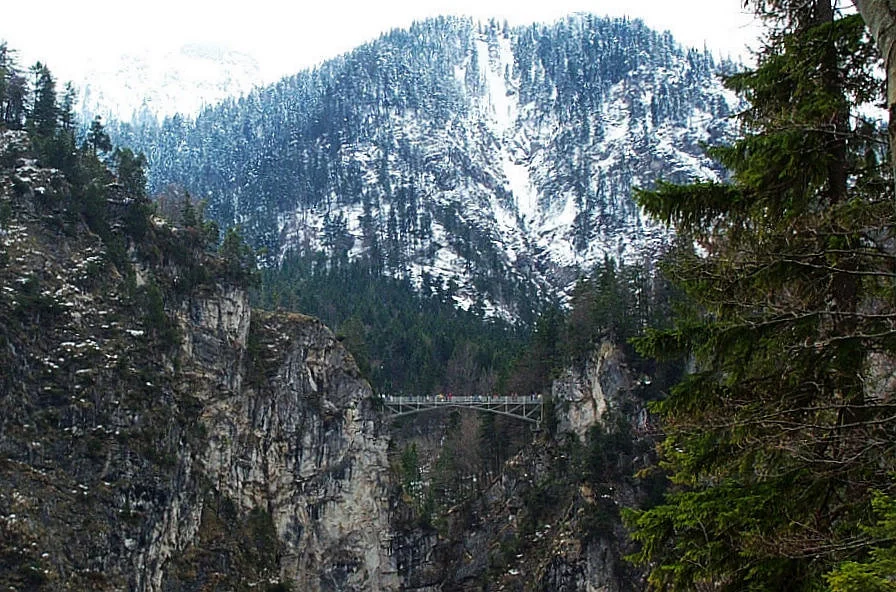
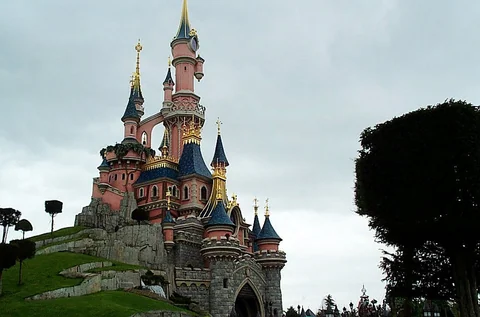
Looking back from Marienbrucke came closer to the shock I remembered from those old forwarded photos. The castle was no longer just one building seen from the front; the mountains, trees, and distance framed it together. From that angle, it was easier to understand why Neuschwanstein's appearance inspired many modern fairy-tale castles, including the Sleeping Beauty castles at Disneyland in California and Hong Kong Disneyland.
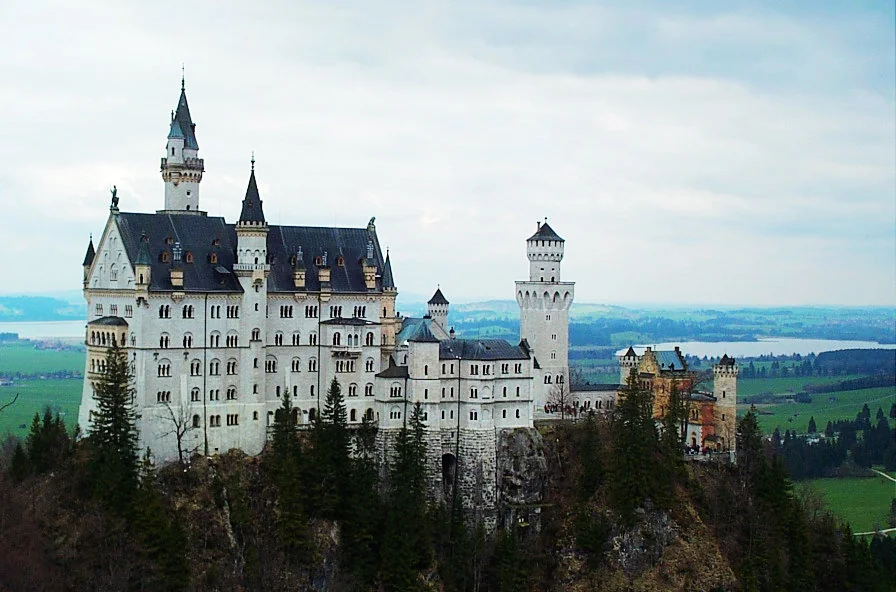
Well...no matter how much you like it, you still have to say goodbye eventually.
Back To Fussen, Letting The Day Settle
In the afternoon we returned to Fussen, a town full of medieval atmosphere, and slowly walked through its old streets. Nothing dramatic happened in this part, but after a whole day of castles, the quiet streets were exactly right for settling the mood. After the dream worlds of the father and son kings, the town brought the day back to a traveler's pace: walking slowly, looking at windows, corners, and old streets.
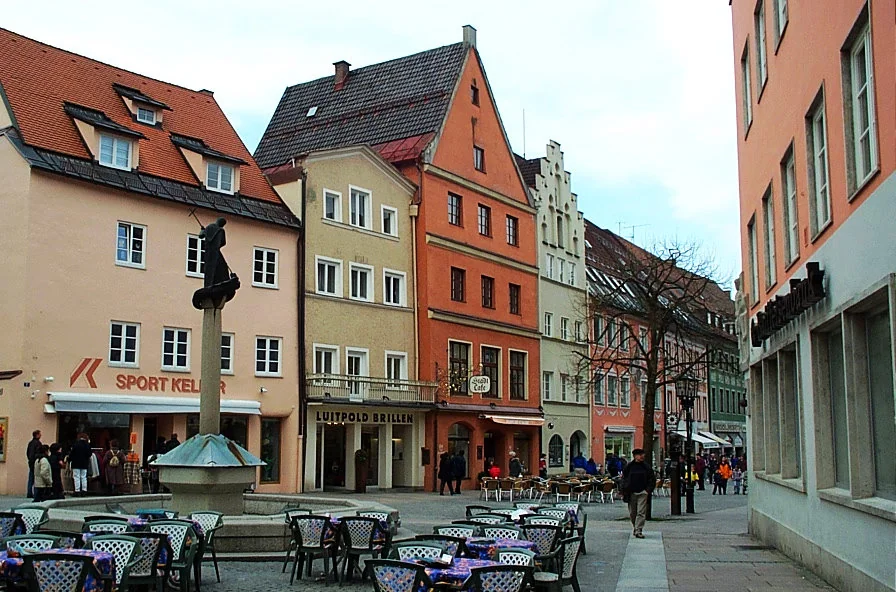
Later, we took the train back to Munich and snapped a few more photos along the way and in the city. That was about the end of the Neuschwanstein day. From a forwarded email that made me think "this has to be fake," to actually standing in front of the castle, and then back into the streets of Munich, the most interesting part of the day may have been this: some photos look unreal not because they are fake, but because they are so far away from your original life.
Further reading: Germany Travel Diary - Hamburg... coming someday...
Afterword: TV Screenshots From Inside The Castle
Inside the castle, photography is basically not allowed unless it is for something like a TV interview or program.
So when I later organized the post, I added a few screenshots from the Japanese satellite TV program to fill in the interior impressions I could not record with my own camera that day. Friends who have been there can use them to remember the visit; those who have not...can use them to satisfy the craving from afar ^.^
Complete photo album
Previewing up to 8 album photos. Open the gallery to browse all photos.