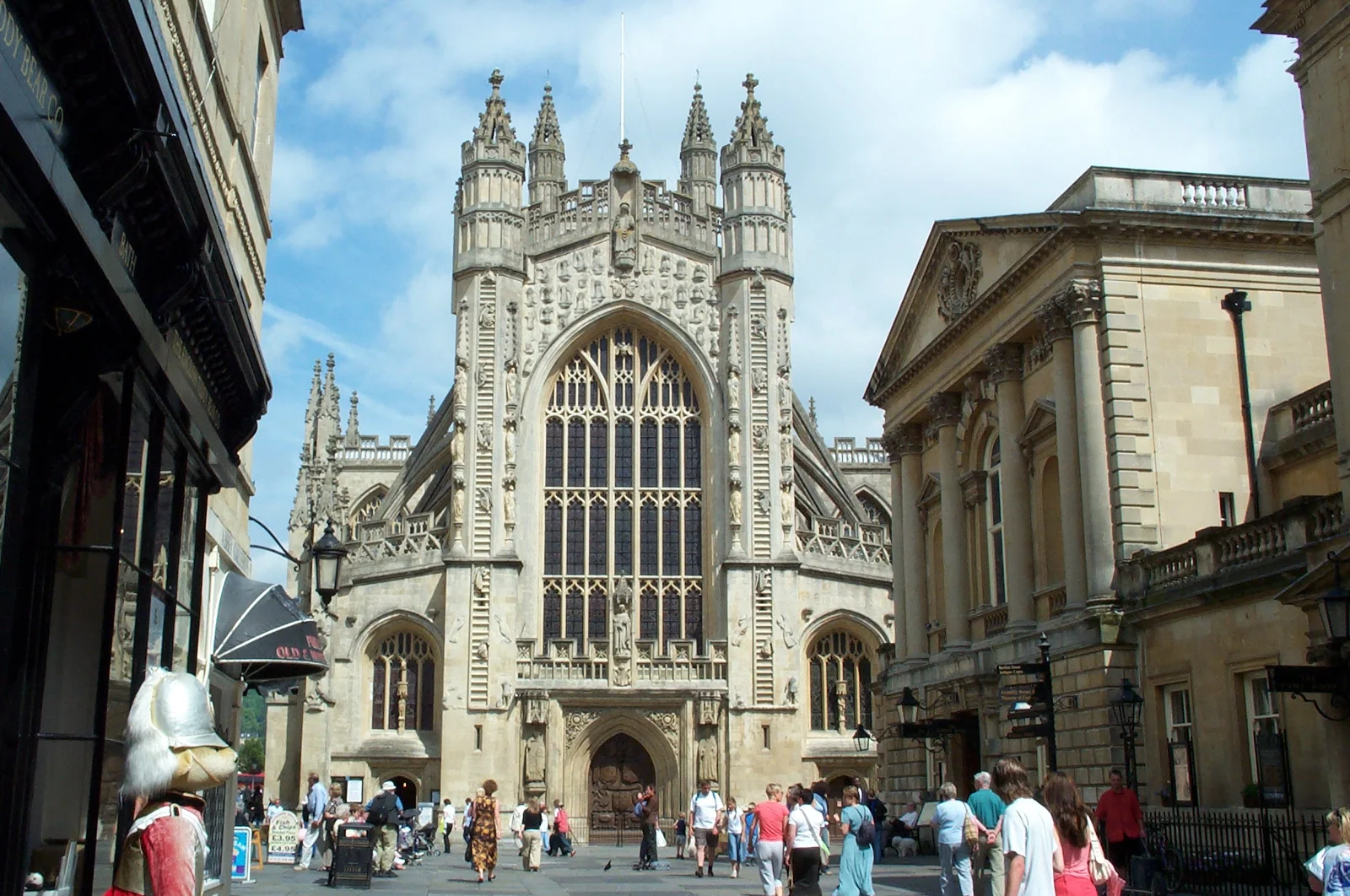
2004.06.04 England Travel Diary Day 3: Bath Spa
On the third day of the England trip, we went west from London to Bath Spa. Bath is interesting because, although the Roman Baths are the famous headline, walking through the city is not only about looking at old ruins. There are hot-spring legends, an abbey, a river bridge, a broad lawn, and a crescent of houses that made me think on site, "Hmm... this seems famous," only to understand the connections more slowly while organizing the diary later.
So this entry is not meant to be a travel guide. It is more like rebuilding the route of that 2004 day: what felt interesting on the spot, what only became meaningful after checking notes later, and what was simply old pre-trip research. If you are planning a current visit, practical details such as opening hours, prices, and booking rules need to be checked again from current sources.
The Roman Baths: seeing the ruins first, then the legend
The English word Bath is, of course, bath, and the Roman Baths Museum sits right in the city centre. Before going in, my understanding was probably only "the Romans bathed here." But after seeing the water, columns, carvings, and underground remains, it became easier to feel that people two thousand years ago had turned bathing into a whole culture.
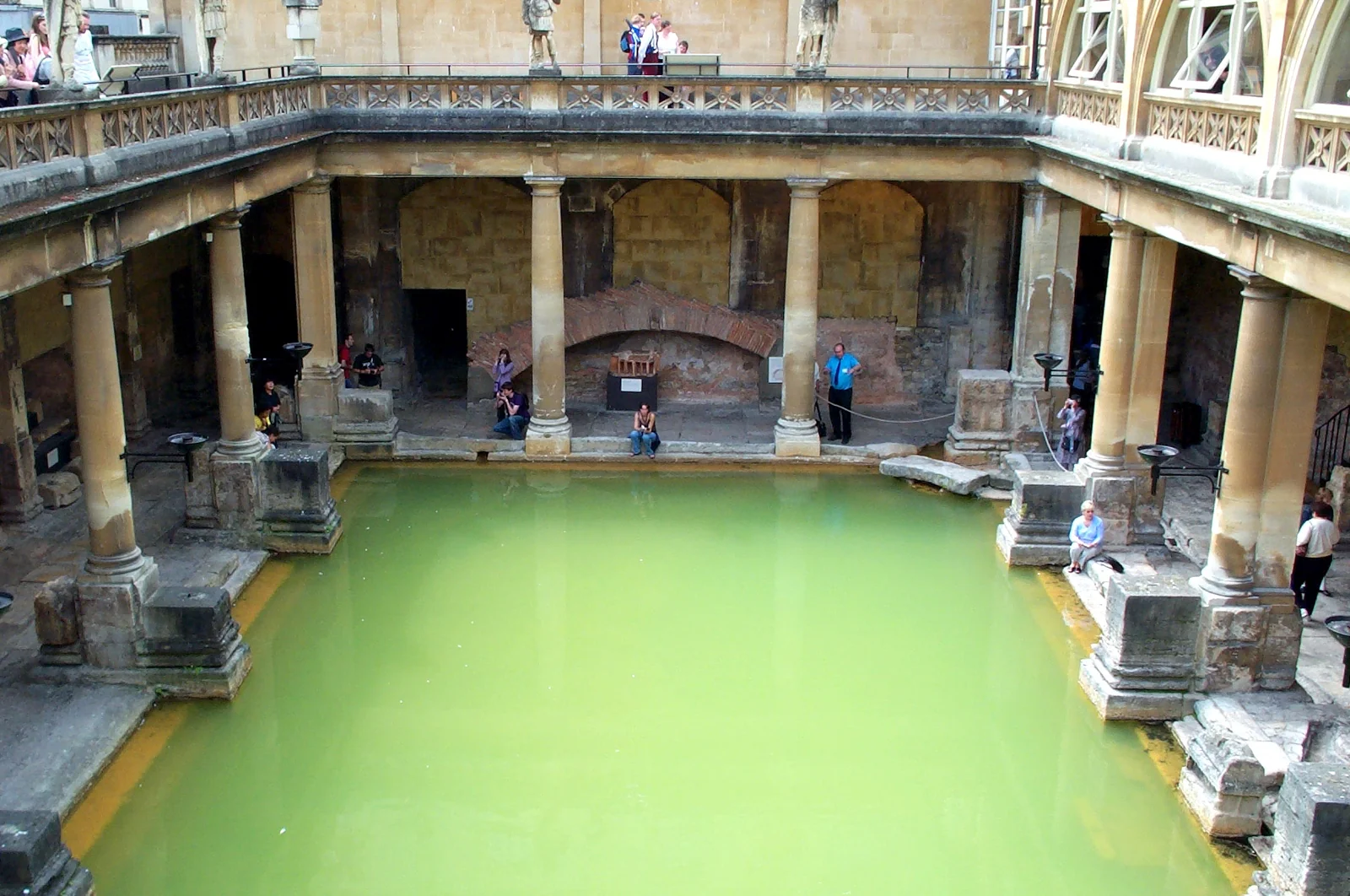
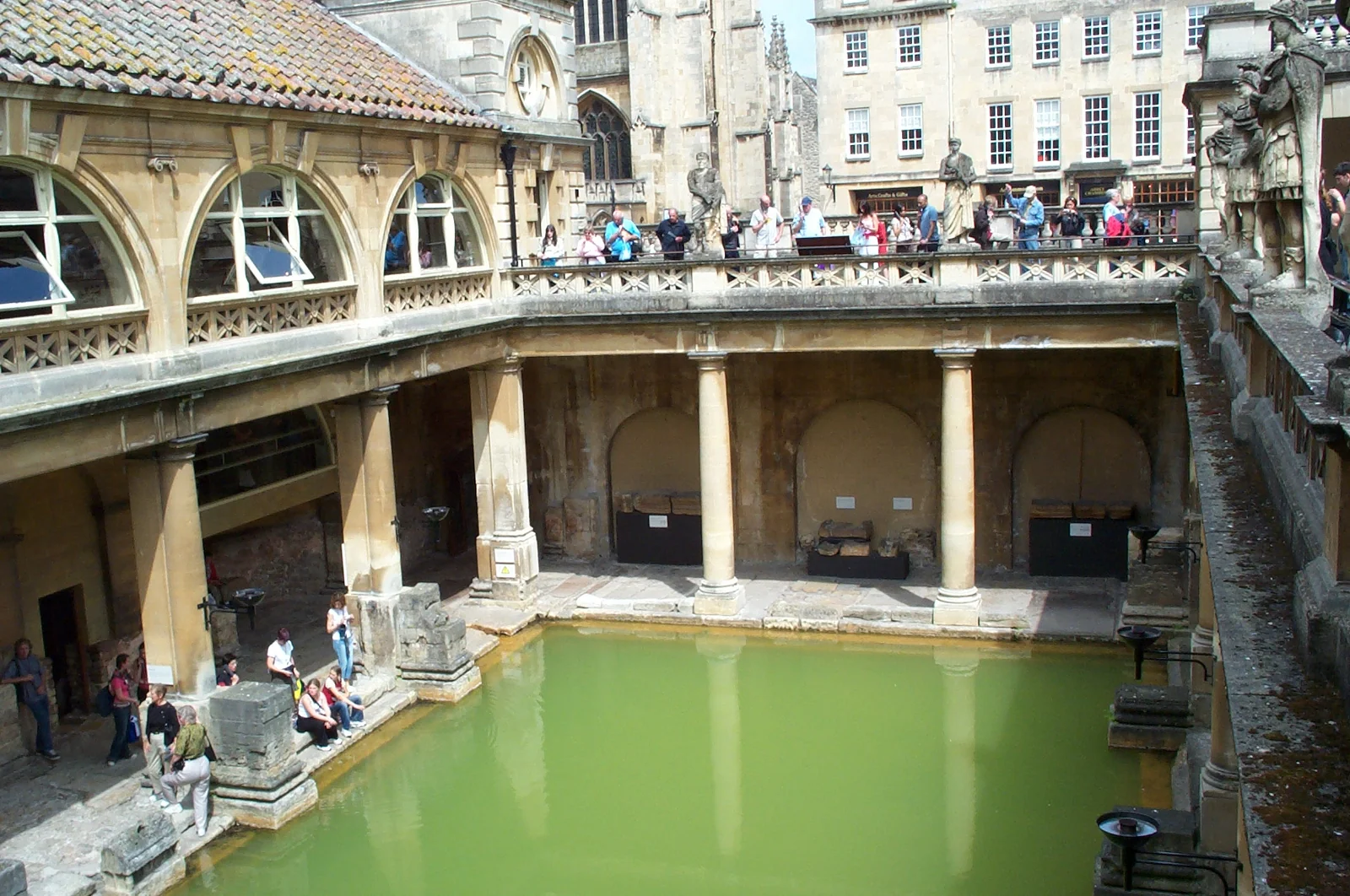
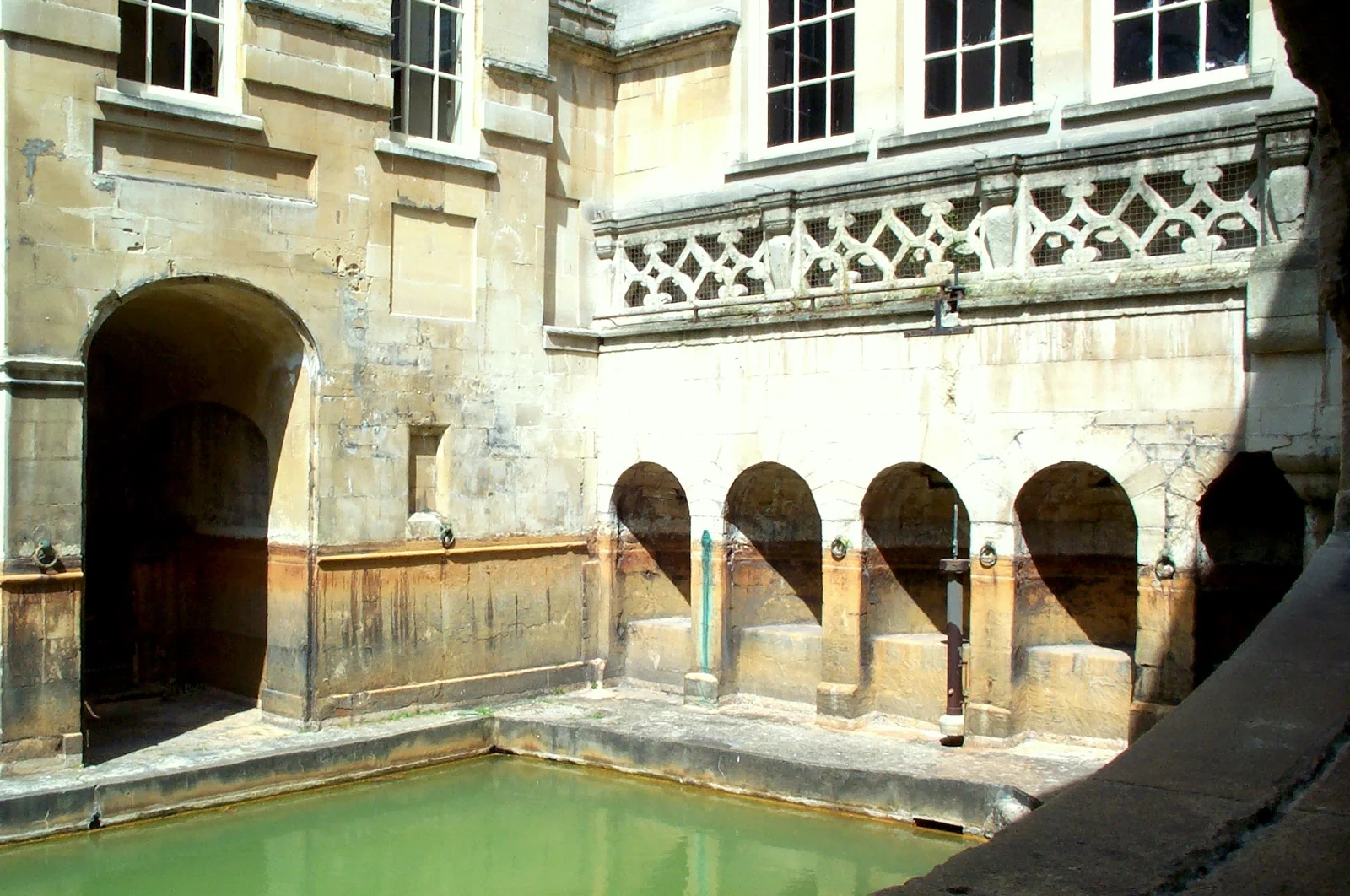
One old story in my notes said that a prince, banished because of illness, found pigs rolling in strange-smelling hot mud. He tried the spring himself and was cured. Later, after becoming king, he built the baths and the city here. It sounds like a legend, but standing beside the steaming bath makes it easier to understand why a city would treat water as its origin story.
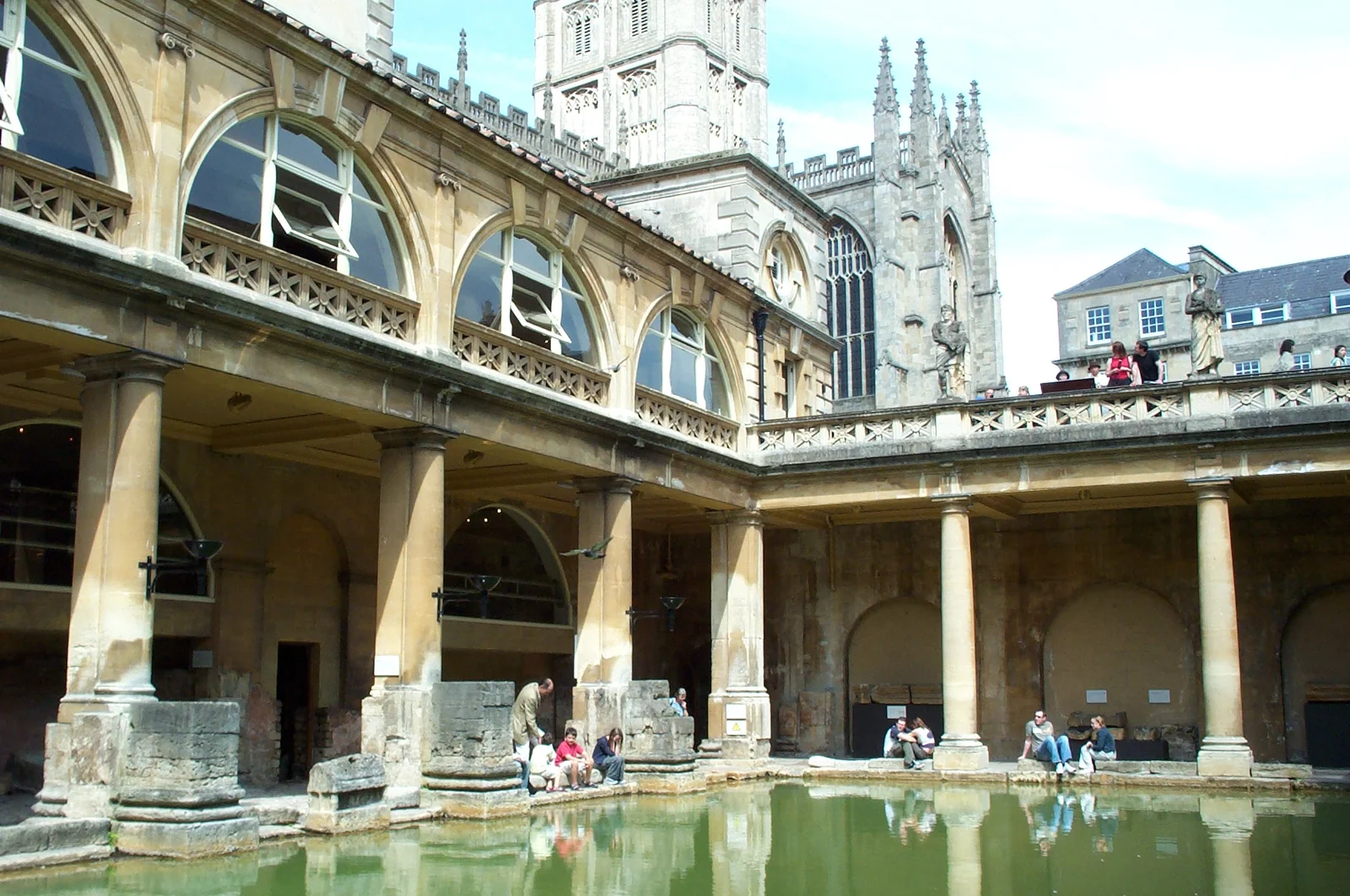
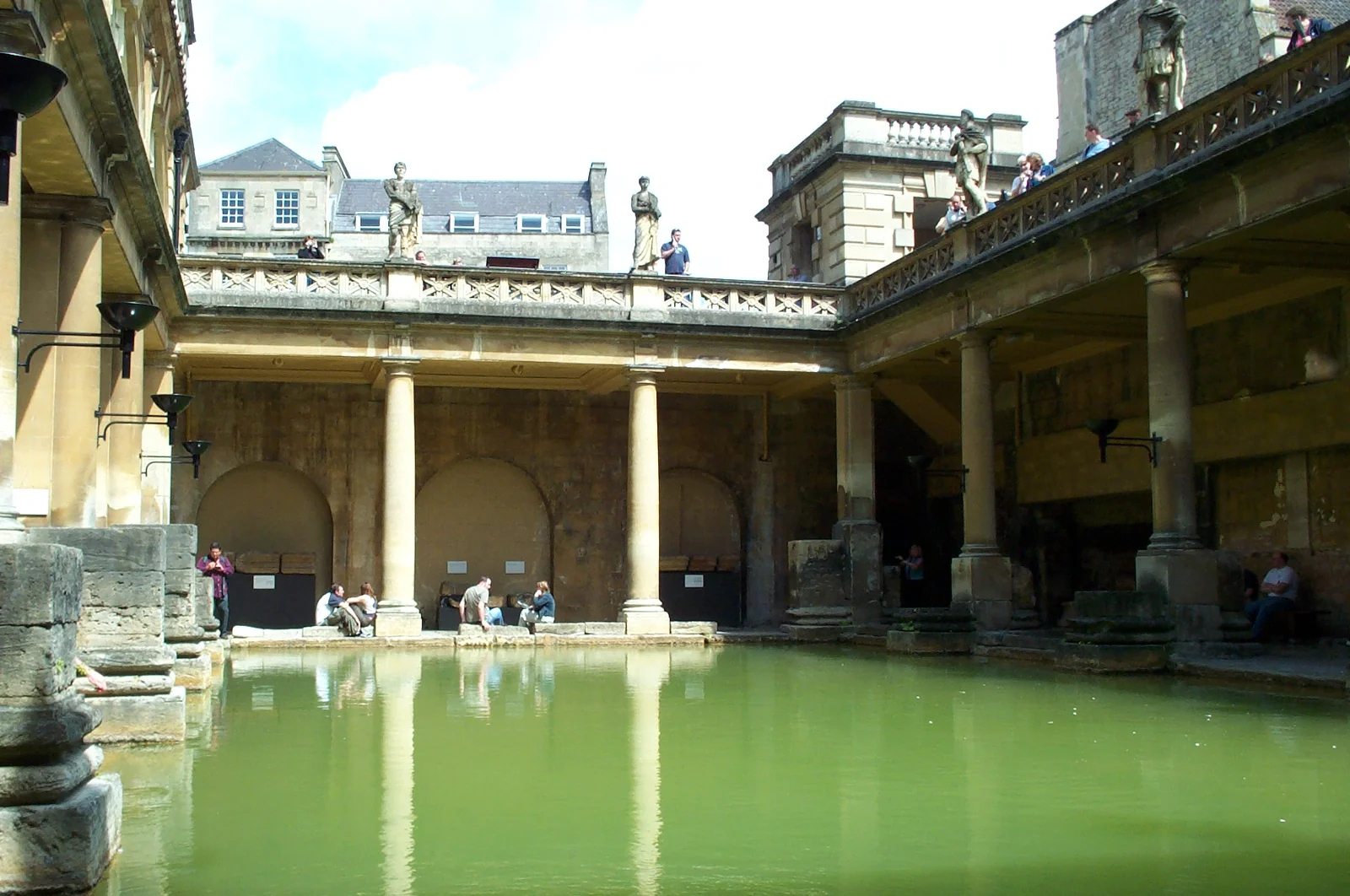
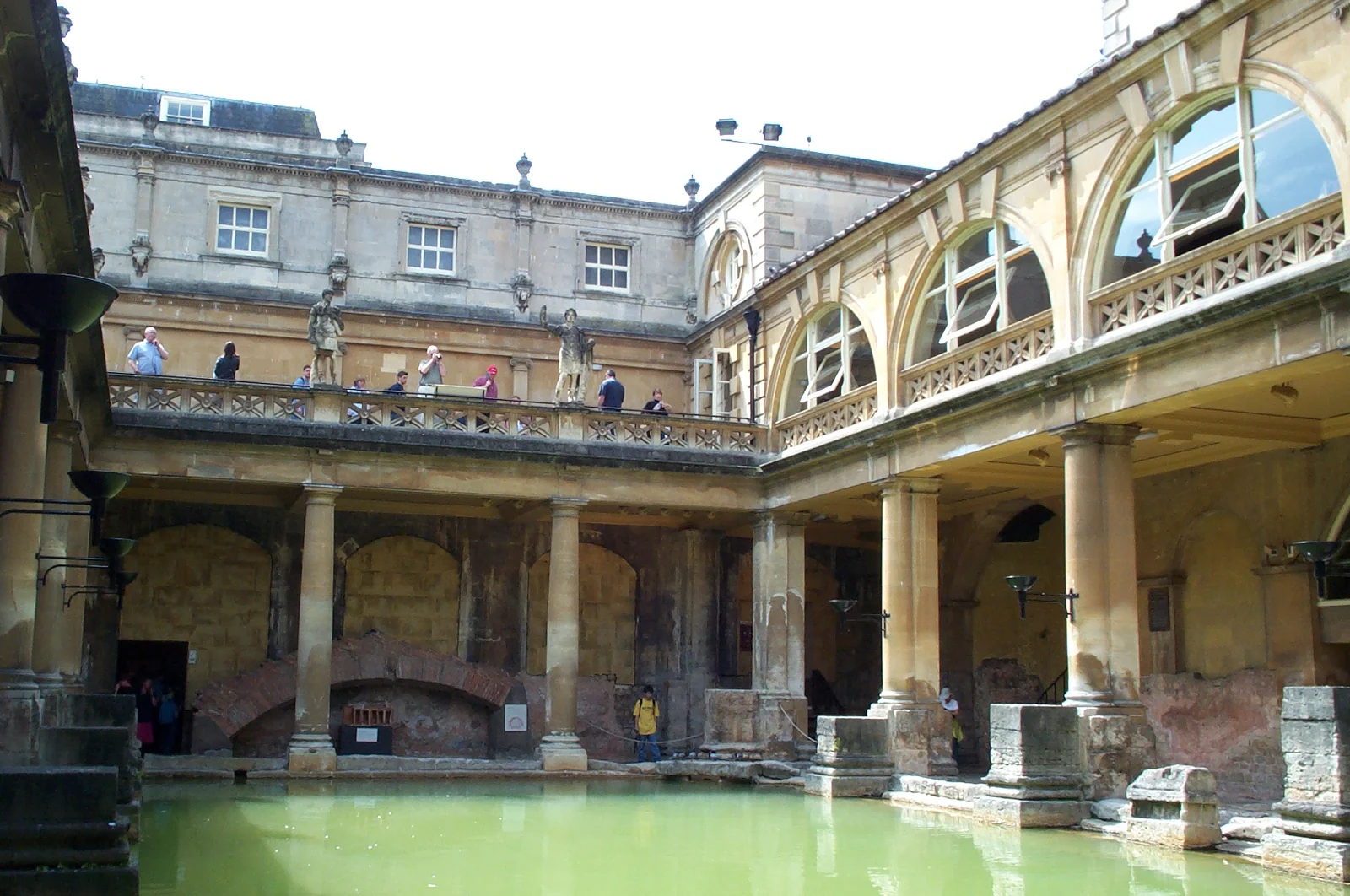
My notes also mentioned that after the gilded head of the goddess Minerva was discovered in the 18th century, the long-buried Roman bathing complex gradually came back into view. It was not only a pool. There were heated rooms, sculptures, railings, and fragments of arches. What impressed me was not that I could remember every date clearly, but the sudden feeling that even "taking a bath" could leave behind such a large trace of civilization.
From the baths to the abbey: the city centre is compact
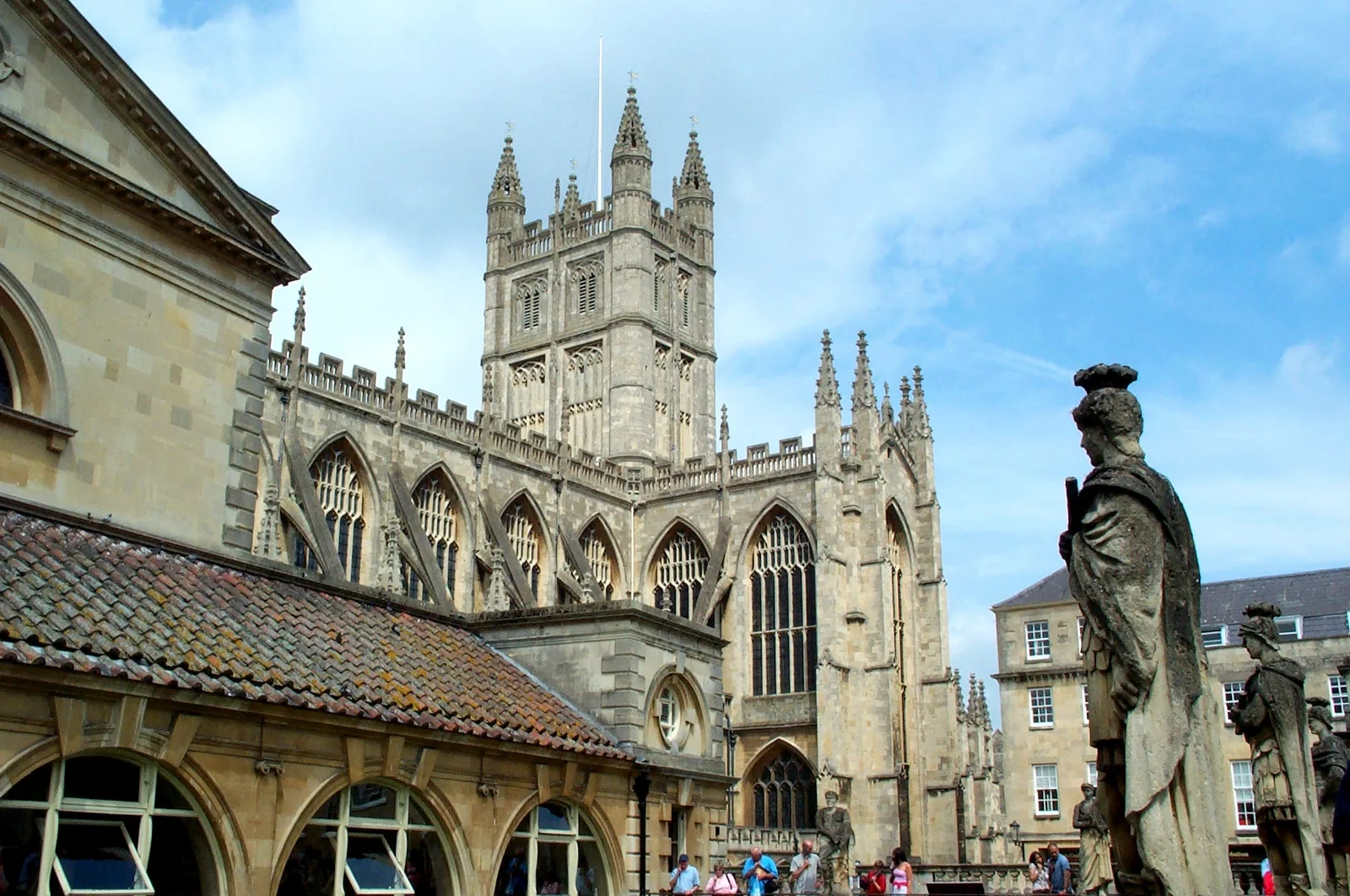
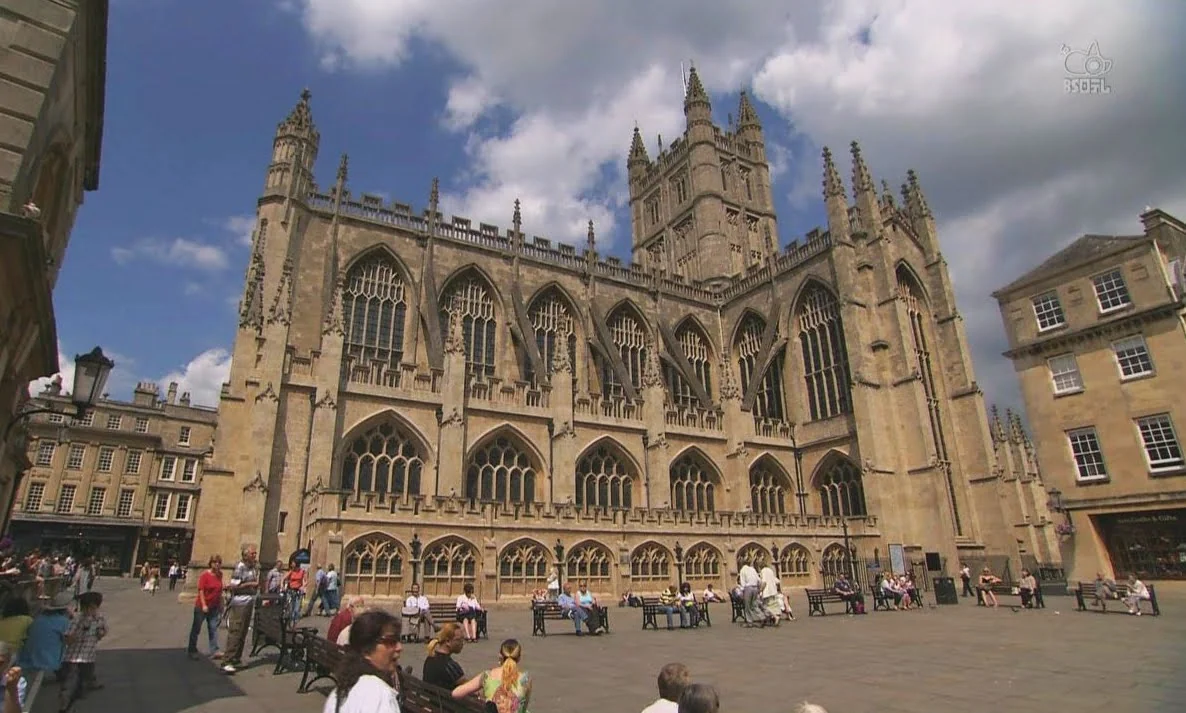
Bath Abbey is only a short walk from the baths. That compactness is one of Bath's pleasures. You step out of hot springs and Roman ruins, and almost immediately the view changes to abbey towers and stained glass.
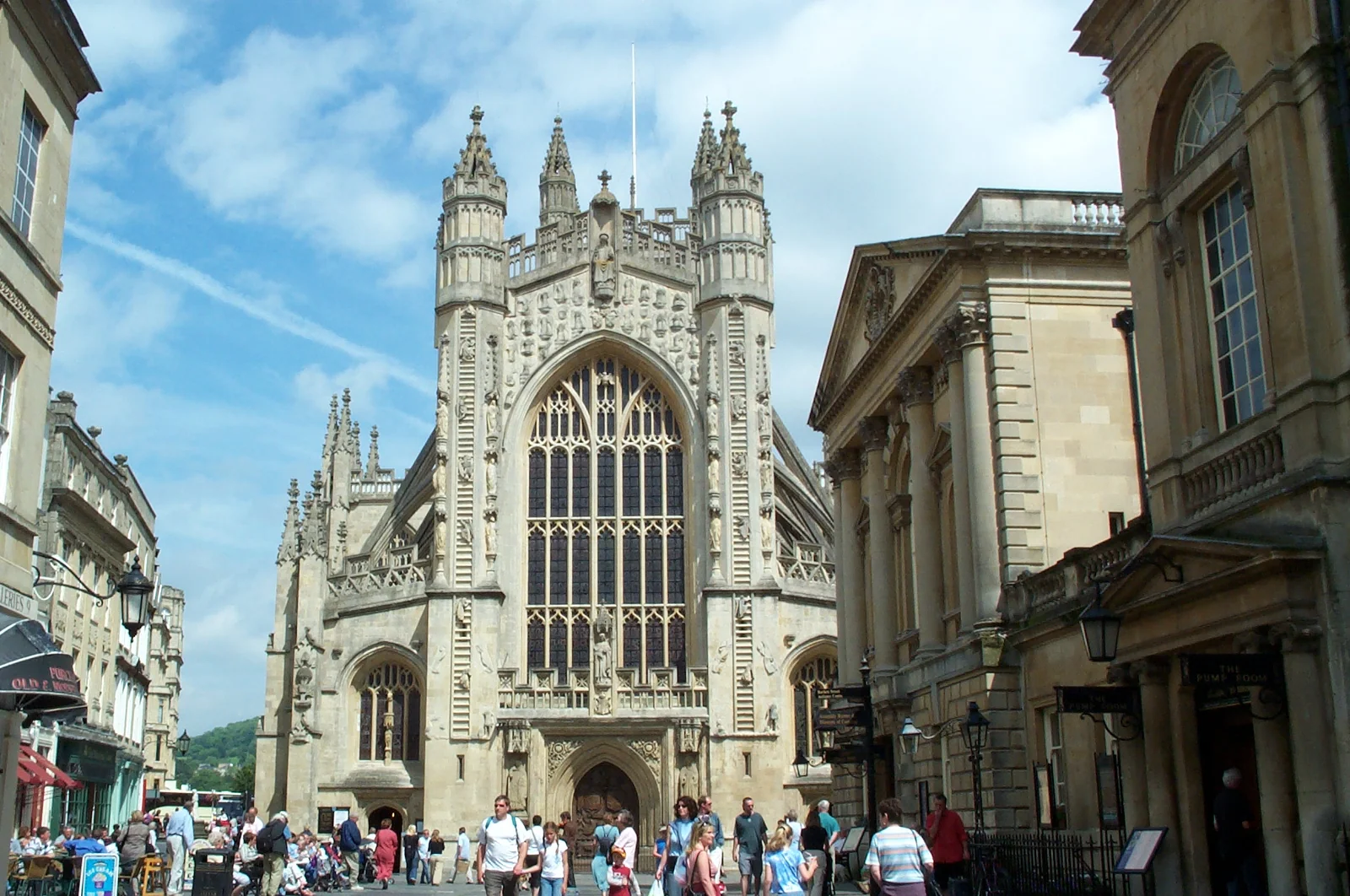
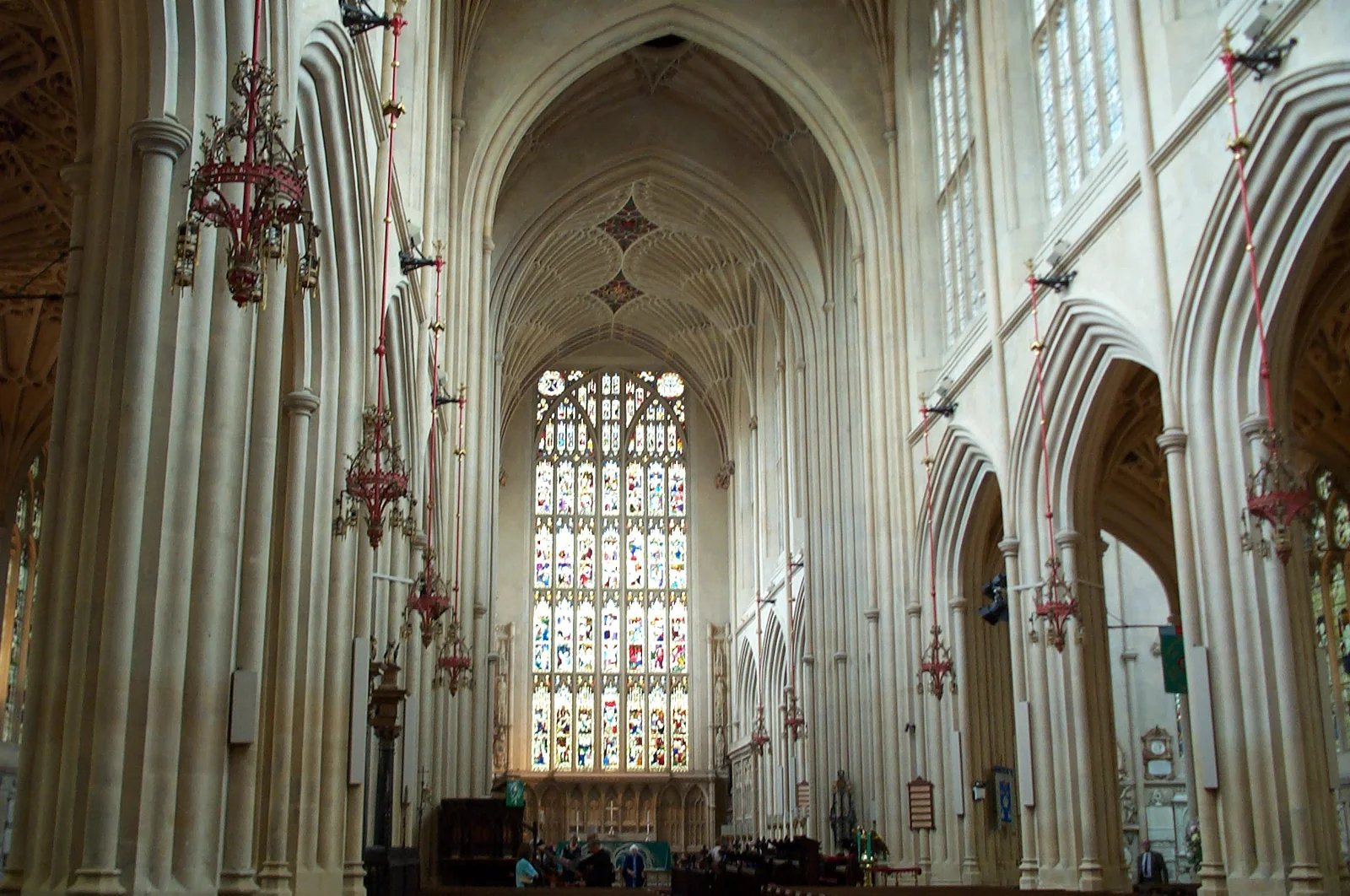
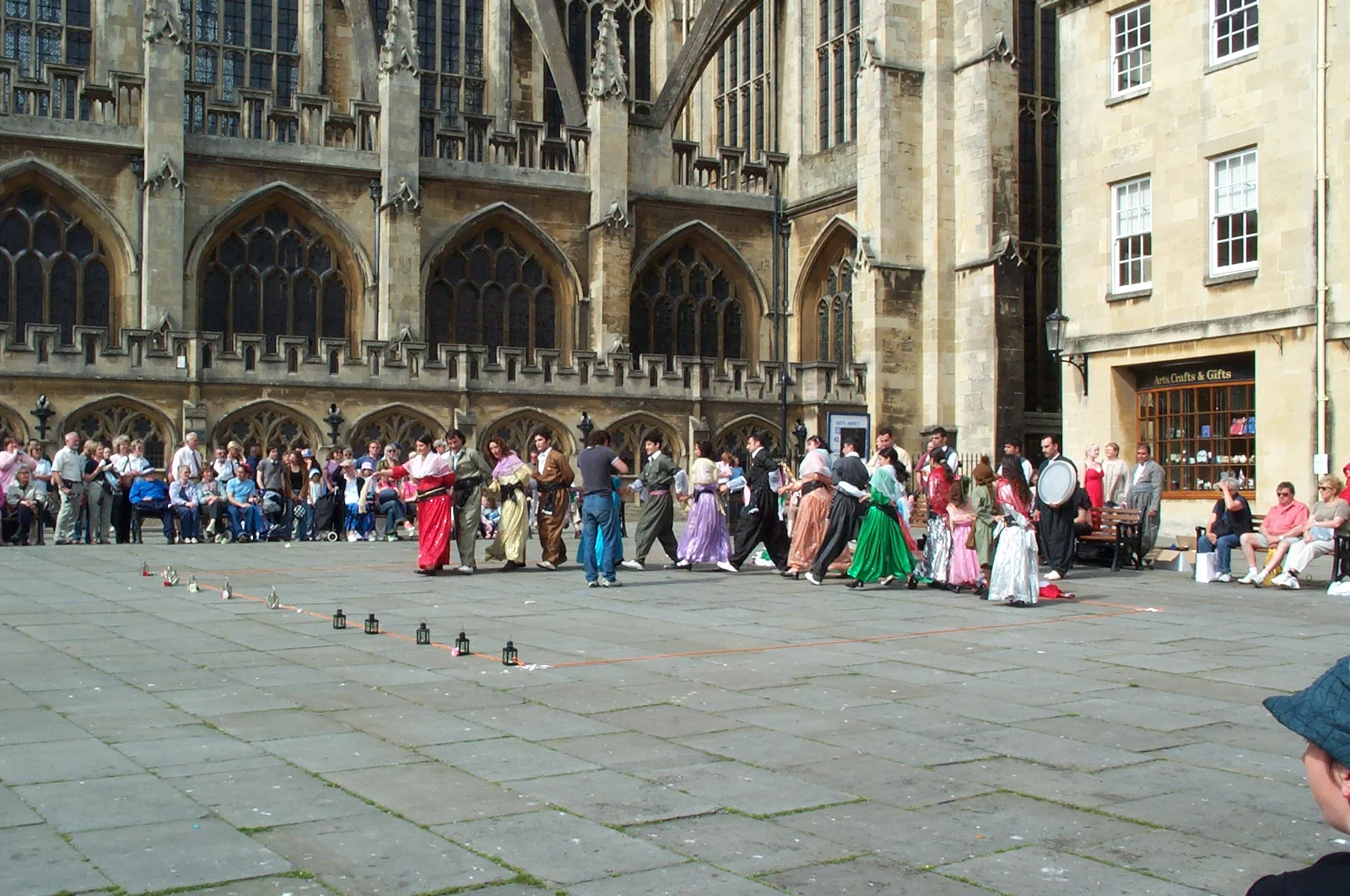
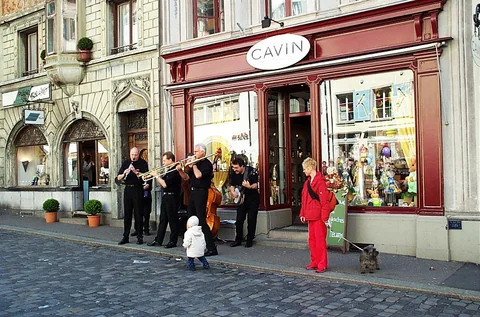
My old notes described Bath Abbey as known for its stained glass and fan vaulting, with enough windows to earn the nickname "Lantern of the West." But the part I felt more directly was Abbey Church Yard. Street performers often appeared there, and it did not feel like a square where tourists only took a photo and left. It also seemed like a place where residents could sit, rest, talk, and listen.
Pulteney Bridge: the river slows Bath down
Next we walked to Pulteney Bridge. The mood here was different from the baths and the abbey. The bridge, the river, the small weir, and the stone paths slowed the city down. After several heavy historical sites, the riverside felt more like a walk.
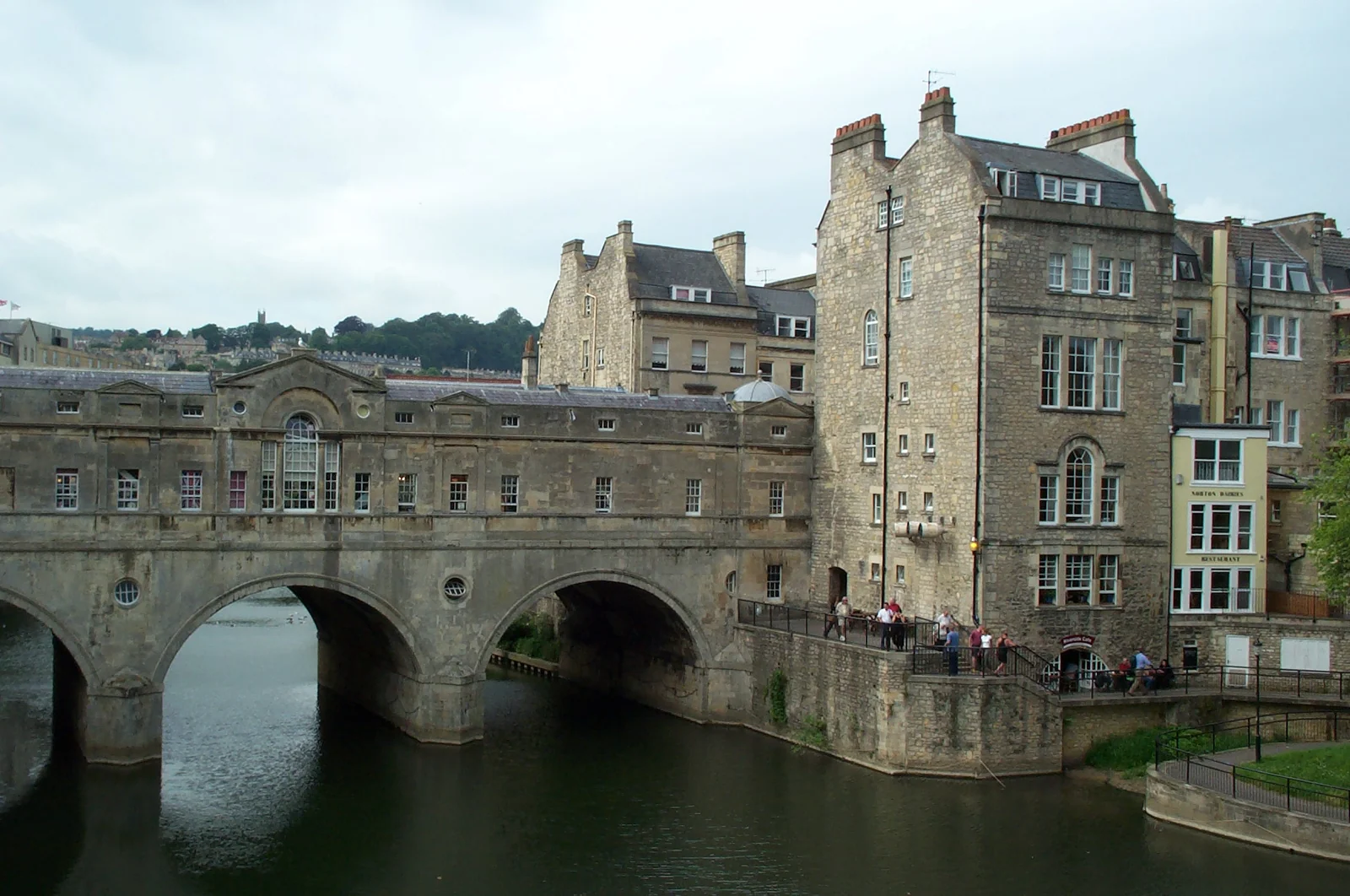
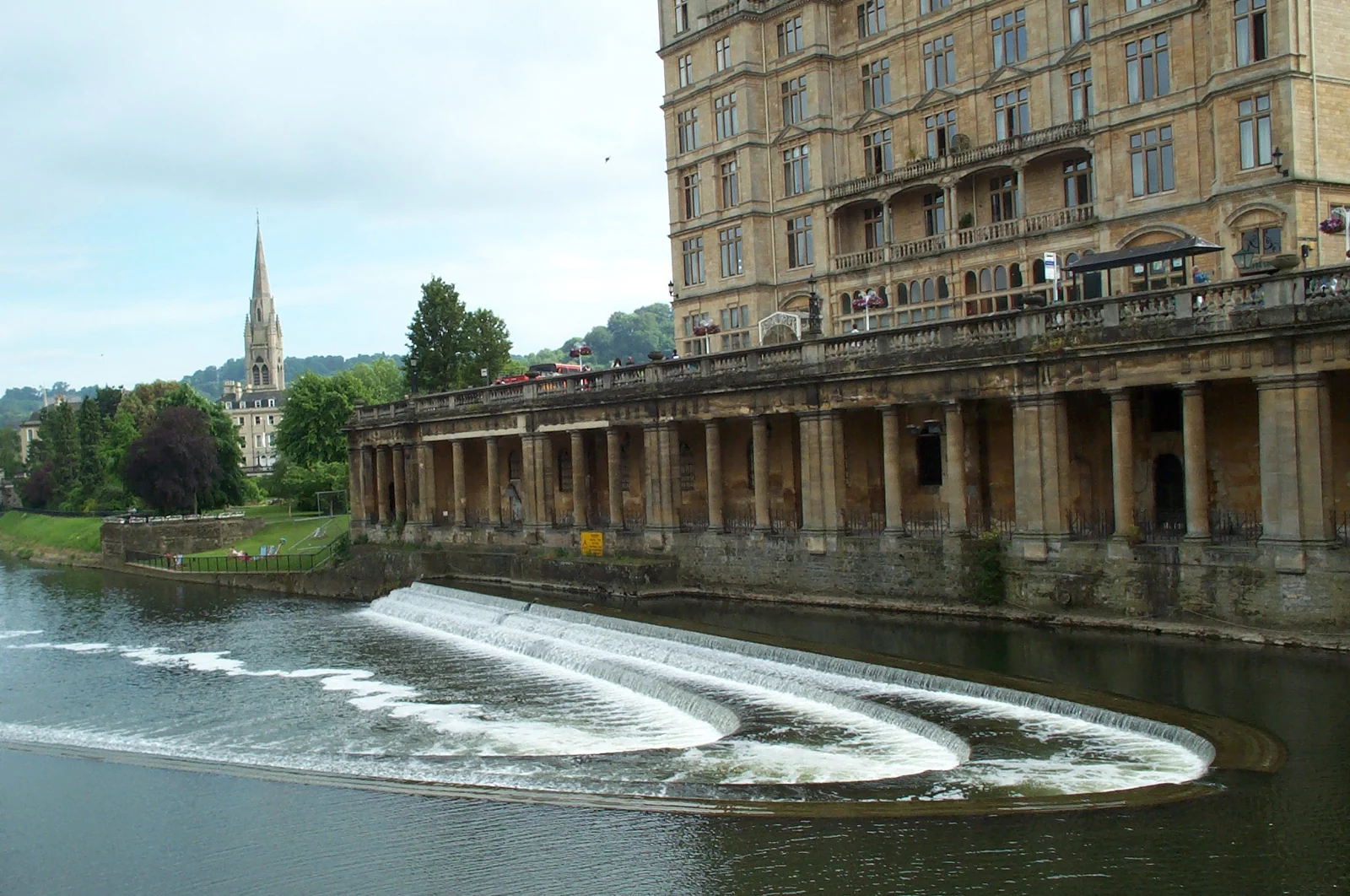
The old guide information sounded very formal: the bridge crosses the River Avon, connects the old city and the newer area, was designed by Robert Adam, and was built from 1769 to 1774. My own feeling was simpler. The drop in the river made a graceful little fall, turning the bridge into a moving part of the whole city scene.
Royal Crescent and The Circus: ordinary on site, better understood later
Royal Crescent is one of Bath's famous sights. But honestly, when I was standing there, the broad lawn impressed me first. As for the half-circle building formed by thirty houses...
Other than proving that "large numbers can be beautiful," personally I thought it was just okay...
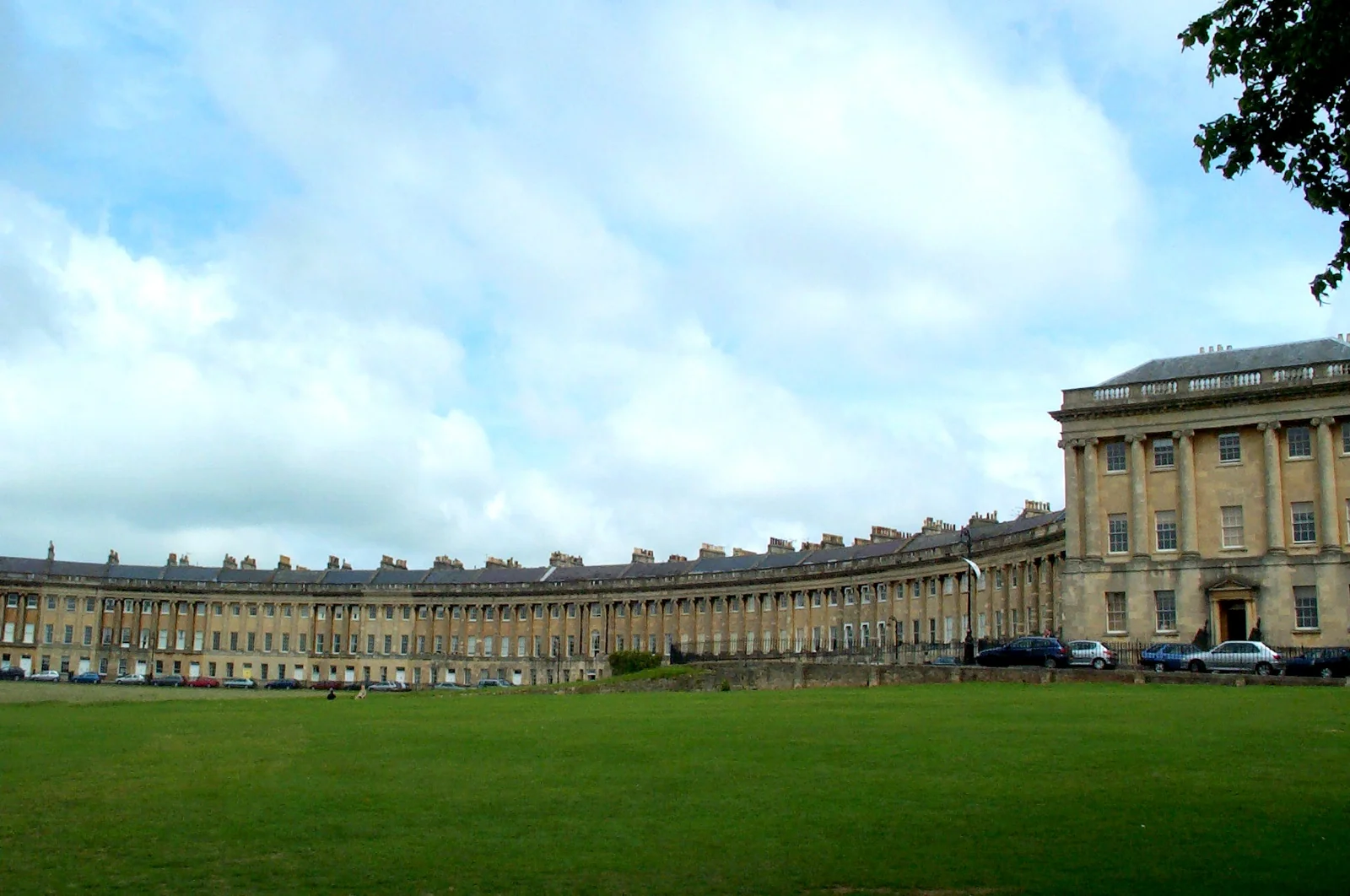
That reaction is very real. Travel often works like that. You know a place is famous, and you know it is supposed to be impressive, but it does not always hit you immediately. Only later, while organizing notes, did I realize that Royal Crescent and The Circus were designed to correspond to each other: one like the moon, the other like the sun, connected by Brock Street.
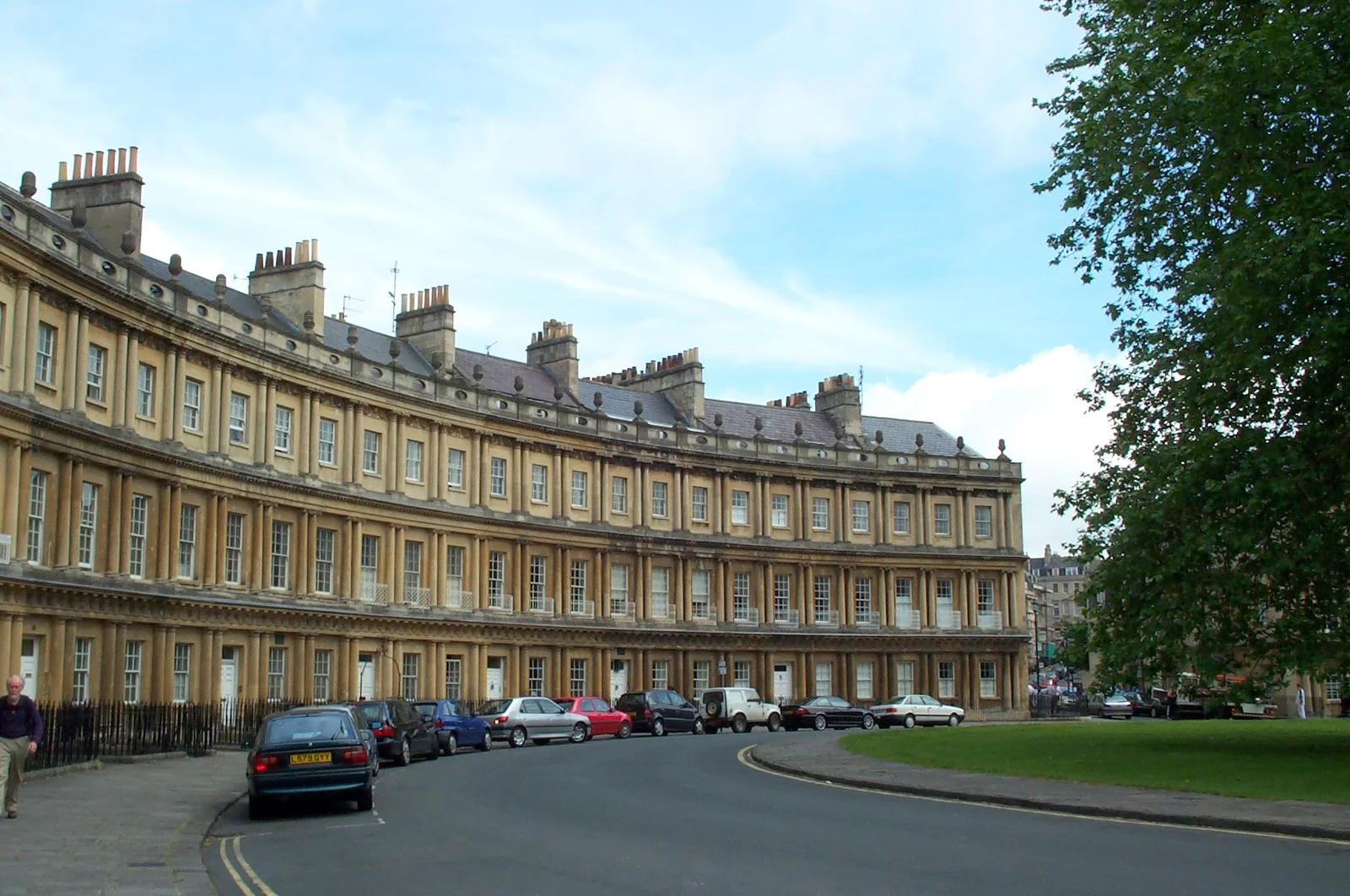
Honestly, only after writing the diary did I discover that Royal Crescent and The Circus respond to each other... then this spot became much more interesting...
Too bad I only found out later @.@'"
Old pre-trip homework: part research, part period feeling
FYI, these were notes I kept before the trip, plus a few screenshots from the Japanese satellite TV program "ヨーロッパ水紀行Ⅳ ブリストルからの旅"...
This large block of material no longer works as current travel advice, especially for phone numbers, ticket prices, and opening hours. But it does preserve how I prepared for travel at the time: guidebooks, TV programs, clipped notes, then comparing what I saw on site with what the notes had described.
In those notes, the most interesting part of the Roman Baths was not the admission fee. It was the way Romans treated bathing as part of daily life and social life. Exercise, hot baths, cold pools, conversation, business, and exchanging ideas all seem to have belonged to the bathhouse. It sounds almost like an ancient social centre.
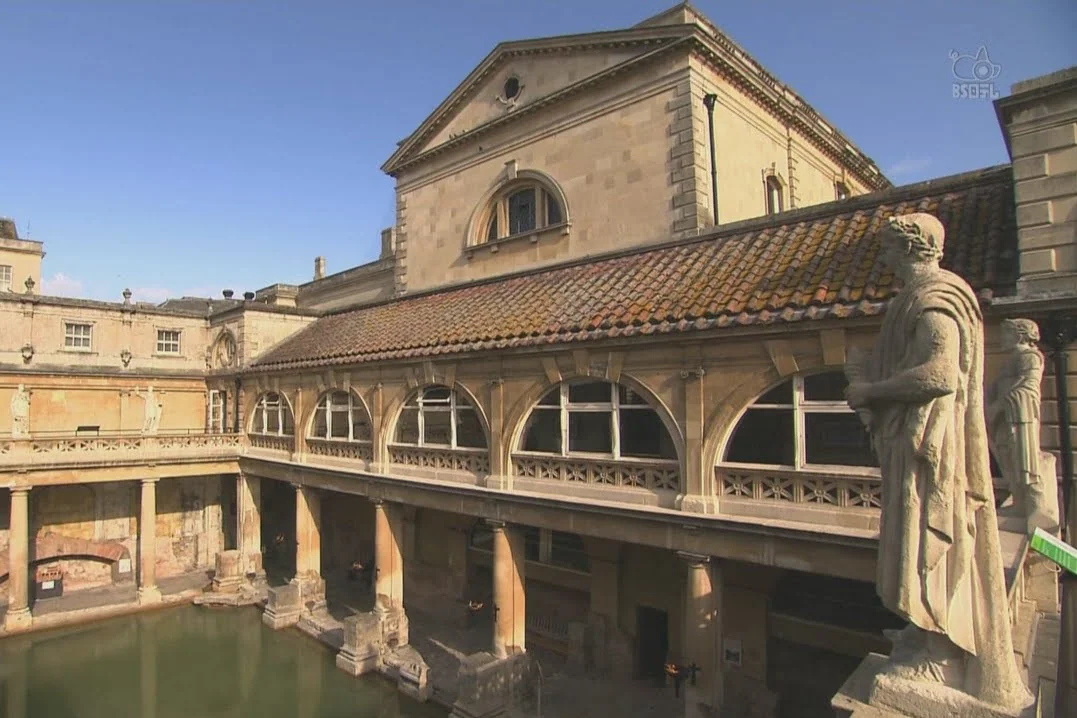
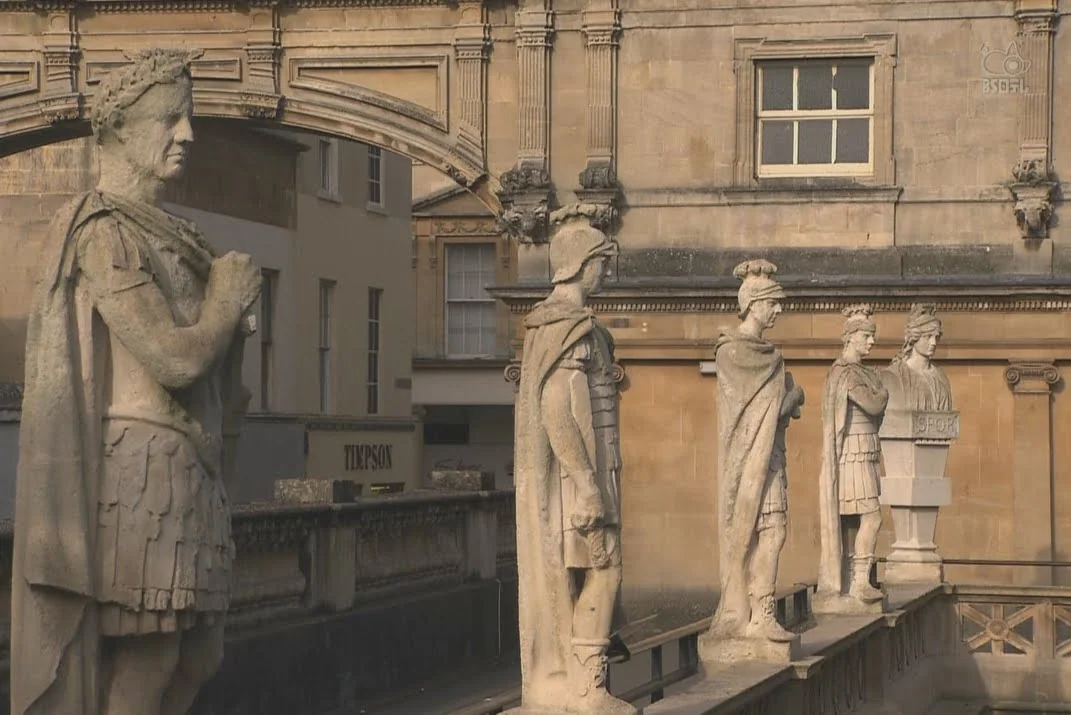
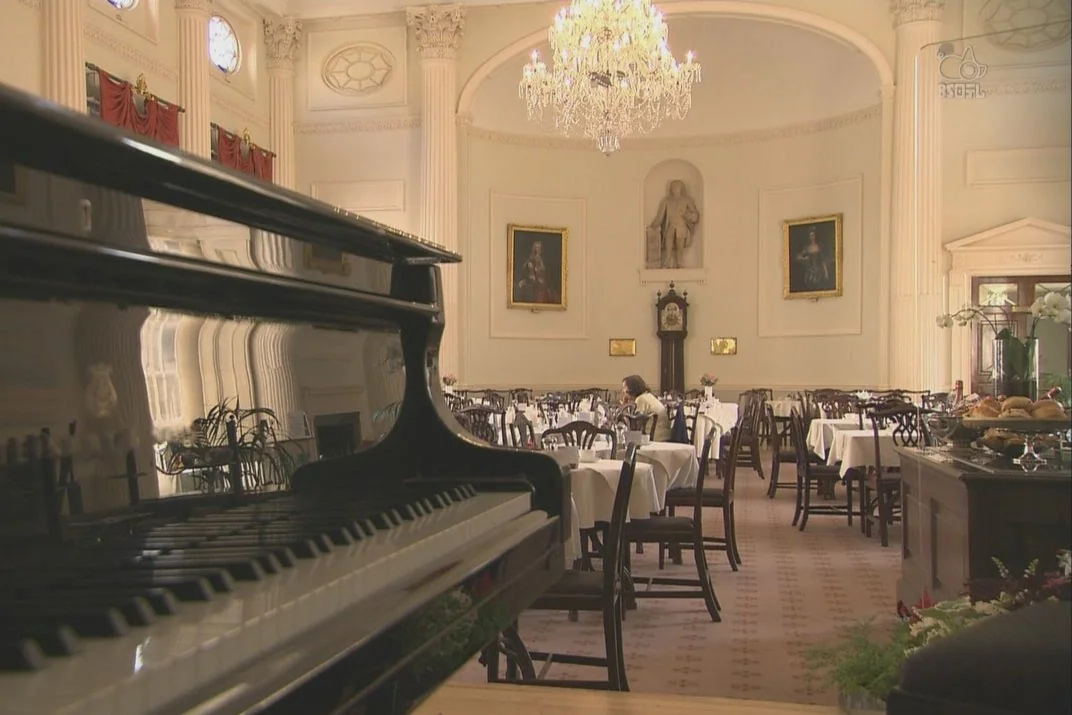
The notes also mentioned the Pump Room. It began as a space for viewing the baths and drinking the spring water, and later became a popular restaurant. What makes a place like that interesting is how it connects the ancient-bath imagination to everyday tea and meals, making the hot-spring city feel like more than museum ruins.
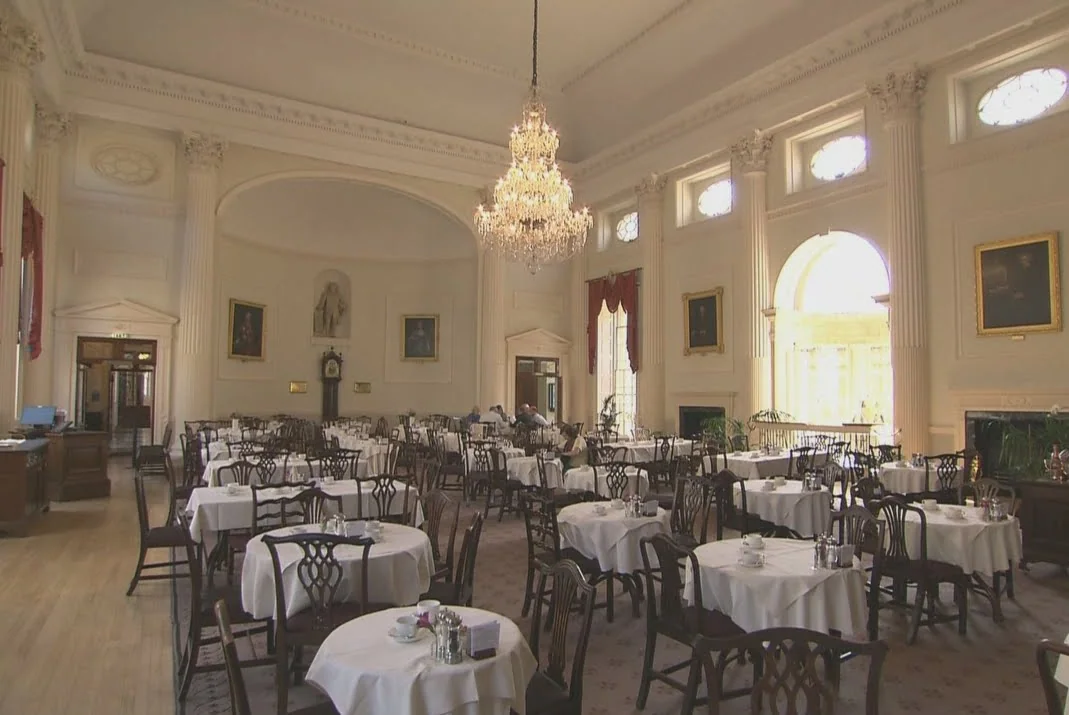
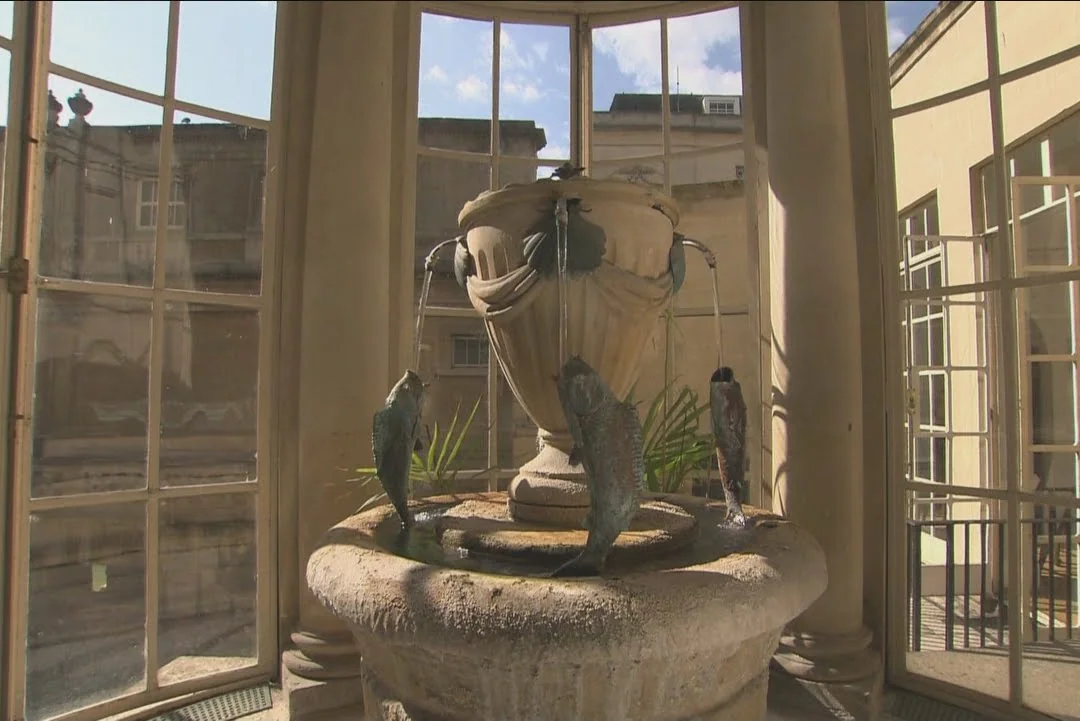
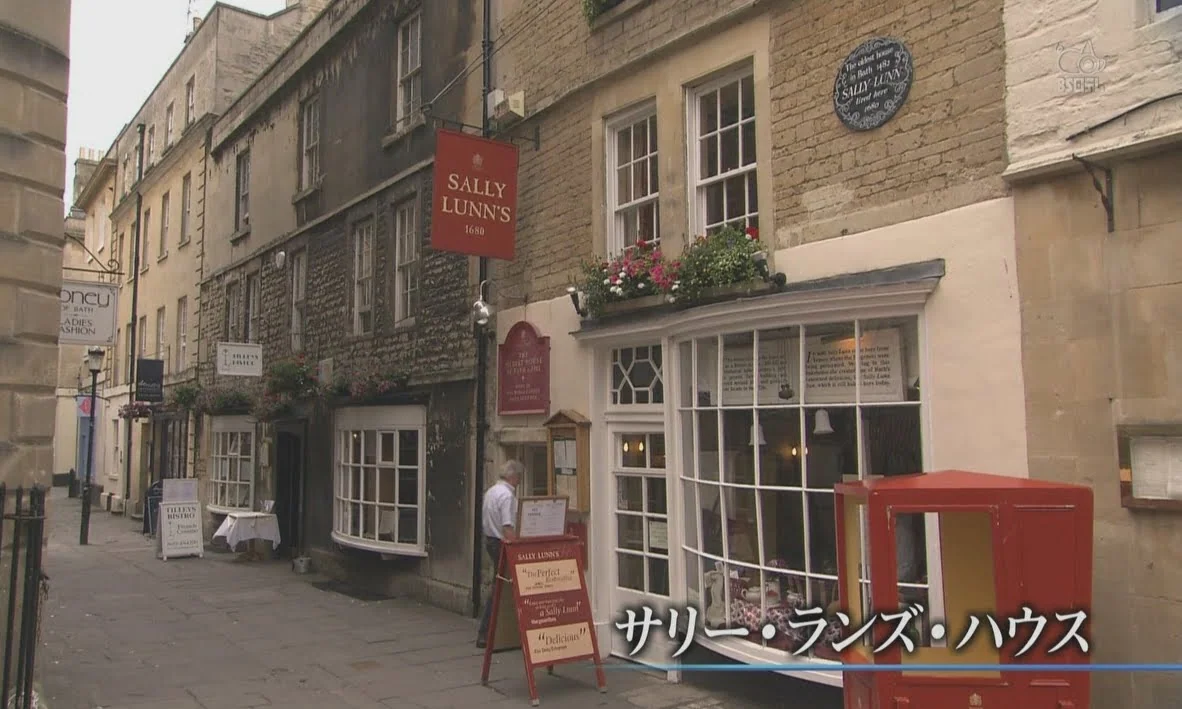
The same TV screenshots also included Bath Abbey, Royal Crescent, and Sally Lunn's. The Sally Lunn bun sounded especially tempting in the notes, written as something one should try when visiting Bath. Whether to go now, how to book, and what the menu is like today all need current checking. But for a 2004 travel diary, these images preserve the mood of doing homework before a trip.
Returning to that Bath Spa day
After reorganizing this entry, I realized that this Bath Spa day had two layers of memory. The first was what I saw in person: the water at the Roman Baths, the people in front of the abbey, the river beside Pulteney Bridge, and the lawn before Royal Crescent. The second was what I filled in later: the bathing legend, the sun-and-moon city design, Roman bathing culture, and old-shop stories like Sally Lunn's.
If I only keep the first layer, the day looks like an ordinary day trip. With the second layer added back in, it becomes clearer why Bath made me keep taking photos, keep checking notes, and keep thinking, "Ah, so that is what it was." The most "me" part is probably still this: I stood in front of Royal Crescent and felt only mildly impressed, then discovered later that it was actually more interesting. Travel is often like that. Sometimes understanding arrives late, and that gives the memory another reason to return.
England travel diary series
England Travel Day 1: London City Tour
England Travel Day 2: Cambridge
England Travel Day 3: Bath Spa
England Travel Day 4: Brighton
England Travel Day 5: Leeds Castle
England Travel Day 6: Stratford Upon Avon
England Travel Day 7: Lake District Part I
England Travel Day 8-9: Lake District Part II
England Travel Day 10: Burberry Factory Shop
Full Photo Gallery
Previewing up to 8 album photos. Open the gallery to browse all photos.
Originally published: 2004-06-13 Revised: 2026-07-16 View the original Blogger post