2001.04.05 Italy Travel Diary: Florence
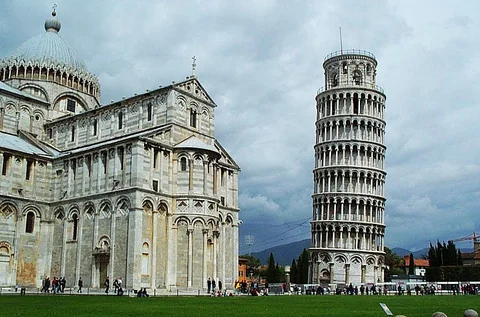
This was planned as a three-day, two-night trip: drive from Milan to Florence for half a day, take an evening train to Rome, then return to Florence on the third day, detour through Pisa for the famous tower, and finally drive back to Milan.
Florence is neither especially large nor especially small, but its streets are narrow and not very convenient for driving. Fortunately, the main sights are concentrated close together. Walking suits Florence much better than driving.
When we visited, the internet was not nearly as developed and travel information was harder to find. Luckily there were enough photos to tell the story, or this diary entry would never have been possible @.@'"
Most of the background added later came from Google Street View and Wikipedia. Only then did I learn how much history was attached to places I had already visited .'" Writing it down more completely also means less research if I ever return ^.^
From Santa Maria Novella to the Arno
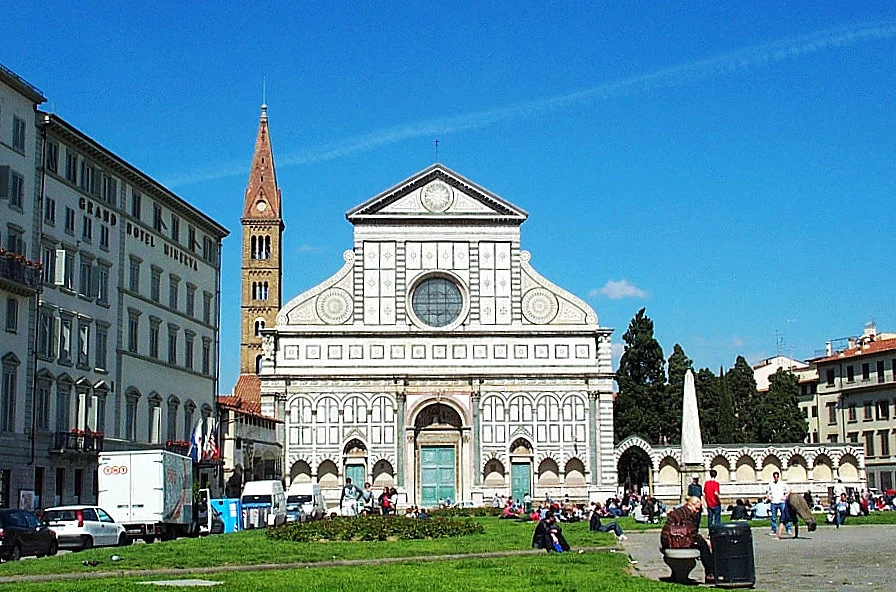
Santa Maria Novella stands opposite Florence's main railway station. It was the city's first papal basilica and remains the Dominican order's principal church in Florence. The square in front took shape between 1287 and 1325 and later hosted festivals and competitions.
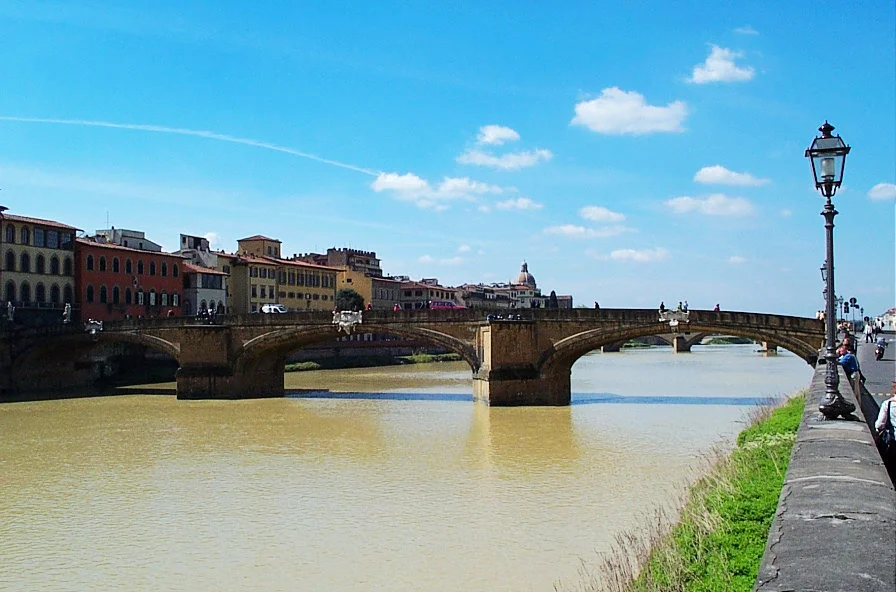
Ponte Santa Trinita was built during the Renaissance and later decorated with statues representing the four seasons. Continuing along the Arno leads to Florence's most recognizable bridge.
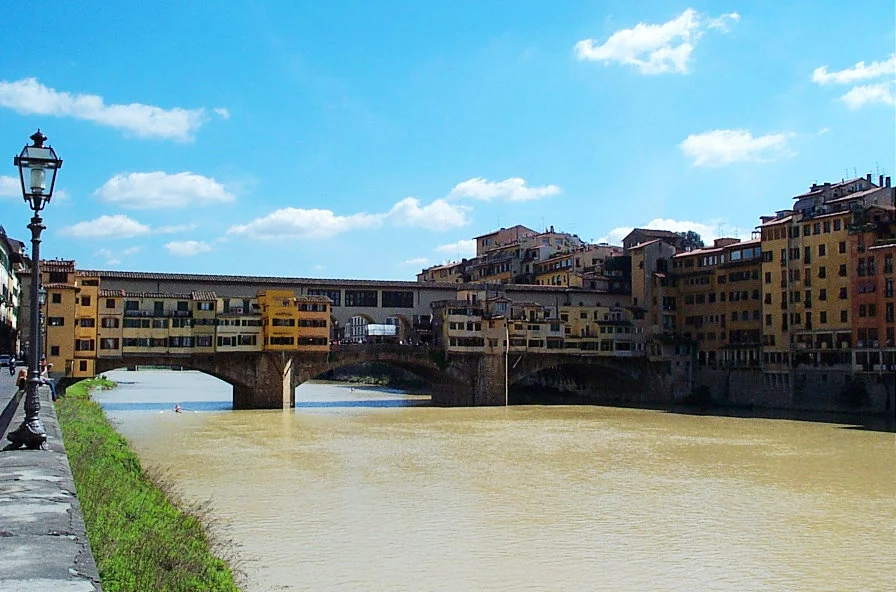
Ponte Vecchio dates to 1345 and has long carried shops. The first shops were butchers. The story goes that unwanted innards were simply thrown into the water. Hmm... perhaps the Chinese term for innards, literally "things from the water," makes sense after all... hehe. Today the bridge is mostly lined with jewelers and souvenir shops.
Palazzo Vecchio and Piazza della Signoria
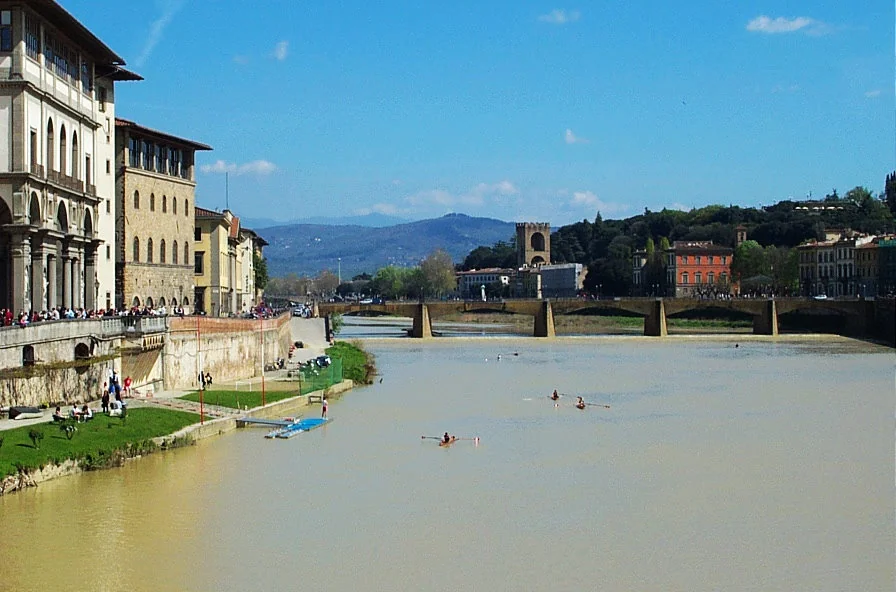
Palazzo Vecchio is Florence's town hall. Vecchio means "old," which is why it is sometimes translated simply as the Old Palace. Its heavy Romanesque walls and crenellated fortress form make it one of Tuscany's grandest civic buildings.
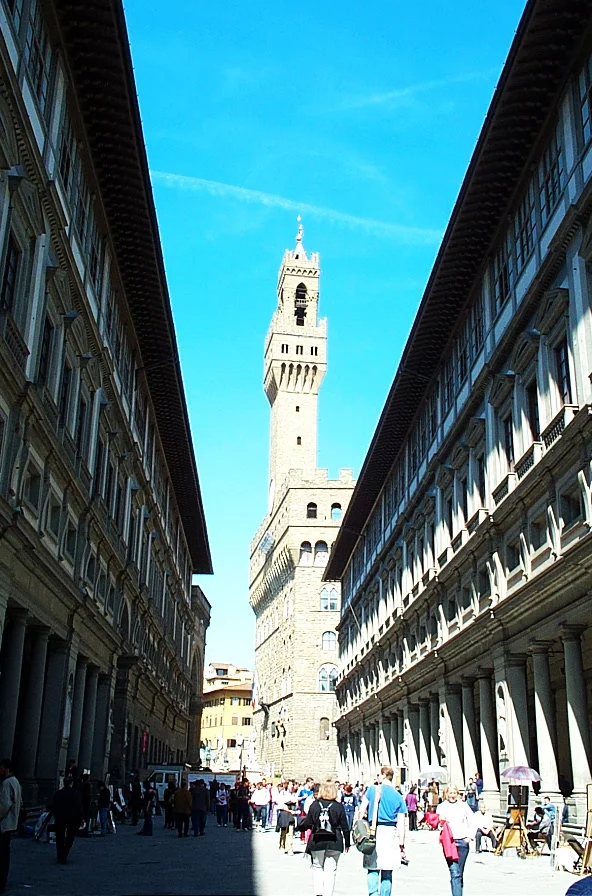
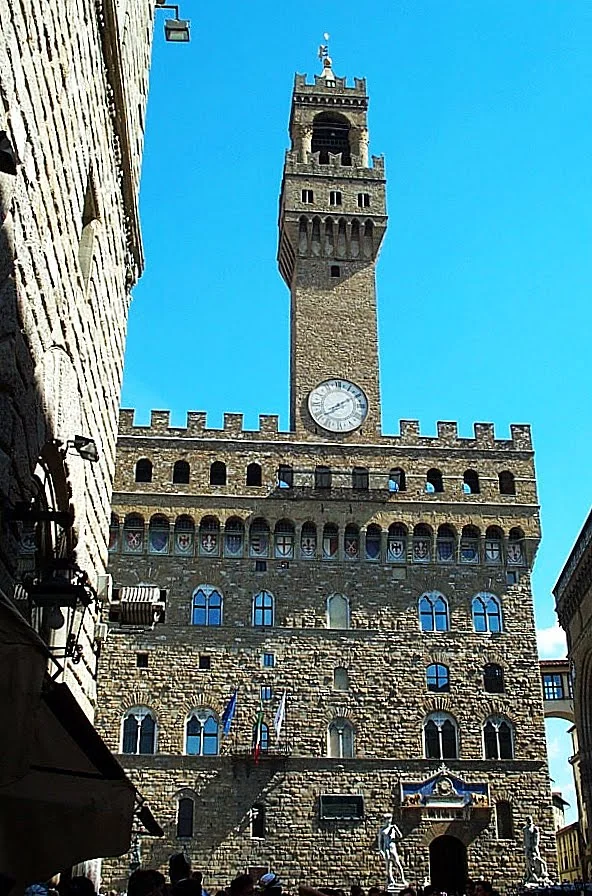
One view looks toward the palace from the Uffizi; the other looks back from Piazza della Signoria. A replica of Michelangelo's David stands at the entrance, surrounded by other major sculptures.
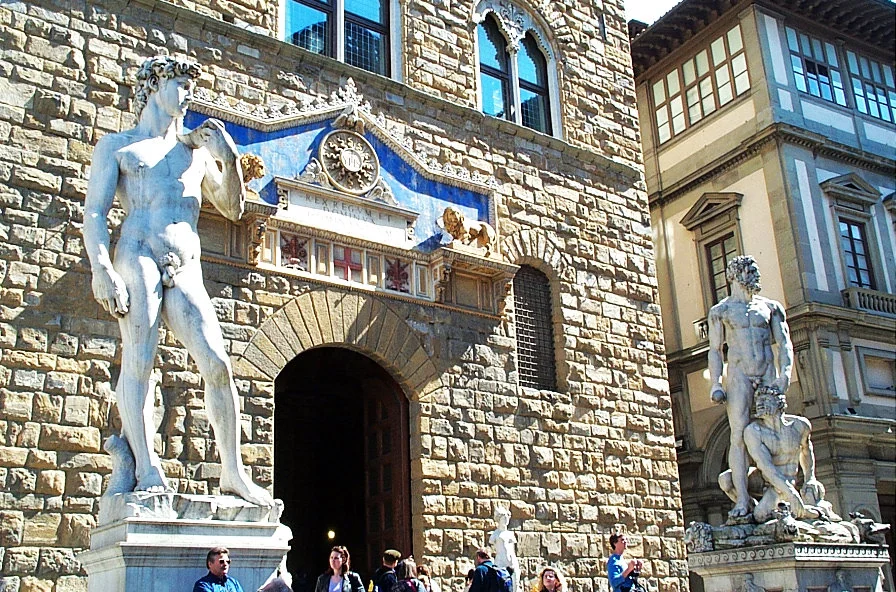
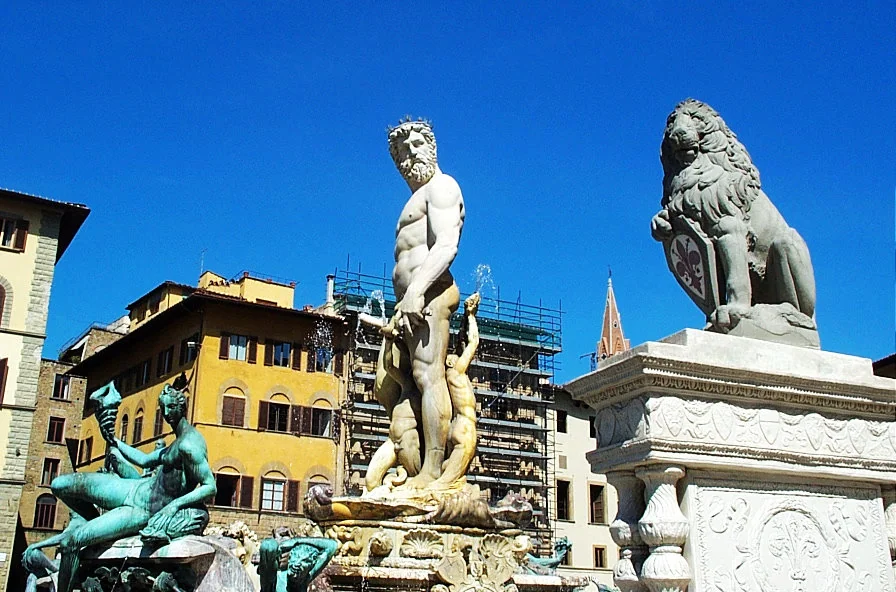
The L-shaped piazza remains a center of Florence's political and social life. The replica of David, Cosimo I on horseback, the Fountain of Neptune, Hercules and Cacus, and many other works make it feel like an open-air museum.
Florence Cathedral and the Gates of Paradise
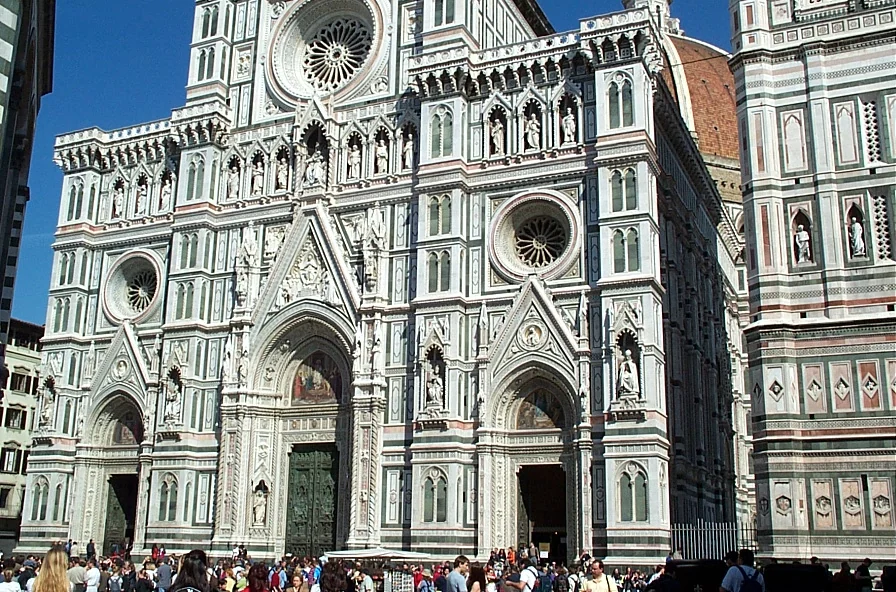
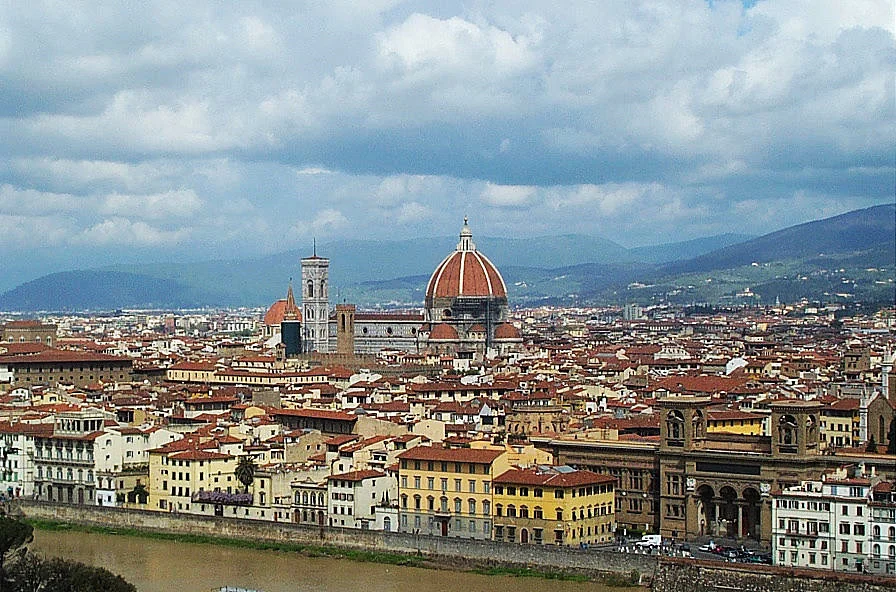
Florence Cathedral is the city's best-known building. Brunelleschi's enormous dome can be seen from many parts of Florence, while Giotto's Campanile and the Baptistery of St. John are equally striking beside it.
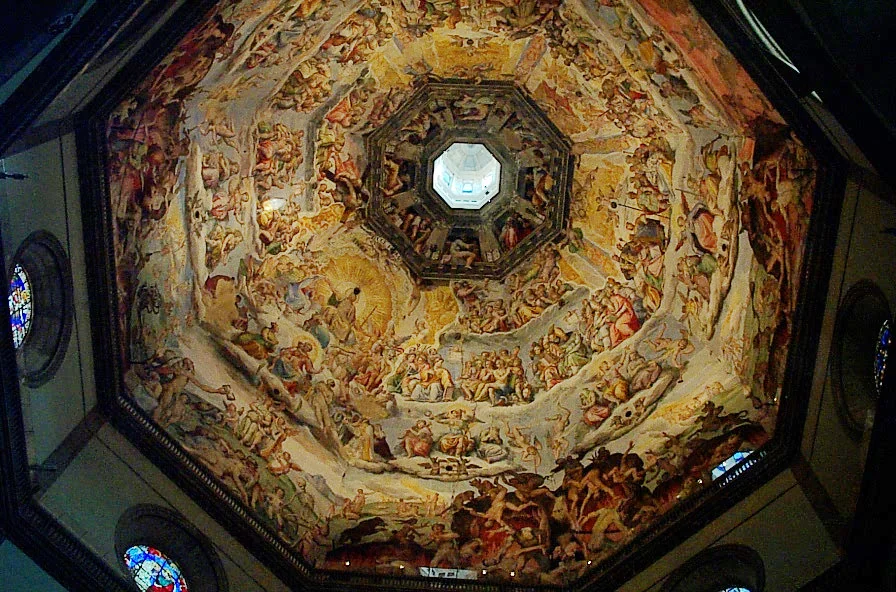
Inside, looking up reveals the Last Judgment across the dome. Standing beneath a work at this scale feels entirely different from seeing it only in a photograph.
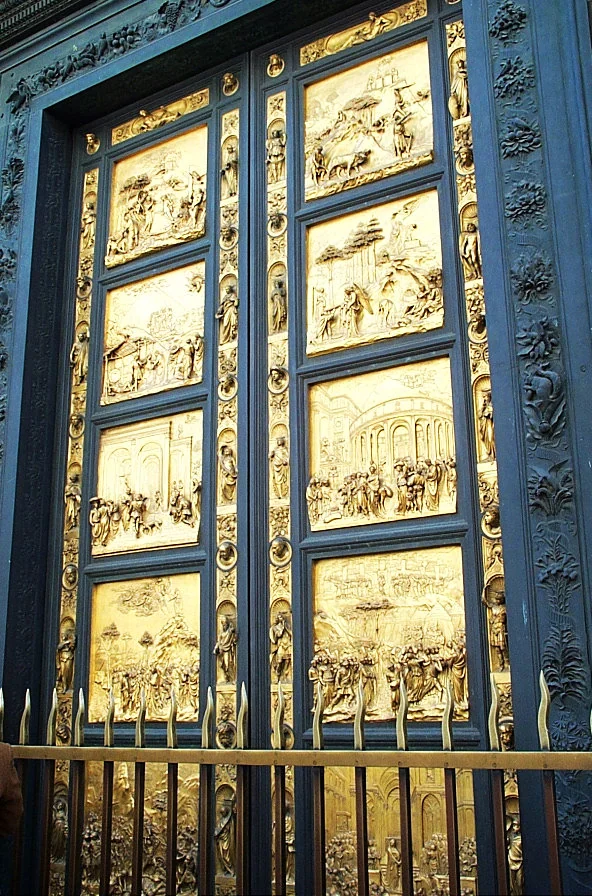
The baptistery's most famous feature is its east door, made by Ghiberti over twenty-seven years beginning in 1425. Ten panels depict Adam and Eve and other stories from the Old Testament. Michelangelo called them the "Gates of Paradise."
Two More Churches, Then Rome
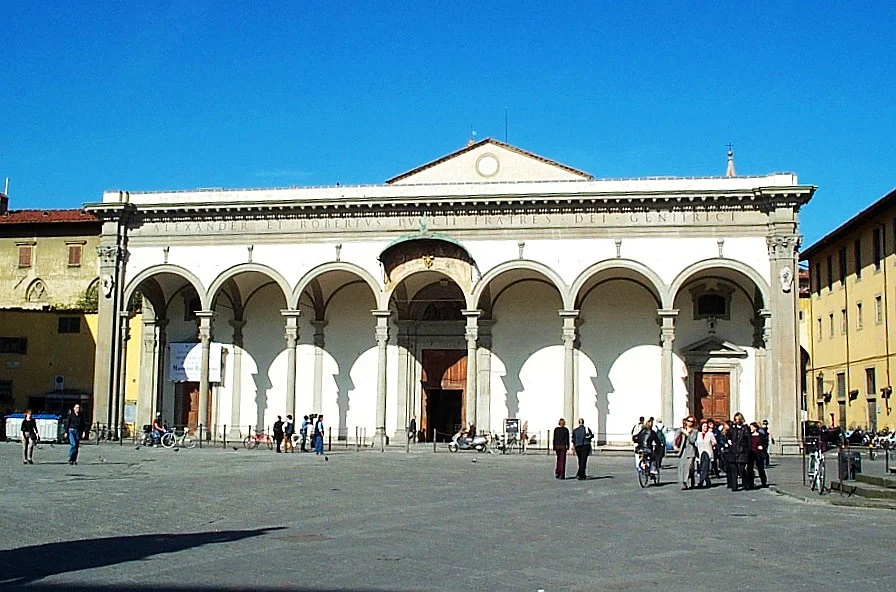
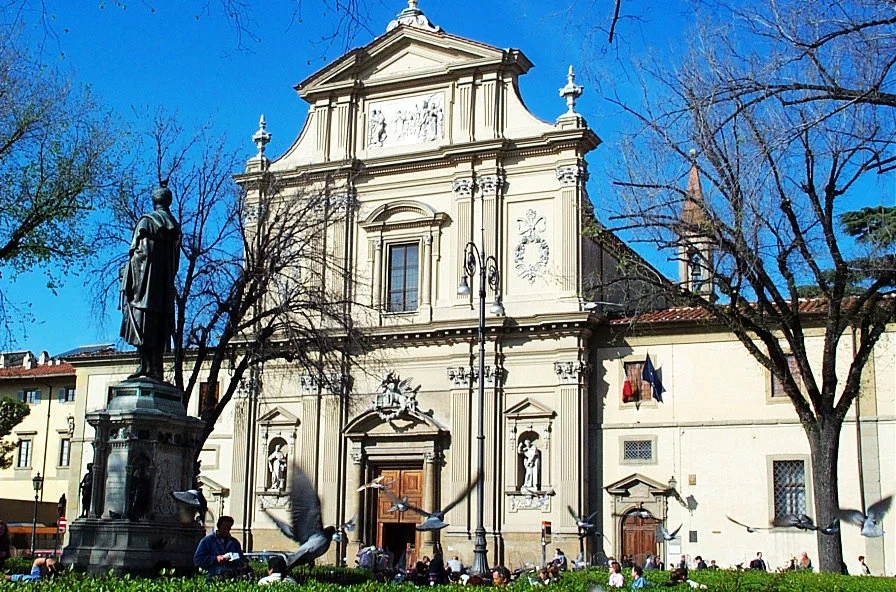
Along the way we also passed Santissima Annunziata and San Marco. The former is the mother church of the Servite order; the latter is a religious complex of church and convent, with the convent now serving as a museum.
It was getting late, so we took the train to Rome. Palazzo Pitti and Piazzale Michelangelo would wait until we came back.
Back in Florence: Palazzo Pitti and Piazzale Michelangelo
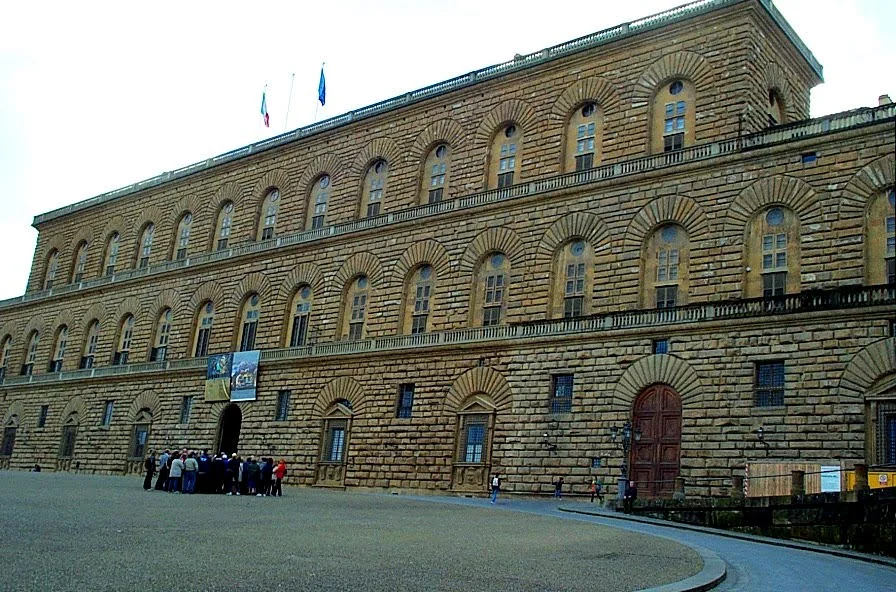
Palazzo Pitti stands on the south bank of the Arno, not far from Ponte Vecchio. It began as a Florentine banker's residence, was later acquired by the Medici family, and became the principal residence of the grand dukes of Tuscany, accumulating paintings, jewelry, and other treasures over generations.
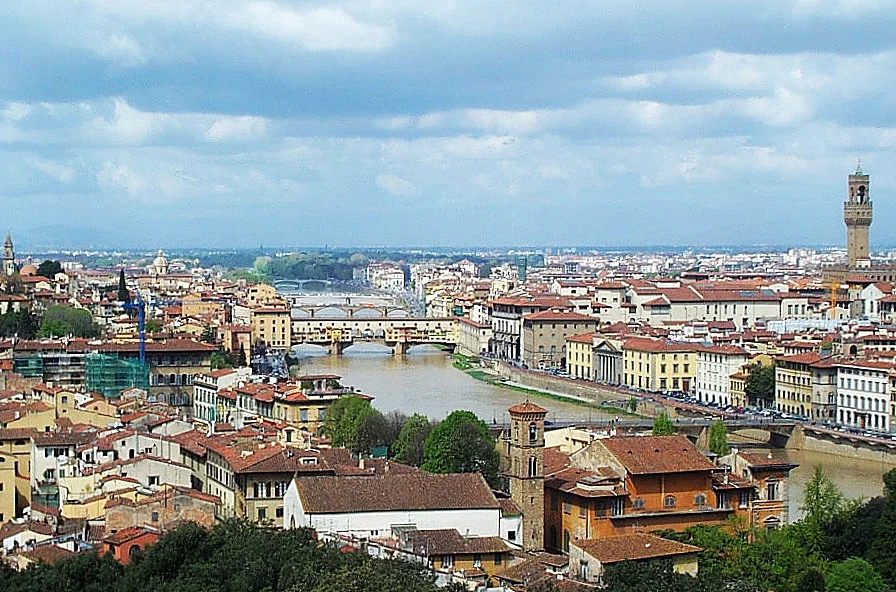
Piazzale Michelangelo sits on a hill south of the Arno and offers Florence's classic panorama. From here, the churches, bridges, and rooftops seen throughout the day finally arrange themselves into one complete city.
More photos from Florence
Previewing up to 8 album photos. Open the gallery to browse all photos.
Original publication date: 2001-04-06
Revised: 2026-06-19
View original Blogger version