2004.06.03 England Travel Diary Day 2: Cambridge
Day two was a day trip from London to Cambridge by train. The theme became clear very quickly: walk into a city full of colleges, lawns, bridges, and punts, and then realize that the most expensive thing in European travel is not the entrance fee. It is stamina.
I left with a 4 Day Pass I had bought in Taiwan and went to King's Cross Station for the train to Cambridge. We arrived just in time for the 8:45 train, only to find out that this type of travel ticket could only be used after nine o'clock @.@'"
Learning to save energy first
After leaving Cambridge station, we took a bus for about two stops to reach the main college area. It was not actually far, so why take a bus?
Here is my travel advice from that time: "In Europe, no matter which city you are in, if you see a bus, take the bus; if you see a carriage, get on the carriage..." Do not think, "It is only one or two kilometers." There is so much walking to do here. If you can save two stops' worth of energy, you can visit a few more places later.
Since we had come all the way to Europe, we needed the spirit of not treating money like money. Otherwise, staying home to watch travel shows would be the cheapest option ~.~
Of course, that was how I felt while traveling in 2004. Transport passes, fares, and visiting rules may all be different now, so anyone planning a current trip should check the latest information. But "save your walking energy" still feels correct.
Passing Cavendish, then realizing I had underestimated it
Once in Cambridge, the first impression was not a grand landmark but Cavendish Laboratory in a small lane. I had seen the name in a guidebook and took photos almost casually. Later, while writing the diary, I looked it up and realized how serious this place was.
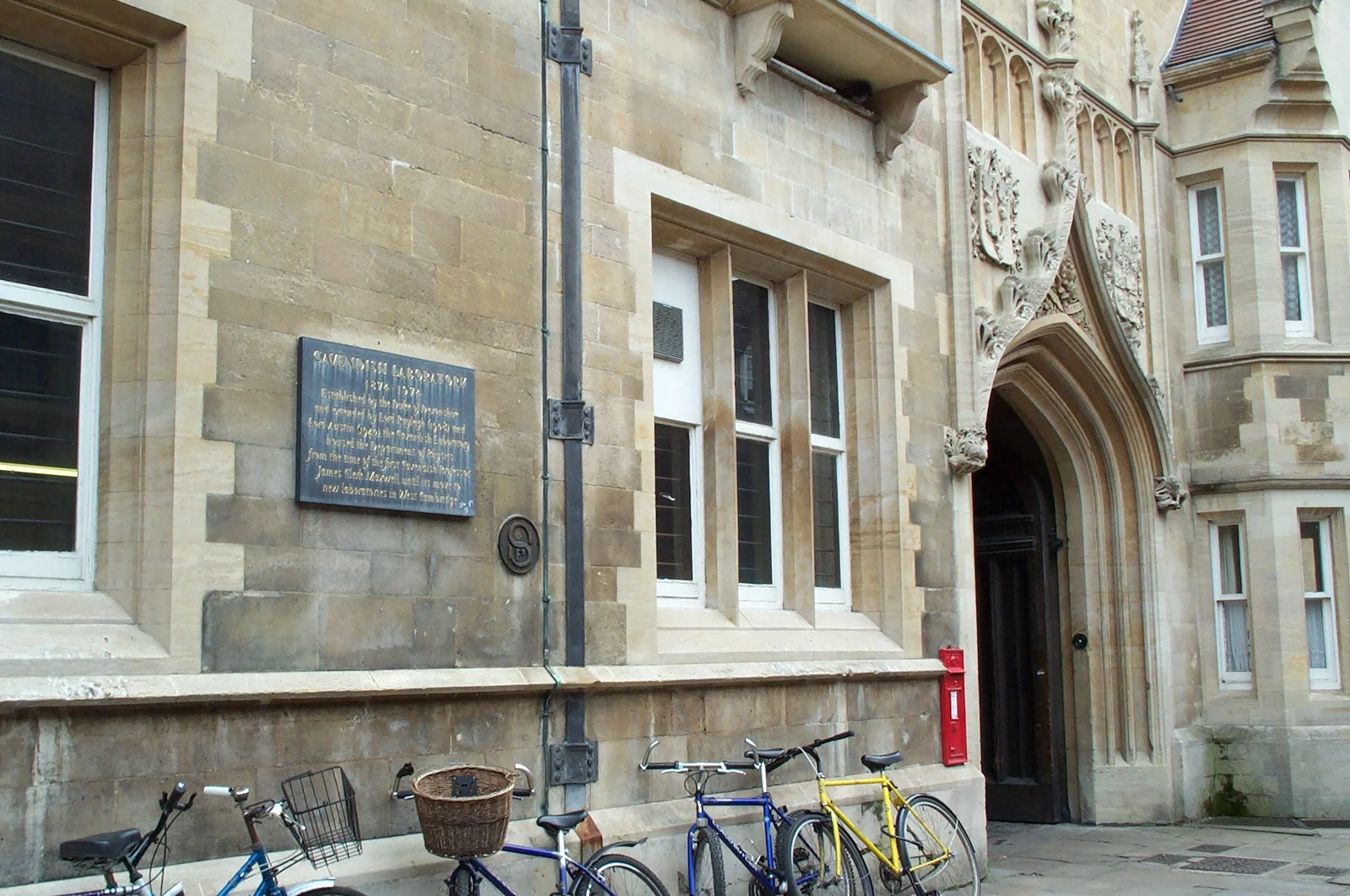
One plaque recorded the history of Cavendish Laboratory. A place that had been only "apparently famous" suddenly became a scientific site with real weight.
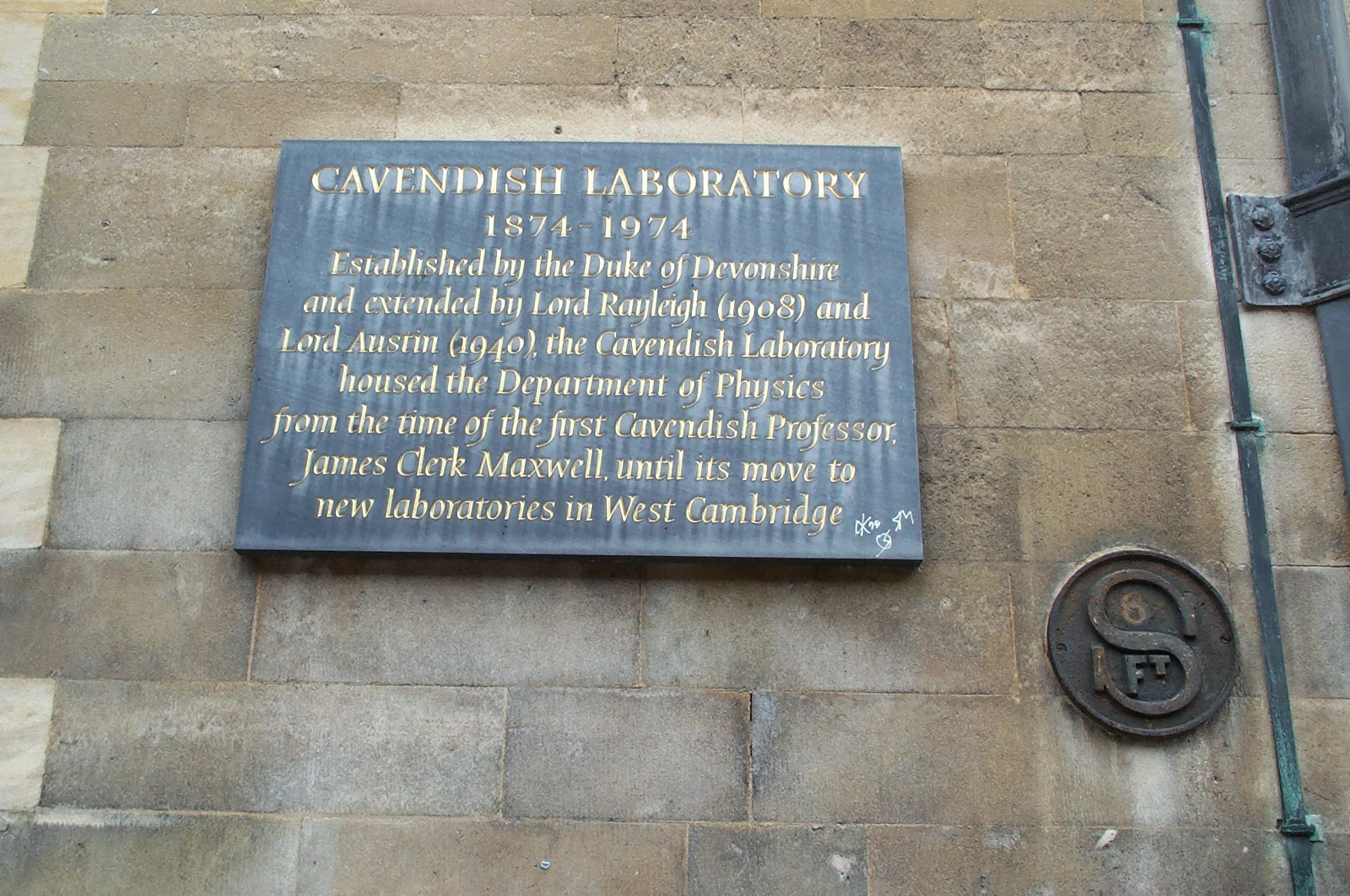
In the previous five or six decades, Cavendish Laboratory had produced 27 Nobel laureates and opened up important fields such as atomic physics, nuclear physics, DNA, electromagnetism, and cosmology. Impressive, right? I had read a short guidebook note and forgotten it, then only understood how important it was after Googling while writing this diary.
King's College: the gate, the shop, and that lawn
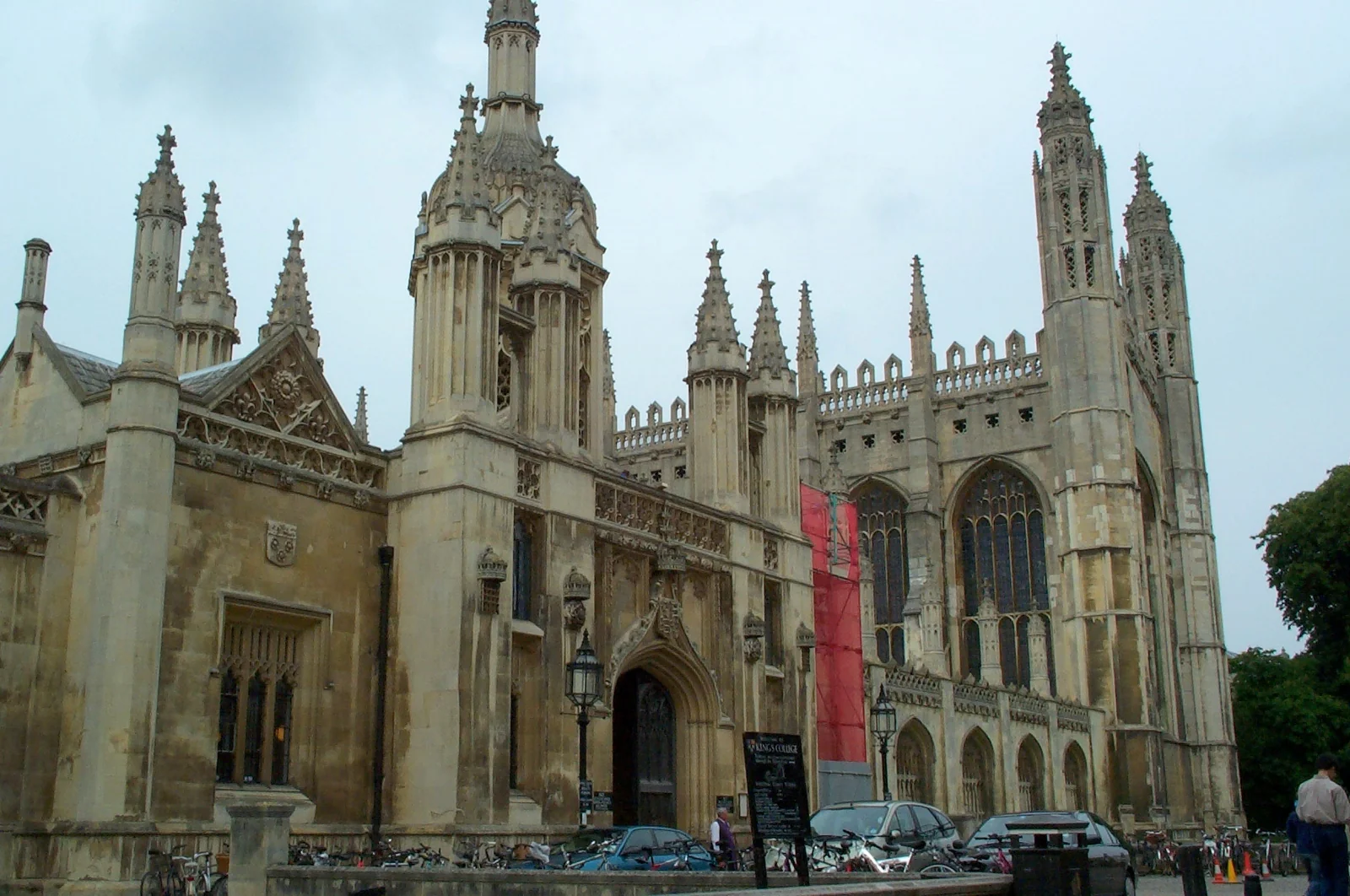
After turning out of the lanes, we arrived at King's College, Cambridge. The gate was impressive, but if you are not a student, you have to enter through the chapel side.
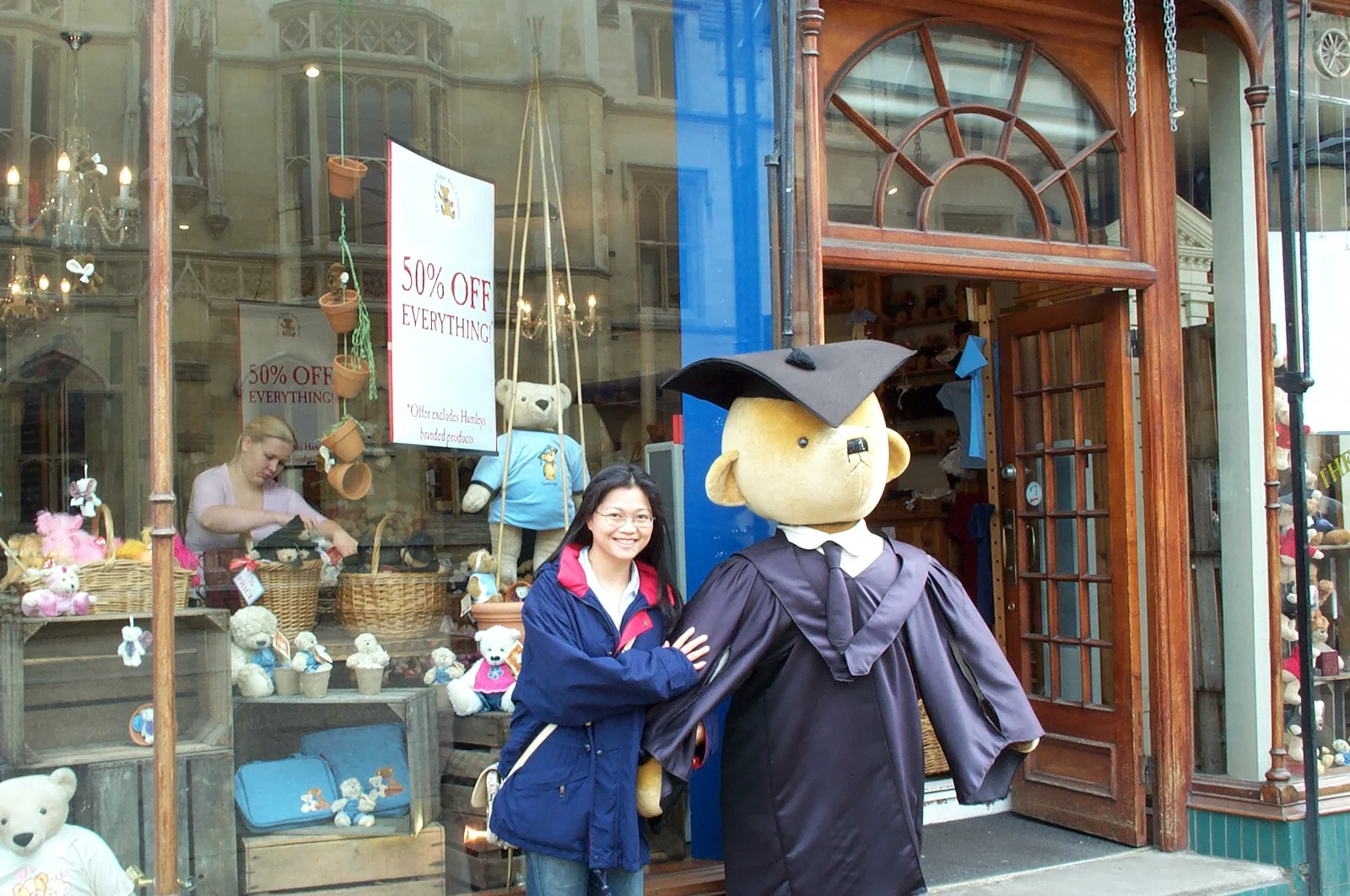
The bookshop near the gate also felt very Cambridge, even with a bear dressed in academic robes outside. Since we were there, of course we had to take a souvenir photo ^.^
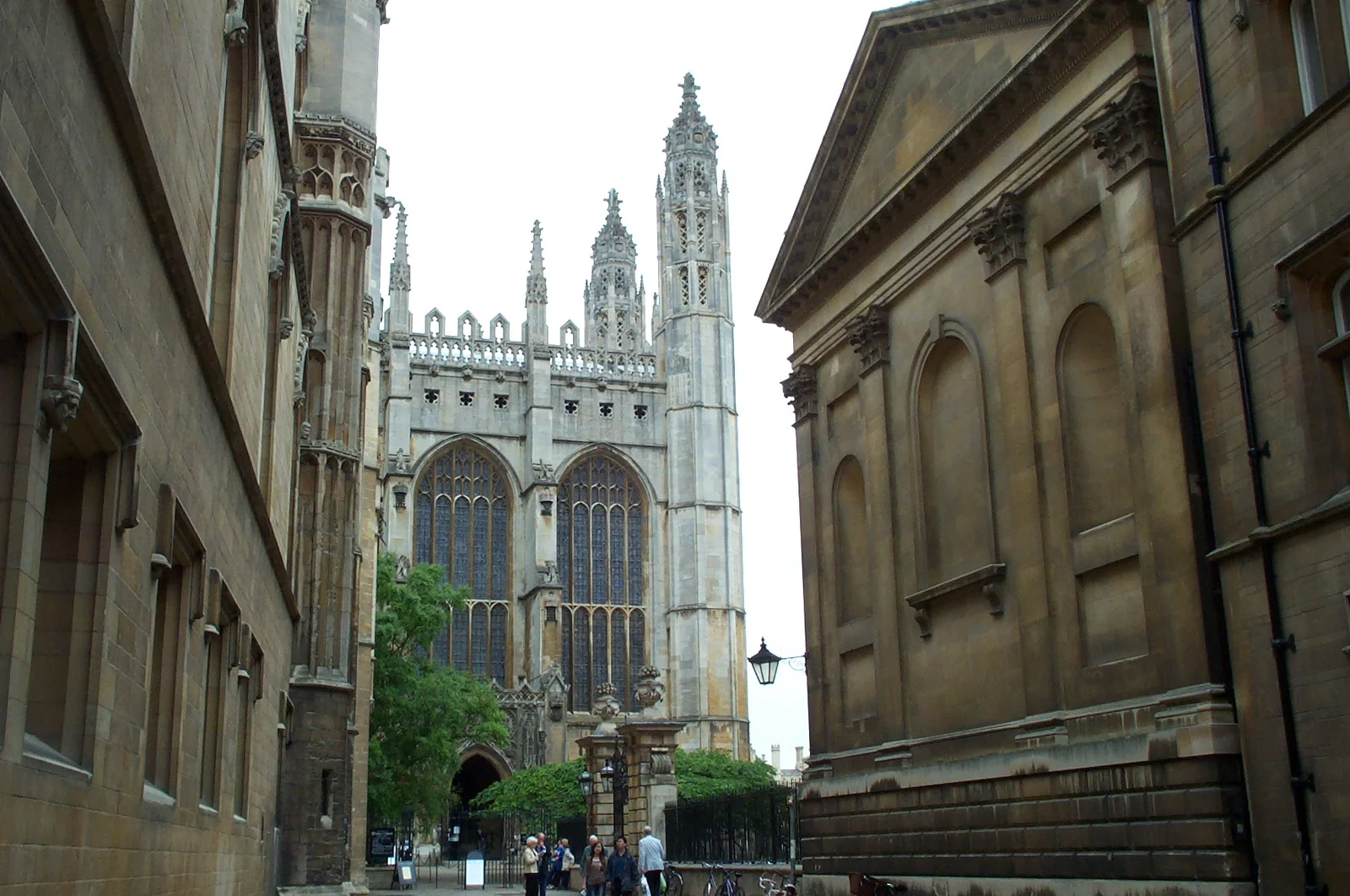
Entering King's College Chapel cost 5 pounds per person at the time. With my travel mindset then, this was exactly the kind of place where you complain that it is expensive and then still say, "Well, we are already here."
Inside King's College, there was a huge lawn. It was so large that it made people slow down, and it made me keep raising the camera again and again.
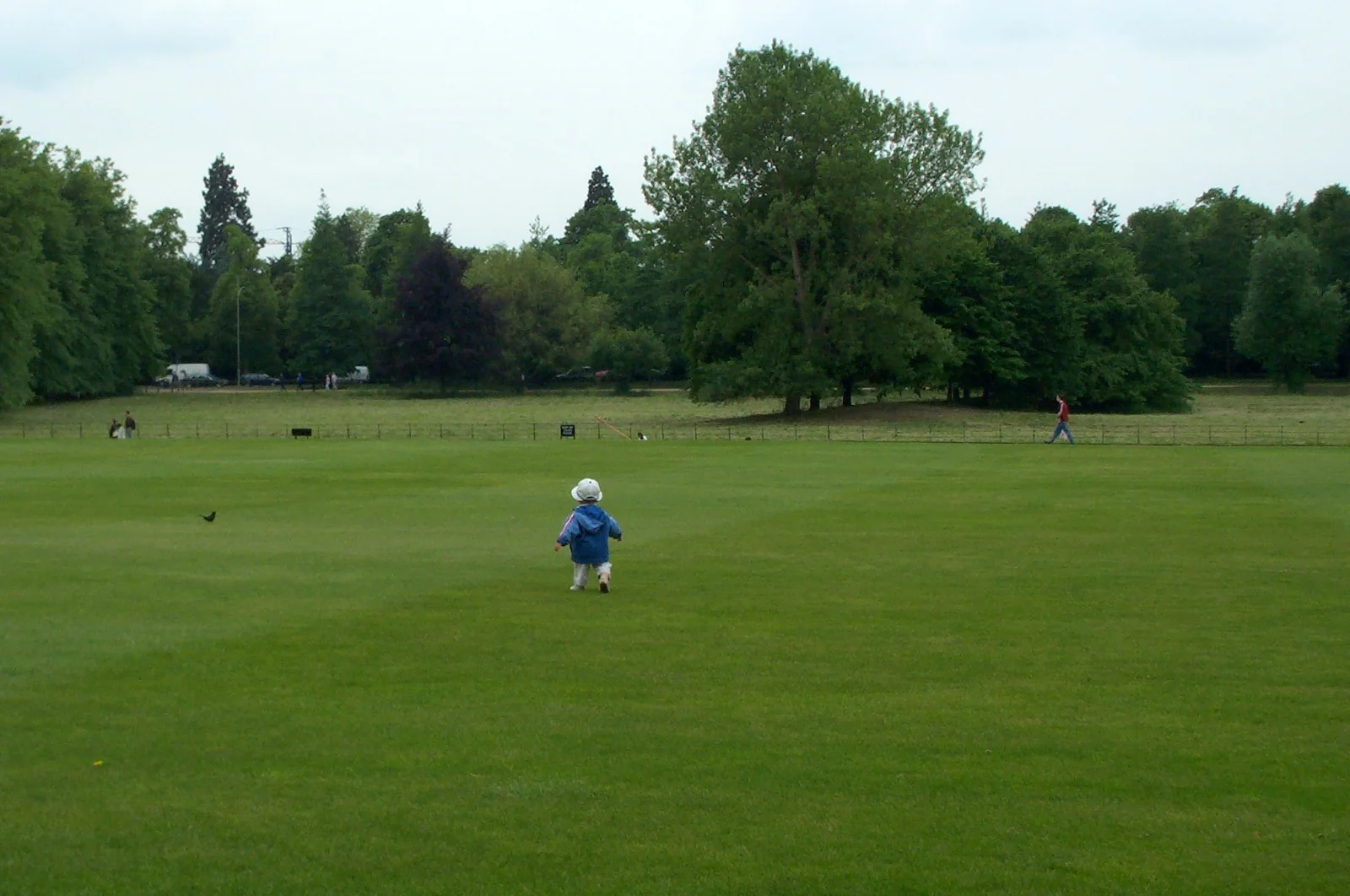
Colleges, streets, and a growing pile of snapshots
After leaving King's College, the rhythm became very Cambridge: walk a little and there is another college; walk a little more and there is another street scene. Every place seemed to have a name and a history, but a traveler's brain cannot always hold that much. So I took the photos first.
Street snapshots, Trinity College, St John's College. Looking back now, the interesting part is not how much background I remembered at the time, but the feeling that the whole city was almost one large campus.
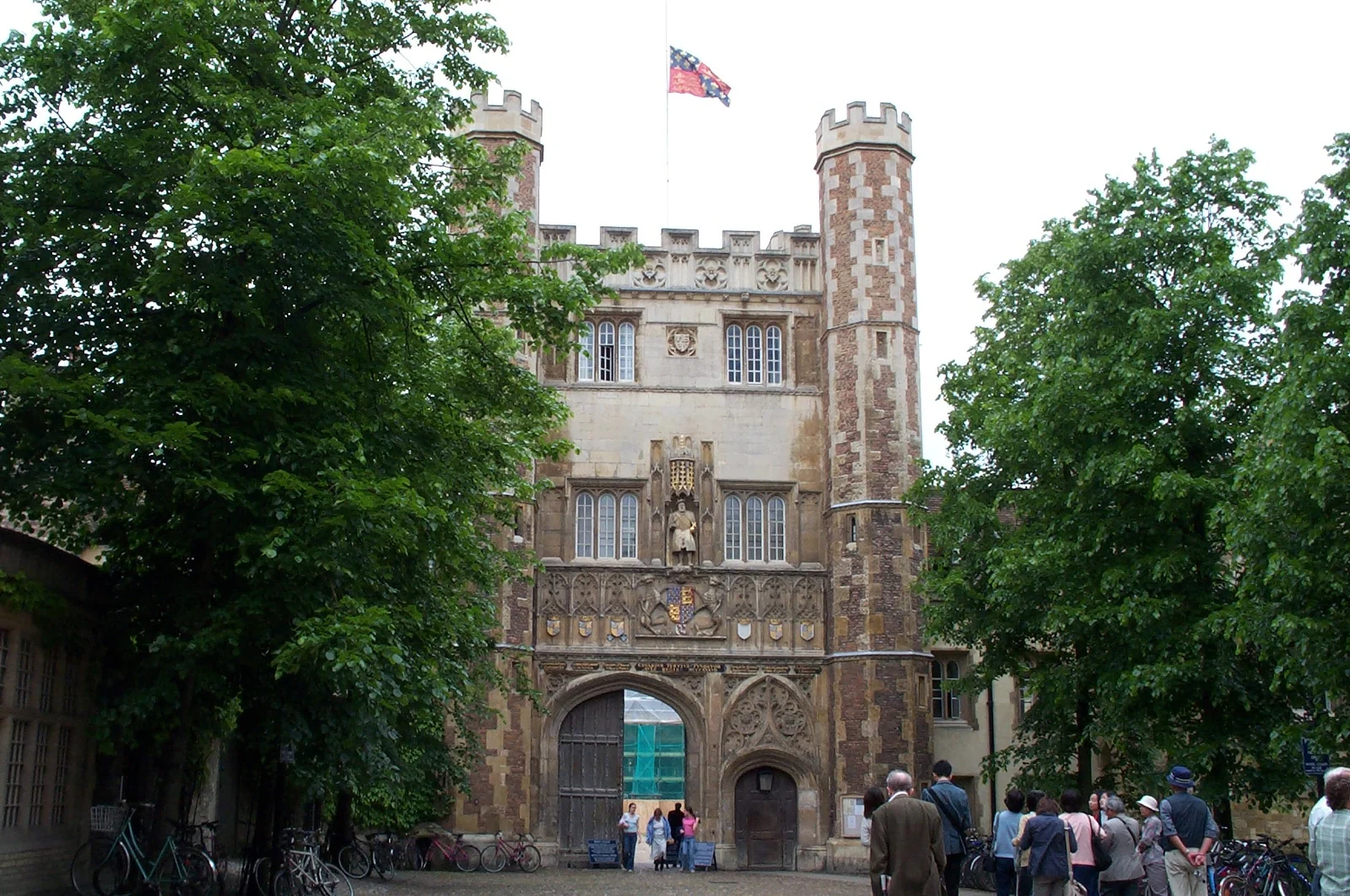
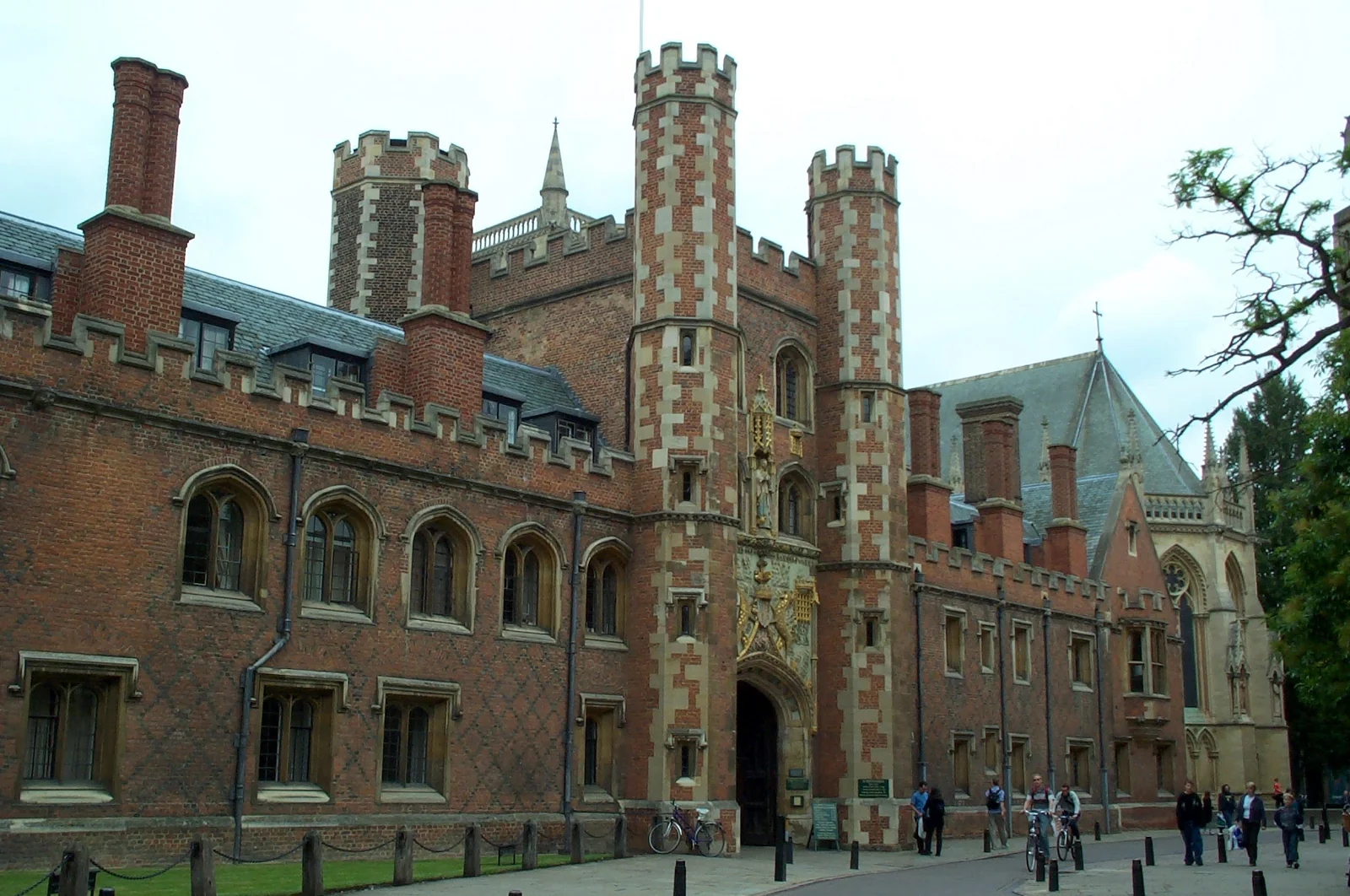
Clare Bridge and the missing quarter
Next came Clare Bridge. It is the oldest bridge in the University of Cambridge, built in 1638, while most of the other bridges were built in the 18th century. The bridge has 14 carved stone balls on its parapets. Strictly speaking, it has 13 and three-quarter balls, because one of them is missing a piece.
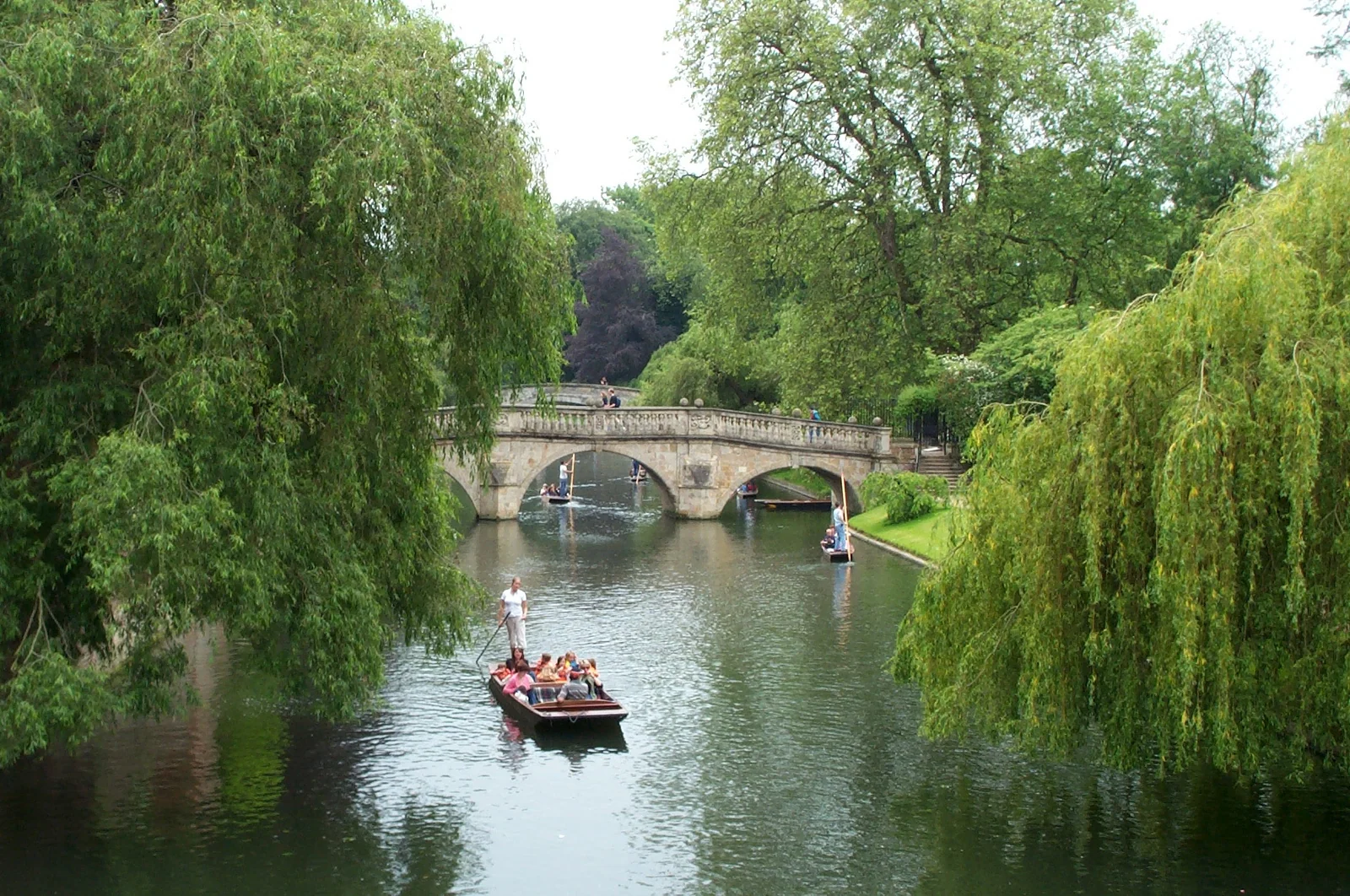
According to the story, the builder was shorted 25 pence in wages and cut off a quarter of one ball in protest. So... was this an early labor dispute? @.@'"
Punting on the River Cam, and comparing two Bridges of Sighs
Once in Cambridge, taking a punt on the River Cam was almost compulsory. Walking among the colleges was one kind of experience; seeing them from the water was another. Trees, lawns, college walls, and the punter's pole all slowed the day down.
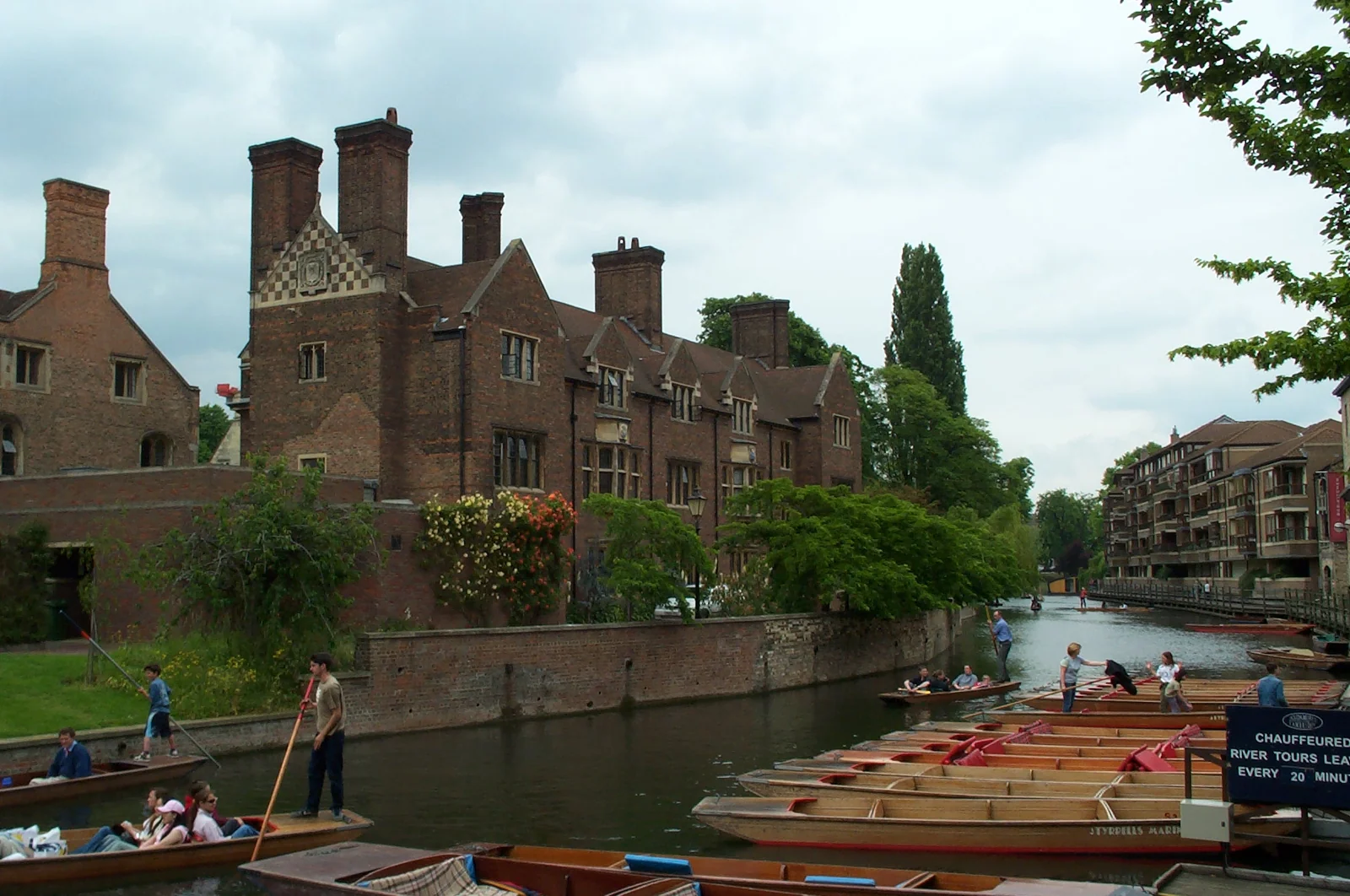
Ahead was St John's College's famous Bridge of Sighs, built in 1831 by architect Henry Hutchinson.
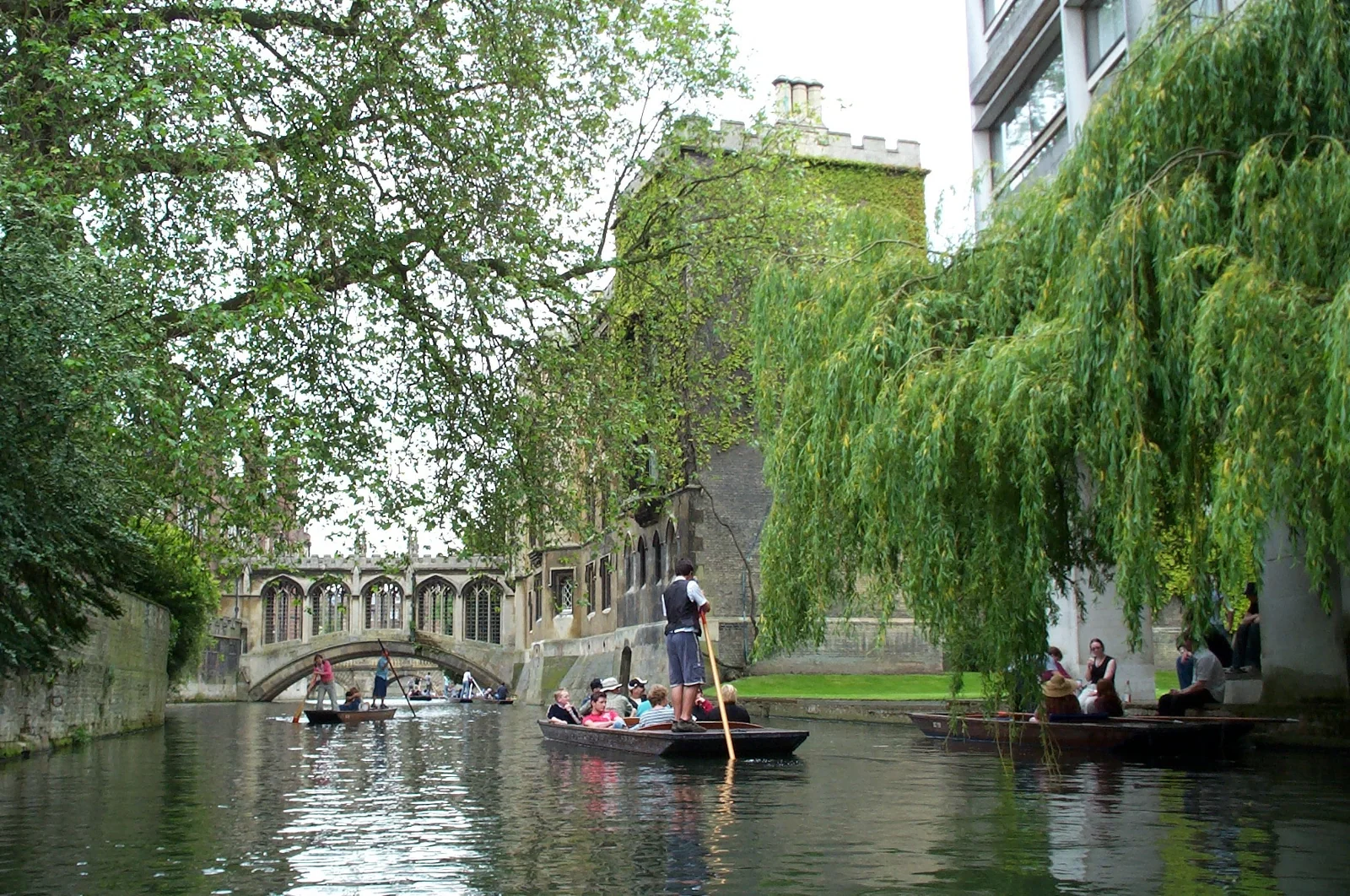
Many guidebooks say it resembles the Bridge of Sighs in Venice. But... does it? Looking at the two photos together, I still had doubts.
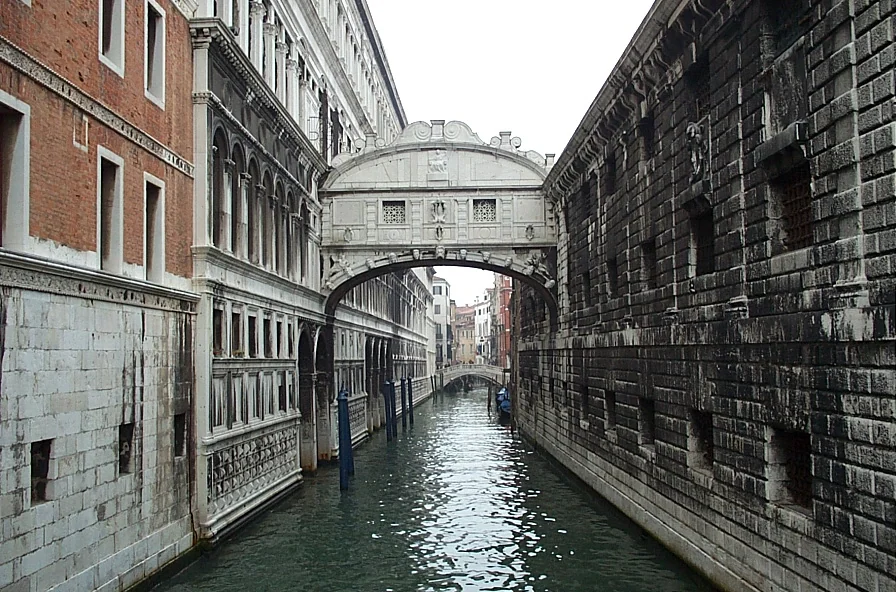
Also, the Bridge of Sighs in Venice was the bridge prisoners crossed on their way to execution. I really do not understand why a university would want a bridge with that kind of name??
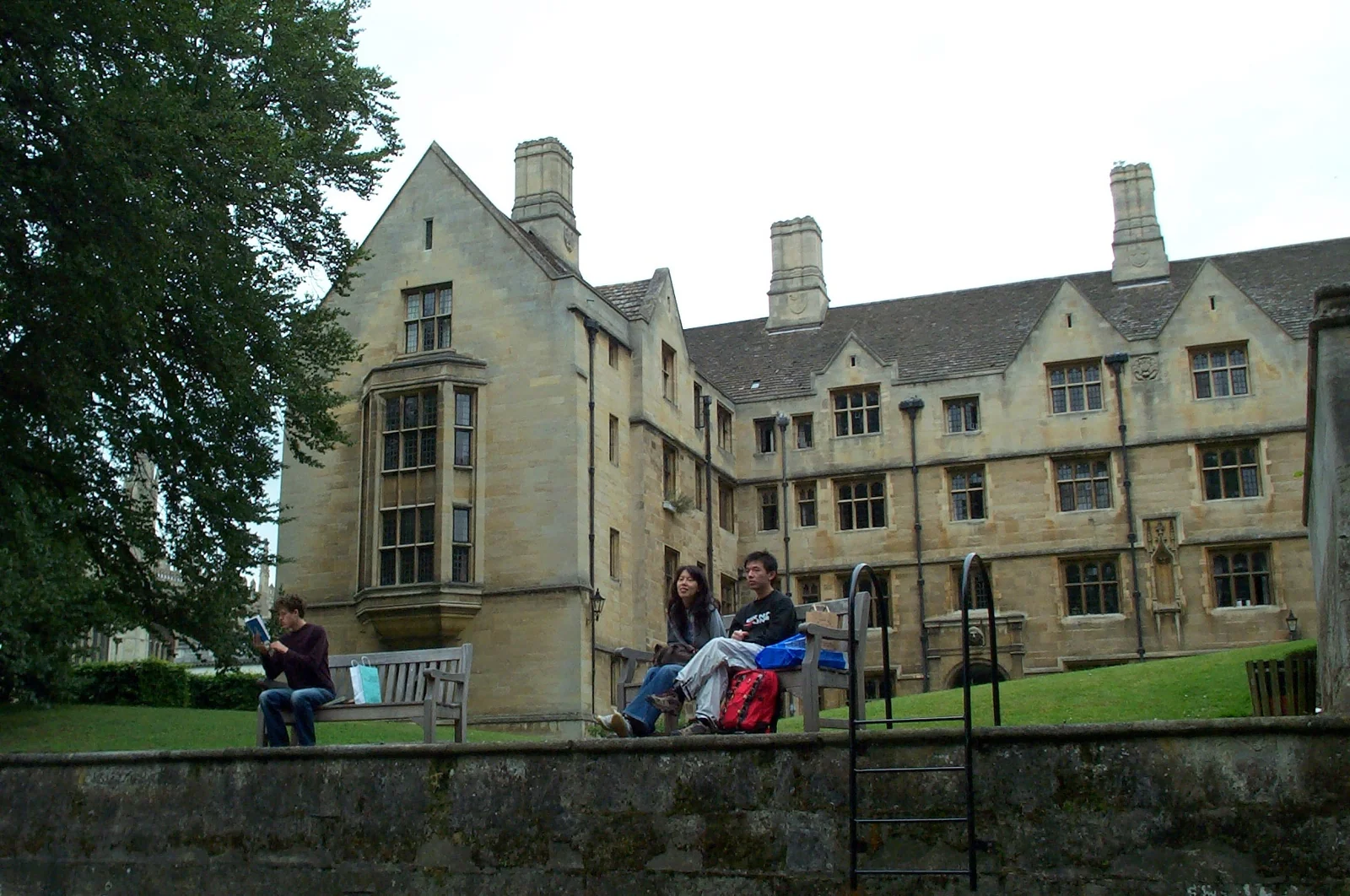
The punt continued past the great court of King's College. Seen from the river, the places we had just walked through on land became quiet, as if we were seeing the day again from a different angle. There was also a couple sitting by the river. Were they watching the boats? Negotiating? I wonder if they have broken up by now (runs away~)
Mathematical Bridge and a ticket that did not go as planned
Then came the really impressive Mathematical Bridge. Its story fits Cambridge perfectly: mathematical principles, a wooden structure, and student legends all bundled together.
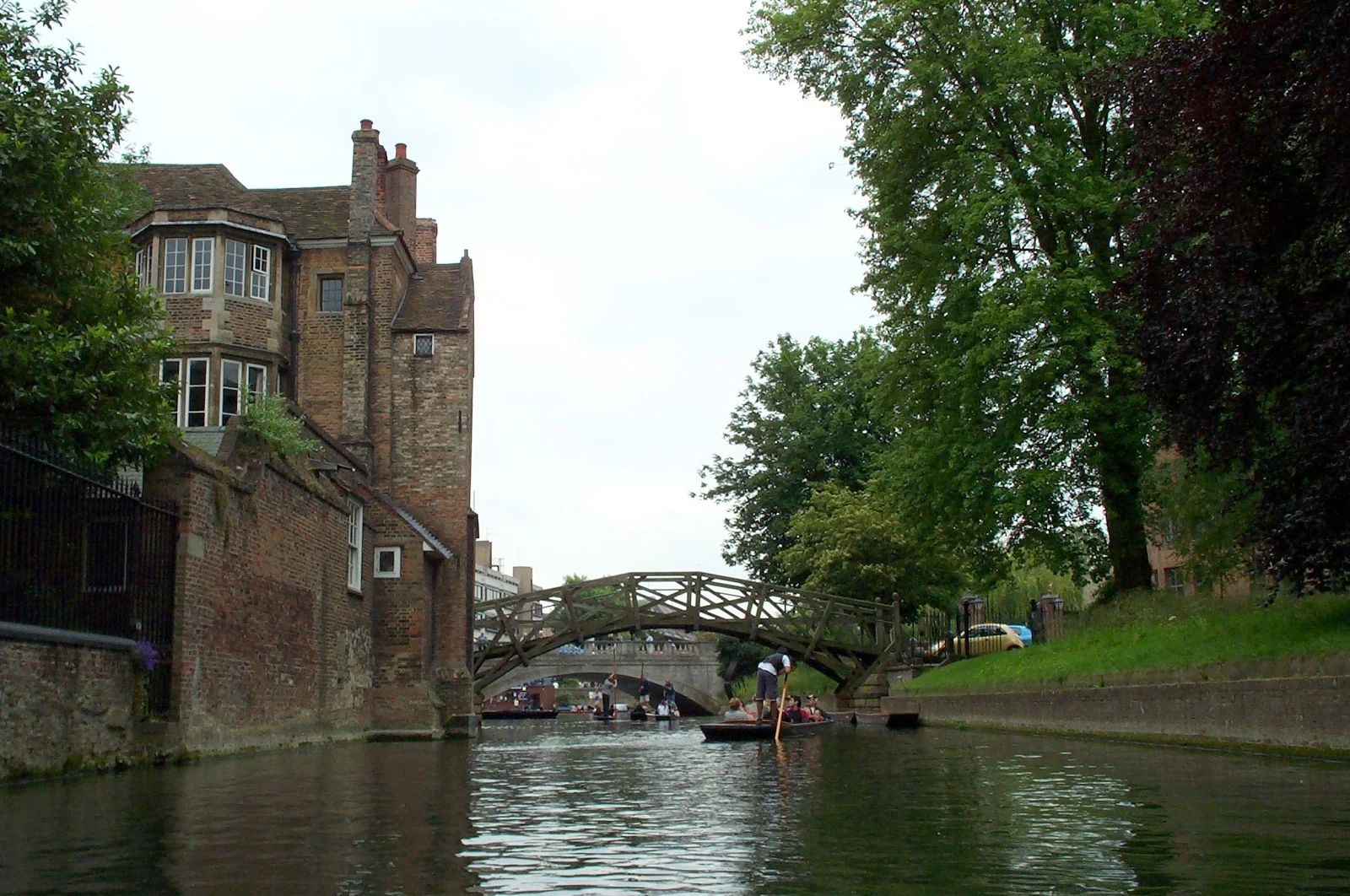
The Mathematical Bridge was designed in 1749 by William Etheridge according to mathematical principles and built by James Essex. The story goes that no nails were used in the original construction, and that some overconfident students later took it apart as a challenge. When they could not put it back together, they had to fasten it with screws...
Before boarding, I had bought a one-way ticket. I thought we would get off farther ahead and walk directly back to the station for the train to London. Unexpectedly, the punter did not stop. He turned a corner and punted us all the way back.
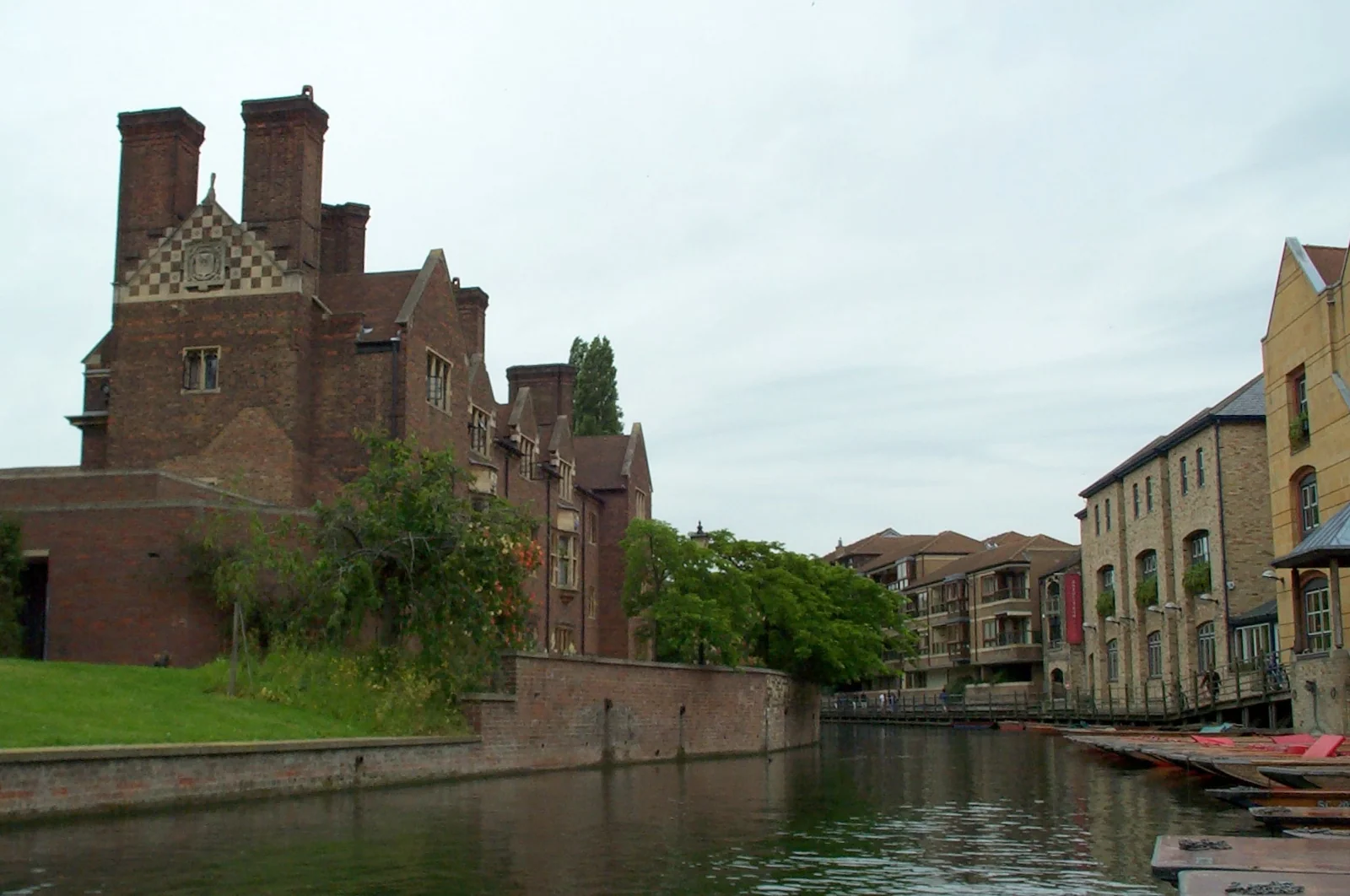
So we gained a return trip on the water, but still had to pay again for a bus back to the station @.@'"
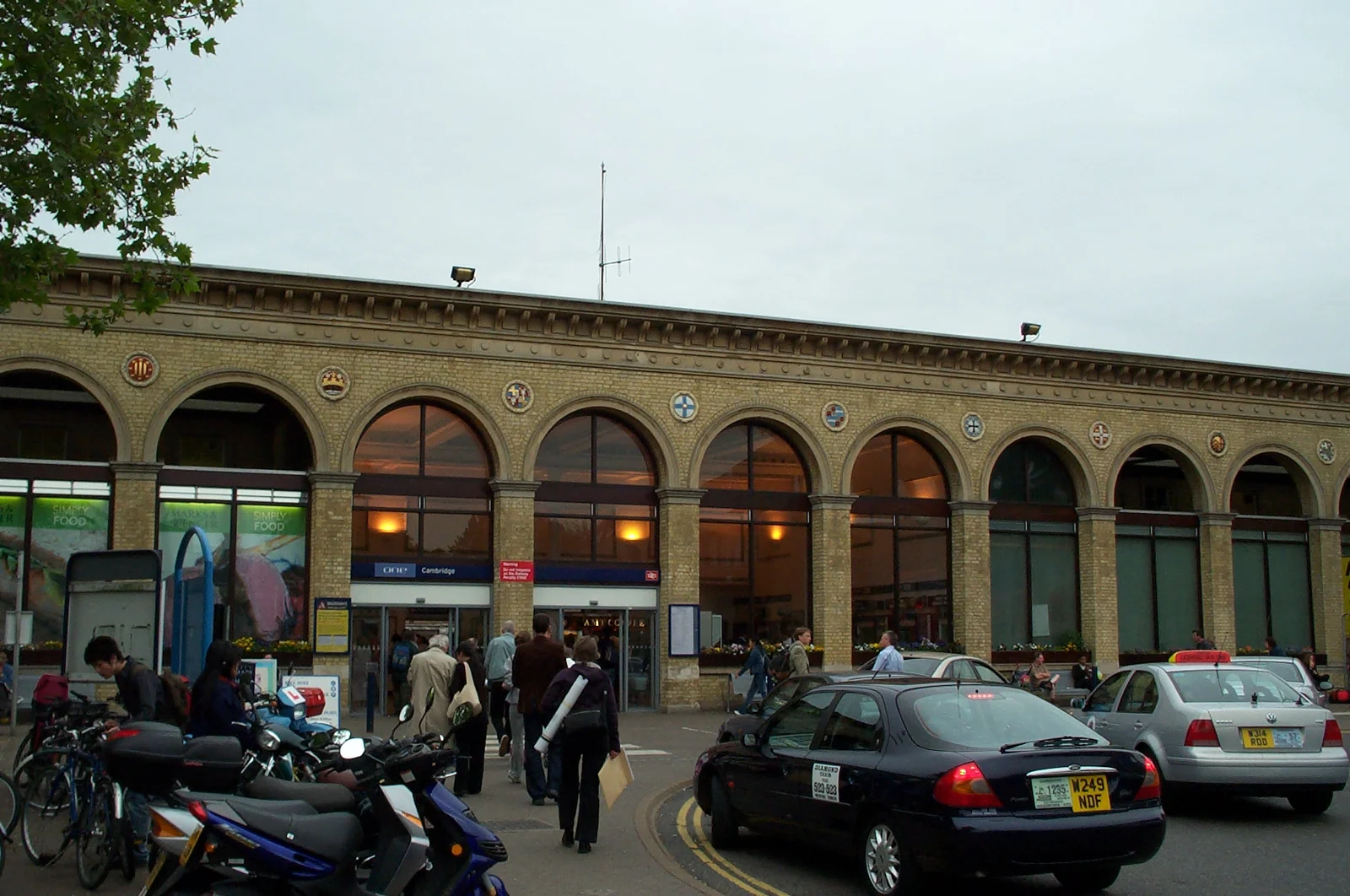
The day began with the nine-o'clock restriction at King's Cross and ended with another bus fare in front of Cambridge station. In between, there were colleges, bridges, lawns, and the River Cam. It also proved one thing again: if you want to see a lot in Europe, prepare both your legs and your spare change.
England travel diary series
England Travel Day 1: London City Tour
England Travel Day 2: Cambridge
England Travel Day 3: Bath Spa
England Travel Day 4: Brighton
England Travel Day 5: Leeds Castle
England Travel Day 6: Stratford Upon Avon
England Travel Day 7: Lake District Part I
England Travel Day 8-9: Lake District Part II
England Travel Day 10: Burberry Factory Shop
Full Photo Gallery
Previewing up to 8 album photos. Open the gallery to browse all photos.
Originally published: 2004-06-14 Revised: 2026-07-15 View the original Blogger post