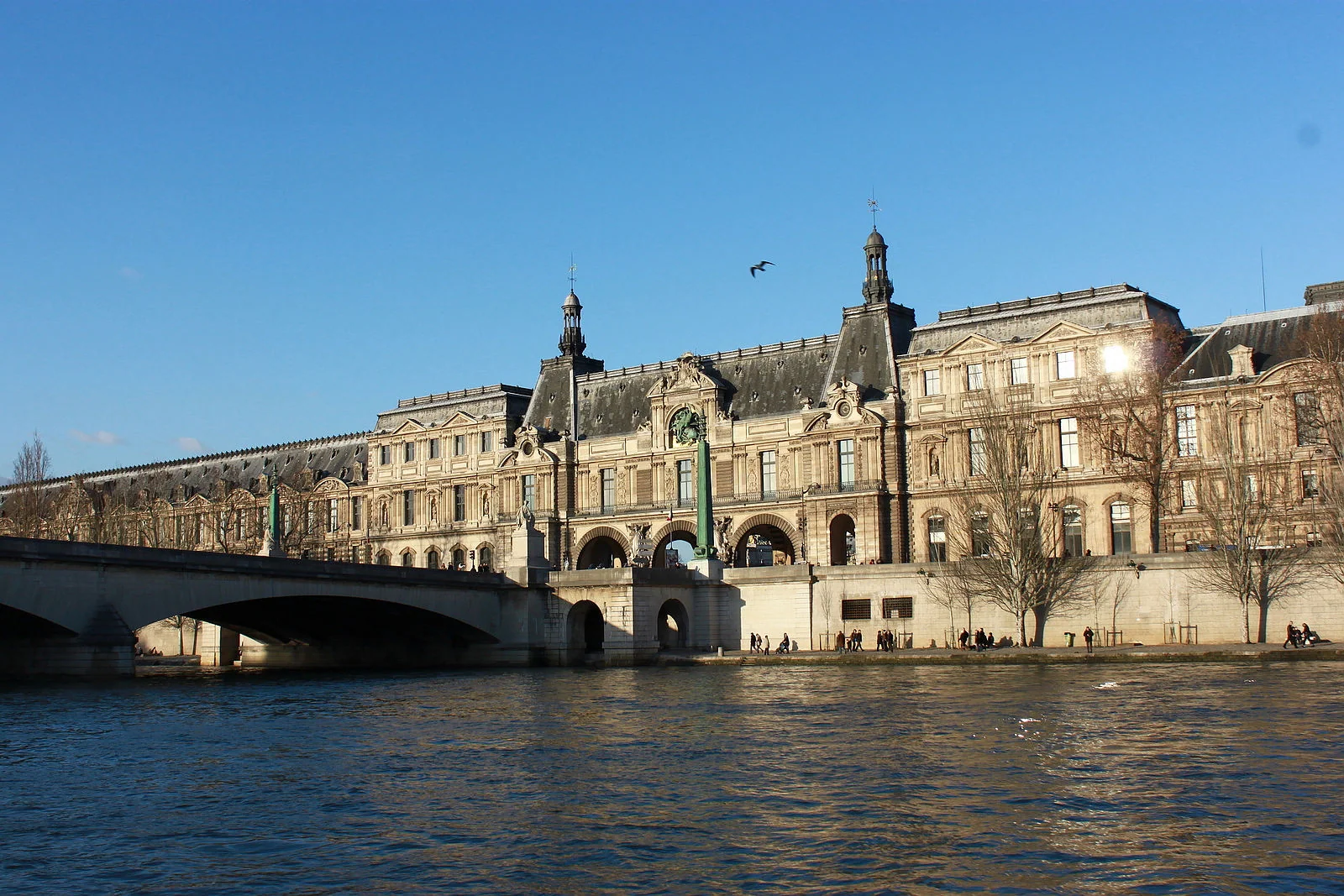
Let's go to Paris, Part 3: a Seine river cruise on a "fly boat."
This was our first full day after arriving in Paris. After a 13-hour flight and the time difference, even with bright sunshine outside, it felt smarter not to plan too much. The goal for the day was simple: get on a boat, drift along the Seine, and look at Paris from the water ^.^
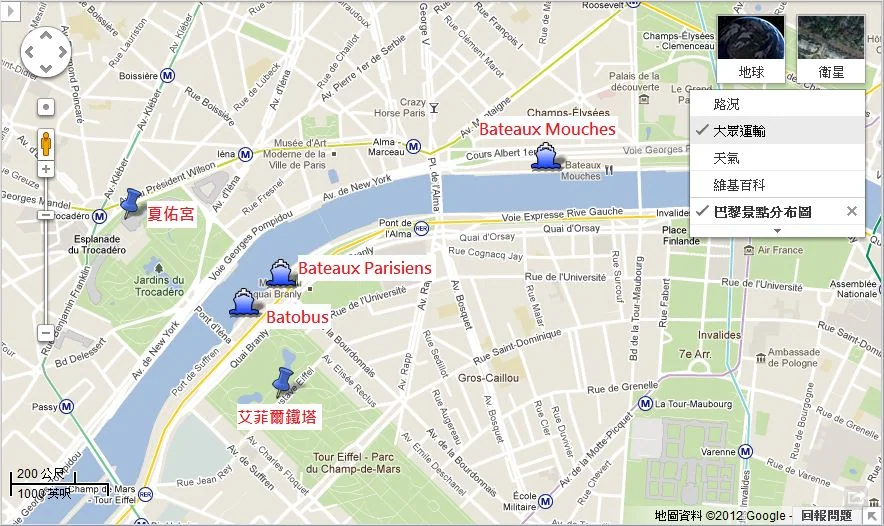
The boat we first had in mind was the famous Bateaux Mouches. The earliest Seine sightseeing boats began around the 1867 World Exposition in Paris.
At that time, the Paris city government commissioned boats from an area south of Lyon called La Mouche, which literally means "fly." Those boats were originally for VIP guests visiting the World Exposition, not ordinary tourists.
In 1950, a company simply named Bateaux Mouches started offering river cruises to regular visitors. As part of its advertising, the company jokingly claimed that its owner was named Jean-Sébastien Mouche, and that is how the "fly boat" name spread. (Source from the original post: An Duo in Paris)
AI-added context: The official Bateaux Mouches company history says Compagnie des Bateaux-Mouches was founded by Jean Bruel in 1949 and began with a steam boat left from the 1900 Universal Exhibition. Since that differs slightly from the travel research quoted in the original post, I am keeping it separate here. (Bateaux Mouches official website)
At that time, there were three main boat companies along the Seine. Take Metro line M9 to Alma Marceau, walk ahead until you see Pont de l'Alma, then turn left at the bridge and walk about 150 meters to reach the Bateaux Mouches ticket office.
Bateaux Mouches
One ride was 10 euros for adults, 5 euros for children under 12, and free for children under 4. Lunch and dinner cruises were also available, starting from 50 euros for lunch and 95 euros for dinner.
If you came out of Alma Marceau, walked straight across the bridge, and turned right, you could find the other two companies:
Bateaux Parisiens
One ride was 11 euros for adults, 5 euros for children under 12, and free for children under 3. Meal cruises started from 54 euros for lunch and 70 euros for dinner, with some off-season discounts.
Batobus
Batobus had 6 stops along the Seine. You could ride without limits on the number of trips or stops. A one-day ticket was 15 euros for adults, 7 euros for those under 16, and 9 euros with a local student card or NaviGo card.
Those were the prices I found or saw back then, so they definitely need to be checked again for a current trip. But for a family still adjusting to the time difference on day one, sitting down and letting the city come to us sounded very appealing.
As soon as we came out of the metro station, we saw the Eiffel Tower ^.^
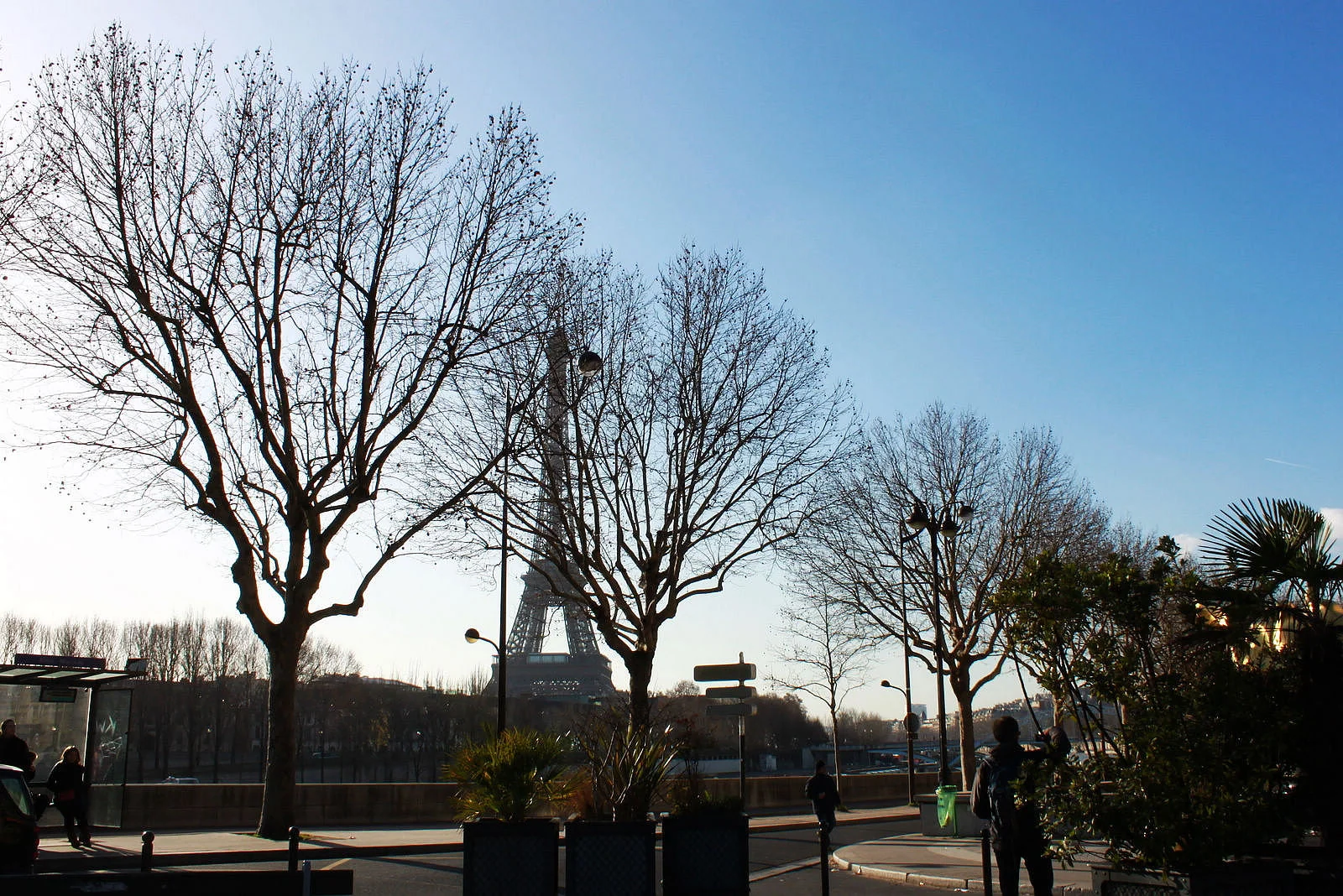
We slowly made our way toward Bateaux Mouches, walking and playing along the way. That first-day-in-Paris feeling makes even a short walk take longer, because everything on the street seems worth stopping for.
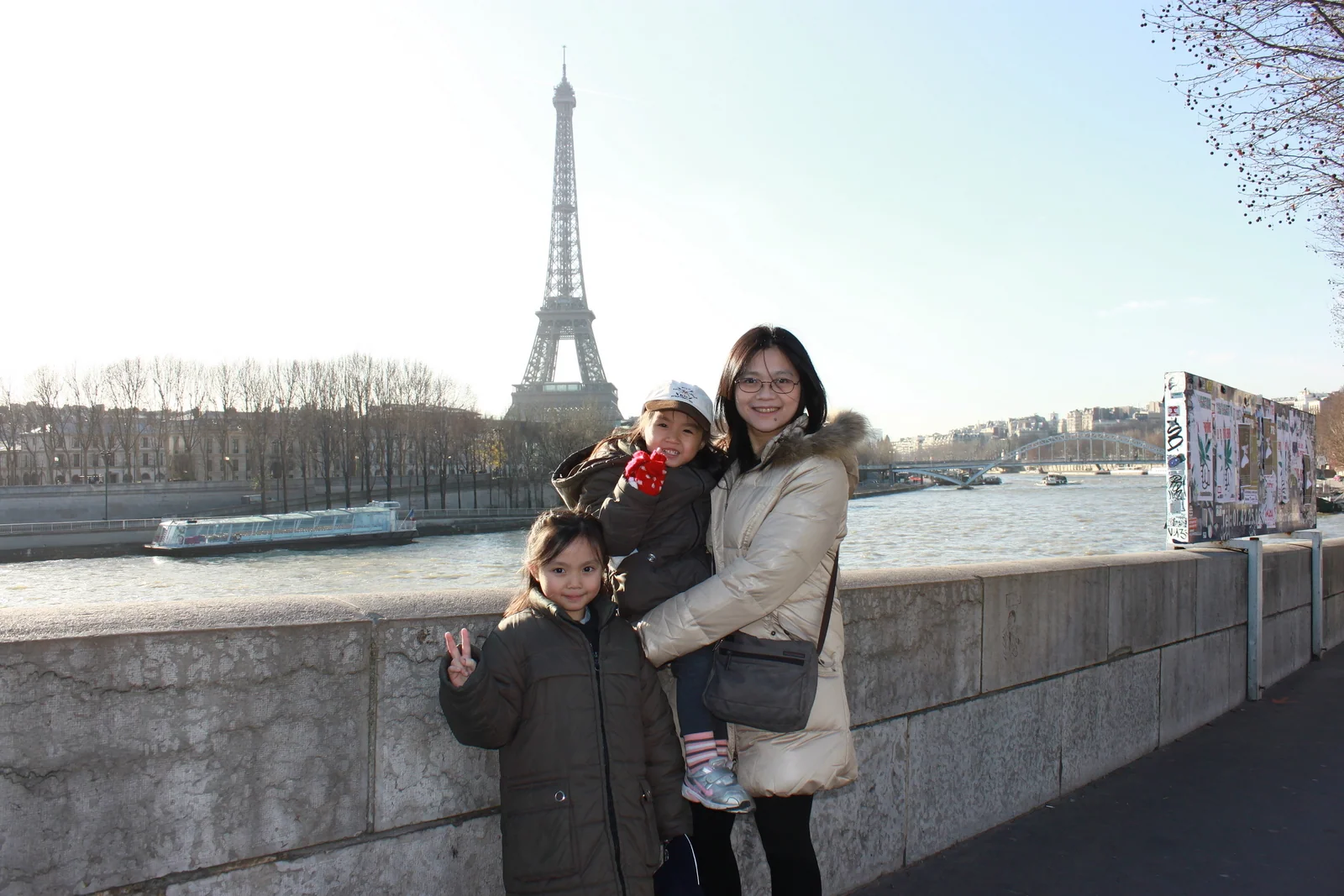
And then we watched the last lunch cruise of the noon service sail away right in front of us T.T
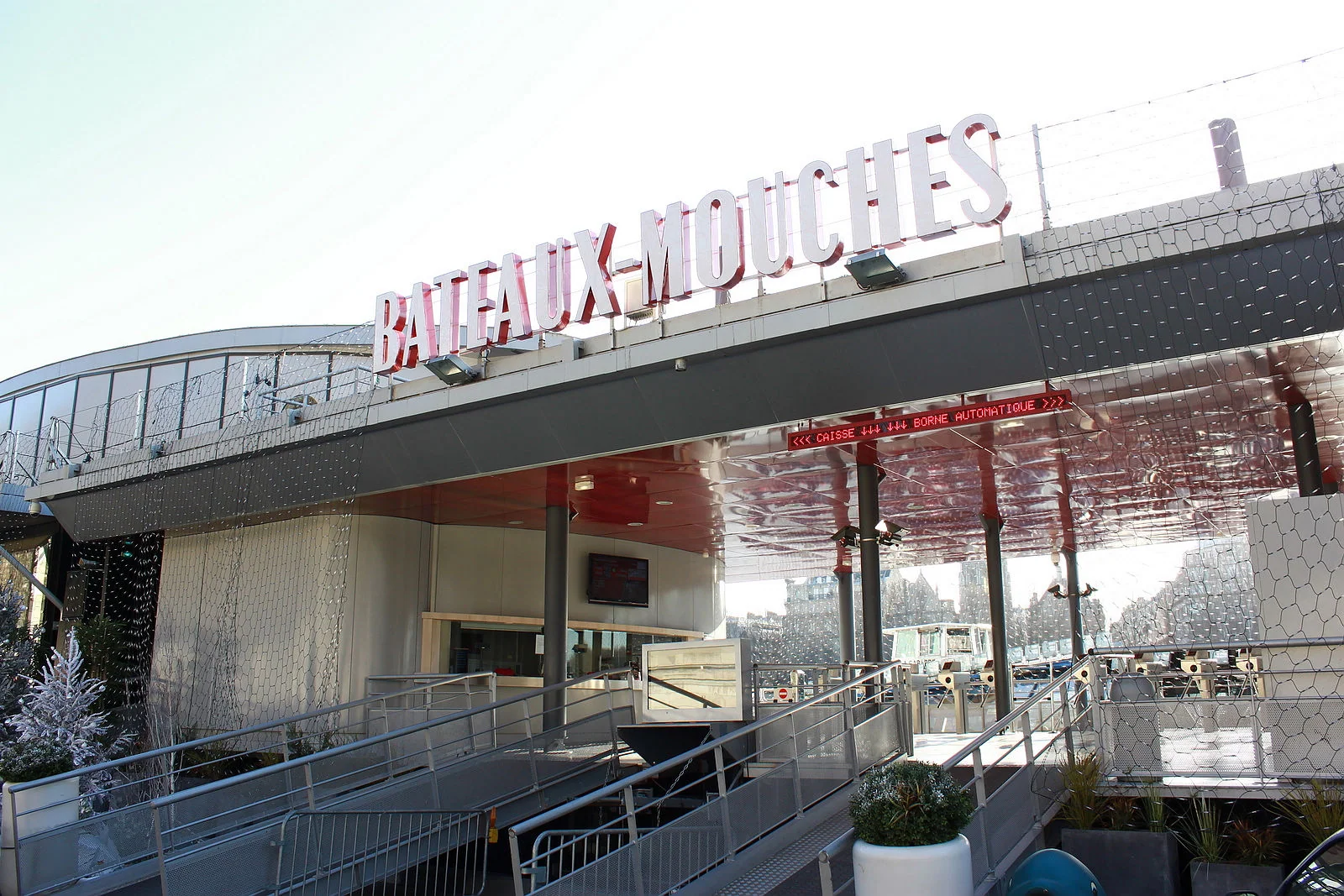
So we wandered back toward the street to find something to eat first ~.~'"
By then, we really were hungry. We picked a random restaurant and went in.
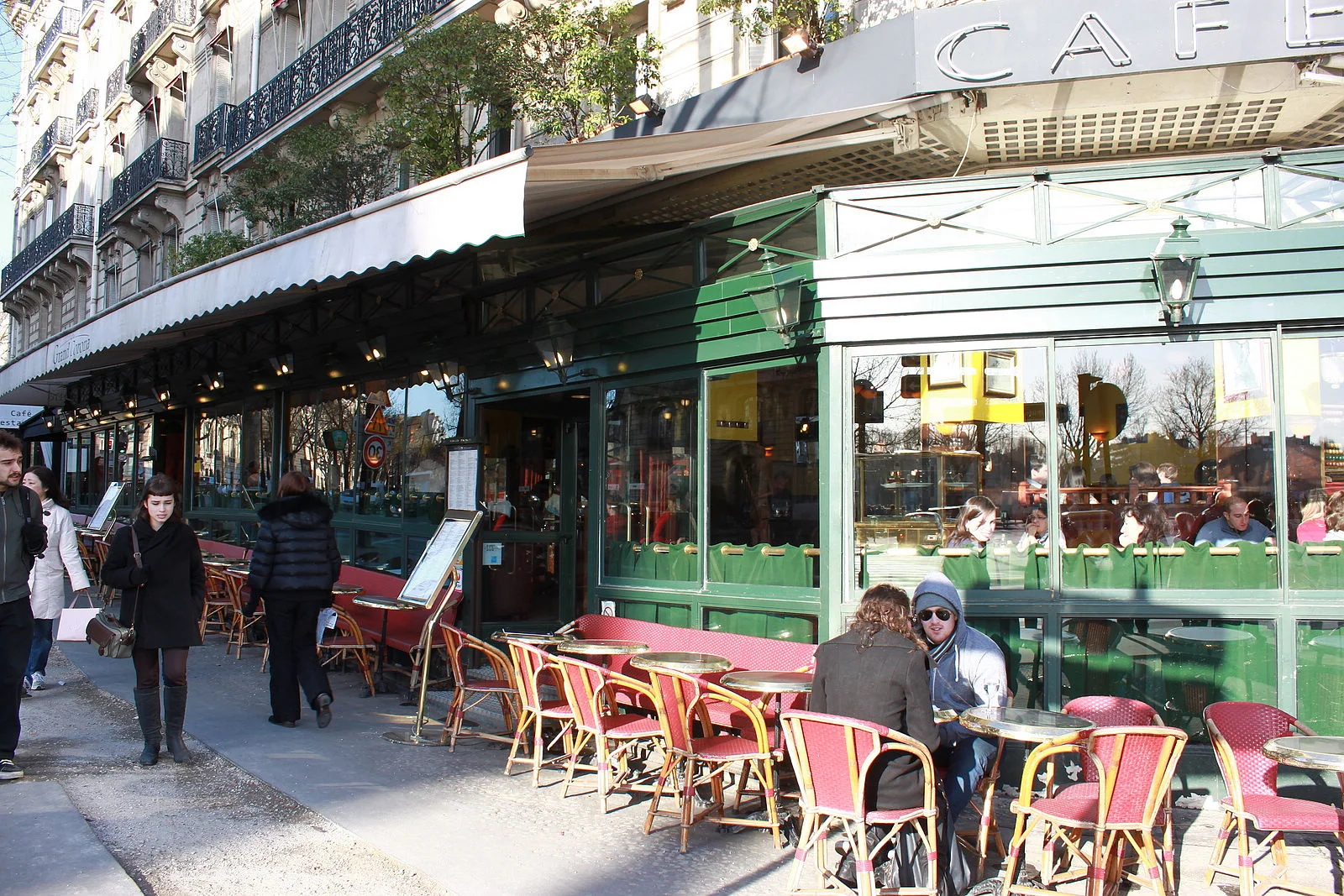
After entering, we chose a sunny window seat. The server brought over a menu, and the prices looked nothing like what we had seen outside (sweat)...
I was just about to summon the courage to "spend money like it is not money"...
But the indoor heating was so strong that we decided to move to a seat away from the sun. The moment the server saw us stand up, he immediately brought over a different menu, this time with the same prices as the one outside @.@'"
So yes, in Paris you really do need to watch out for tourist traps...
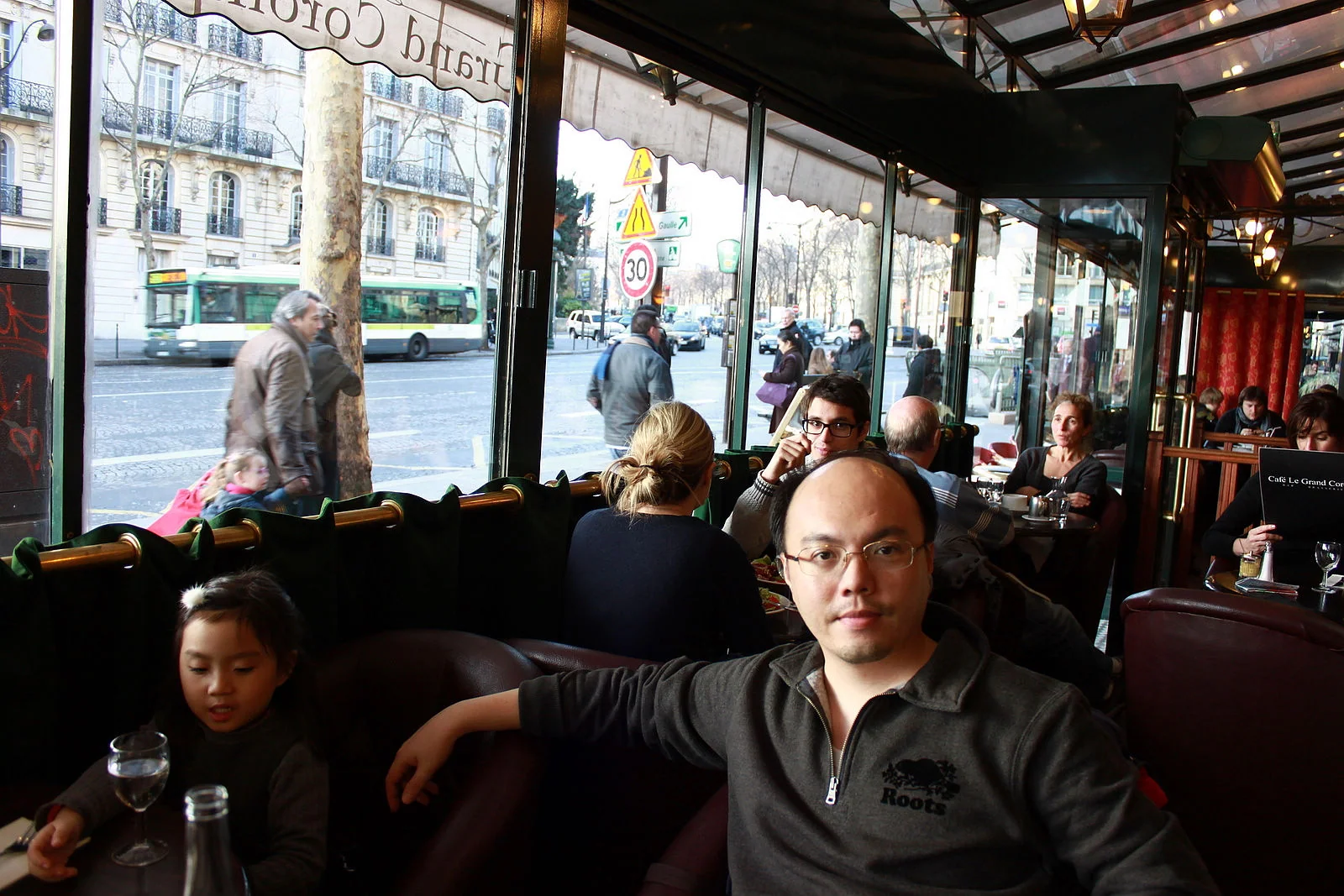
The children's meal was 10 euros. The bottle of water next to it cost 7 euros, so we still got hit anyway ~.~'"
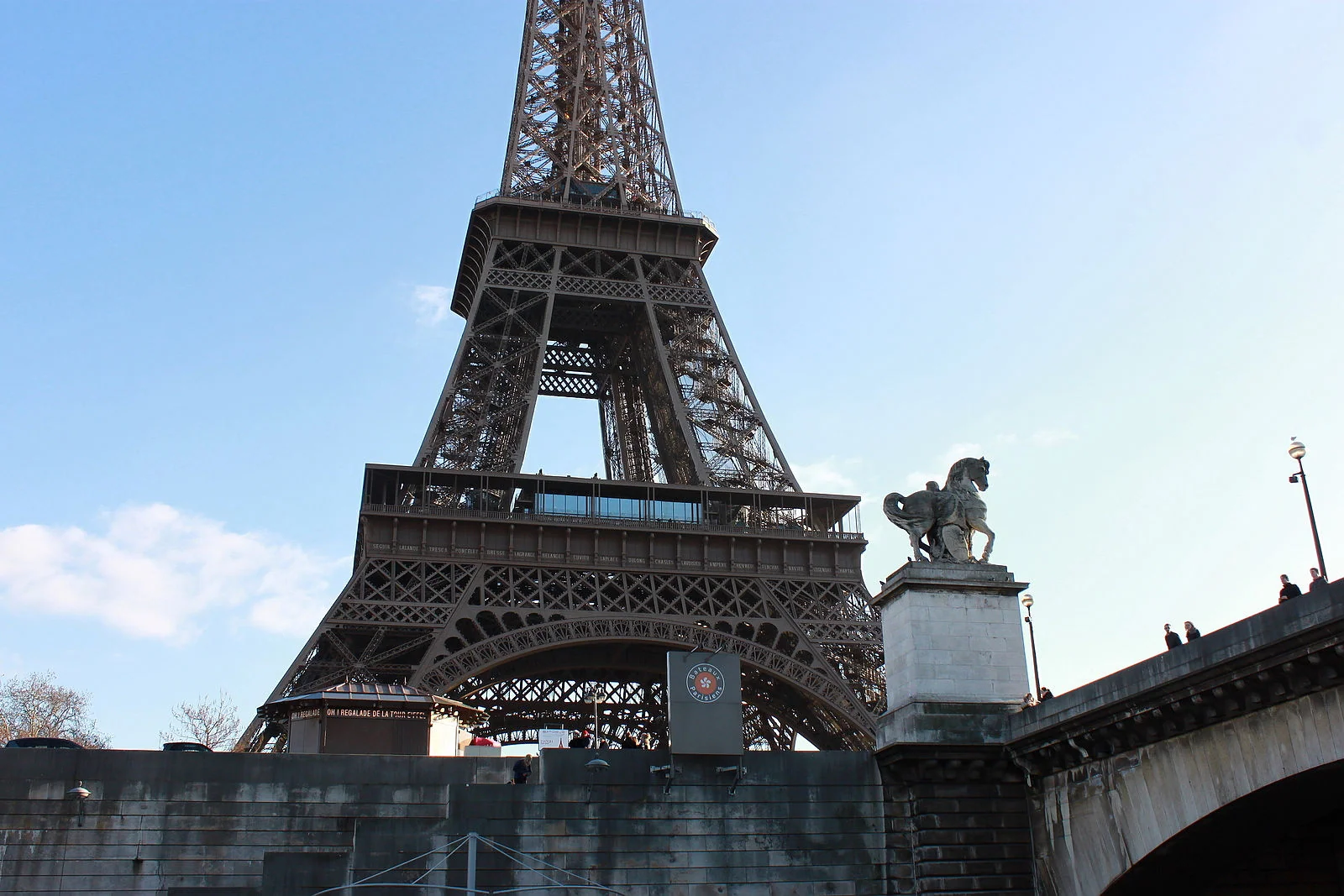
After lunch, we decided to try a different boat company and walked toward the Eiffel Tower.
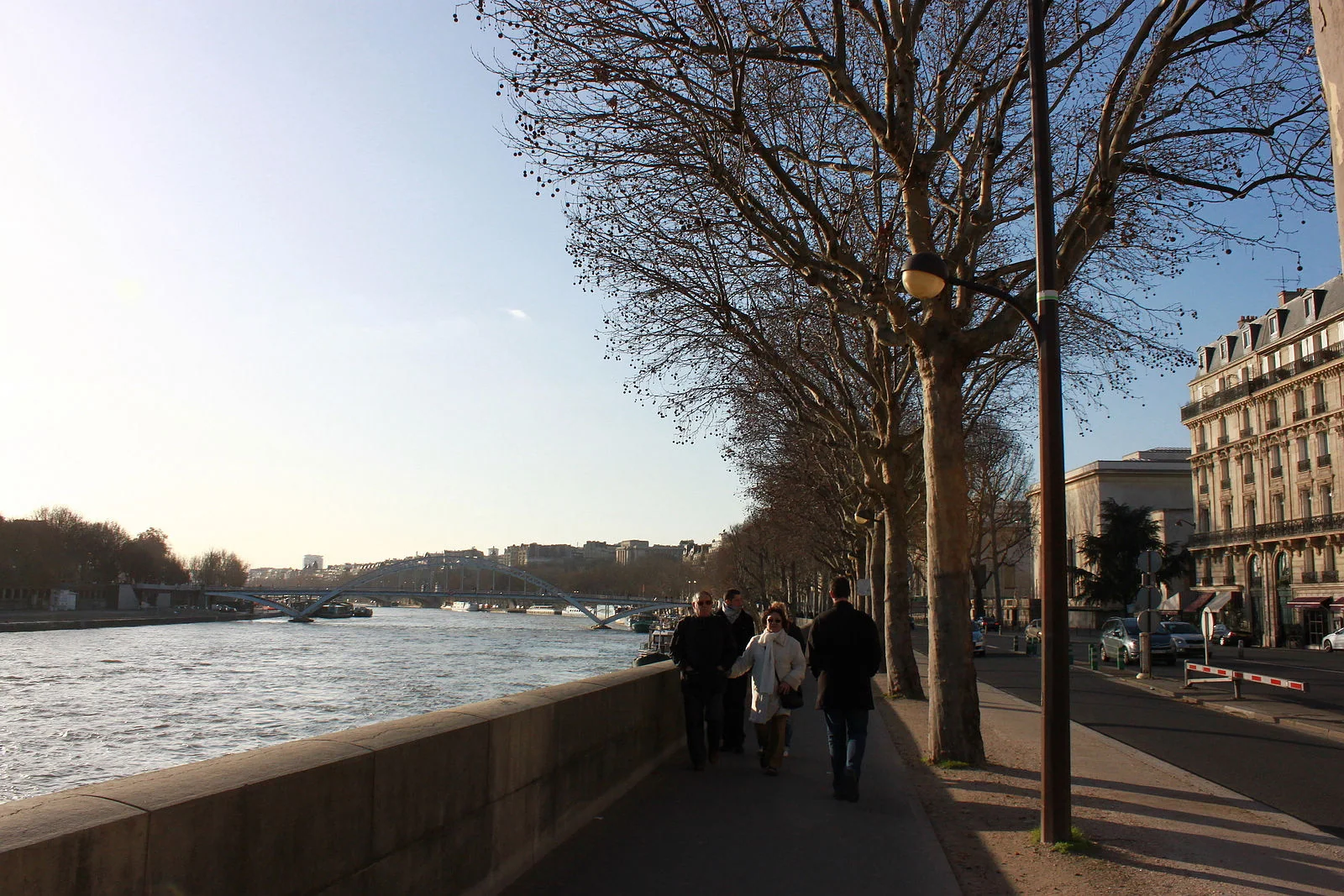
In Paris, it feels like you see some kind of museum every few steps. That is one of the fun things about walking along the Seine: even when you are just looking for a pier, you keep passing names that sound like they came from a textbook.
After crossing the bridge, we could see the other two boat companies.
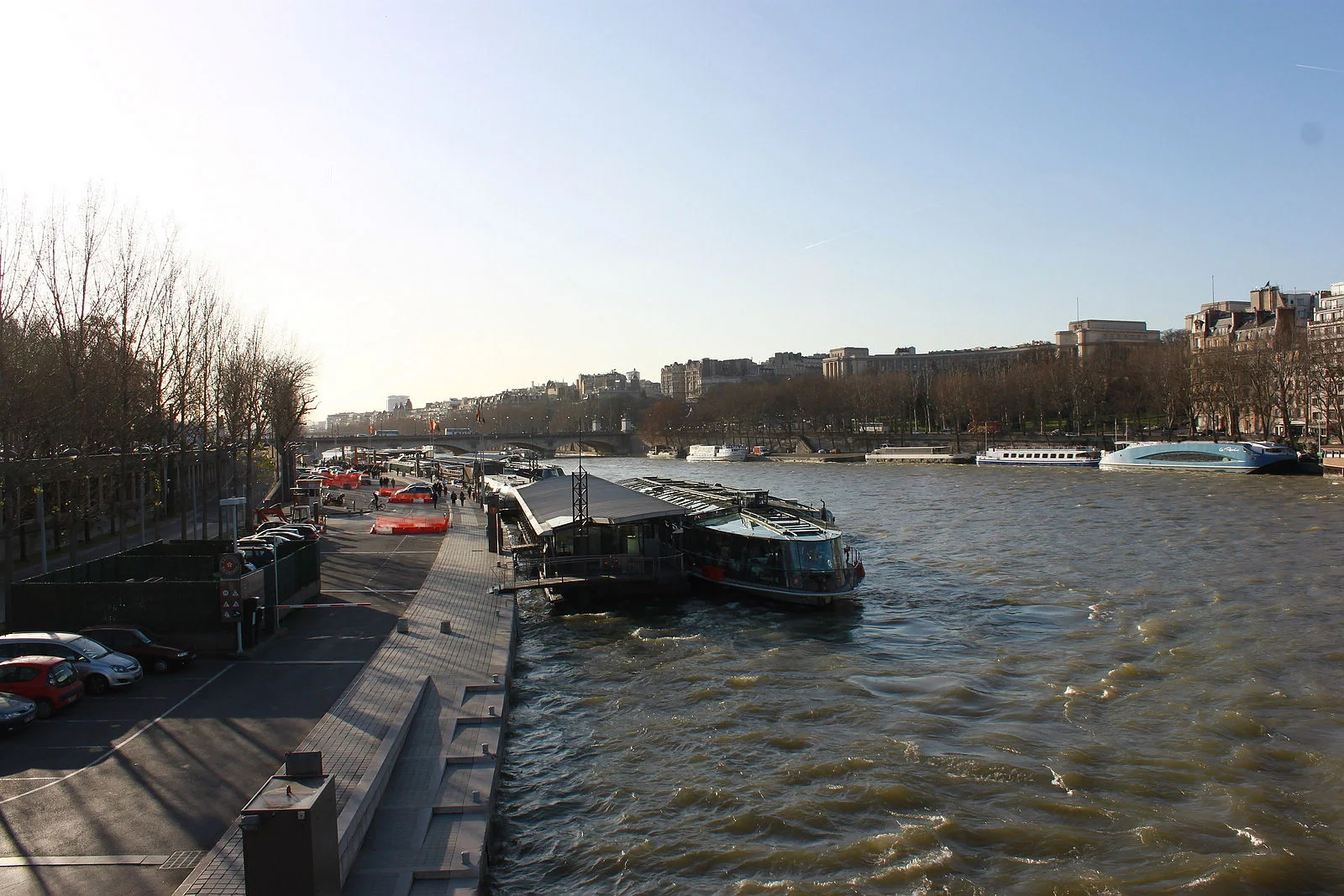
In the end, we chose Batobus. The plan was to get off at Notre-Dame later if we still had energy, and if not, just take the metro back to the hotel.
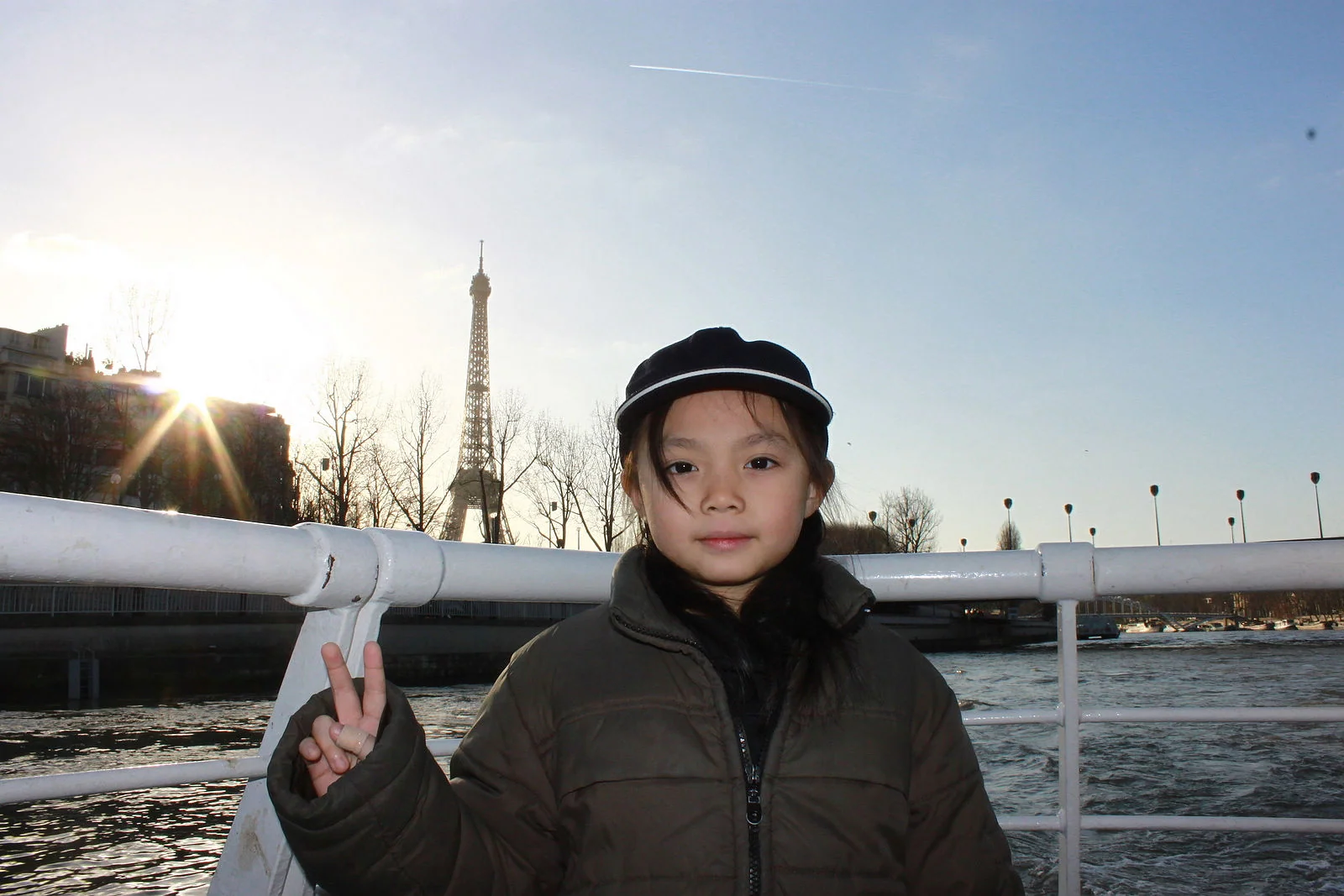
The rear deck was not very spacious. The photo was not great either, but at least it proved we were there XD
Once the boat started moving, Paris along the Seine appeared in connected scenes. From land, each stop feels like one separate sight. From the water, the whole city seems to slide by slowly.
Pont Alexandre III is an arch bridge over the Seine, connecting the Champs-Elysees area on the Right Bank with the Invalides and Eiffel Tower area on the Left Bank. It is widely considered one of the most ornate bridges in Paris. (Source from the original post: Wikipedia)
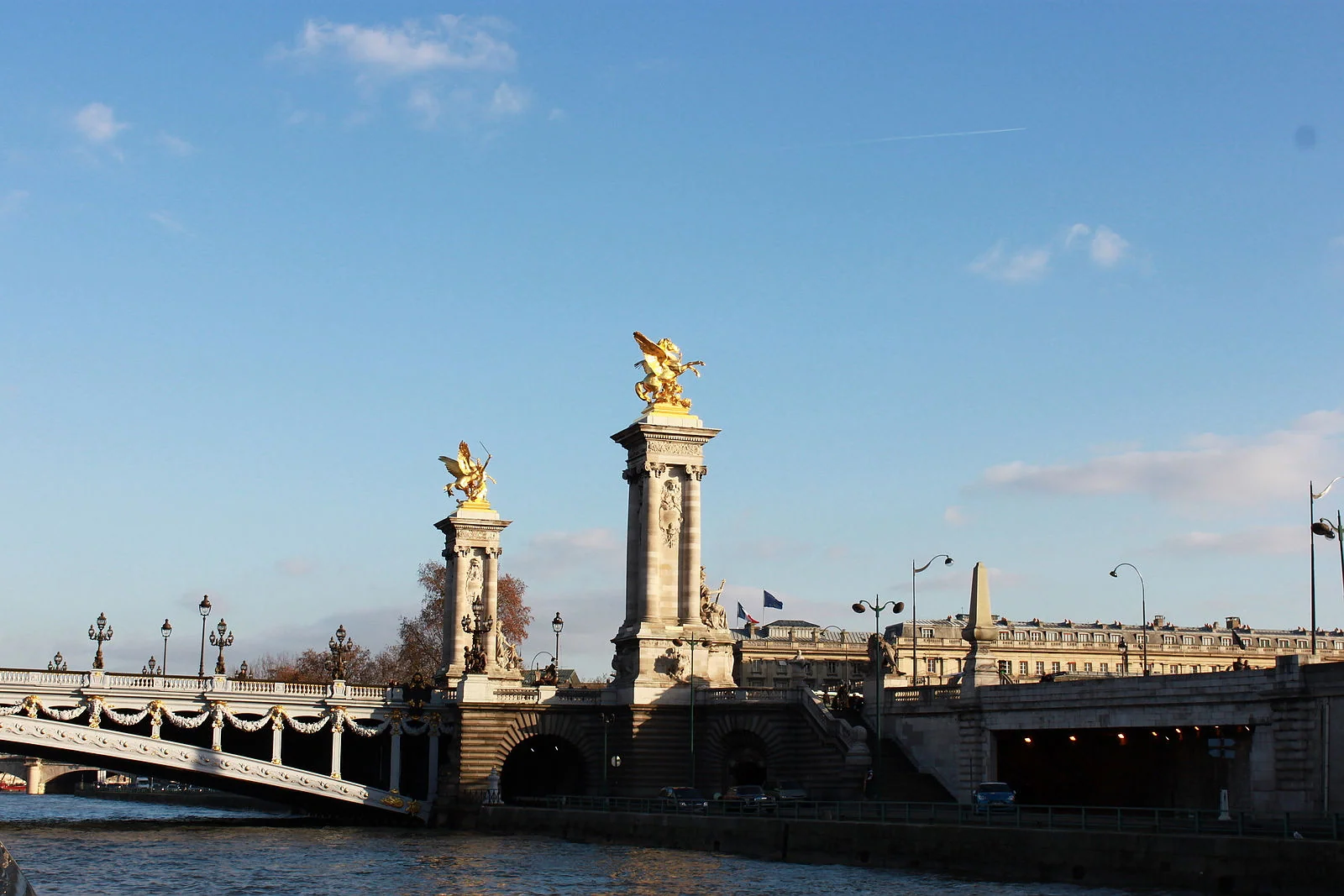
The bridge is decorated with Art Nouveau lamps, angels, nymphs, and winged horses at both ends. It was built between 1896 and 1900 and named after Tsar Alexander III of Russia, who concluded the Franco-Russian Alliance in 1892. His son Nicholas II laid the foundation stone in October 1896. The style of the bridge also matches the Grand Palais on the Right Bank.
AI-added context: The Paris tourism office also describes Pont Alexandre III as a bridge inaugurated for the 1900 Universal Exhibition and listed as a historic monument; it was part of the riverfront infrastructure linking the exposition areas on both banks. (Paris je t'aime - Office de Tourisme de Paris)
That building was the Musee d'Orsay.
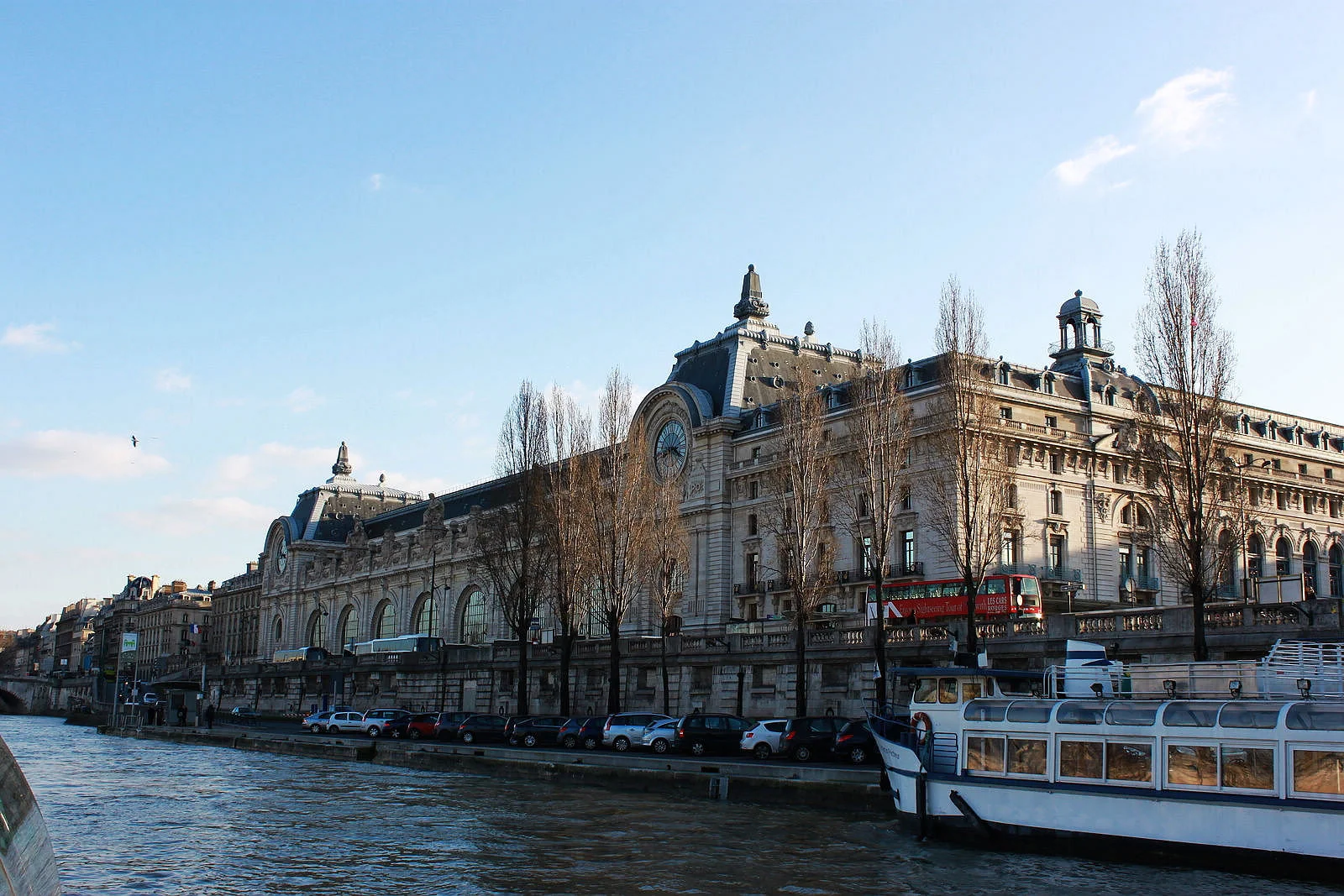
The Musee d'Orsay is a modern art museum in Paris, mainly collecting paintings, sculpture, furniture, and photography from 1848 to 1914.
The museum sits on the Left Bank of the Seine, diagonally across from the Louvre and across the river from the Tuileries Garden. The building was originally a railway station built in 1900: Gare d'Orsay, the Paris terminus for the railway to Orleans.
In 1939, the railway service into Paris was discontinued and the station closed. It was listed as a protected historic building in 1978 and converted into a museum in 1986. Collections from the Louvre, the Jeu de Paume, and the National Museum of Modern Art at the Pompidou Centre were brought together here.
The great hall still preserves the old station clock. The Musee d'Orsay is closed on Mondays. (Source from the original post: Wikipedia)
AI-added context: The official Musee d'Orsay history says Gare d'Orsay served as the Paris terminus for lines to southwest France from 1900 to 1939. As trains became longer and more modern, its platforms became too short, and after 1939 it was reduced to suburban service before later becoming a museum. (Musee d'Orsay official history)
Next, we entered the Louvre area. Passing this part by boat was easy: we did not have to keep walking on the ground, but we could still start to understand where these major landmarks sit in relation to each other.
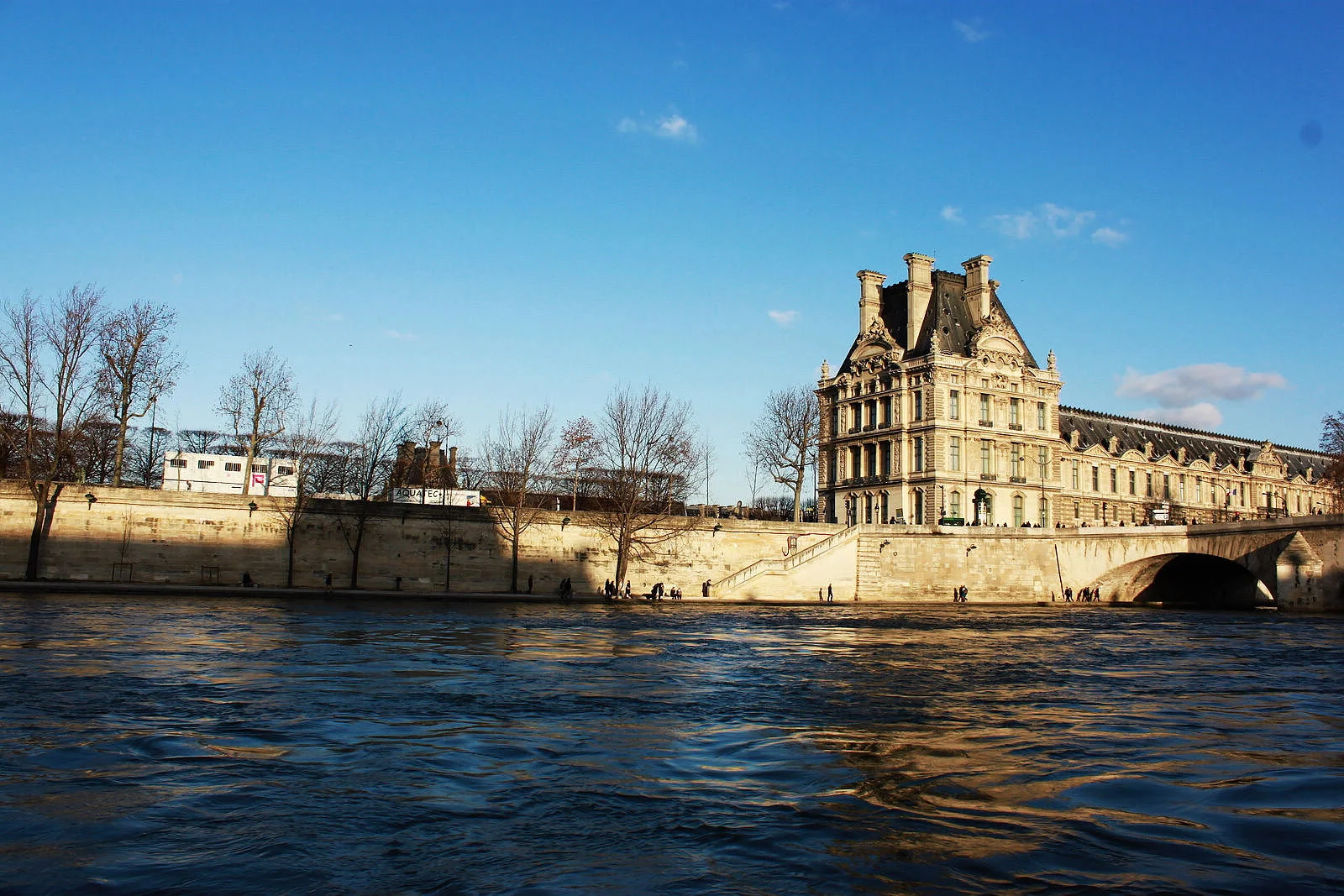
Unexpectedly, this boat turned back at the Louvre and did not continue to the Notre-Dame stop...
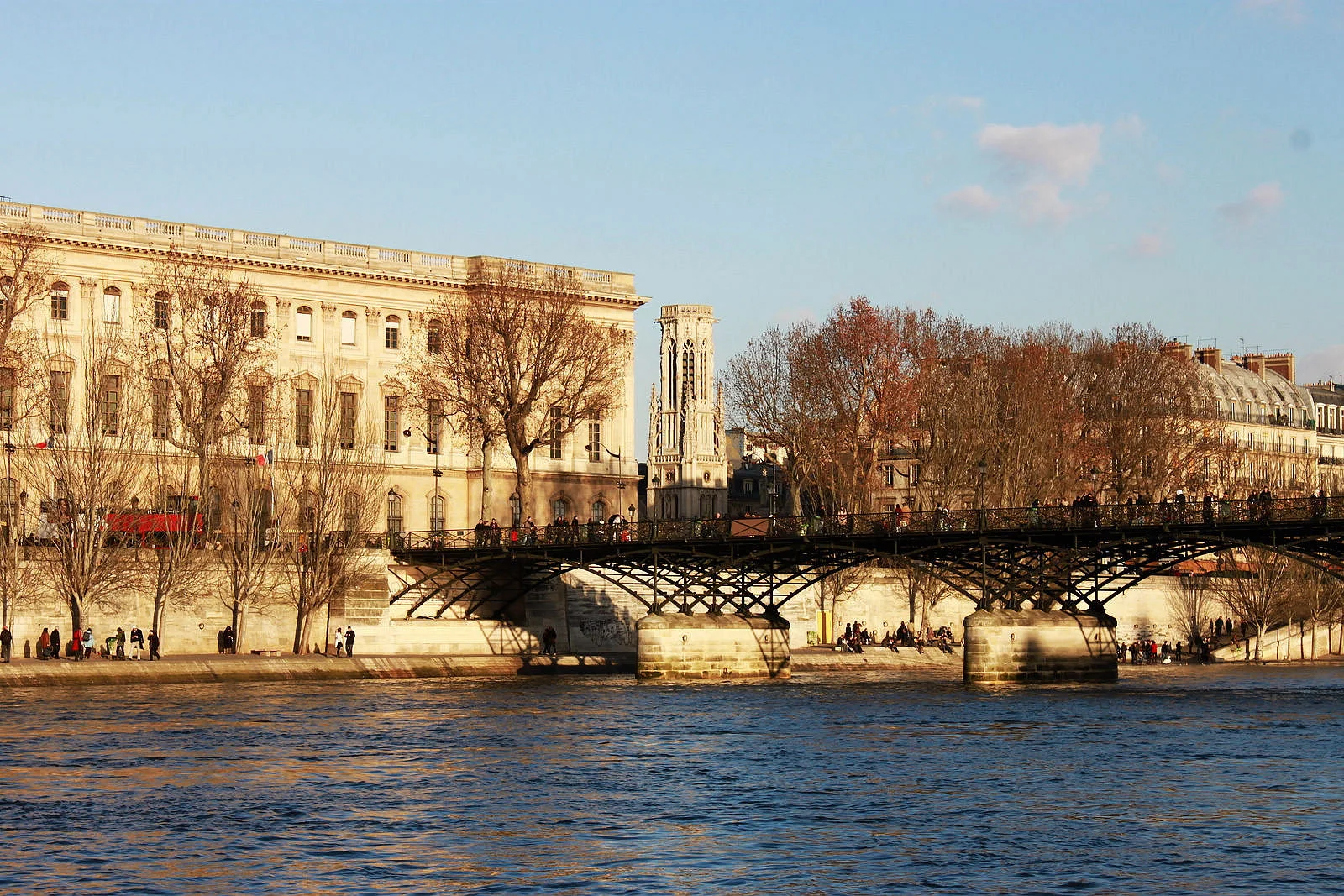
Meanwhile, Belle had fallen asleep from the rocking of the boat. So we had to get off in a rush at the Champs-Elysees stop @.@'"
I had tried to be lazy that day and left the stroller at the hotel... carrying Belle for nearly a kilometer almost destroyed my arms T.T
I could not take photos while holding Belle, but luckily Lisa could act as my little helper ^.^
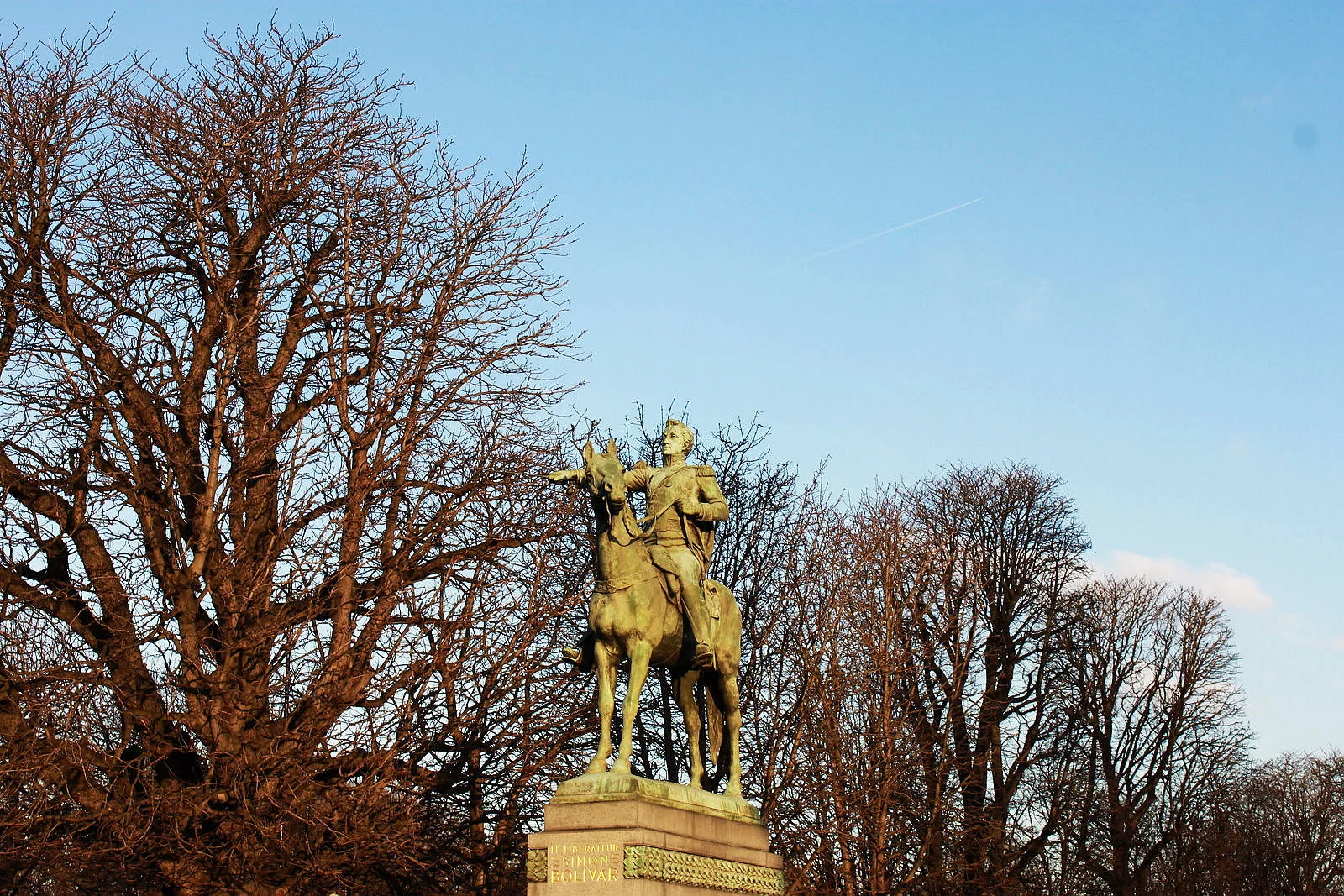
The Petit Palais, now the Petit Palais Museum of Fine Arts, was built by architect Charles Girault as an exhibition venue for the 1900 Universal Exhibition.
Inside are works ranging from Romanticism, including Gericault and Delacroix, to Neoclassicism, Realism, the Barbizon school, Impressionism, Art Nouveau, Symbolism, and sculpture by artists such as Carpeaux and Dalou.
It also houses medieval objects, Renaissance paintings, drawings, ceramics, and 18th-century decorative arts.
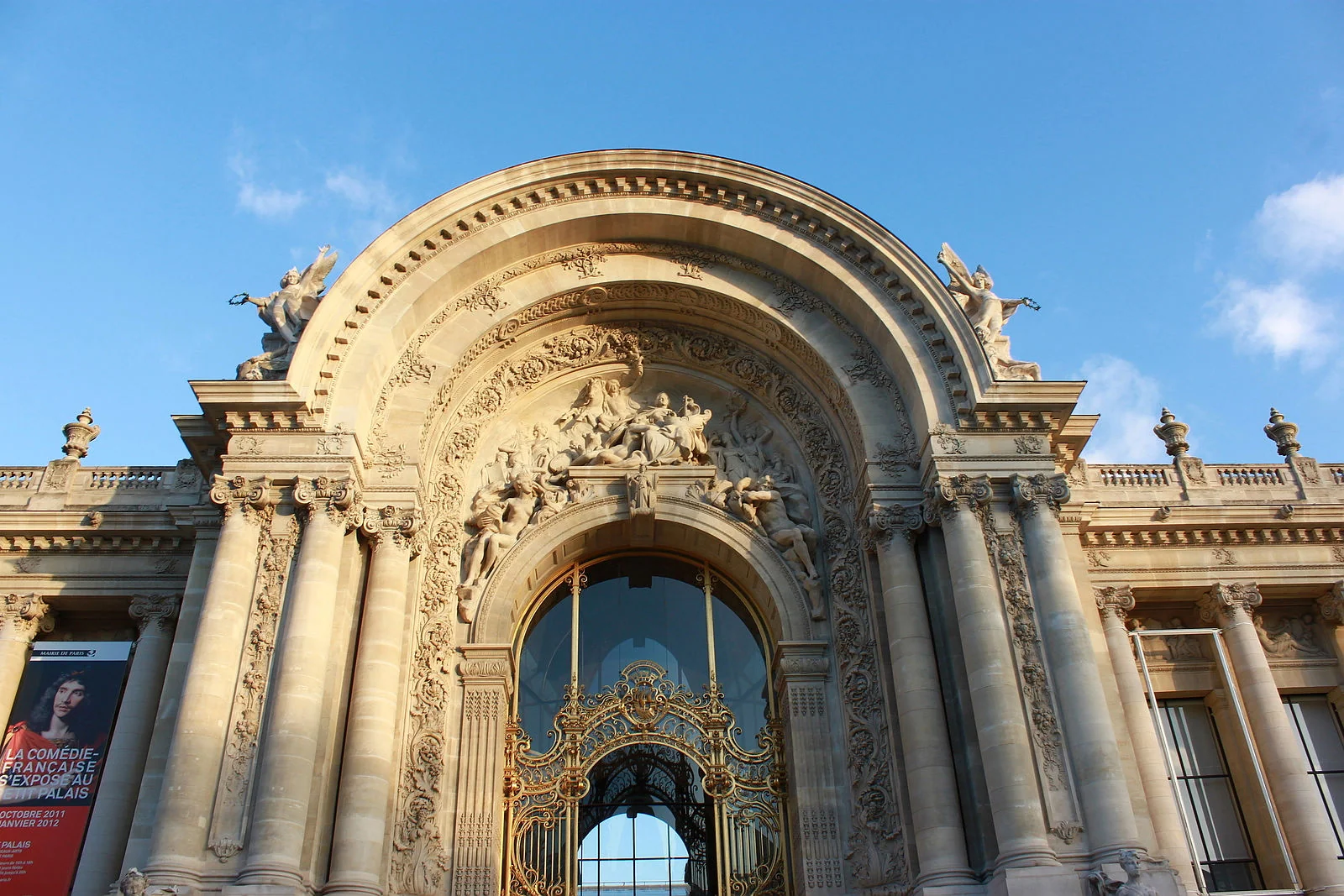
AI-added context: The official Petit Palais history says it was designed together with the Grand Palais and Pont Alexandre III as a set of buildings for the 1900 Universal Exhibition, and was converted in 1902 into the City of Paris Museum of Fine Arts. (Petit Palais official history)
That was enough for the day. We took the metro back from the Champs-Elysees area to recharge at the hotel.
Tomorrow's plan: Versailles ^.^
2012 Let's Go to Paris
Part 1 Planning the Trip
Part 2 Departure and Arrival
Part 3 Cruising the Seine
Part 4 Versailles
Part 5 Gardens of Versailles
Part 6 Disneyland Paris
Part 7 Rue Mouffetard Market, Notre-Dame, Musee d'Orsay, and Galeries Lafayette
Part 8 Chateau de Fontainebleau
Part 9 Champs-Elysees and Arc de Triomphe
Part 10 French Food
Complete Photo Gallery
Previewing up to 8 album photos. Open the gallery to browse all photos.