October 12, 2012. Wuhan. Yellow Crane Tower.
An old friend leaves the Yellow Crane Tower in the west,
amid the blossoms and mist of March, he travels down to Yangzhou.
His lonely sail fades into the endless blue sky,
and only the Yangtze is seen flowing to the horizon.
This seven-character quatrain should sound familiar...
I did not actually know the title of the poem. I do not know that many Tang poems anyway. But mention Yellow Crane Tower, and I know it. So it was in Wuhan.
After searching Google, I learned that this is Li Bai's "Seeing Meng Haoran Off To Guangling At Yellow Crane Tower."
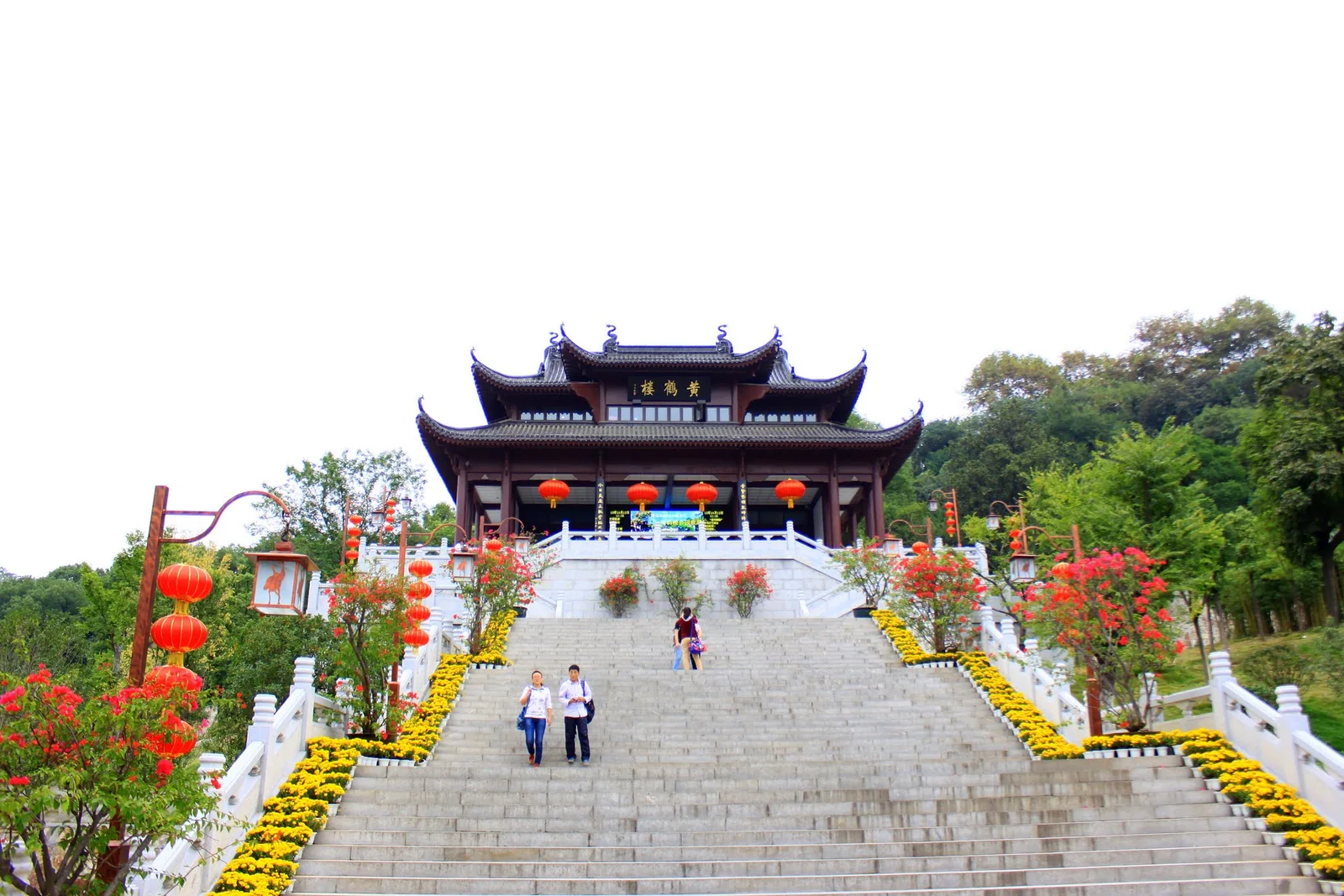
The current Yellow Crane Tower was rebuilt in the 1980s. The previous one, from the Qing dynasty period, was destroyed by fire.
Even though it is a reconstruction, with a name this famous, we still had to come pay our respects.
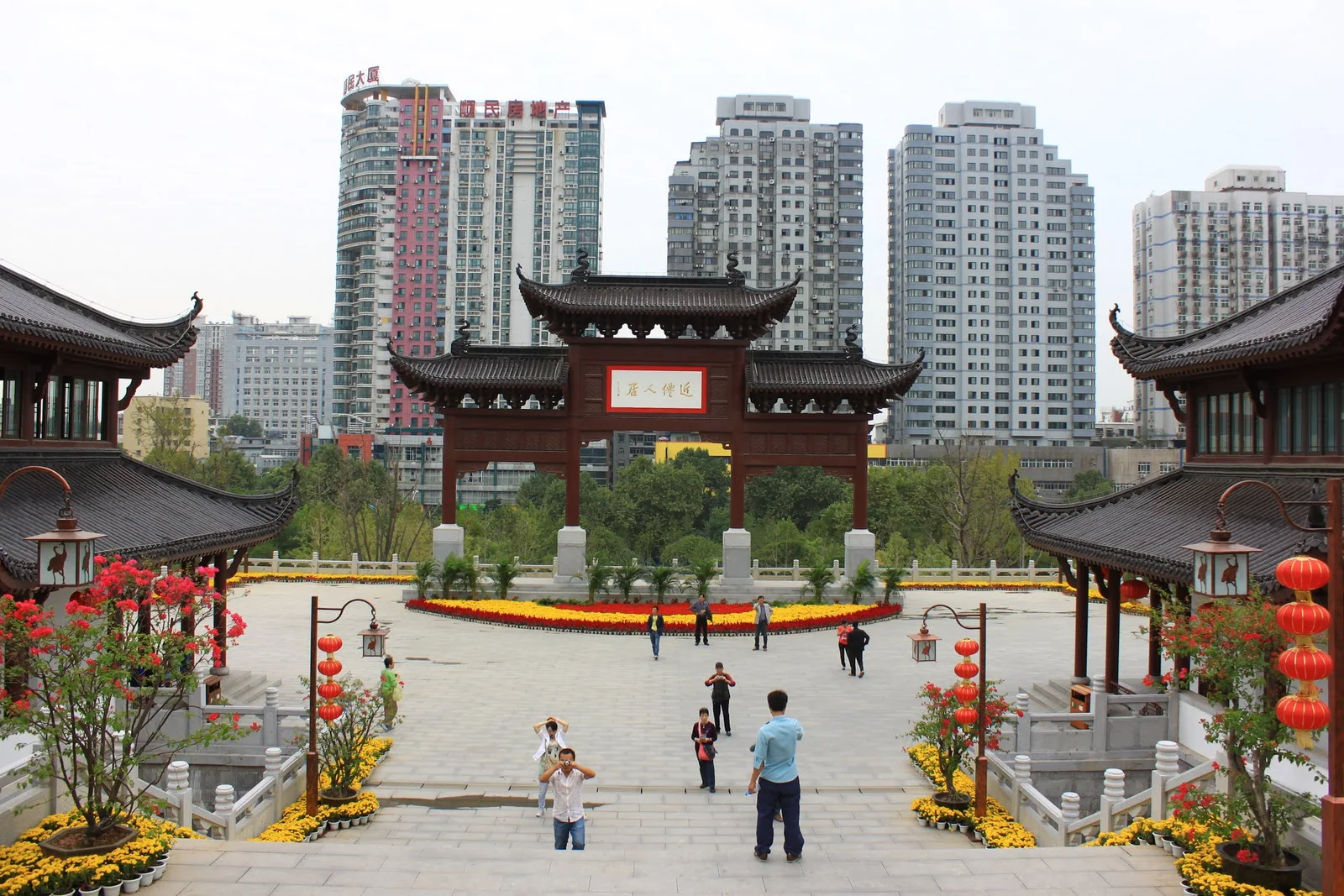
Actually, there is no need to be too hung up on whether the recently rebuilt Yellow Crane Tower counts as a historic relic, or whether it is worth seeing.
Since it was first built during the Three Kingdoms period, Yellow Crane Tower has been rebuilt more than a dozen times. If it was not destroyed by war, it was claimed by fire. @.@'"
By the Tang dynasty, Yellow Crane Tower had already taken shape. But with frequent wars and fires, it was built and abandoned again and again. During the Ming and Qing dynasties alone, it was destroyed seven times and rebuilt or repaired ten times.
Later, a saying spread among the people: "When the nation's fortune flourishes, the tower's fortune flourishes too."
The last reconstruction was in the seventh year of the Tongzhi reign, 1868, and it was destroyed in the tenth year of the Guangxu reign, 1884.
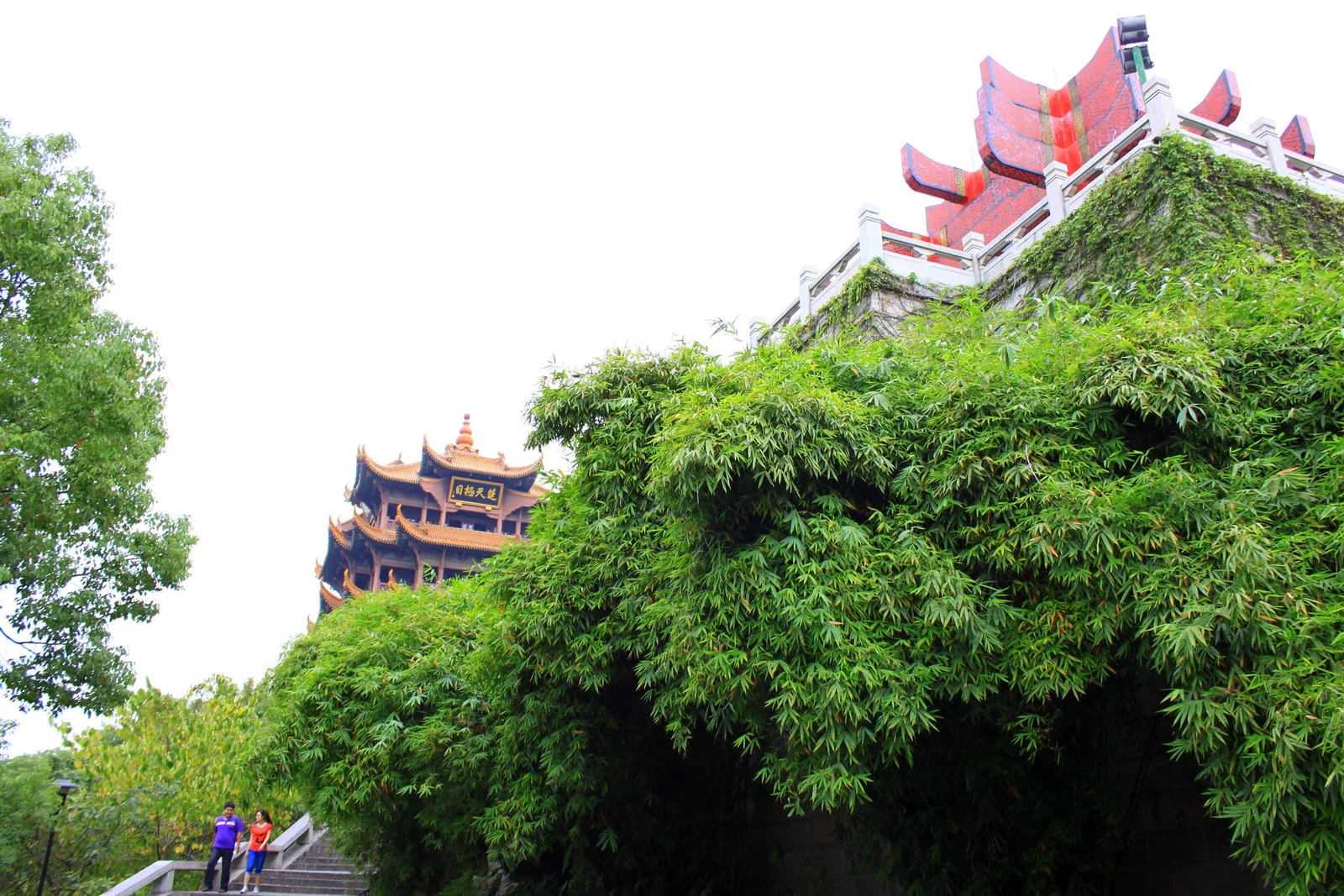
Today, the only surviving object left at the original site after the Qing-era Yellow Crane Tower was destroyed is a bronze roof ornament.
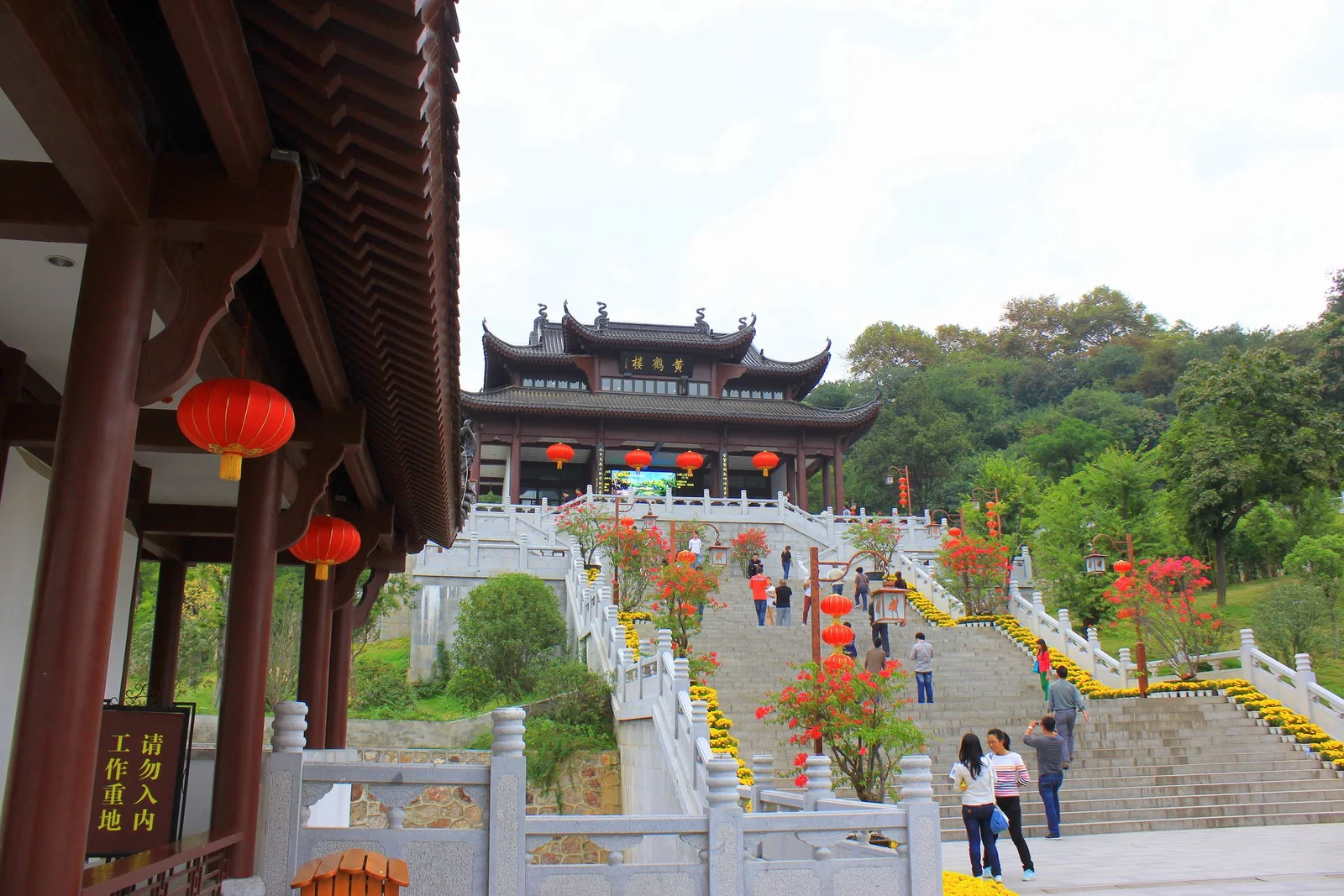
After entering the park, the first thing we saw was the Yue Wumu Portrait Pavilion.
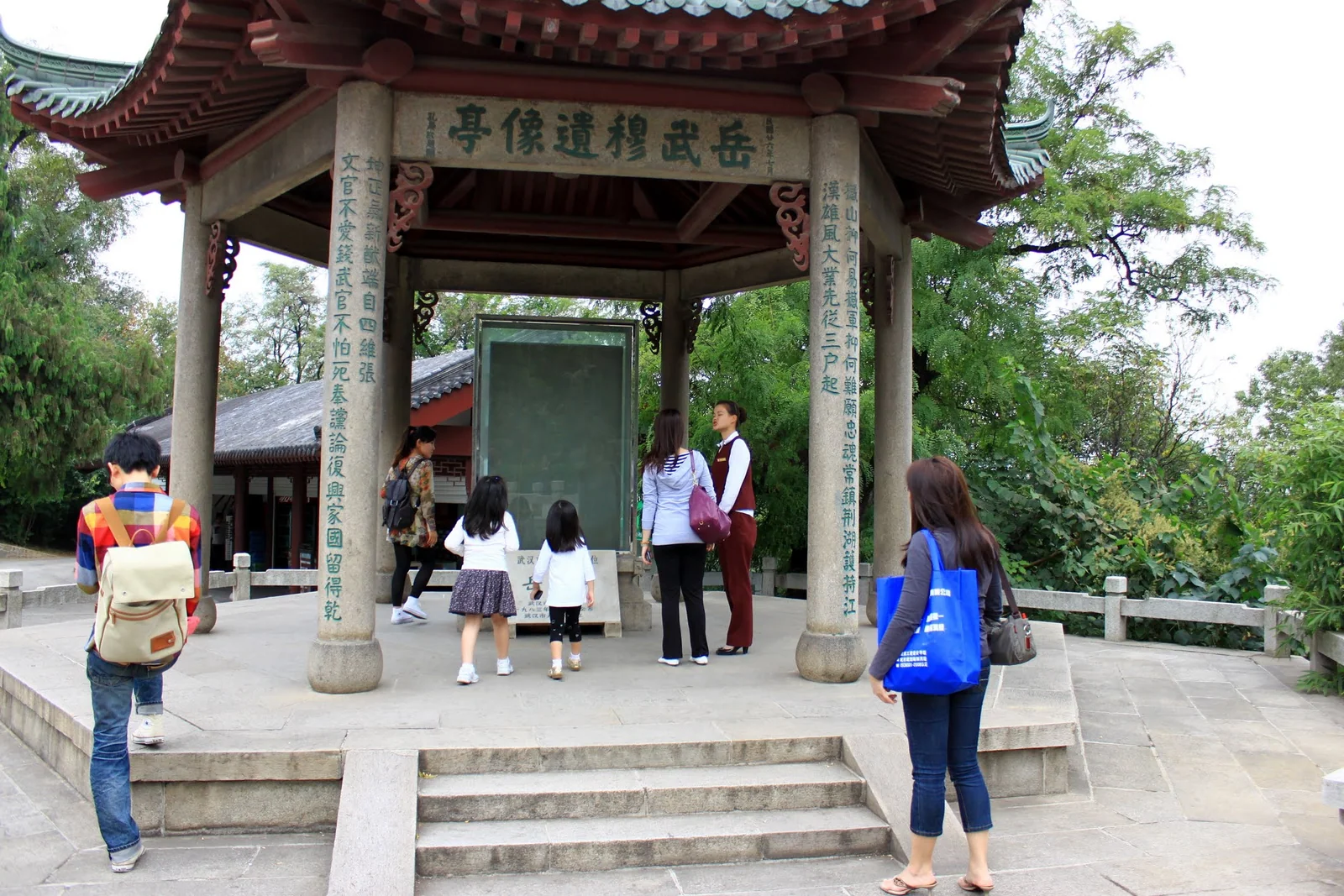
According to the guide, Yue Fei spent seven years of his life, from 1134 to 1141, stationed in Wuhan. Wuhan was the base for the Yue army and its northern expeditions.
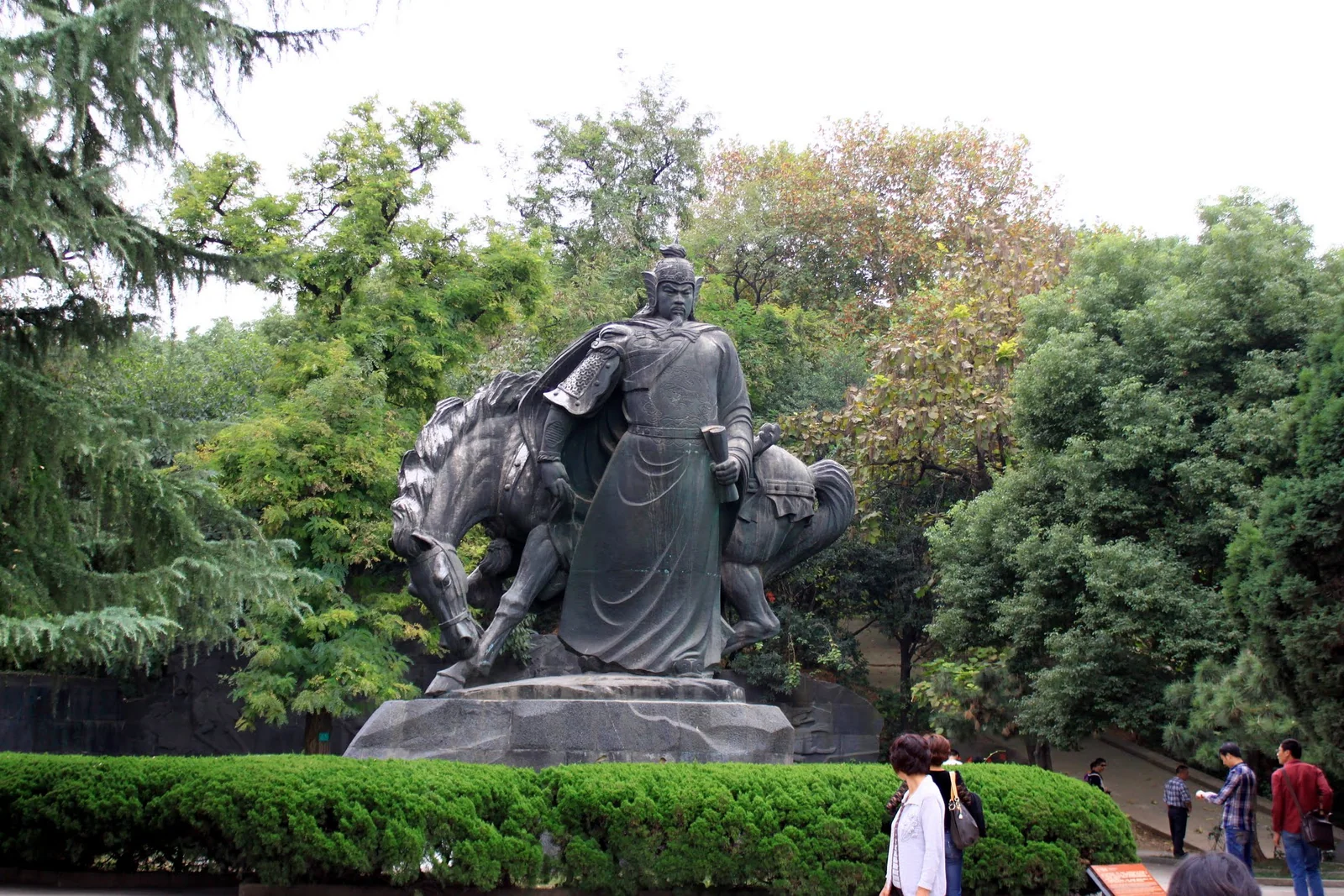
When I came back and wrote this blog post, I searched again and only then realized how deep the connection between Yue Fei and Wuhan was.
For RMB 10, you could take an electric cart straight to the foot of Yellow Crane Tower and save about ten minutes of walking.
Remember this rule for travel: when you see a bus, take the bus; when you see a horse carriage, take the horse carriage. Walking a little less preserves a lot of energy for seeing more things.
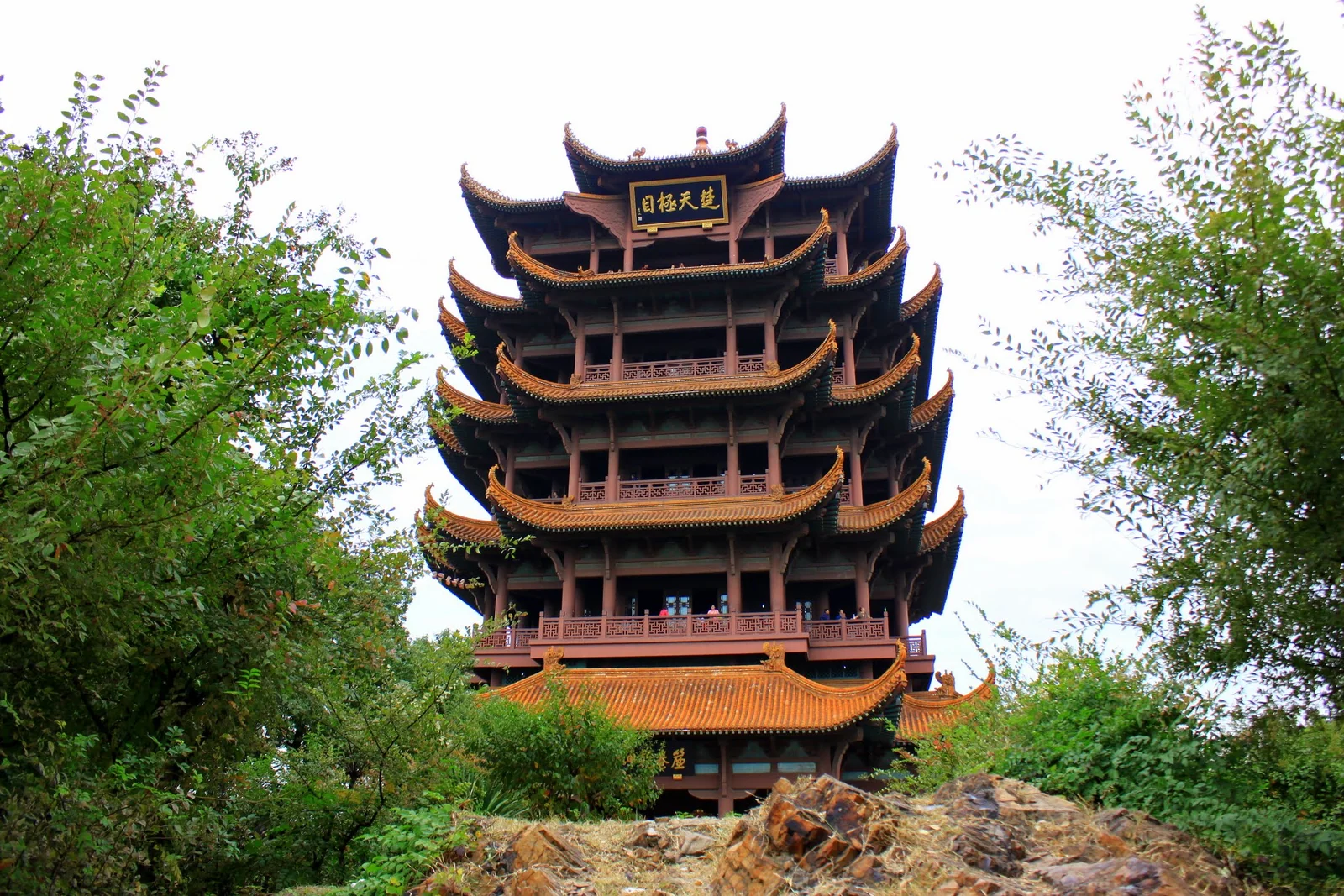
The gourd-shaped object in front of us was the surviving relic I mentioned earlier, the only thing left after the late Qing Yellow Crane Tower burned down.
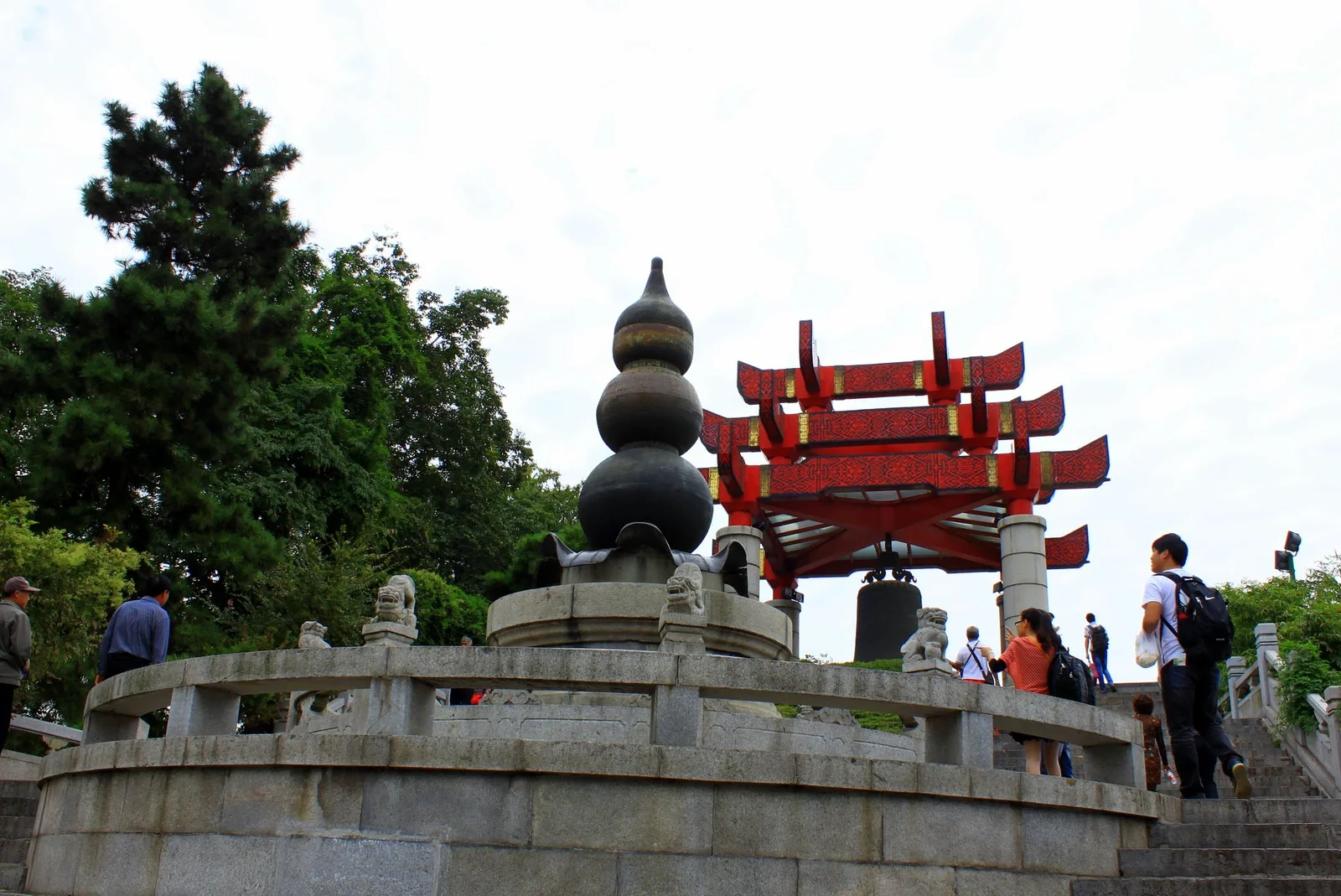
But why is it a three-tiered gourd?
The guide said the three tiers represent Daoist ideas such as heaven, earth, and humanity, as well as essence, energy, and spirit.
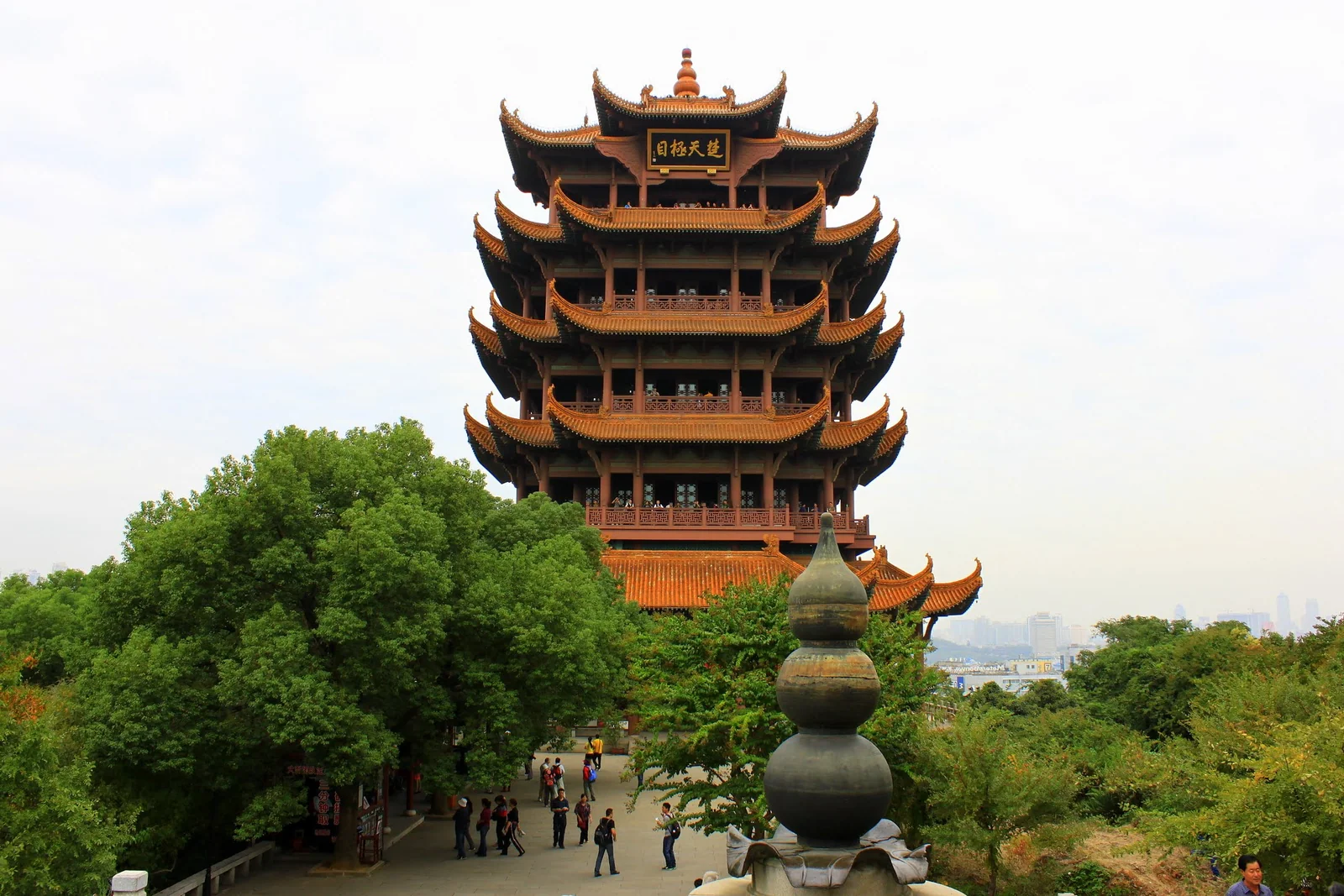
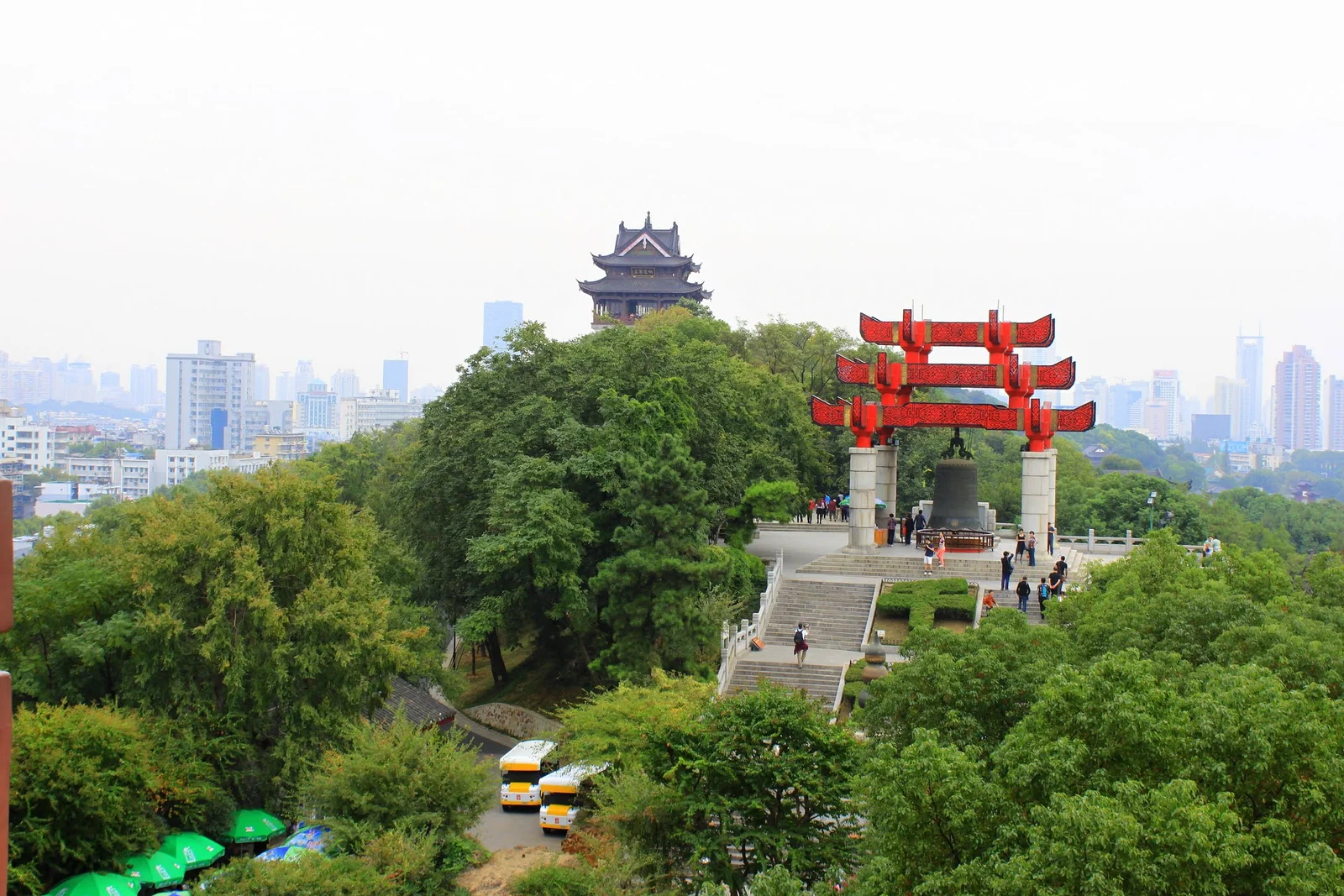
The large bell in front was specially cast for the millennium.
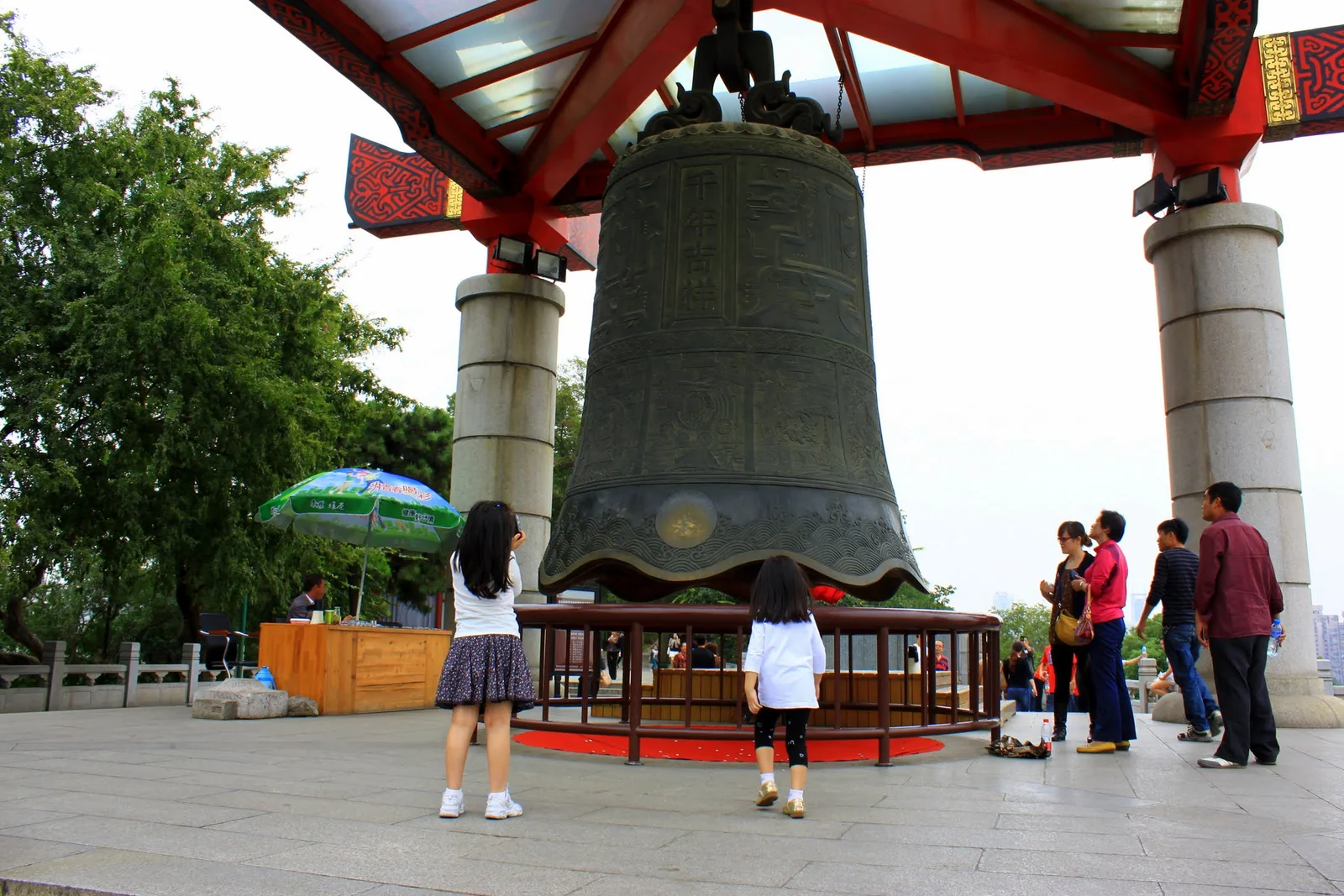
The bell body weighs 20 tons, and the pulao ornament on top weighs one ton, symbolizing the connection between the 20th and 21st centuries.
The bell is made of copper alloy and contains 2.1 kilograms of gold and 8.4 kilograms of silver. It is the largest bronze bell cast in China since the Yongle Bell of the Ming dynasty.
All right, time to go up.
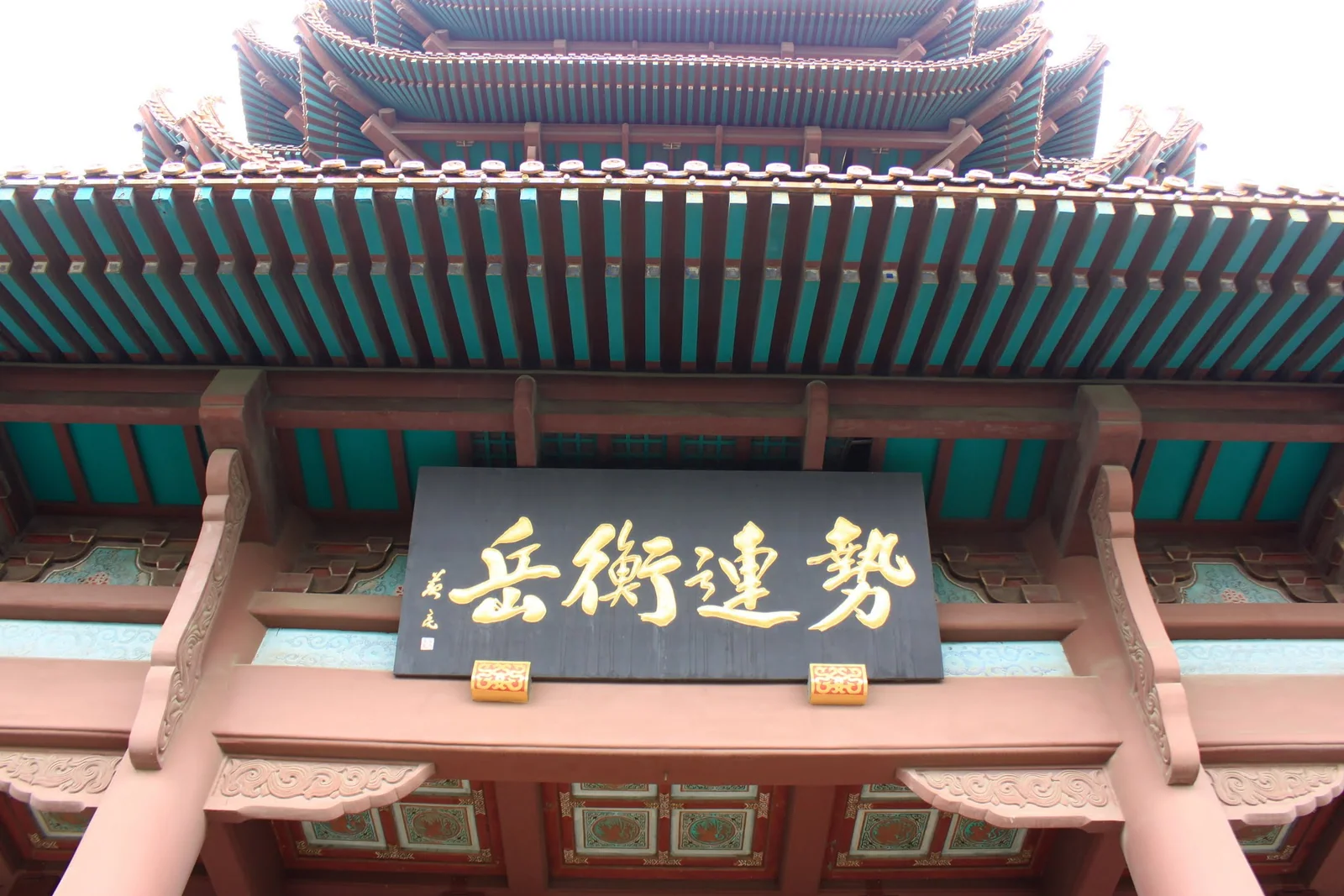
From the outside, the current Yellow Crane Tower appears to have five levels. Inside, it is divided into nine levels, echoing the imperial symbolism of "nine and five."
If you want to look out over the Yangtze from the top, climb the nine levels properly. Good thing we had paid a little to take the electric cart over, or someone would definitely have lost patience. XD
The great river ahead is the Yangtze.
The bridge is the famous Wuhan Yangtze River Bridge. It stretches across the Yangtze between Guishan in Hanyang and Sheshan in Wuchang, and was the first bridge over the Yangtze to carry both railway and road traffic.
That is why it is also known as the "First Bridge of the Ten-Thousand-Li Yangtze."
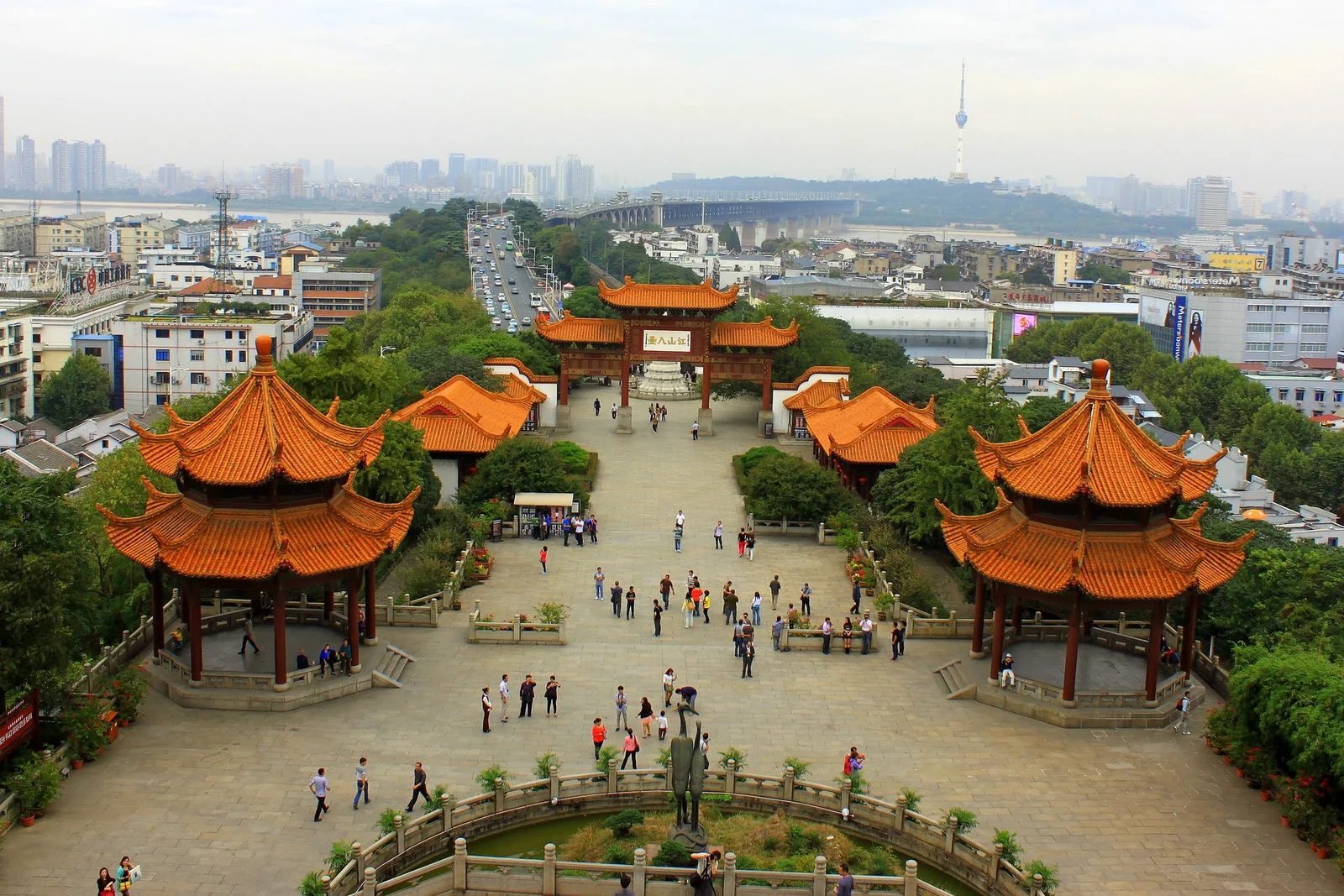
Look closely. About one-third of the way from the near end of the bridge, there are two towers.
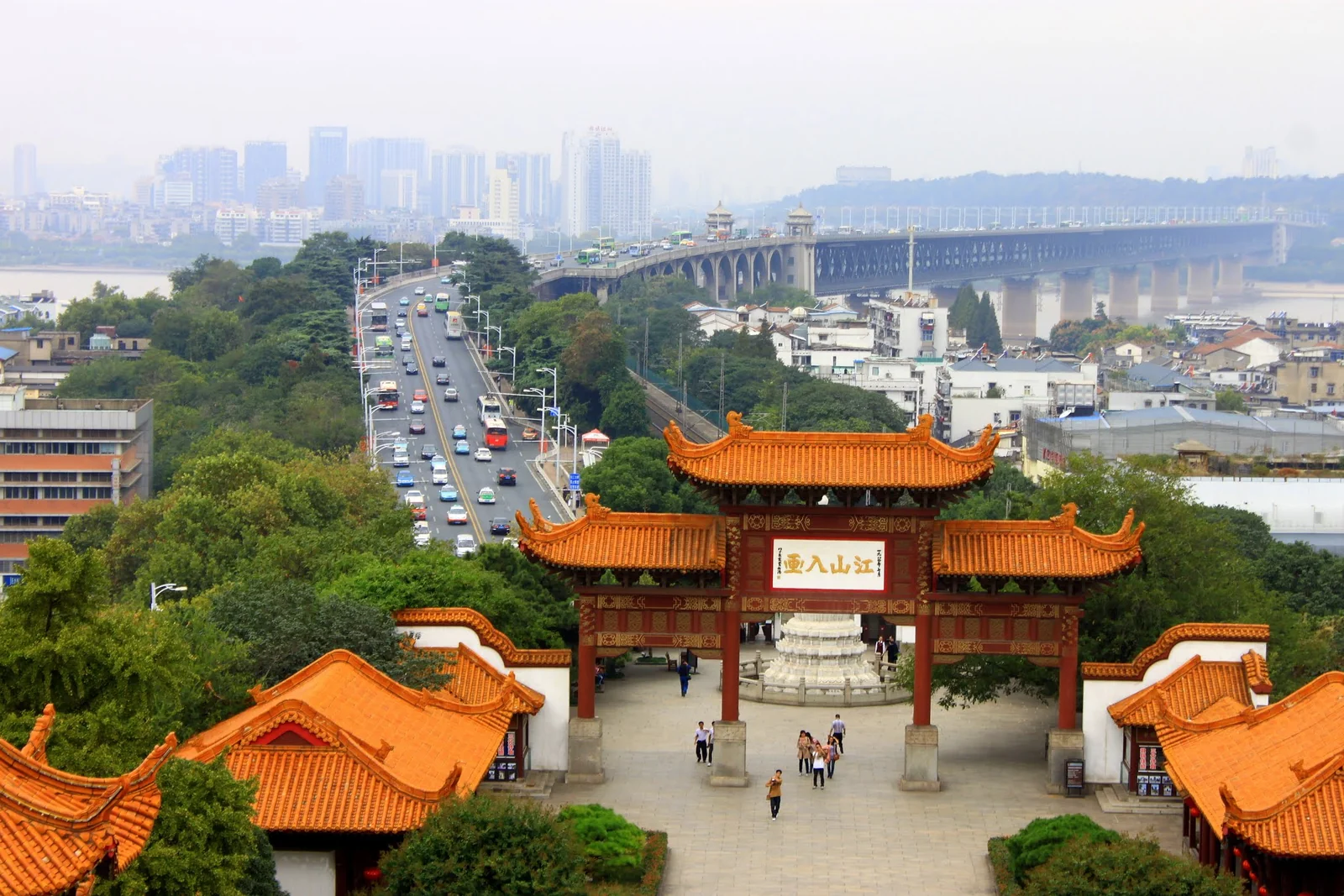
The ancient Yellow Crane Tower actually stood there. That was the narrowest point of the Yangtze in this stretch.
During the Three Kingdoms period, Yellow Crane Tower mainly served a military purpose. After the Tang dynasty, it gradually became more of a scenic destination.
By the late Qing, after it burned down, the imperial court no longer had the money to rebuild it.
When the Yangtze River Bridge was built in the 1950s, it went directly across the closest points on both banks. So when Yellow Crane Tower was rebuilt in the 1980s, it had to be moved a bit.
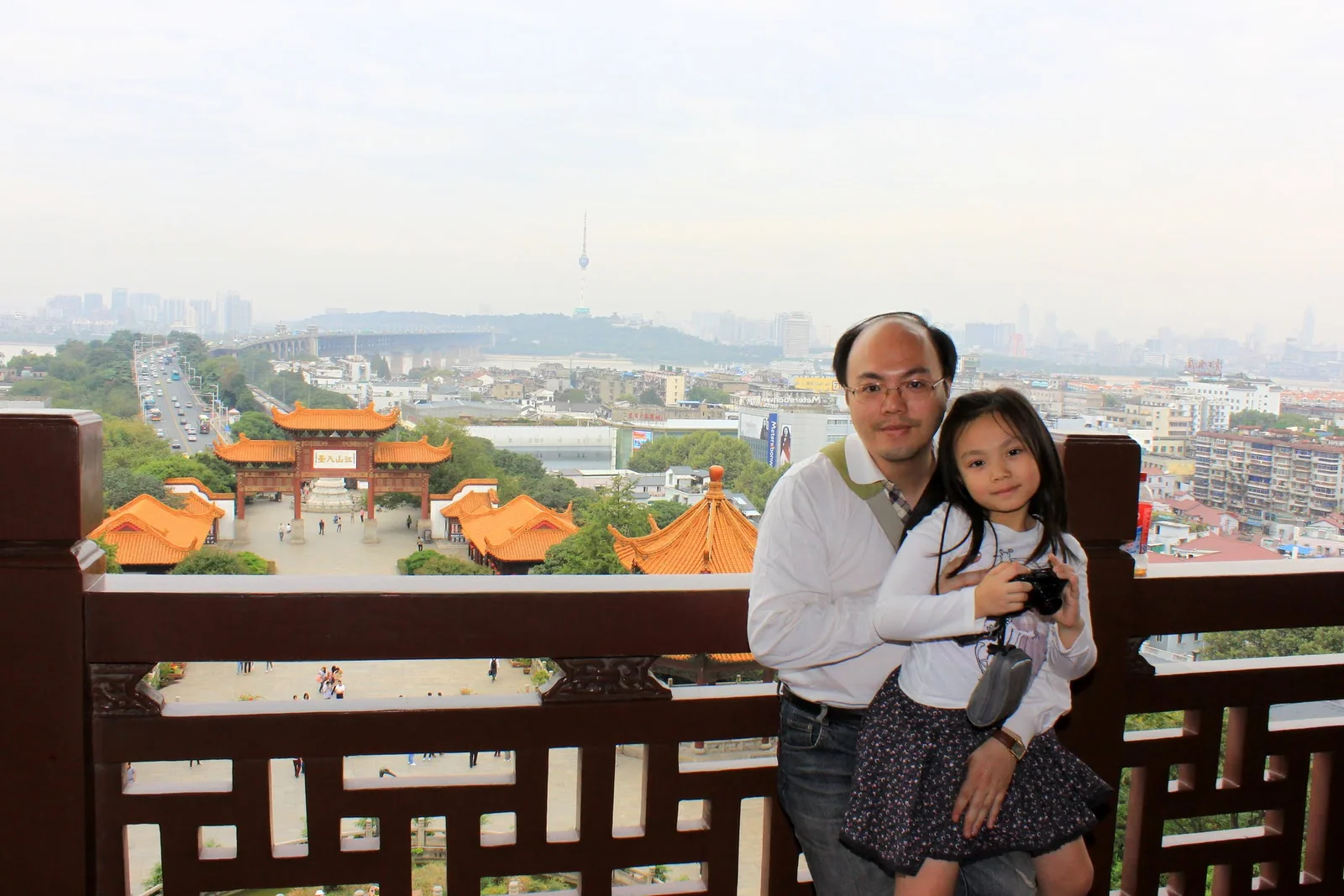
The second level is the best spot for the classic "I was here" photo, with both people and scenery in the frame.
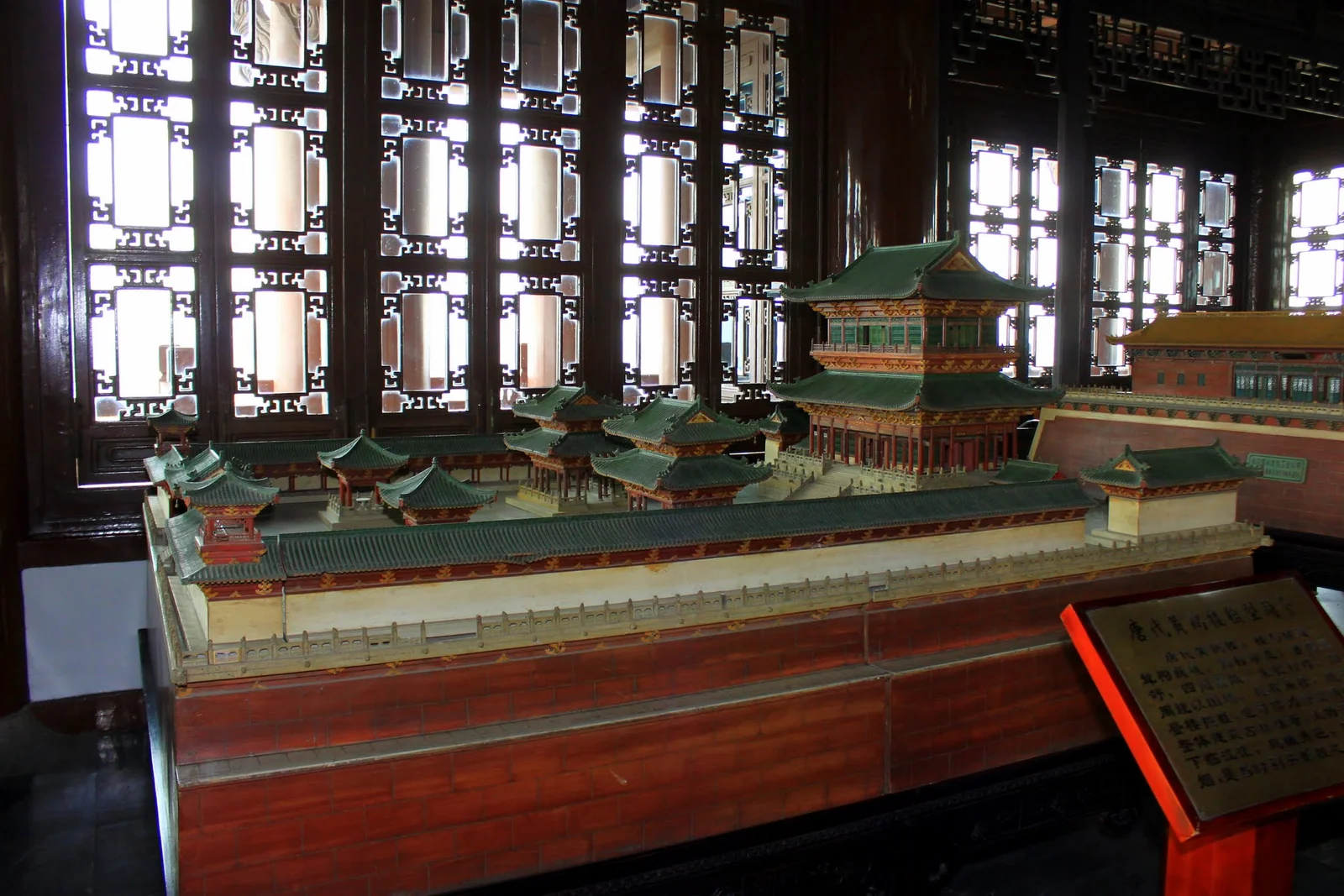
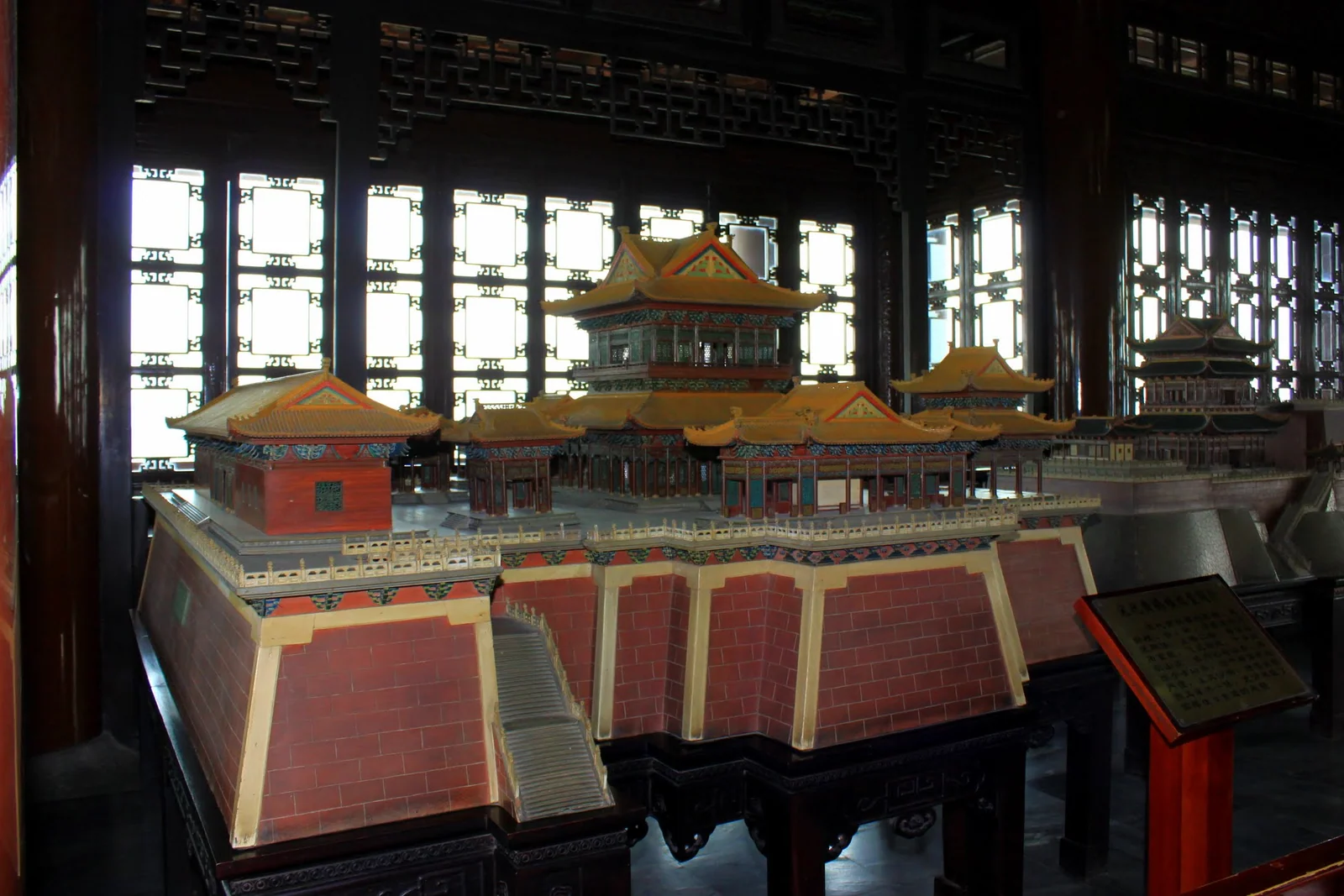
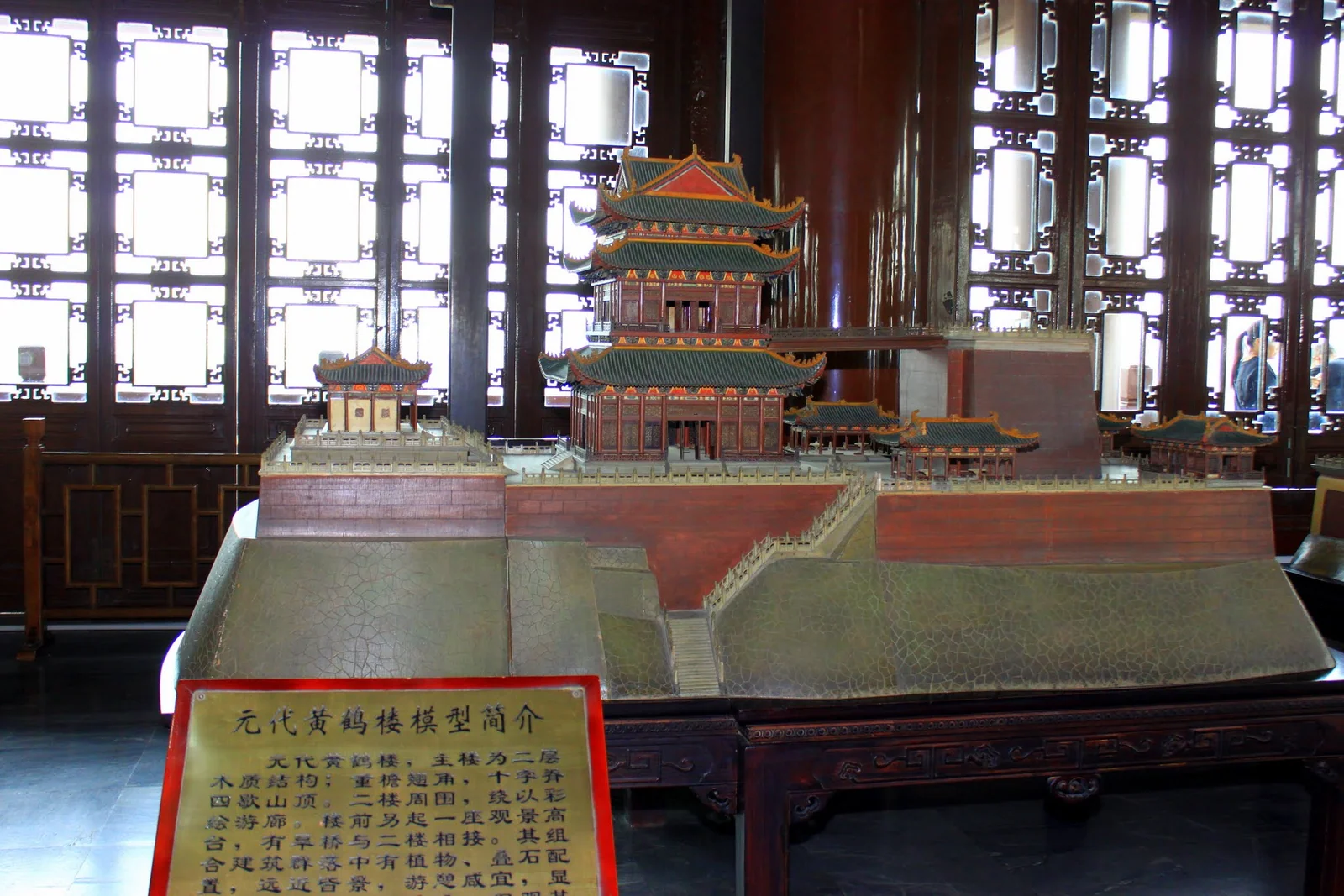
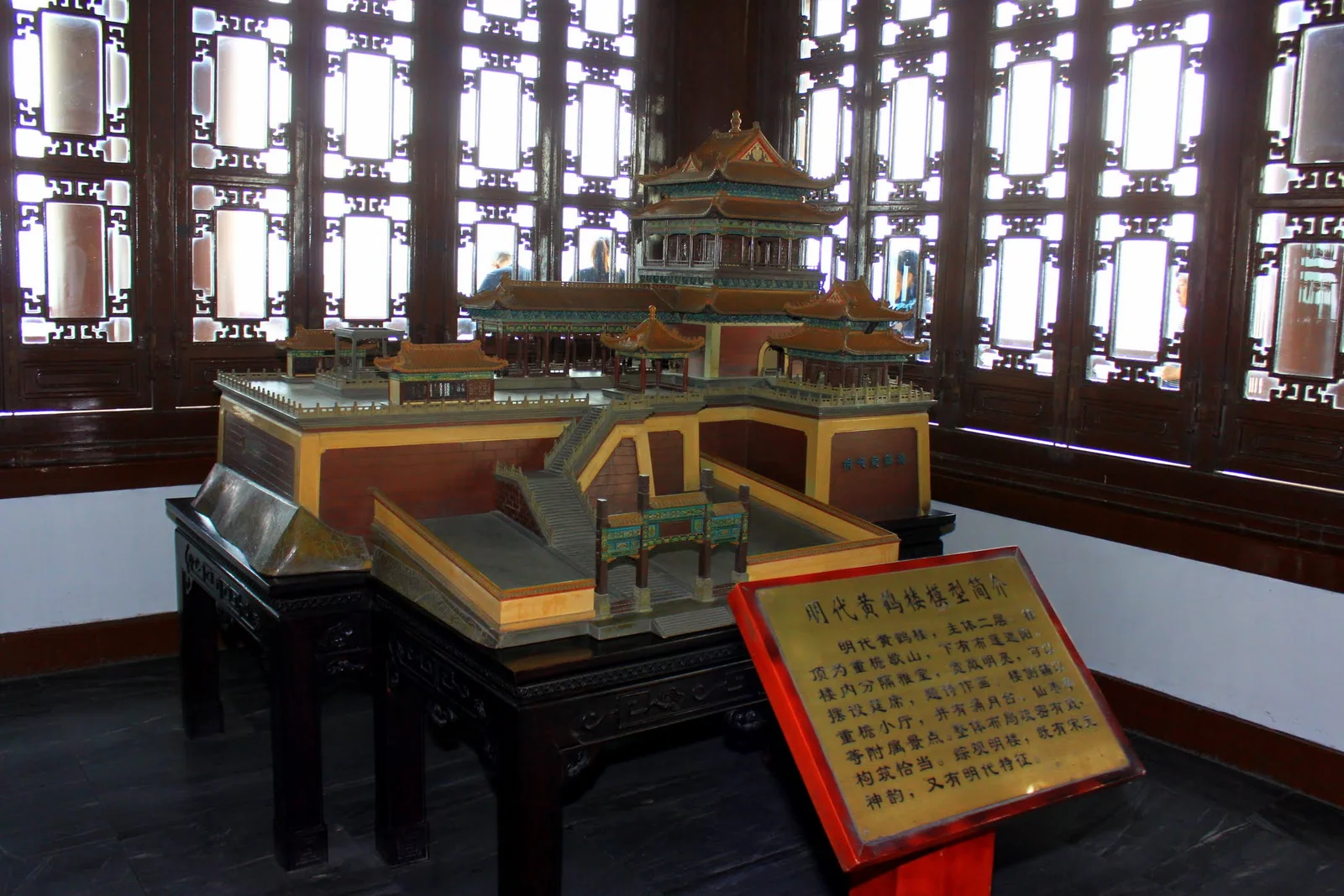
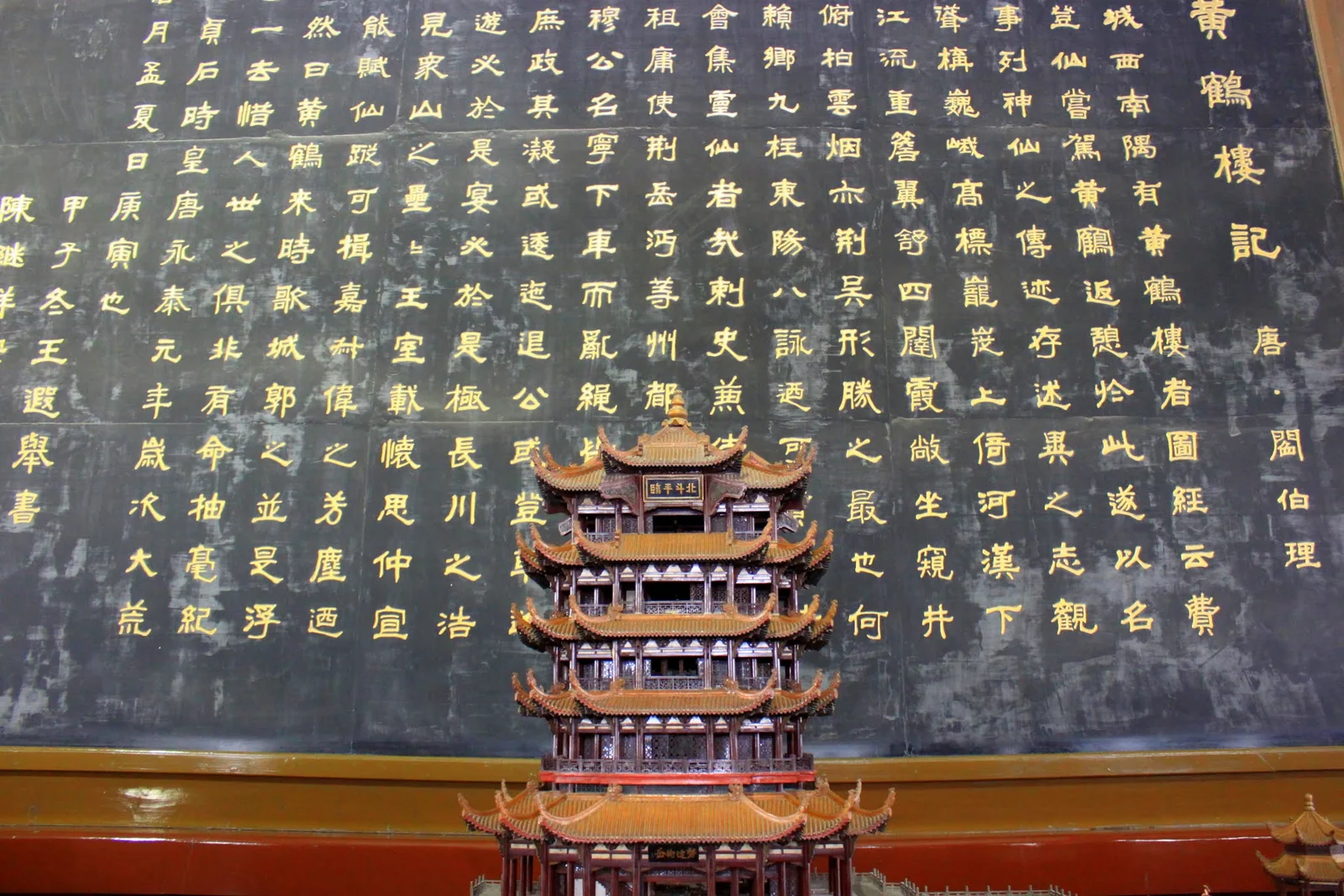
Inside, there are models of Yellow Crane Tower from different dynasties.
Yellow Crane Tower in the Tang dynasty.
Yellow Crane Tower in the Song dynasty.
Yellow Crane Tower in the Yuan dynasty.
Yellow Crane Tower in the Ming dynasty.
Yellow Crane Tower in the Qing dynasty.
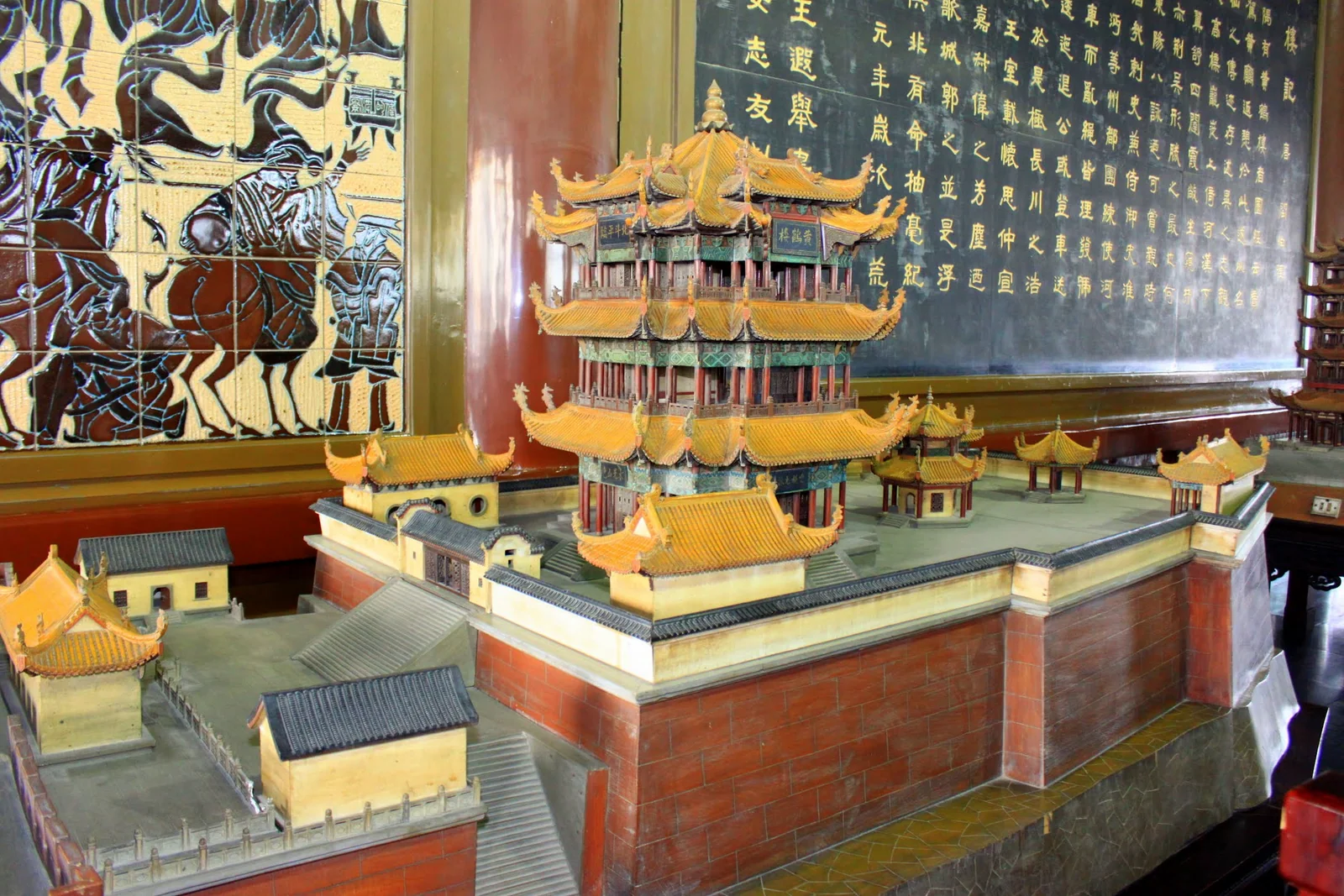
Yellow Crane Tower in modern times.
The building past the Millennium Bell is Baiyun Pavilion, currently used as an art museum.
Then we went up another level.
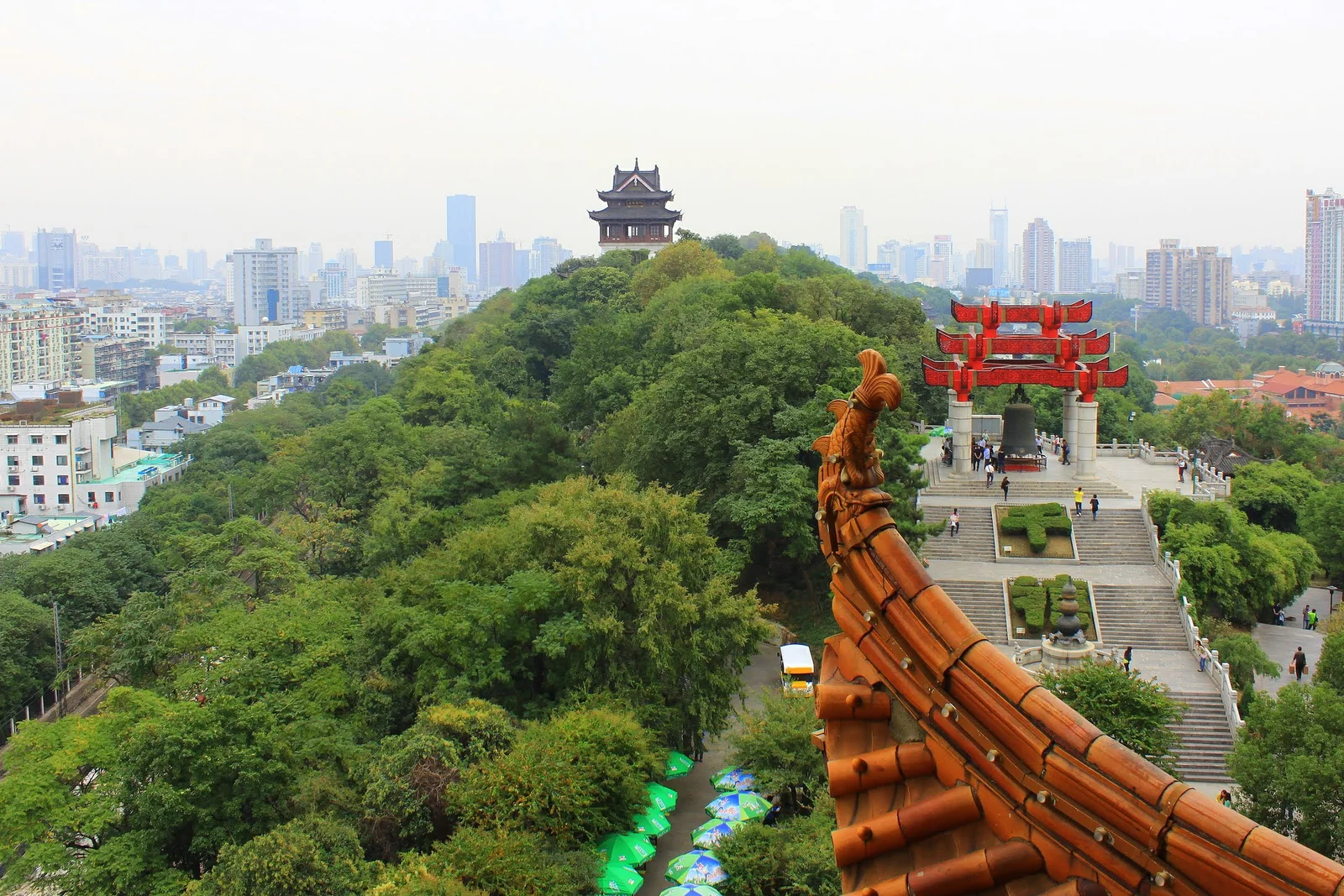
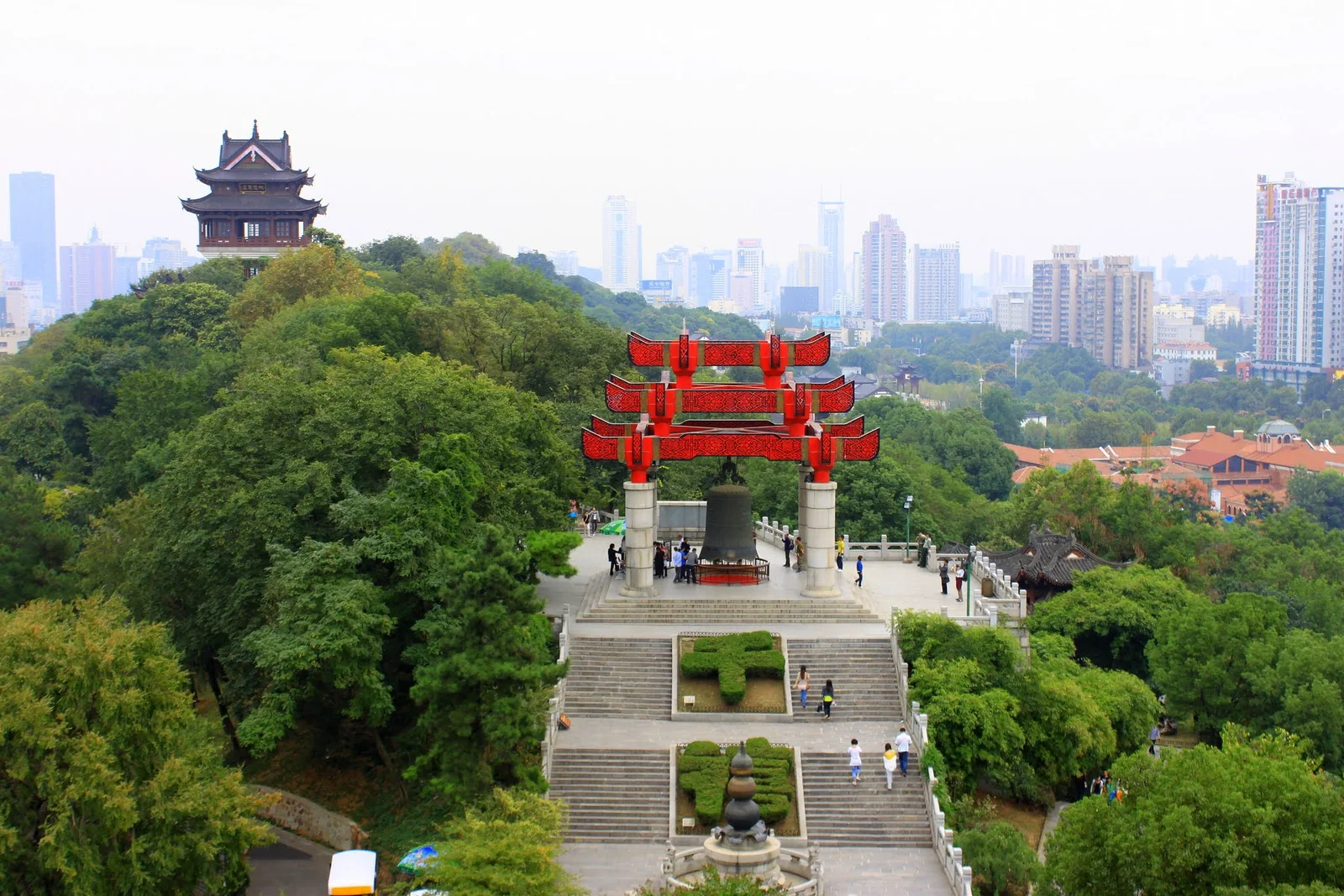
The center of the photo is where the Han River and the Yangtze River meet.
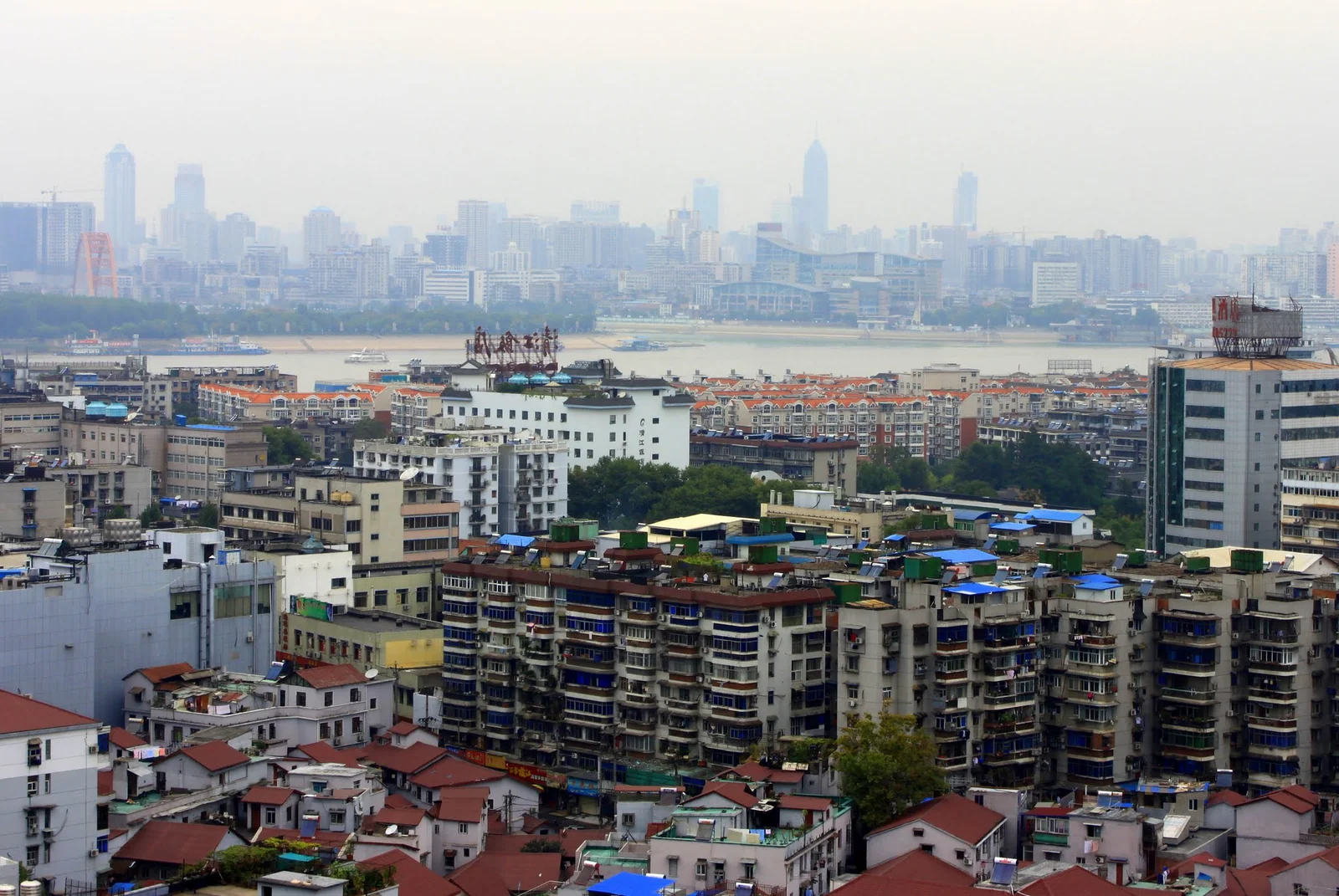
On the left is Hanyang, the industrial area. On the right is Hankou, the commercial and financial center. South of the Yangtze is Wuchang, the cultural and educational area and the seat of the provincial government.
The Beijing-Guangzhou railway passes right next to Yellow Crane Tower.
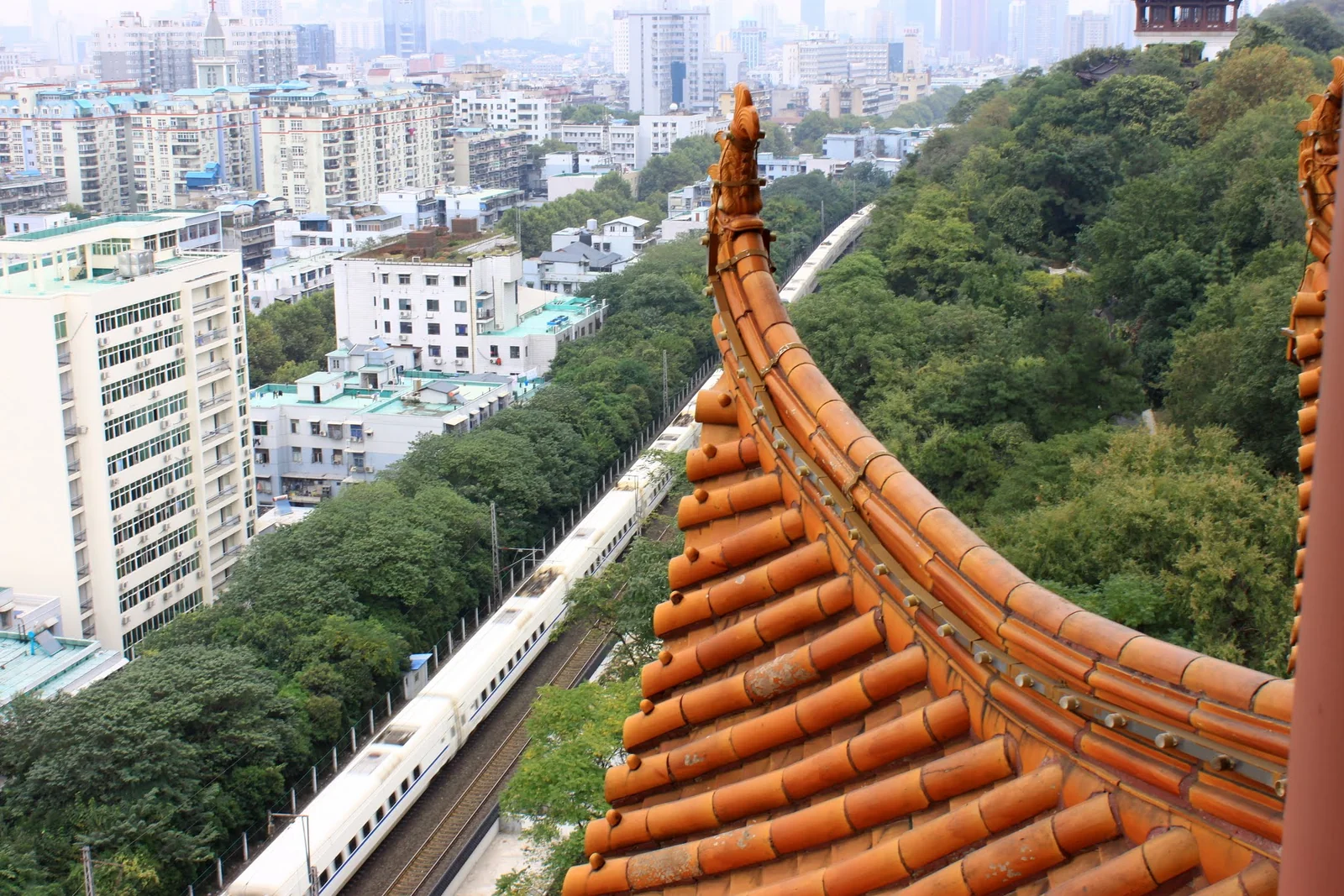
Wuhan has an excellent geographic location. The distances between Wuhan and major cities such as Beijing, Chongqing, Shanghai, Guangzhou, and Taipei are all roughly within a three-hour flight.
Since ancient times, it has been a place of strategic importance. In earlier times, it was known as Jiangxia Commandery.
Up another level.
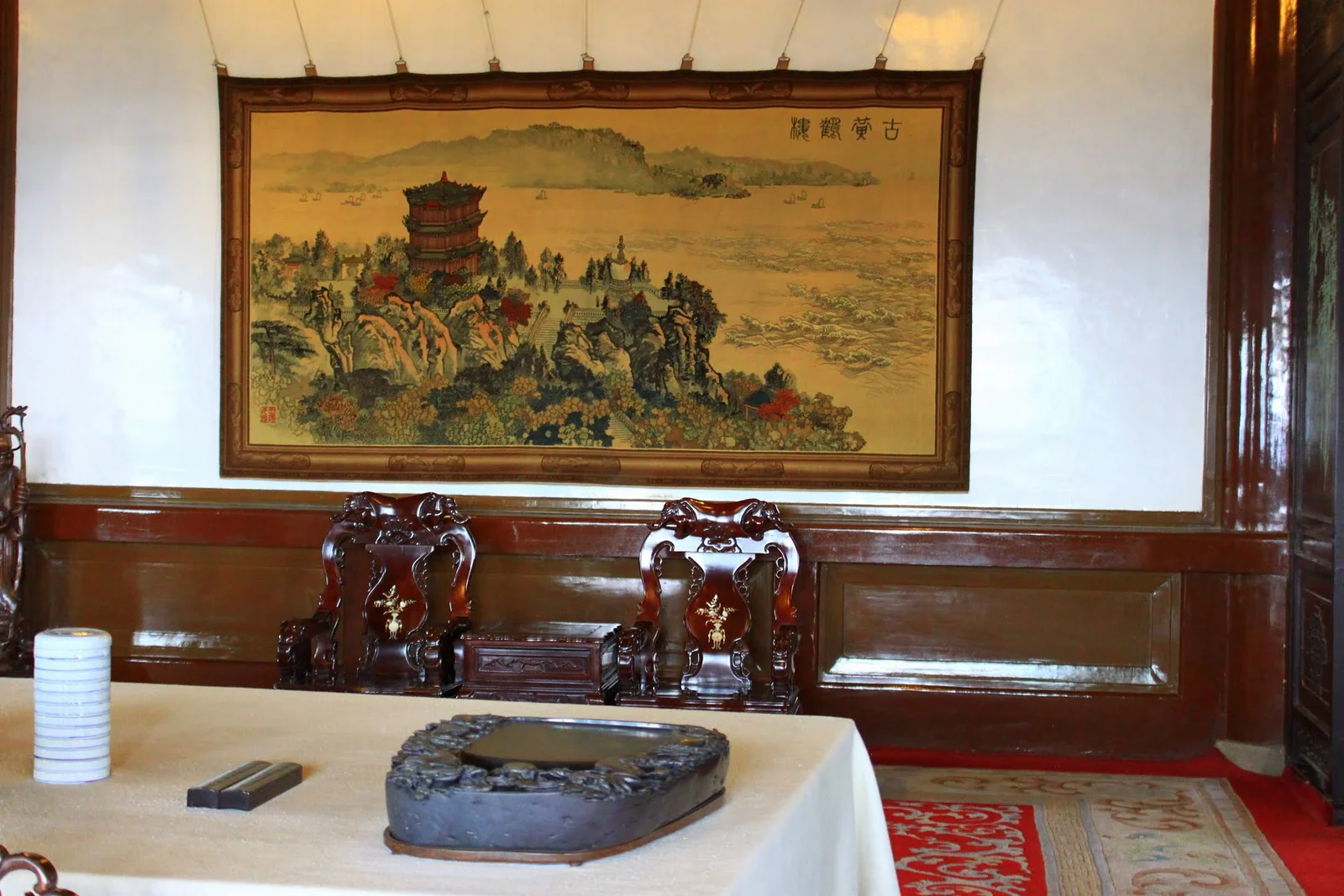
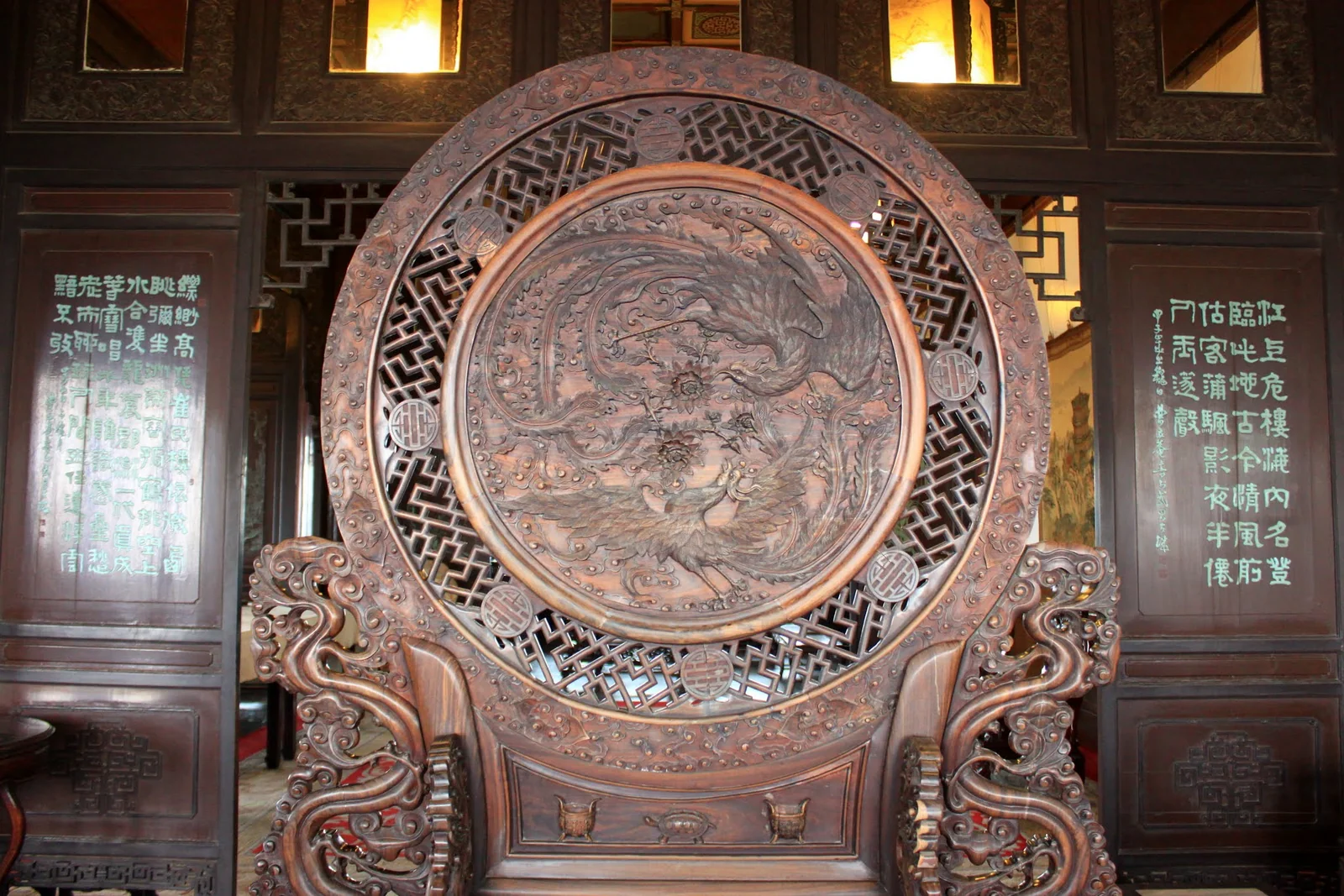
According to the guide, this screen is quite impressive.
The patterns on both sides are exactly the same, carved with two phoenixes.
As mentioned earlier, ancient Hubei was part of the state of Chu. The people of Chu had a vivid imagination, and many myths and legends came from Chu culture.
In ancient times, fire was difficult to make and very mysterious, so the fire god held an important place in people's hearts.
There is a legend about the phoenix. It is said that the people of Chu gathered the beautiful features of many kinds of birds, such as crests, long tails, and colorful feathers,
and created the fire god of their imagination: the phoenix. Impressive, right? ^.^
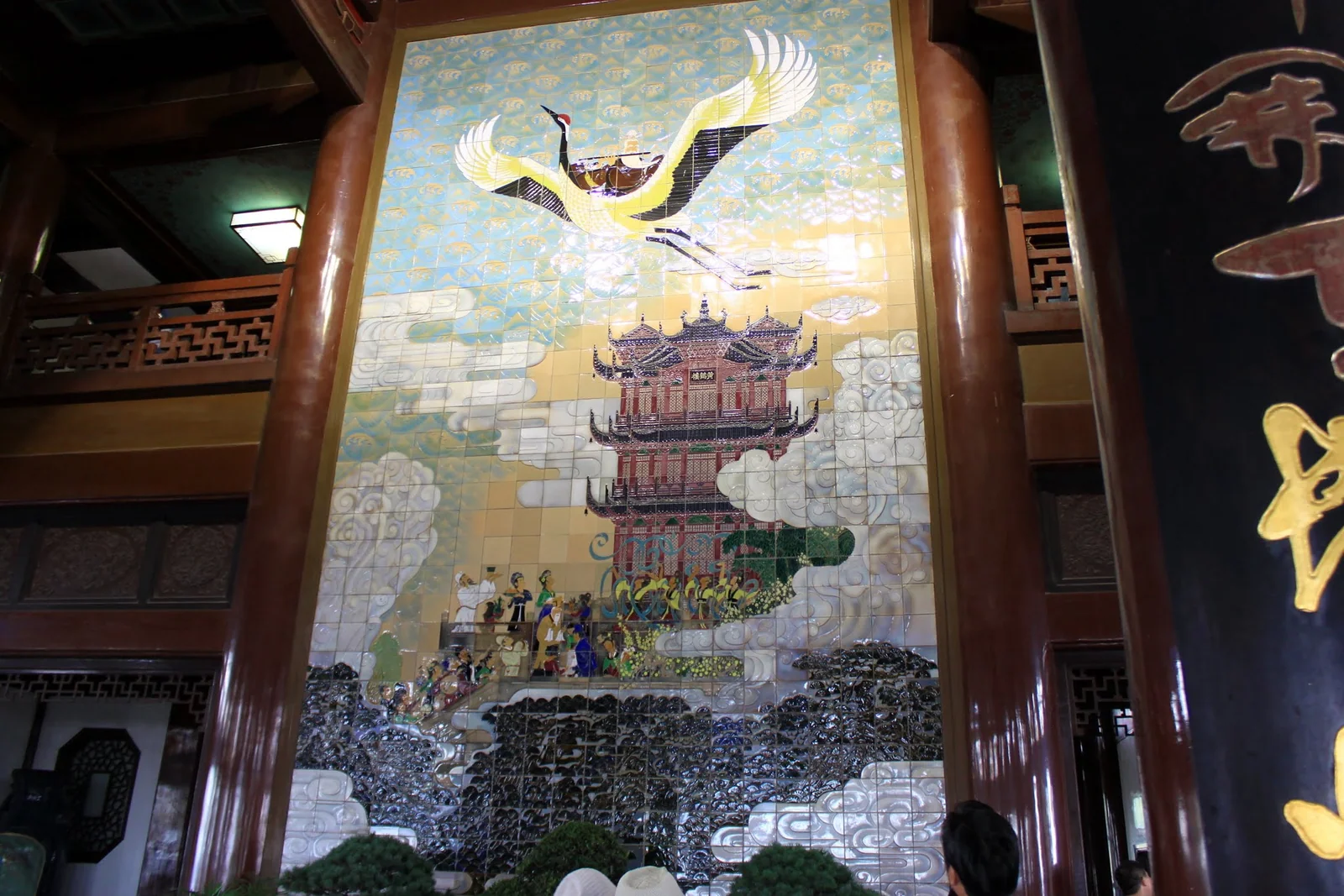
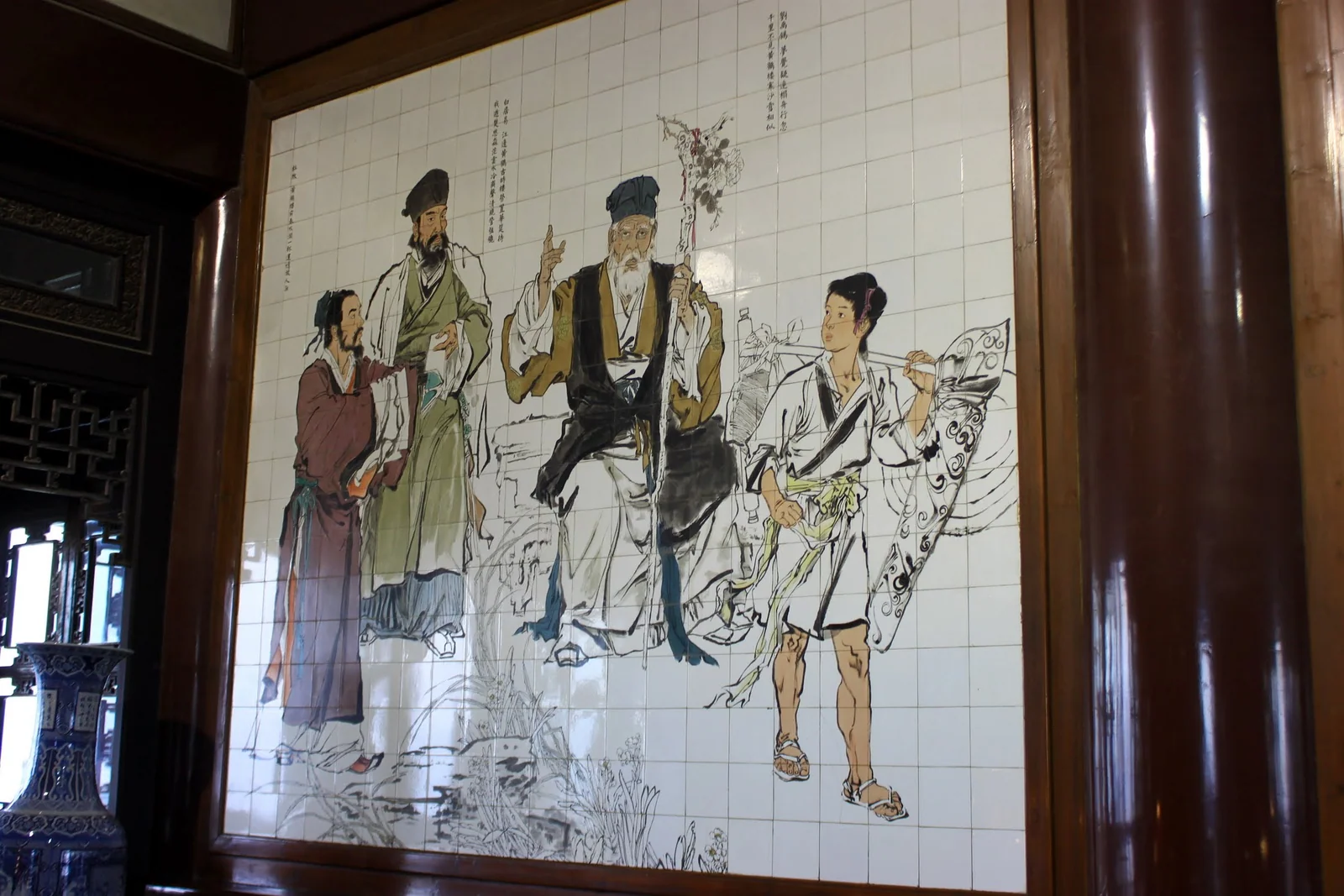
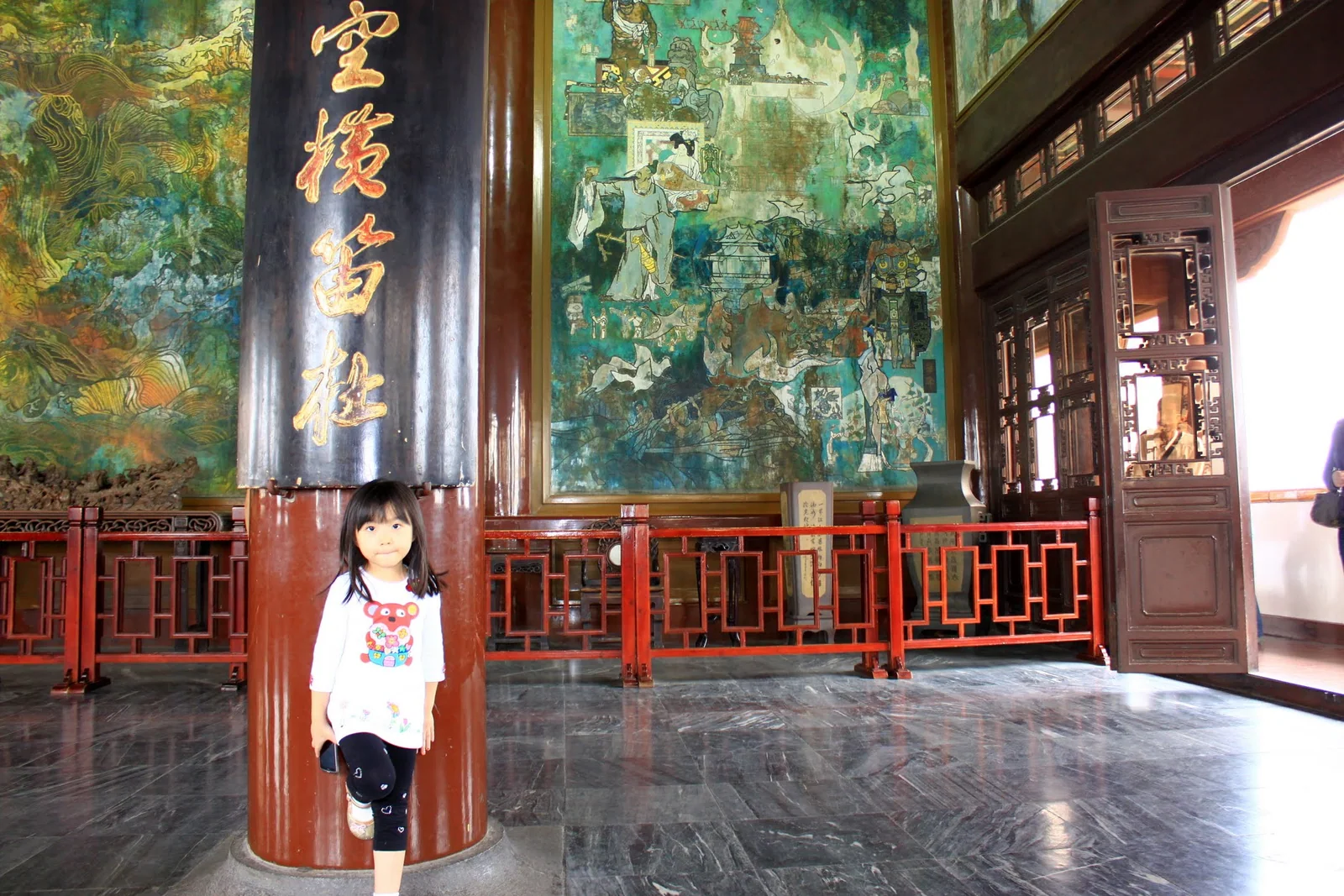
Finally we reached the top level. Inside are three huge murals. Although they are not ancient remains, they operate on a very high level...
If I do not explain this, I am afraid only three people would know: one is him, one is me, and the other one I cannot tell you about... ha XD
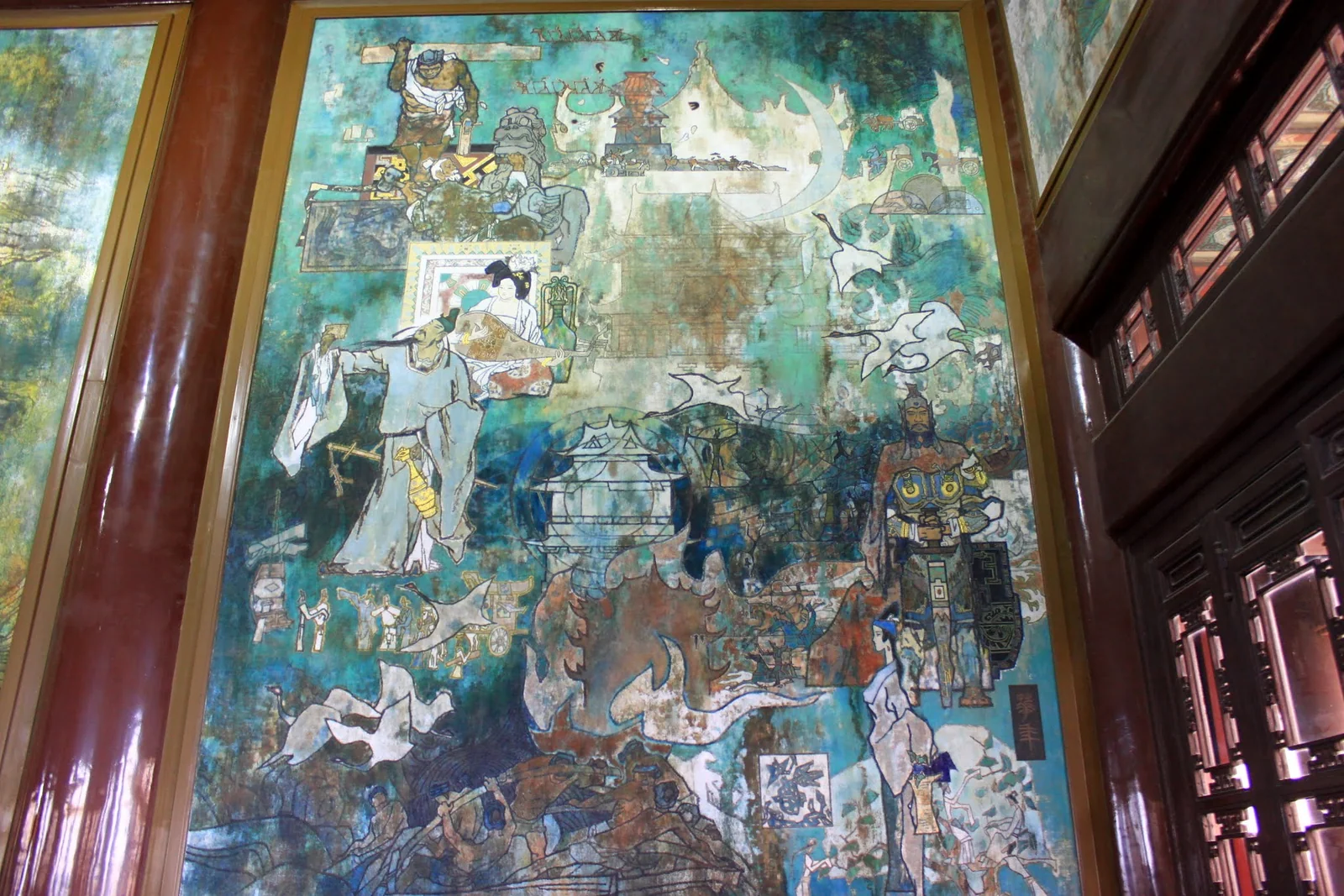
Level?! Cannot see it, right? Let us take this mural as an example. There are seven Yellow Crane Towers hidden inside.
Can you spot them? Yellow Crane Towers from all the past dynasties are painted in the mural, and each one implies elements of its own era.
The Qing dynasty tower is represented in the form of flames, implying that it was swallowed by fire.
The white one at the very top is the modern Yellow Crane Tower, which incorporates all six of the towers below it.
So when traveling, besides having fun, you also need to broaden your knowledge.
When I used to travel in Europe, it was not entirely because I could not bear to spend money on a guide. The main reason was that I could not understand what they were saying. ~.~'"
Even if I could understand, well, if someone tells me this beautiful bed in front of me was slept in by Louis XVI, so what? It is not like I knew him personally, right?
Speaking of this, when I was writing about the Yue Wumu Portrait Pavilion earlier and searching online, I kept reading about that famous general I had heard of since childhood, and suddenly he felt so close in front of me.
Emotionally, there was a little stir. I almost felt like throwing down my pen and joining the army...
That said, most famous foreign attractions now have Chinese audio guides available. Do not save that small amount of money. XD
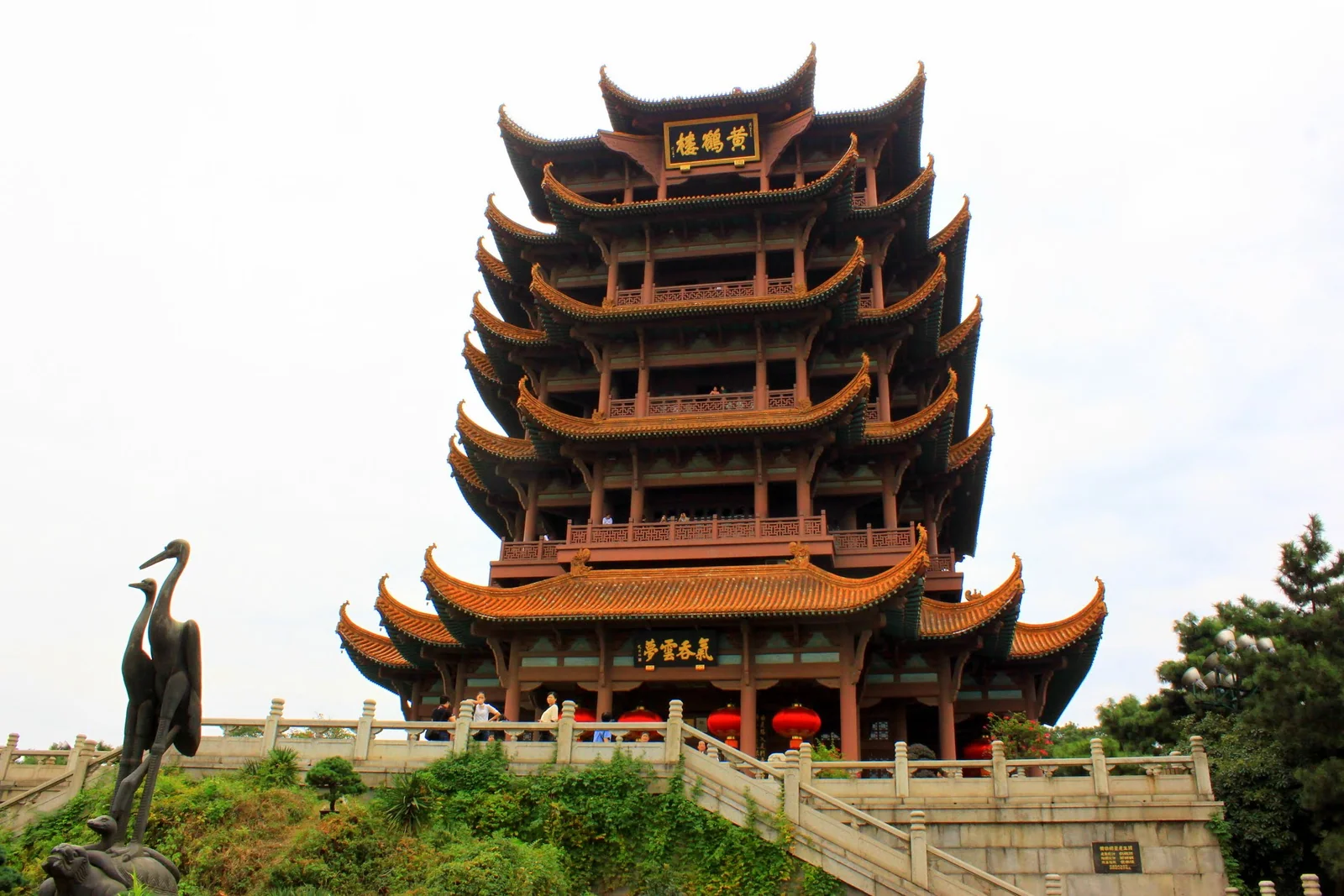
After coming downstairs, only from the river-facing side can you see the "Yellow Crane Tower" plaque.
Since we had come to Yellow Crane Tower, the Gebi Pavilion also has a story here.
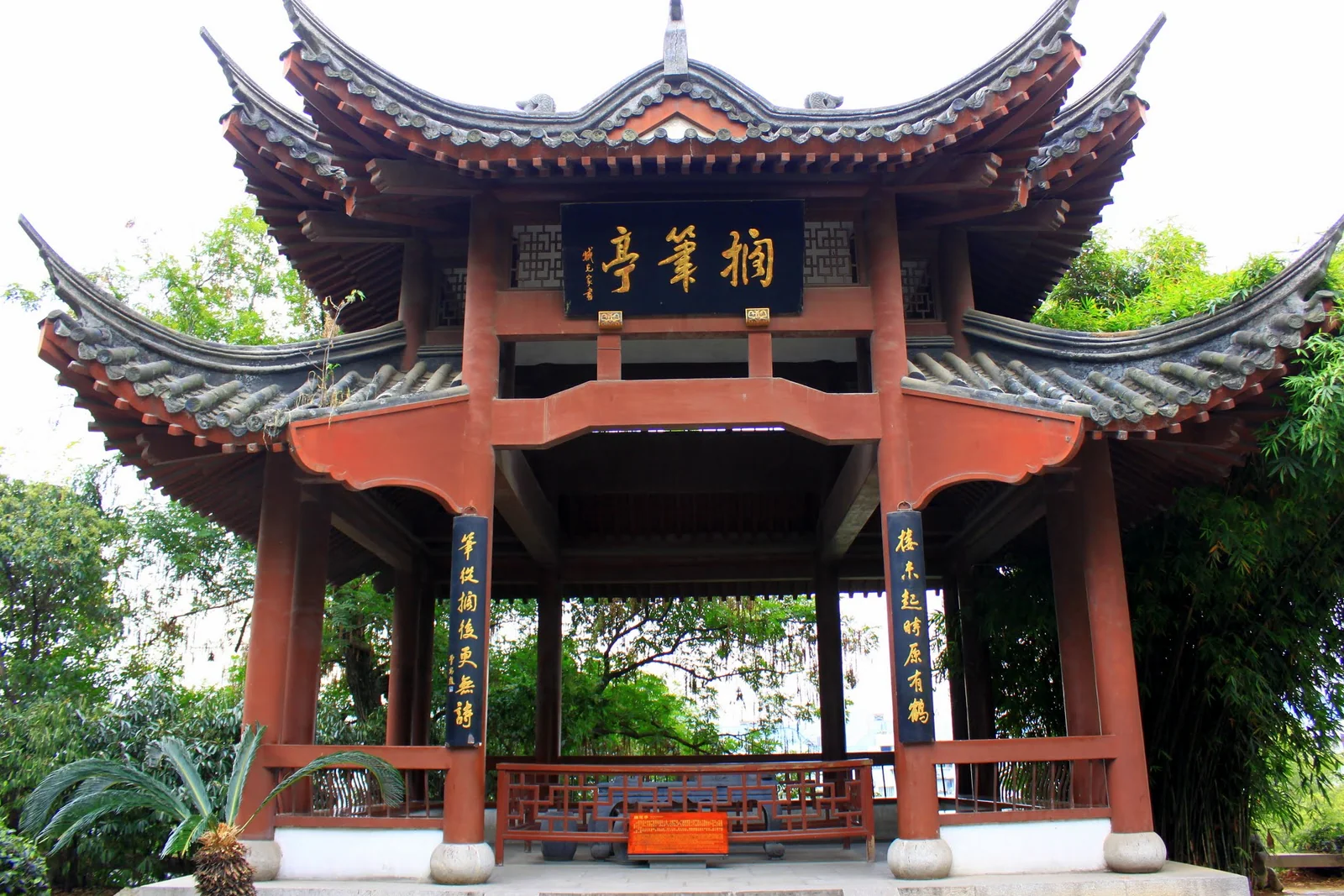
Its name comes from a famous Tang dynasty story: Cui Hao wrote a poem at Yellow Crane Tower, and Li Bai put down his brush.
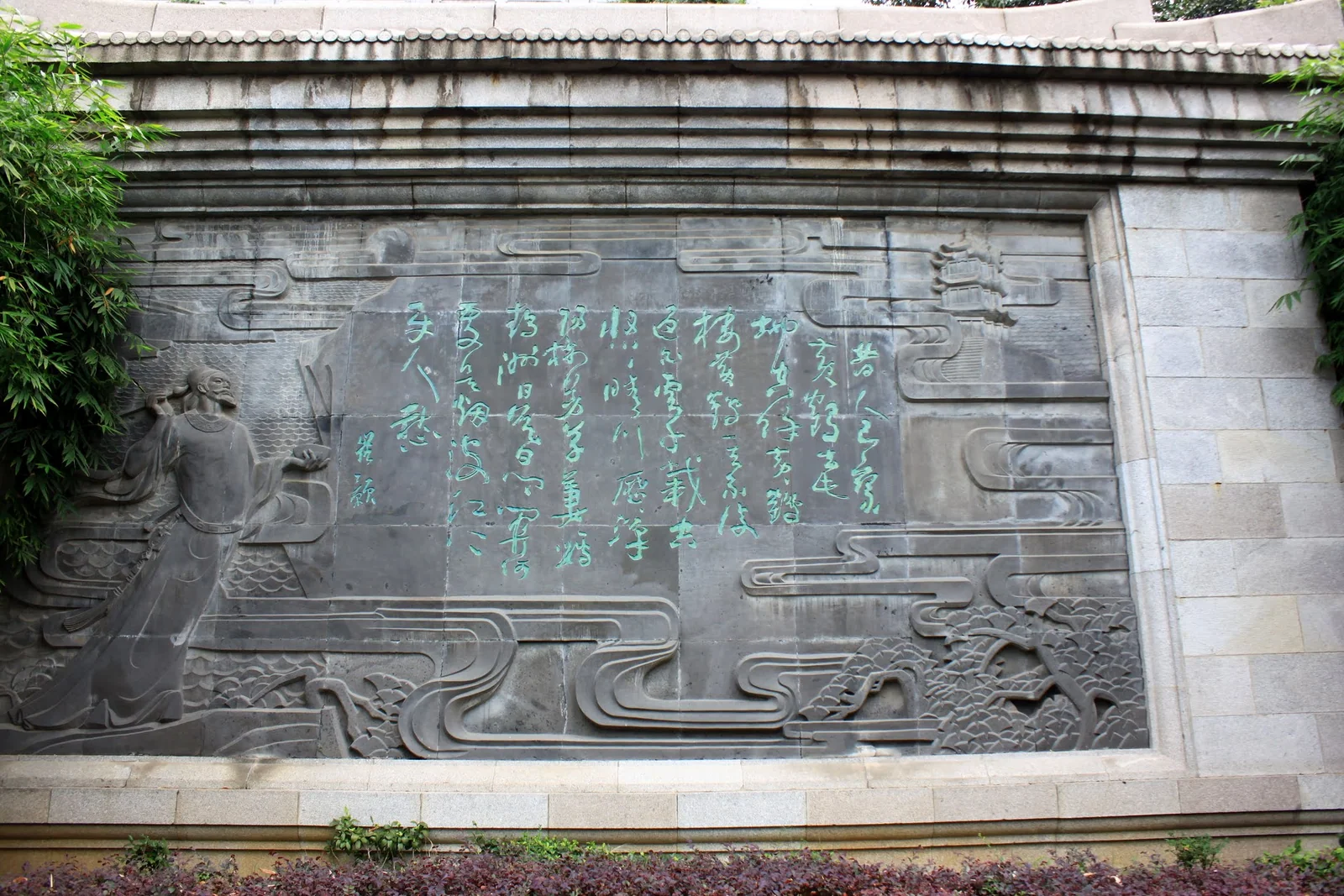
The story goes that Cui Hao was talented but unsuccessful.
One day, he climbed Yellow Crane Tower and wrote a poem titled "Yellow Crane Tower":
The people of old have ridden the yellow crane away; here remains only Yellow Crane Tower.
The yellow crane once gone never returns; white clouds drift for a thousand years in vain.
Across the clear river, Hanyang trees stand distinct; fragrant grasses grow thick on Parrot Isle.
At dusk, where is my homeland? The misty river fills me with sorrow.
The poem begins from the name of the tower. Against the background of vast space and long time, it immediately evokes a sense of eternity and worldly vastness,
while also revealing the poet's envy of ancient immortals and the frustration of his own unfulfilled career.
The poet, who had patriotic ambitions, could not use his talents, and thus developed a desire to leave the world behind.
But when his gaze turns toward the nearby scenery, it stirs a heavy homesickness.
This technique of opening outward and then drawing back combines imagination and reality in just the right way.
Not long after, Li Bai also climbed Yellow Crane Tower. He was so moved by the magnificent scenery that poetic inspiration surged, and he was about to write a poem. But when he saw Cui Hao's poem on the wall, he put down his brush,
sighed, and said, "With one punch I knock down Yellow Crane Tower; with one kick I overturn Parrot Isle. The scenery before my eyes cannot be written, because Cui Hao's poem is already above." He admired Cui Hao's poem that much.
Cui Hao's "Yellow Crane Tower" can be considered the number one seven-character regulated verse.
If you do not believe it, flip through common editions of Three Hundred Tang Poems. The first poem in the seven-character regulated verse section is "Yellow Crane Tower."
That concludes the story of Yellow Crane Tower. Next stop: Guiyuan Temple.
Related posts:
Three Days in Wuhan - Part 1: East Lake
Three Days in Wuhan - Part 2: Yellow Crane Tower
Three Days in Wuhan - Part 3: Guiyuan Temple
Three Days in Wuhan - Part 4: Hubei Provincial Museum
Full Photo Gallery
Previewing up to 8 album photos. Open the gallery to browse all photos.