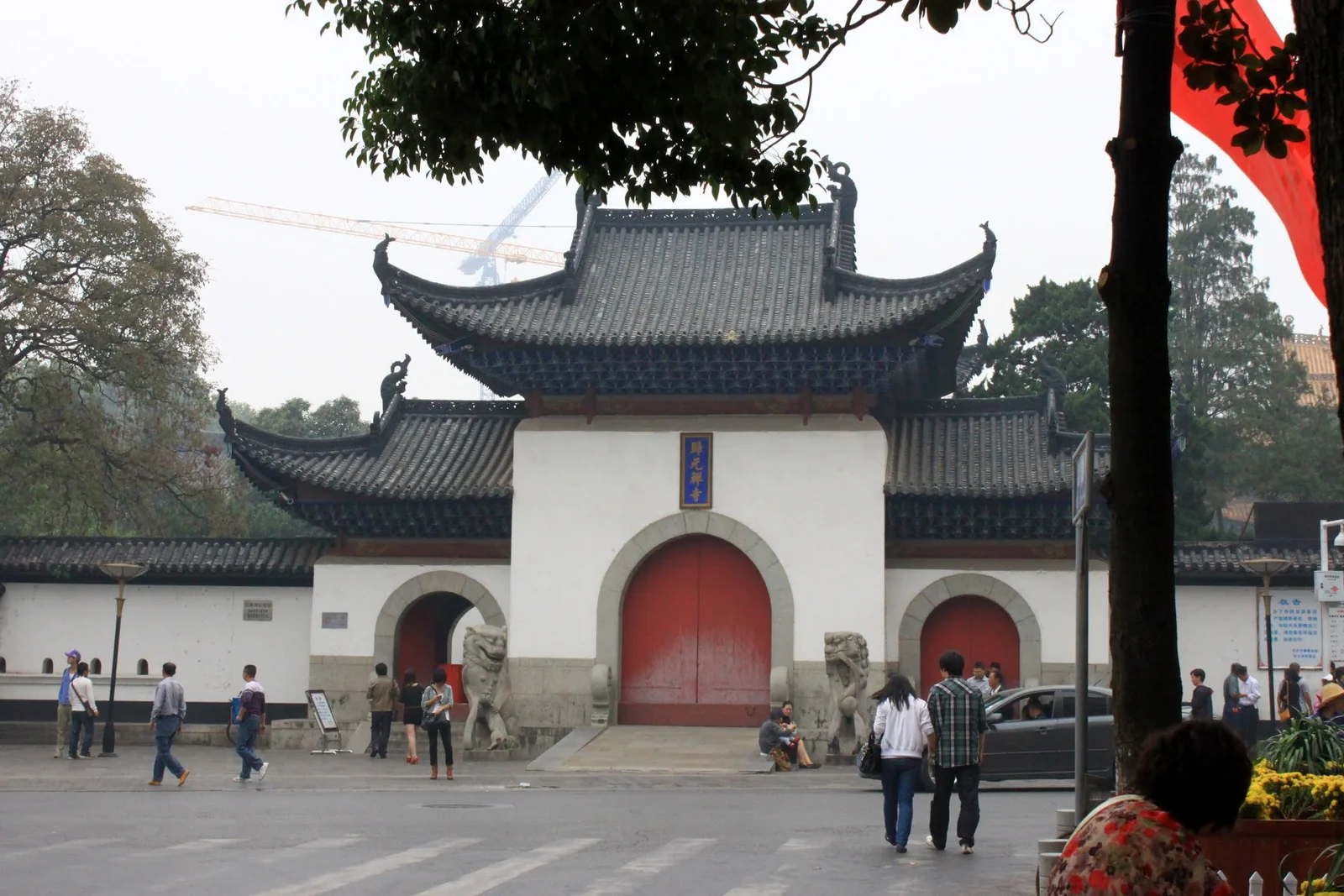
October 13, 2012. Wuhan. This day began at Guiyuan Temple.
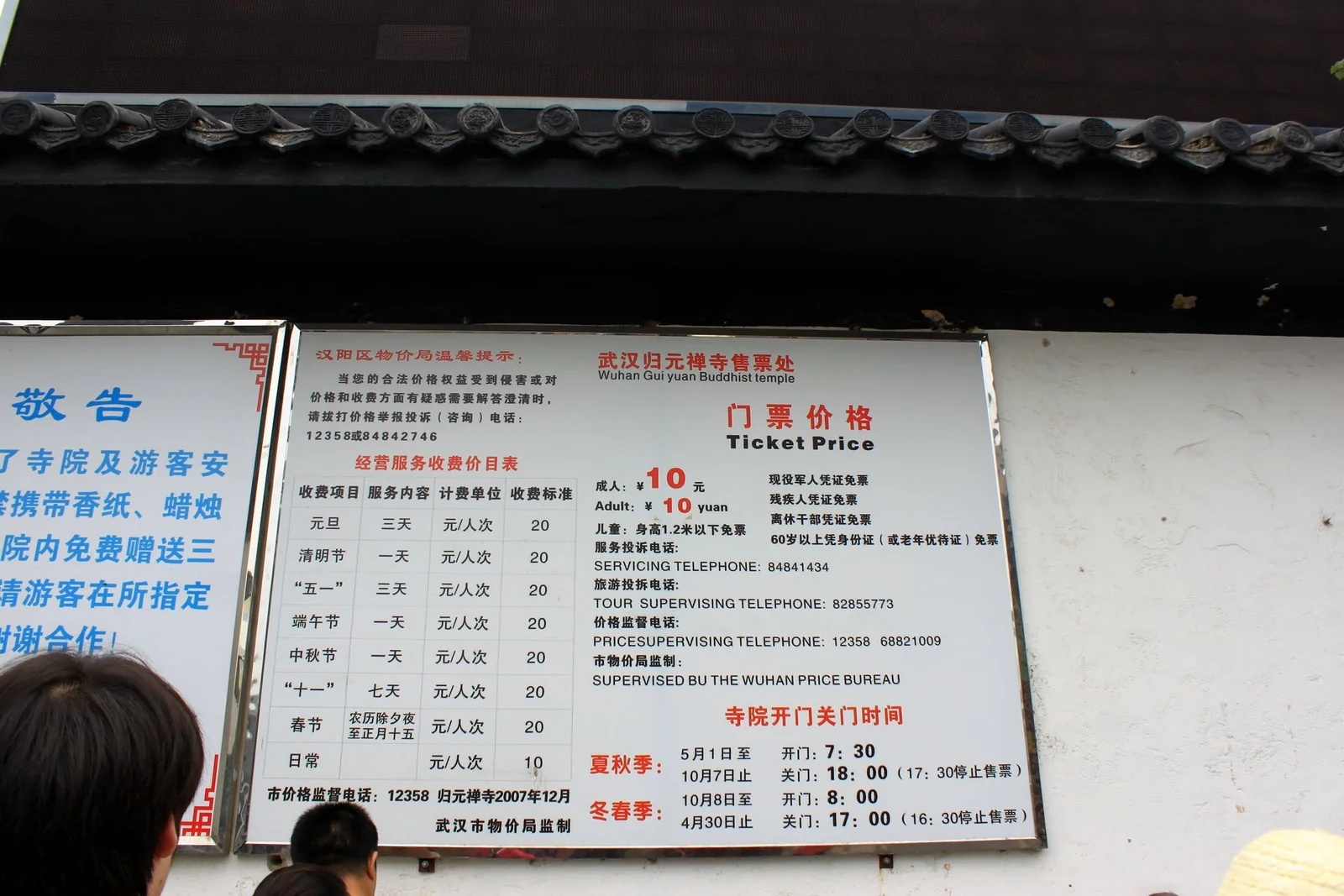
Guiyuan Temple was founded in the fifteenth year of the Shunzhi reign of the Qing dynasty, 1658, and is a key cultural relic protection site in Hubei. It is located on Cuiwei Road in old Hanyang. Although it is technically inside the city, in Hanyang District, transportation was not as convenient as I had imagined. The only bus route I found at the time was Route 401. A more practical approach was to first get to Yellow Crane Tower or the Hanyang end of the Yangtze River Bridge, then transfer from there.
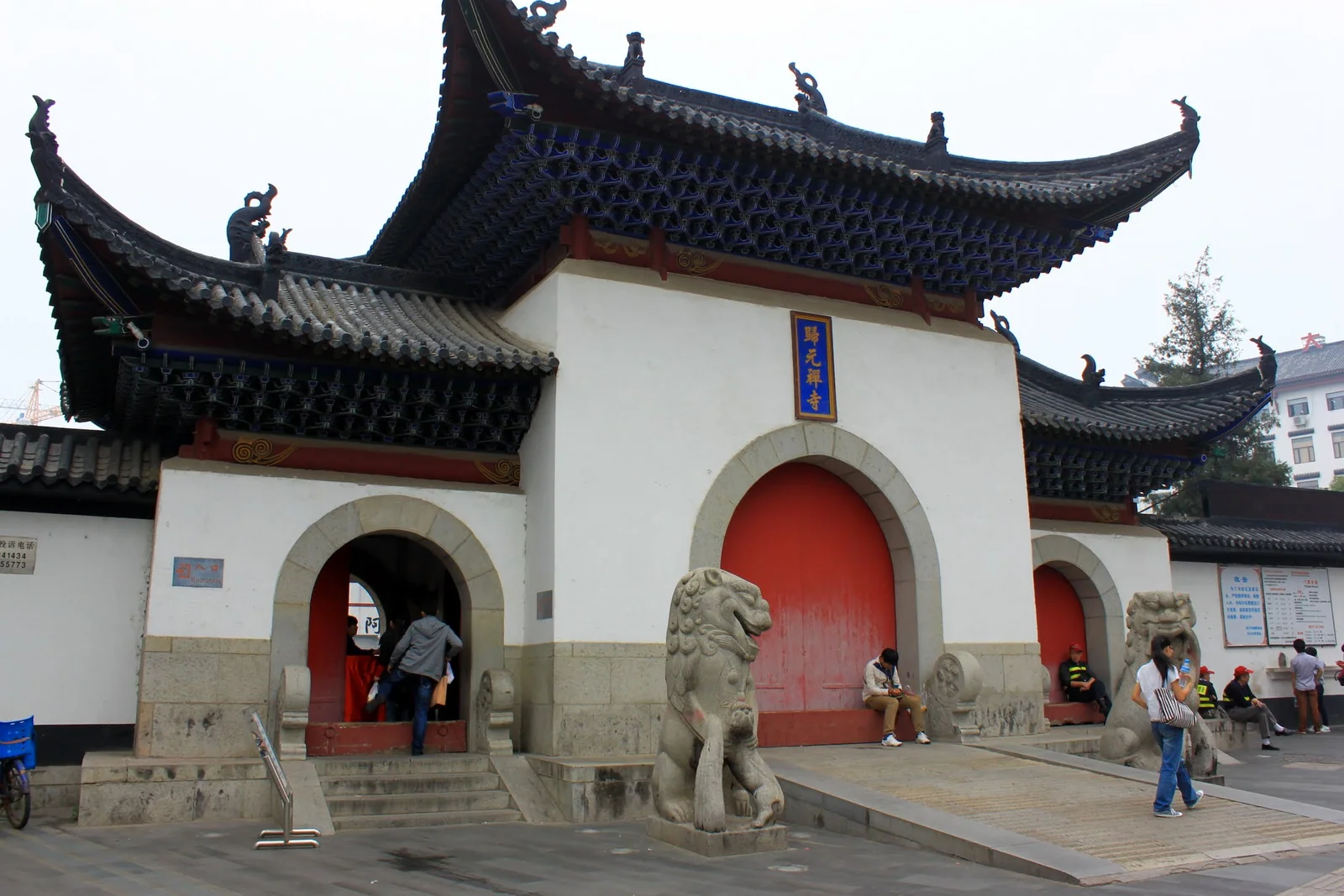
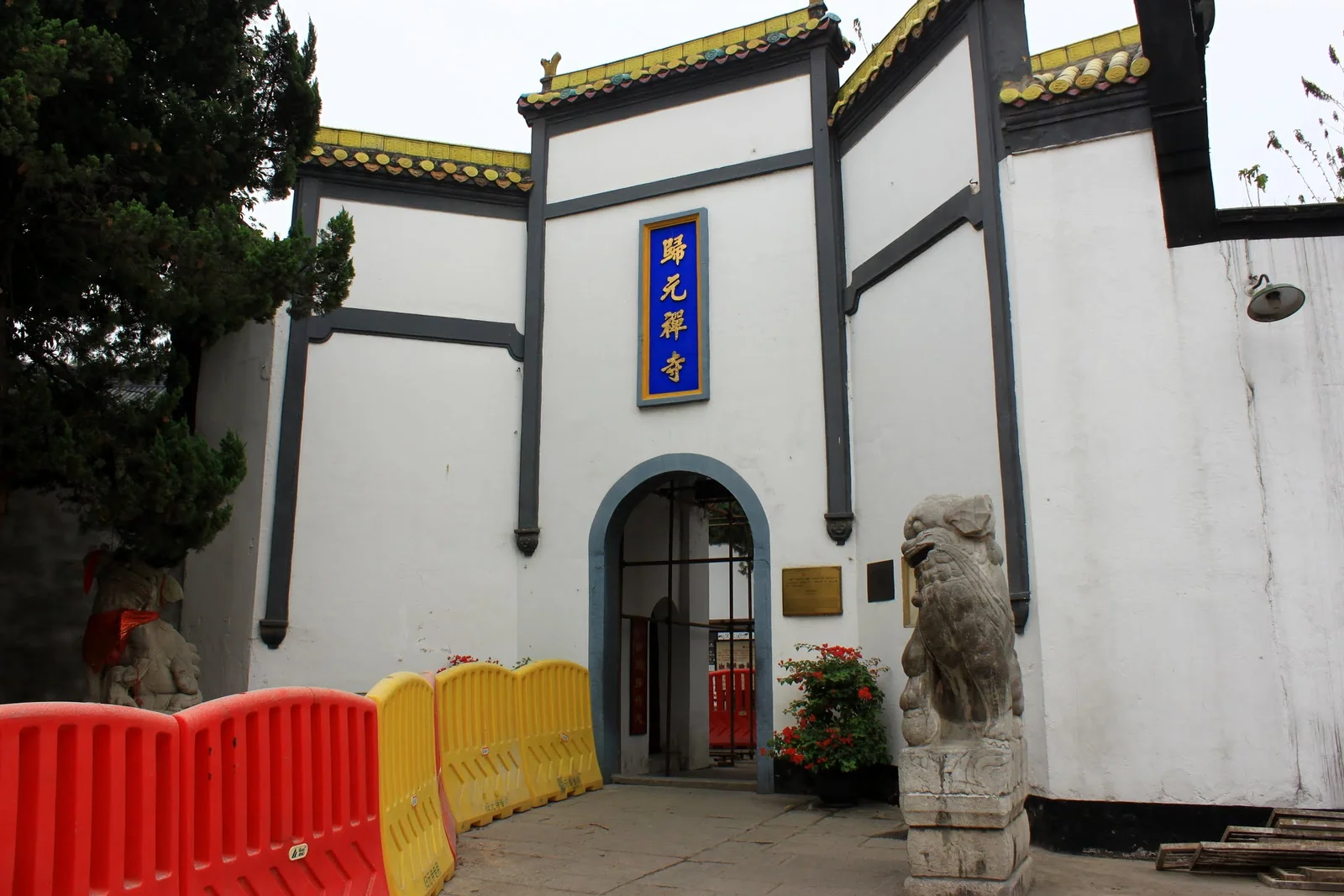
The name Guiyuan comes from a Buddhist phrase meaning that there is no second path in returning to the origin, yet there are many skillful means. Looking back while rewriting this post, that line actually feels very suitable for travel: the destination may be the same, but every person enters it from a different angle.
The more professional explanations below were mostly taken from Baidu Baike at the time. When we were actually walking through the temple, I had not done much homework. It was only when I came back and wrote the blog post that I realized how many details there were in each courtyard and hall.
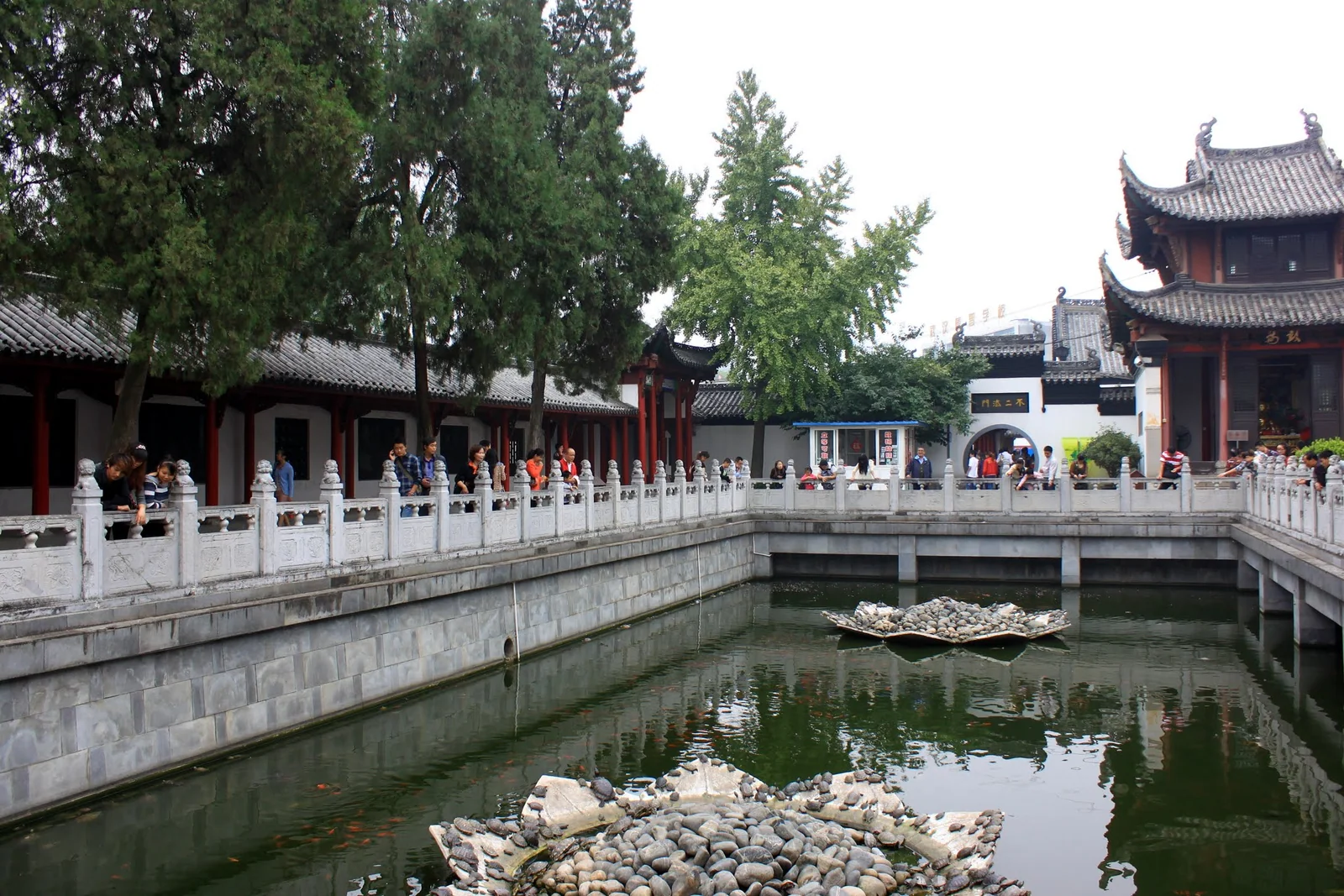
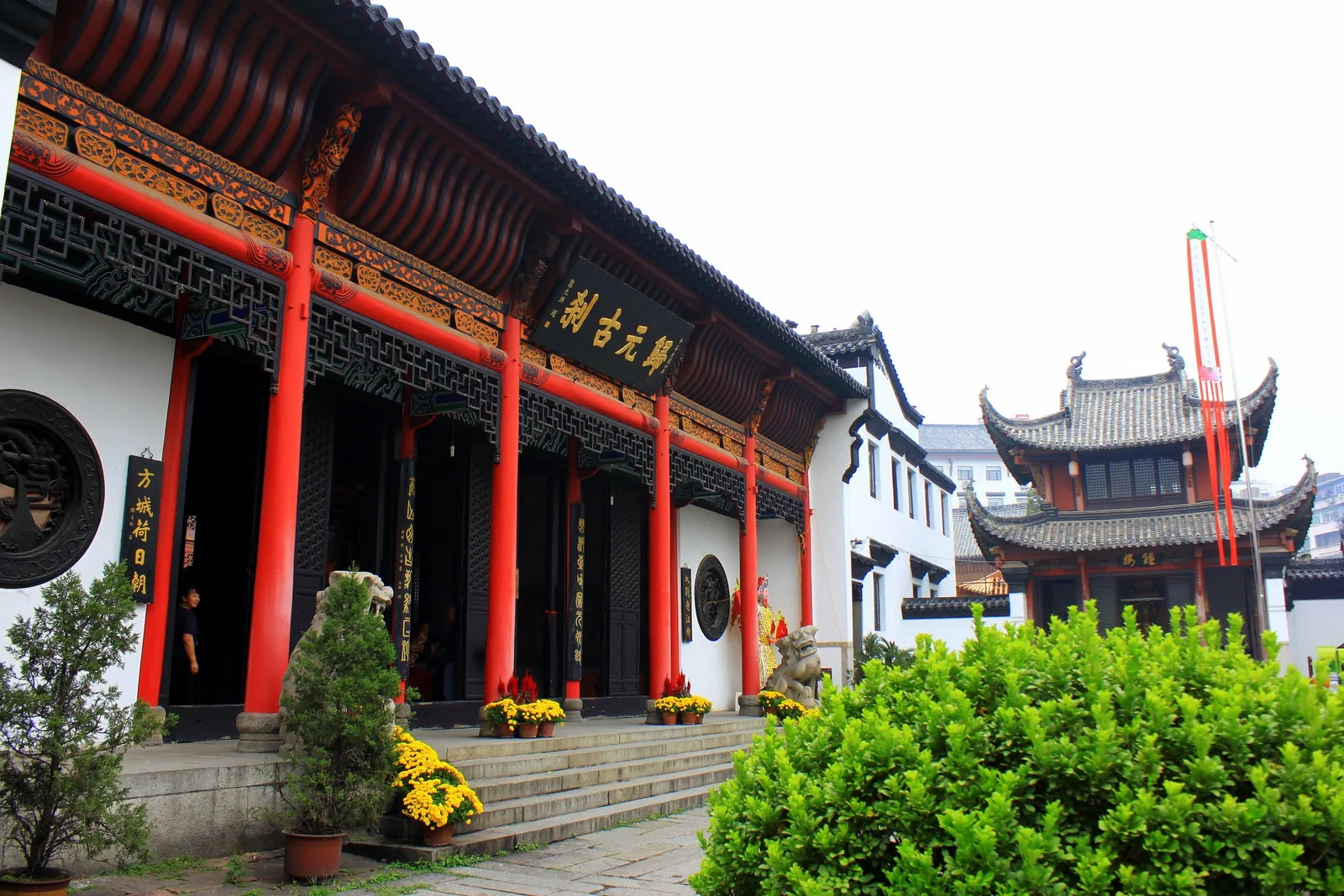
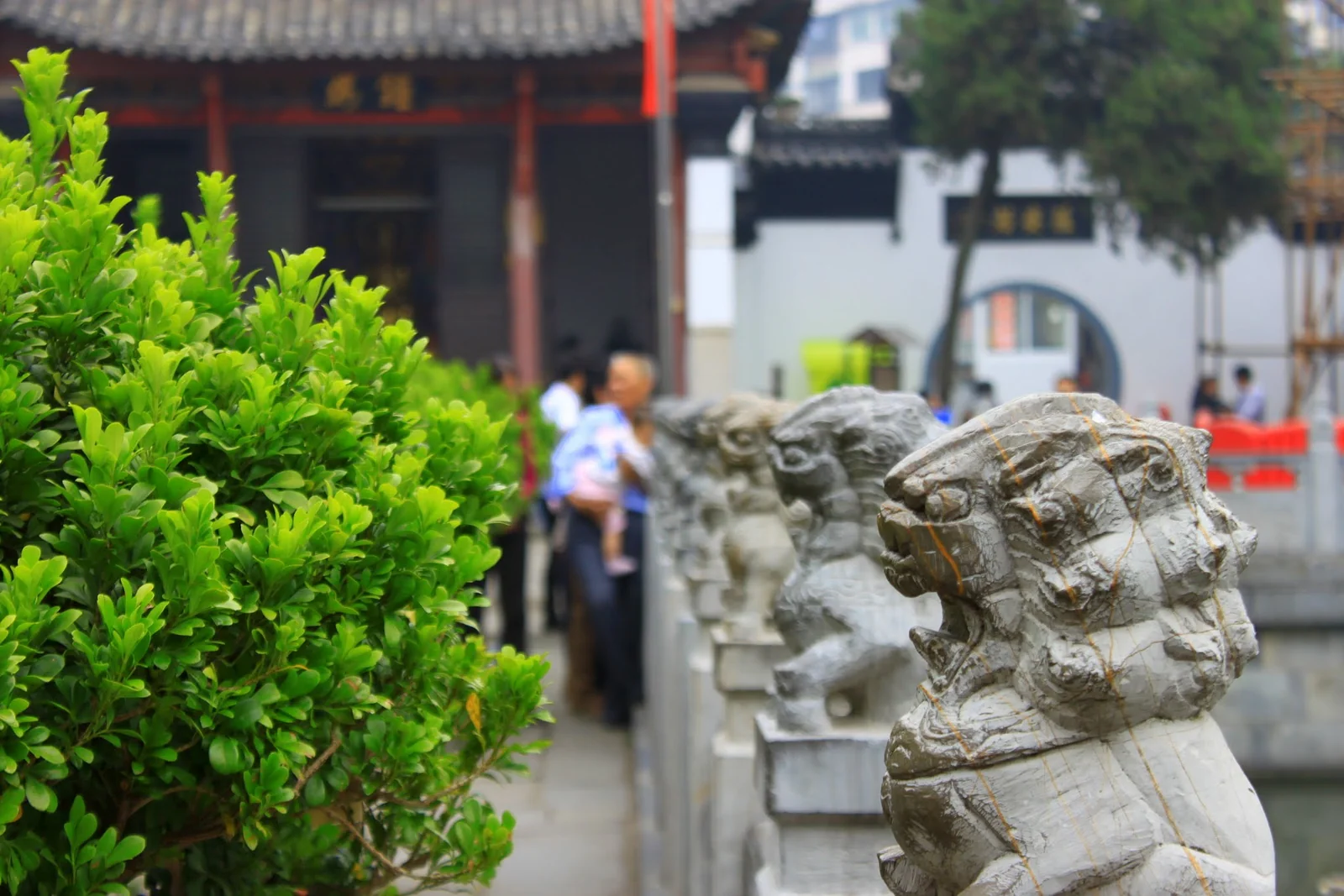
Inside the mountain gate is the central courtyard, with a life-release pond. On the two sides of the pond are the bell tower and drum tower. In the center is the Weituo Hall, and beyond that is the Mahavira Hall.
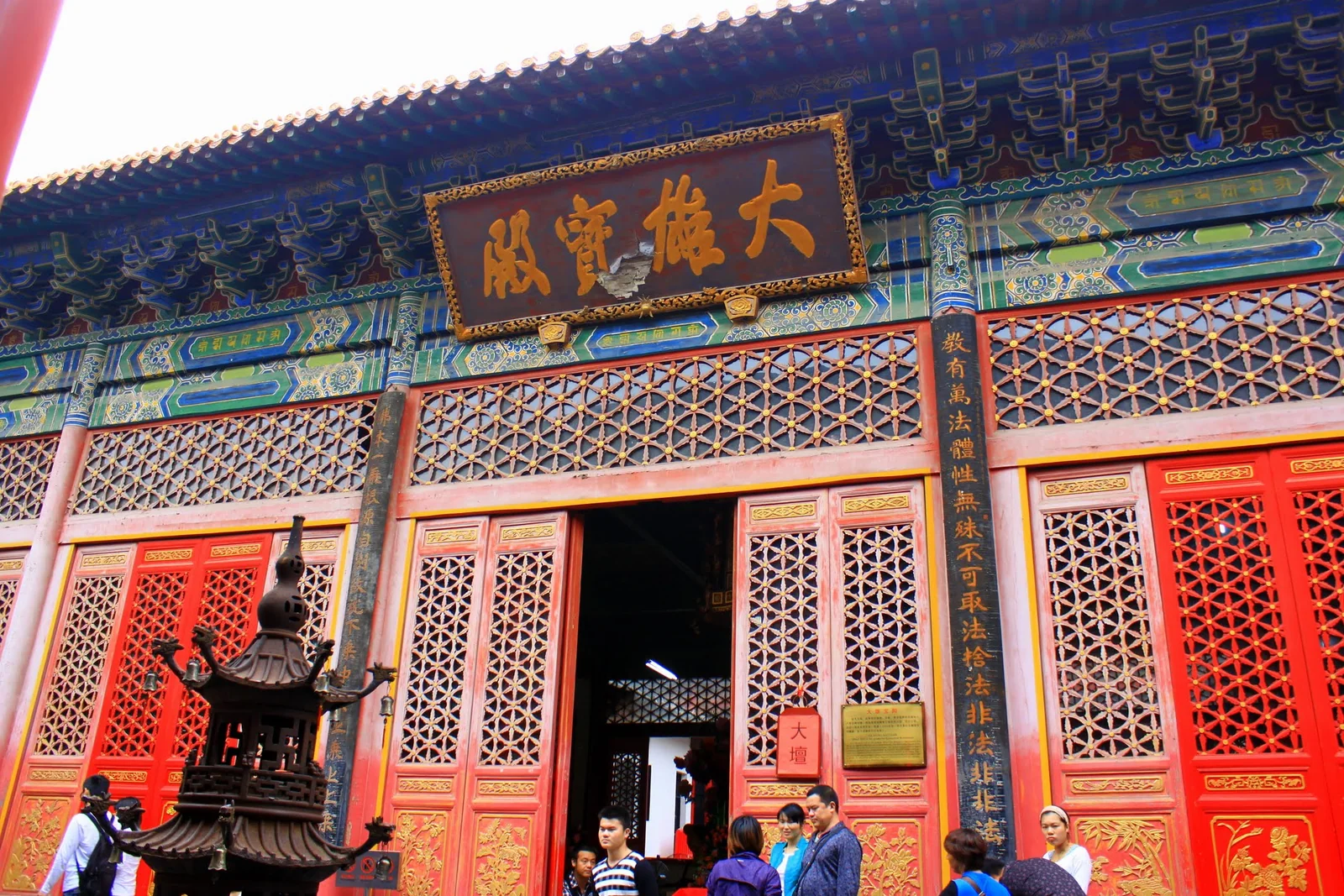
There was also a very down-to-earth legend: if you can get a coin to stick to the incense burner, whether by wedging, sticking, pasting, pinning, or somehow attaching it, as long as it does not fall off, your wish will come true.
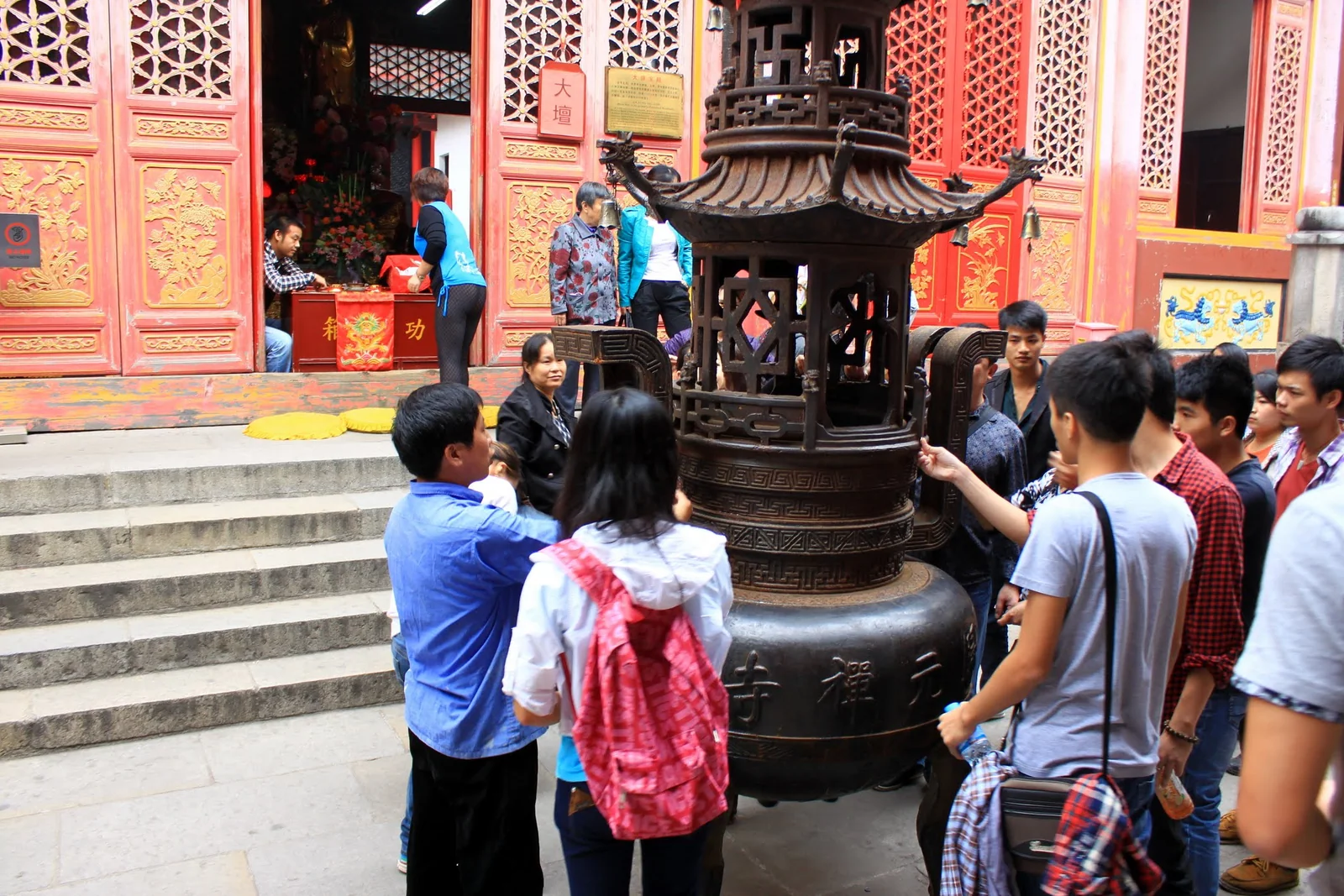
Look how hard these young people were trying. ~.~'"
Passing through the Gate of Non-Duality, we arrived at the southern courtyard.
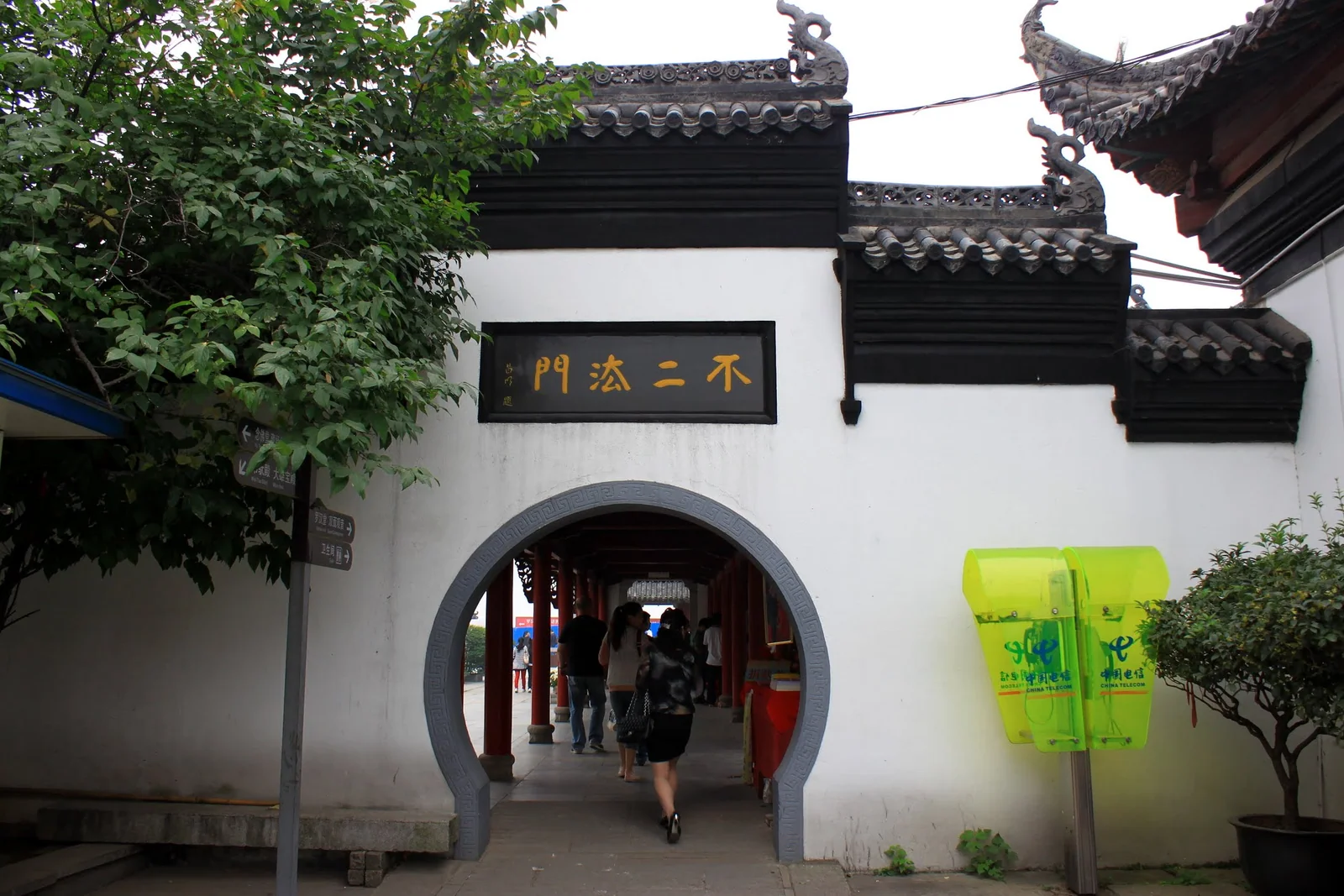
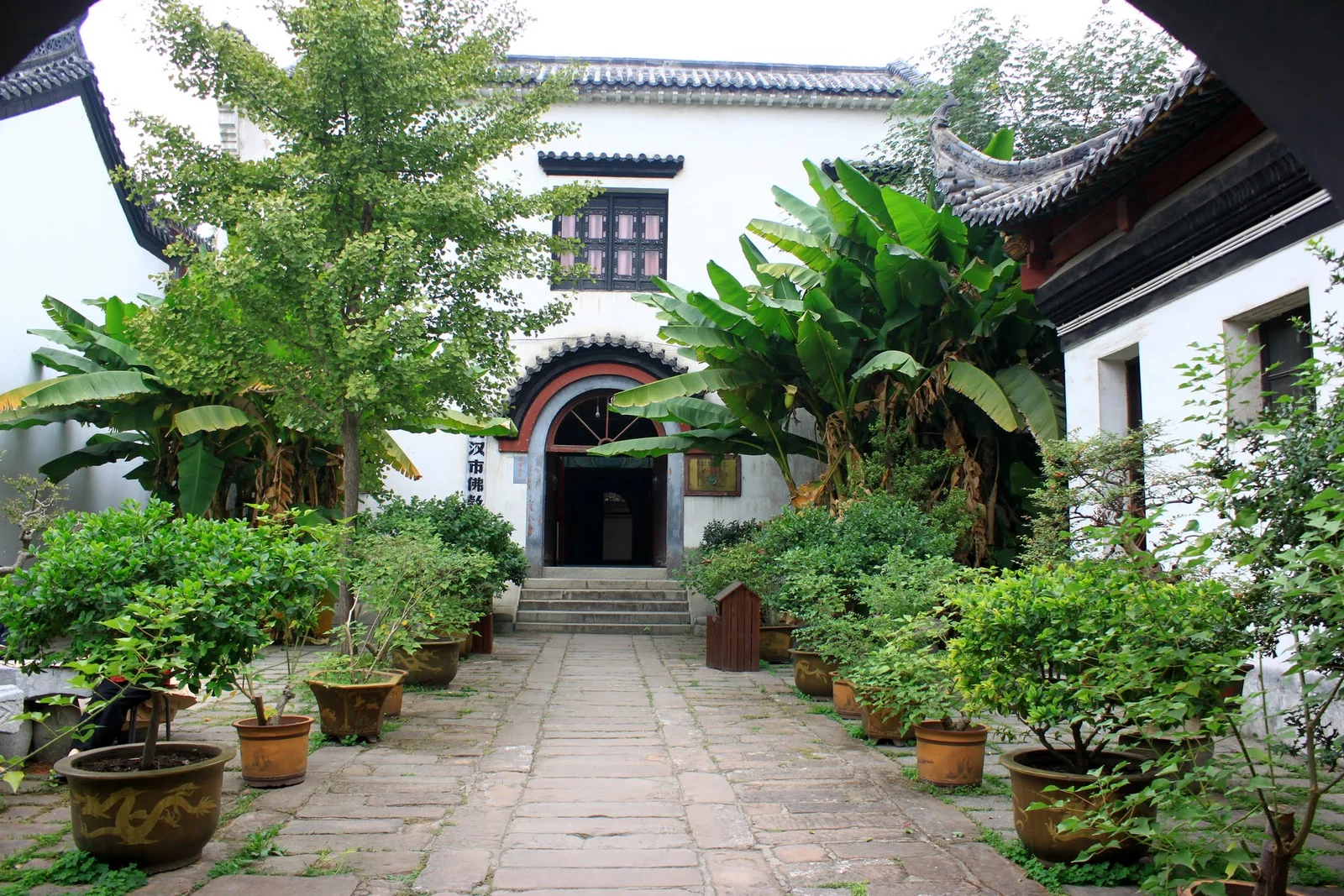
Arhat Hall And Counting Arhats
The main building in the southern courtyard is Arhat Hall, which houses 500 arhat statues made using a traditional sculptural technique. Each one has a different expression and posture, and together they are considered representative works of traditional Chinese Buddhist sculpture.
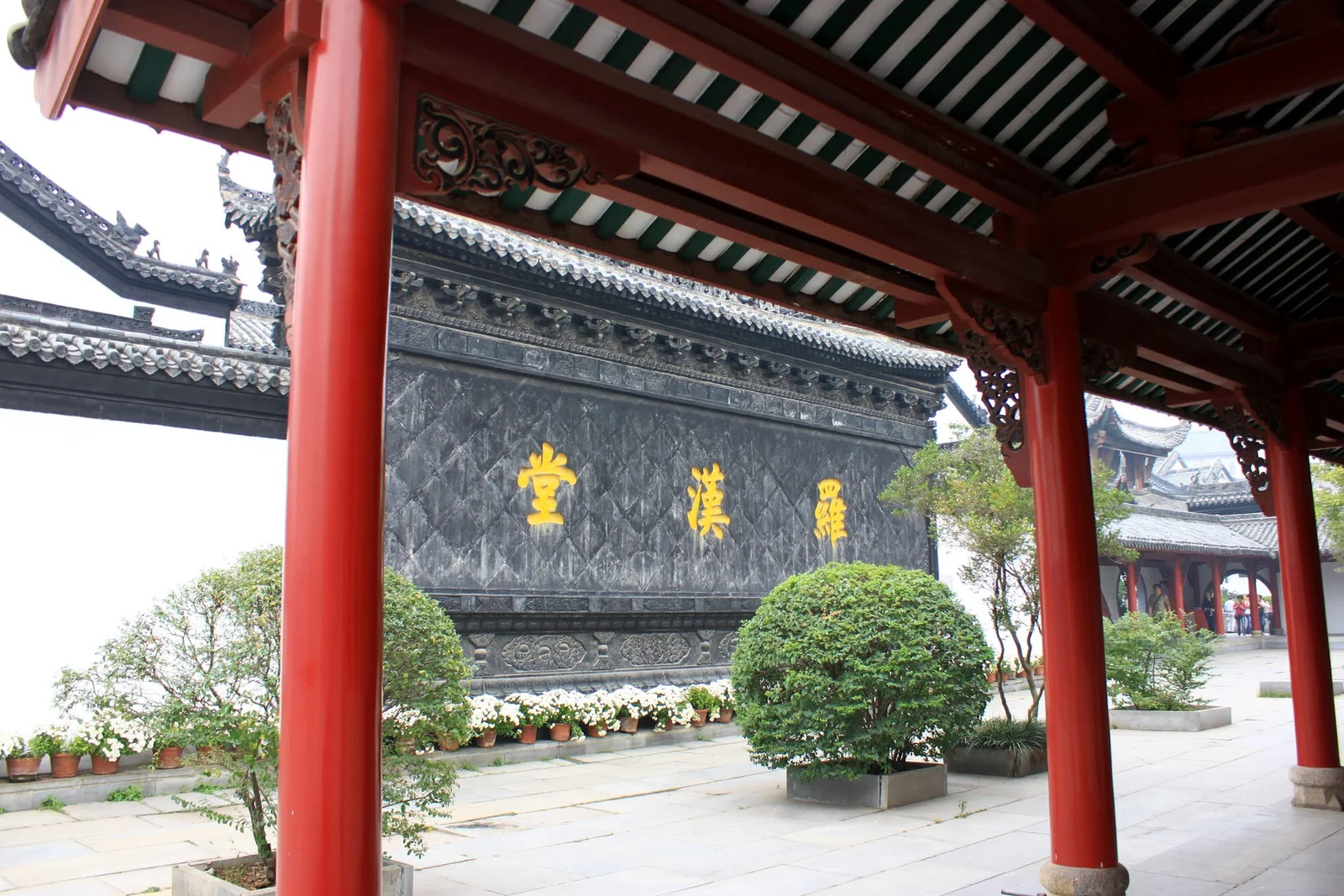
Arhat Hall was first built during the Daoguang reign of the Qing dynasty. It was destroyed by war in 1852, rebuilt in 1895, and completed in 1902. A folk saying names four representative arhat halls: Baoguang in Chengdu, Xiyuan in Suzhou, Biyun in Beijing, and Guiyuan in Wuhan.
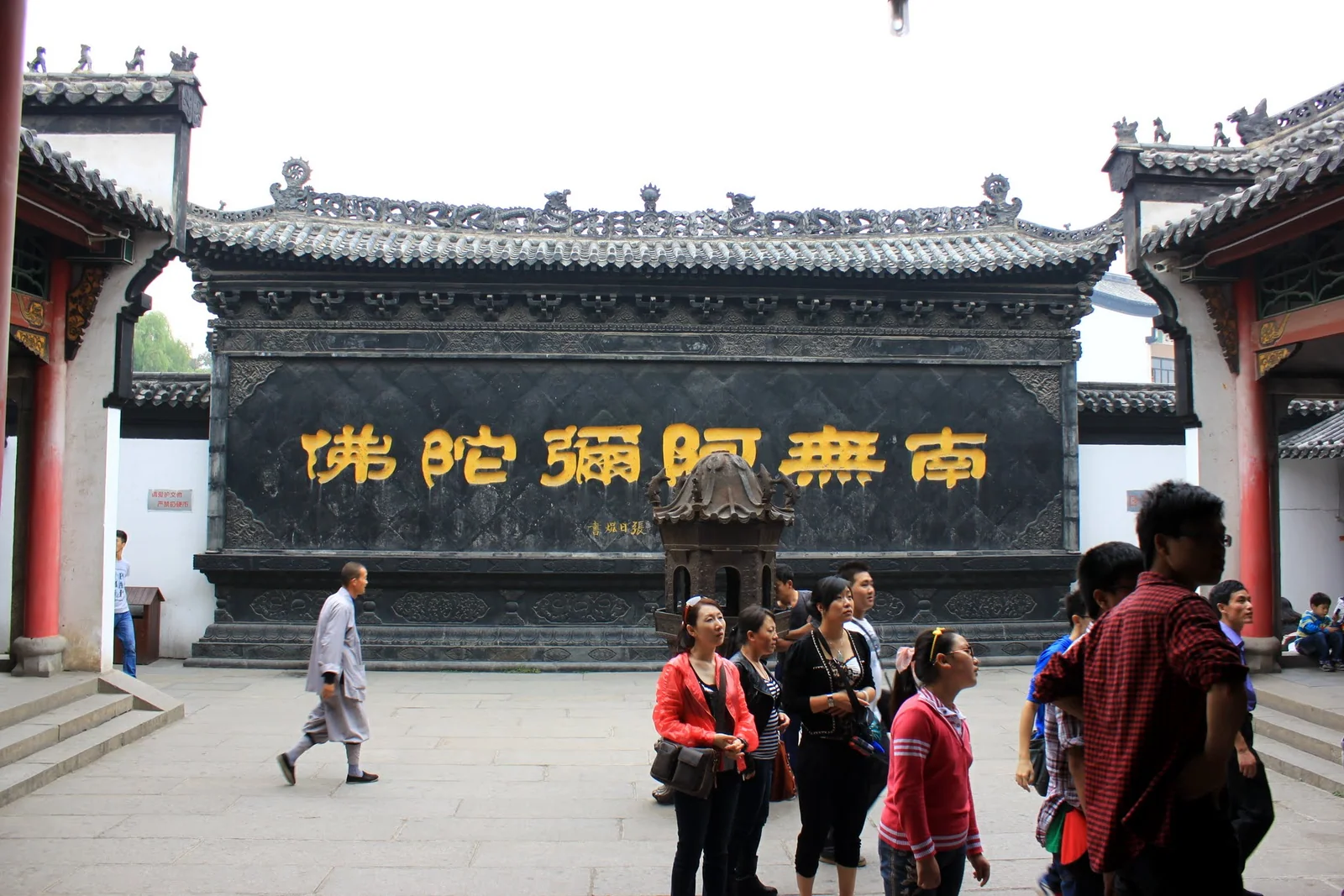
The layout of Guiyuan Temple's Arhat Hall forms the Chinese character for "field." Four small courtyards bring ventilation and light into the deep hall. Although 500 statues are arranged inside, the hall does not feel crowded, which makes the architectural layout feel both clever and practical.
The 500 arhats here were created by a father and son from Huangpi County in Hubei over nine years. Walking into the hall, you can see some sitting cross-legged, some reclining on rocks and looking at the sky, some reading Buddhist scriptures, and some driving away evil. Some look brave, some gentle, some innocent and simple, and some weathered by life.
The fun part of Arhat Hall is "counting arhats." Based on your actual age that year, you enter the hall, start from any arhat you choose, and count until you reach your age. That arhat represents your fortune for the year.
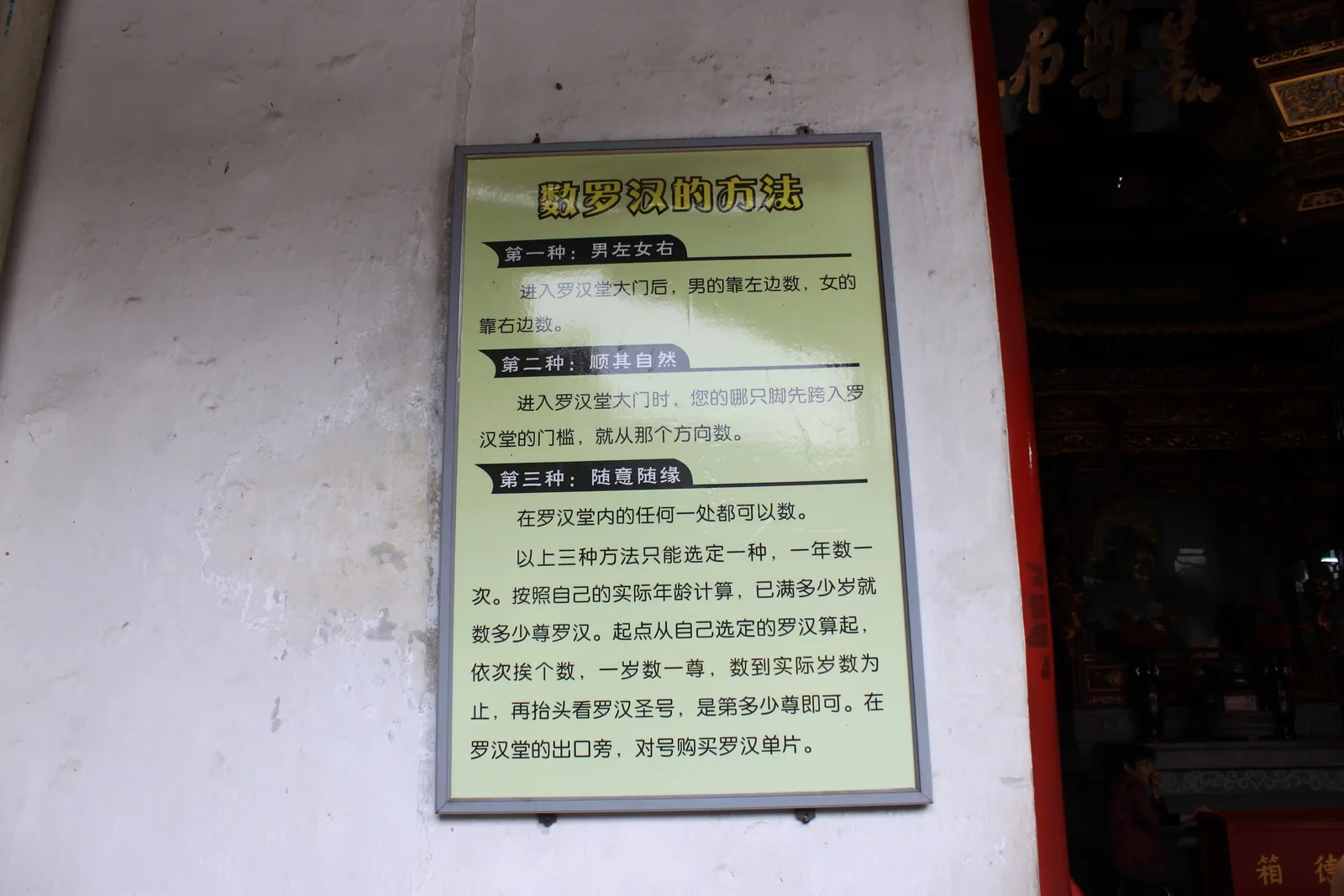
How do you find out what that fortune means? You have to go outside and buy the corresponding arhat card.
But I was afraid of casually drawing something bad for no reason, so I just counted for fun and came back out. When traveling, sometimes you also need to know what to take seriously and what to leave at that. XD
Hello everyone, I am Belle...
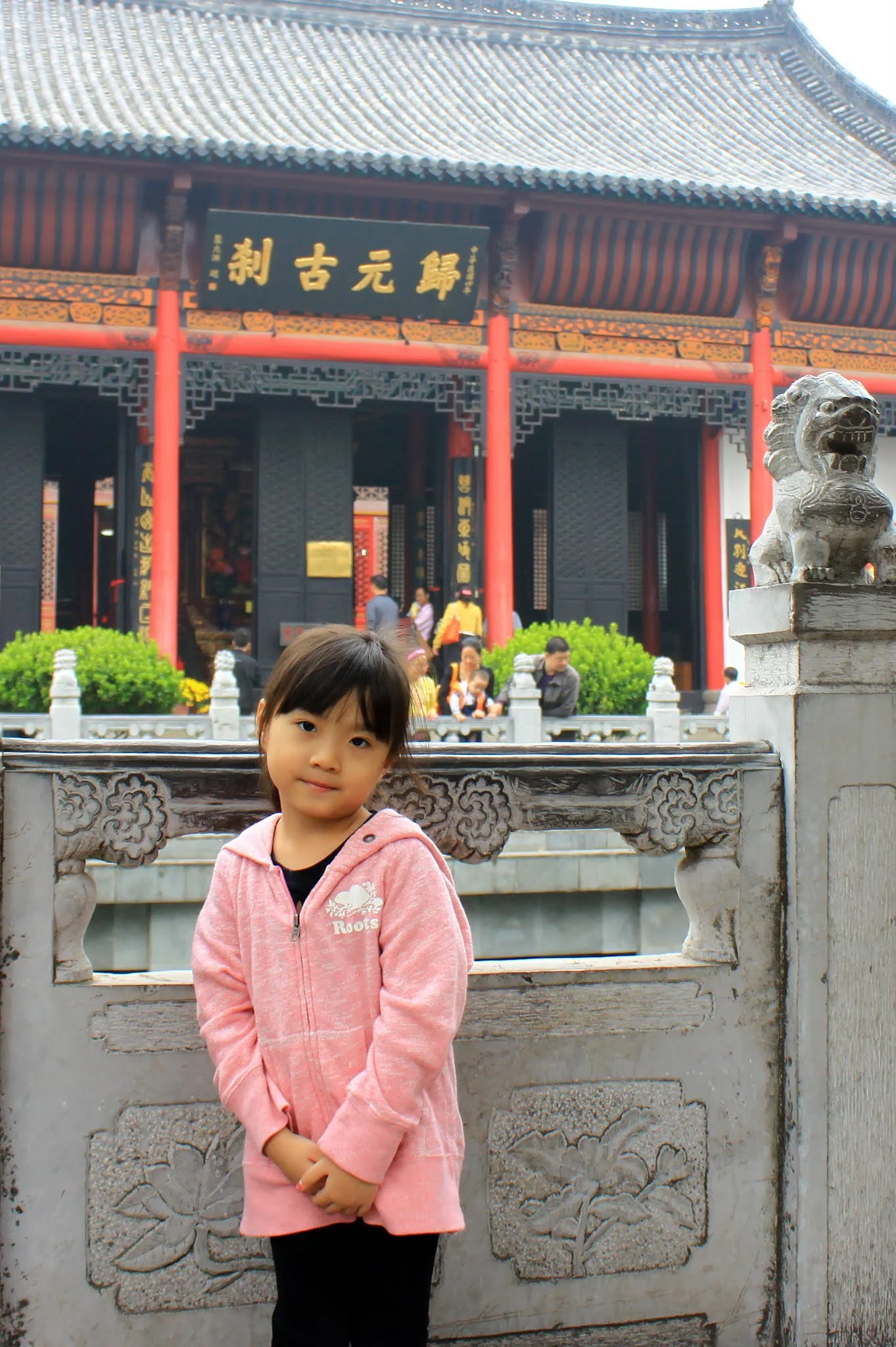
This one works as Belle's little 2012 temple proof shot, with plenty of "I was here" energy!!
Northern Courtyard And The Sutra Library
We walked back through the central courtyard.
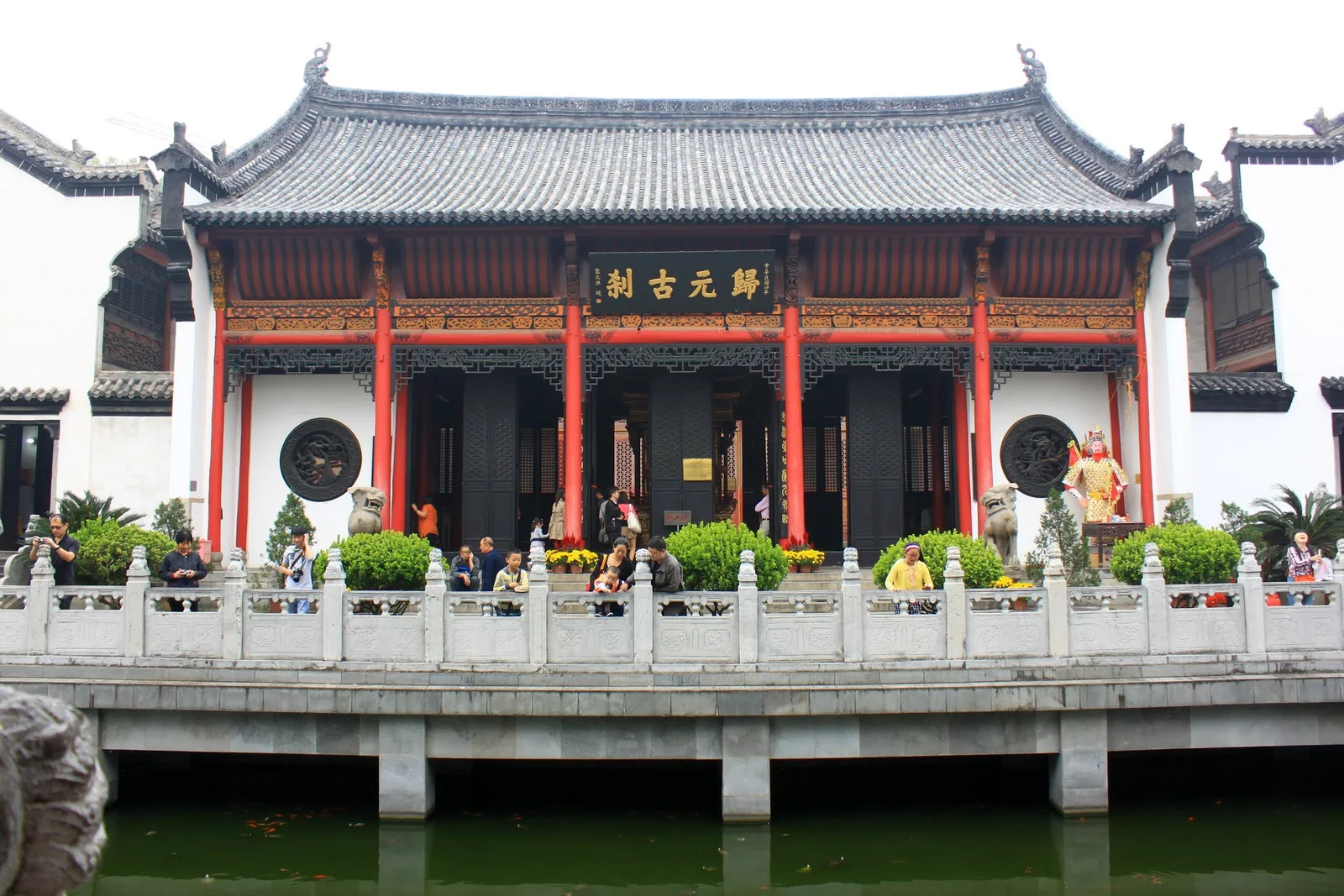
The main buildings in the northern courtyard include the Sutra Library, Dashi Pavilion, Cuiwei Well, and other structures.
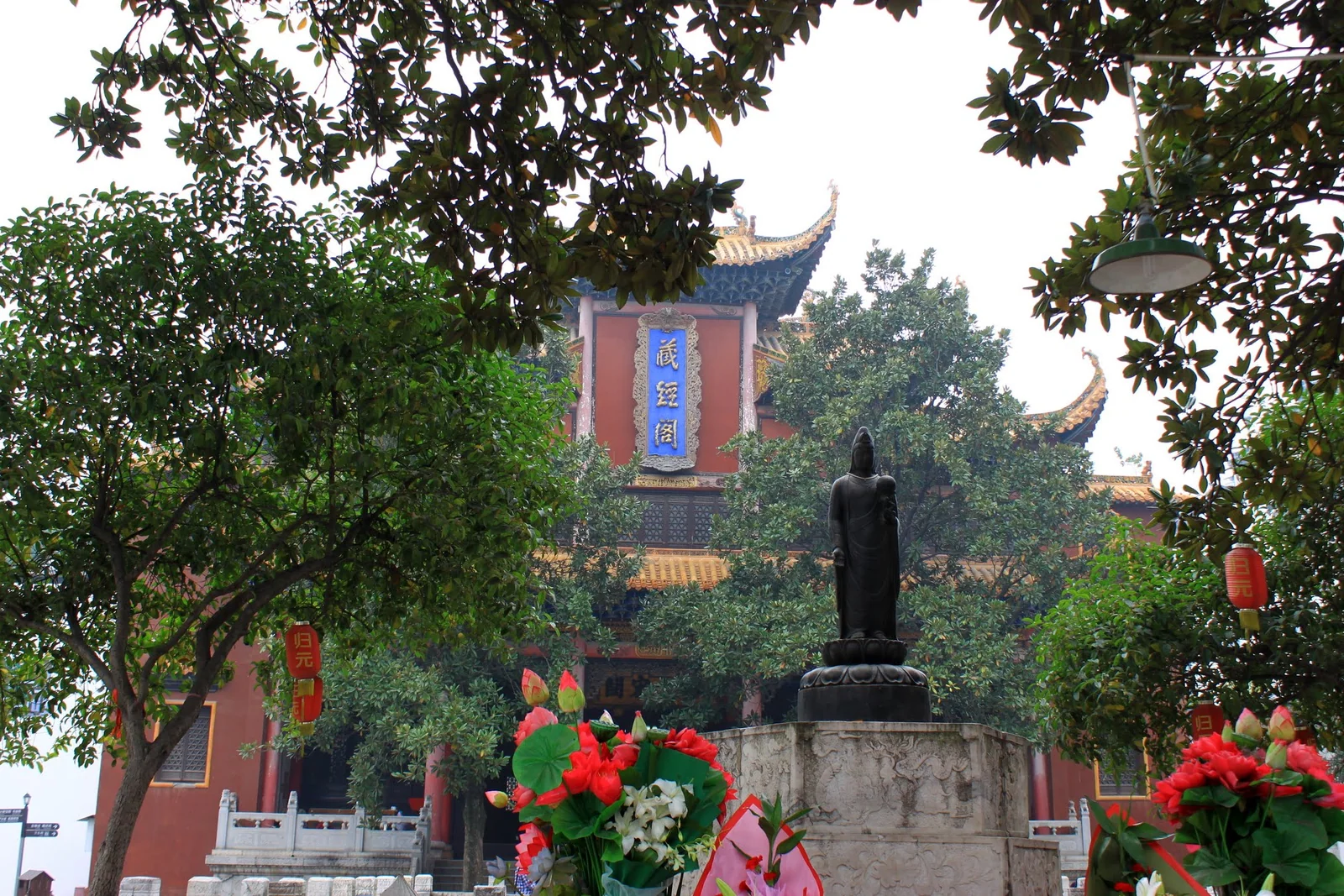
The Sutra Library was built between 1920 and 1922. It is a two-story pavilion-style building with five bays, about 25 meters tall. Its roof has beast-head ridges, fish-shaped corner ornaments, bracket sets, and flying eaves, while the front includes decorative elements such as full-height columns, twin phoenixes facing the sun, and five dragons playing with a pearl.
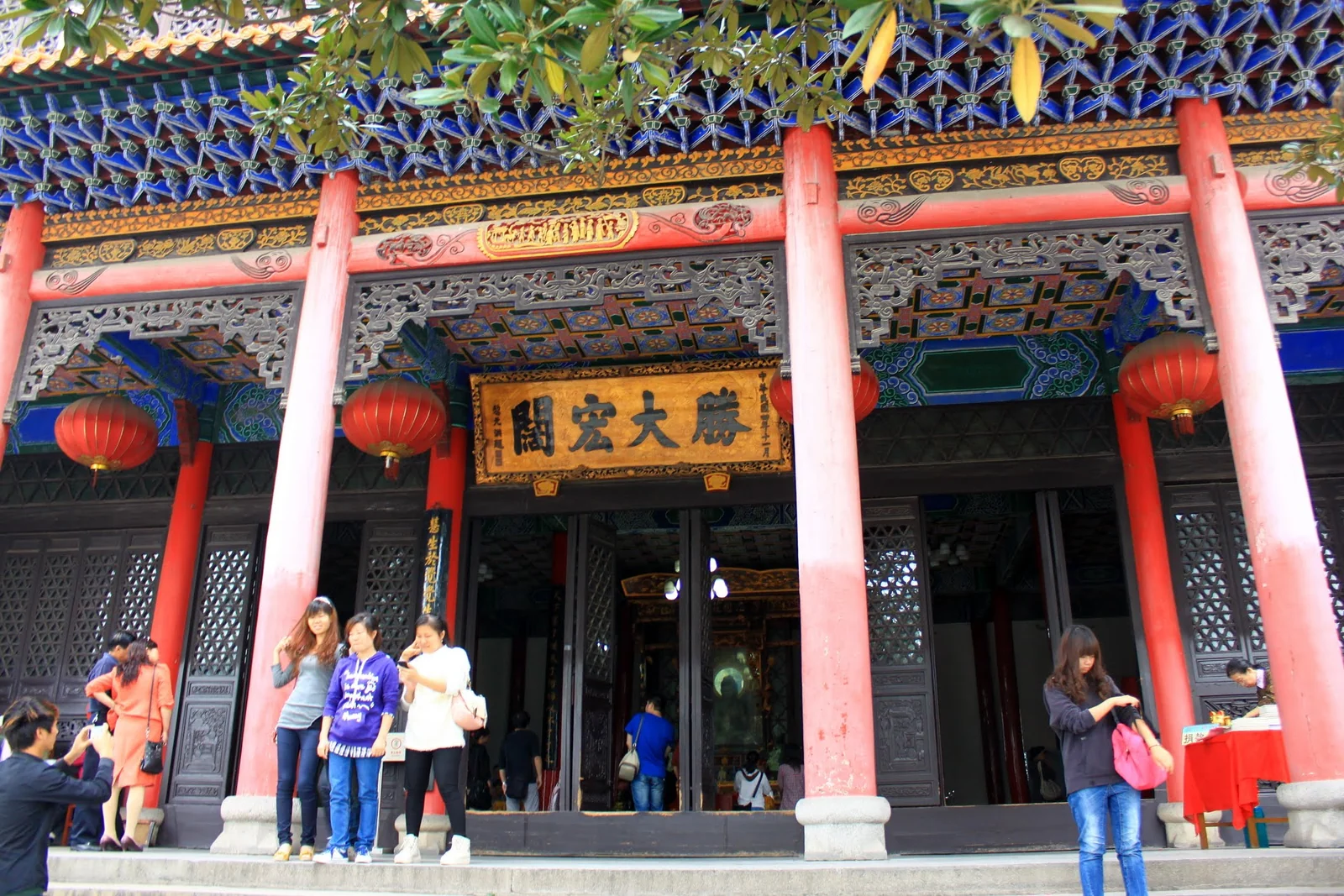
From doors to windows, the building is painted, carved, and decorated in detail. The information I found at the time said this was the only brick-and-wood ancient building in Wuhan.
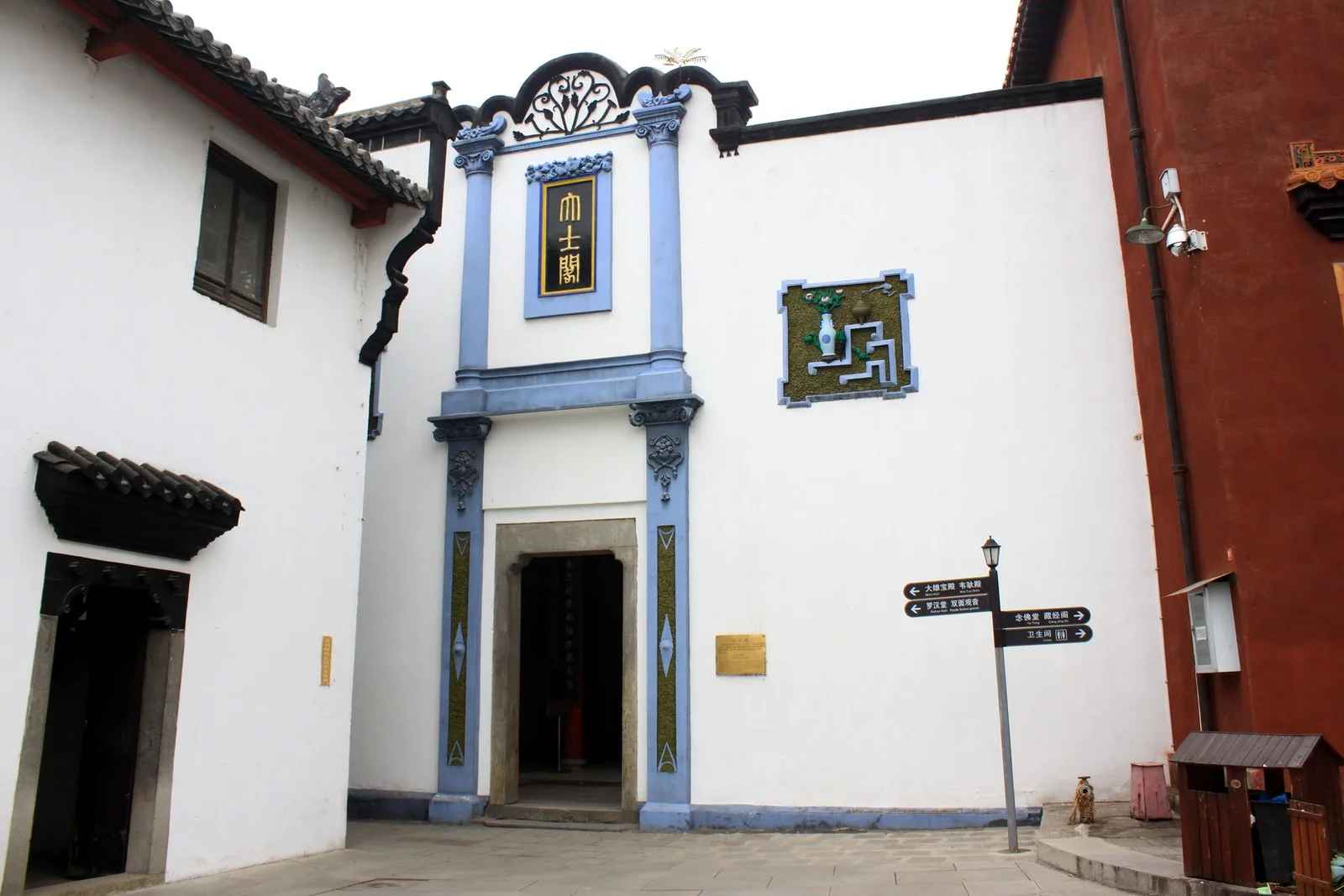
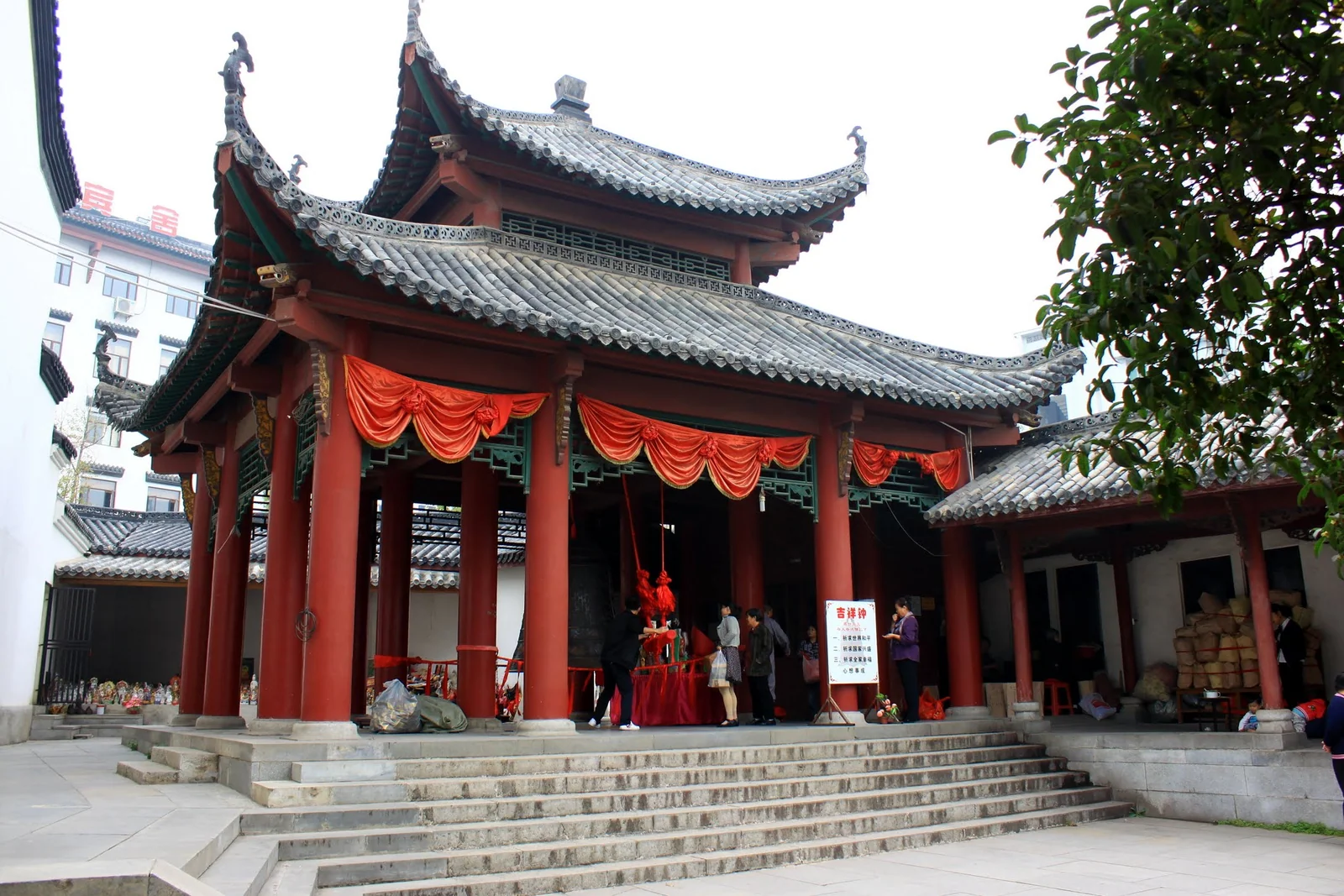
We came to Guiyuan Temple because it was famous, but in reality I had not done much research before visiting. Only when I came back to write the post did I realize there were so many details to look at. ~.~'"
Maltose Candy By The Bus Stop
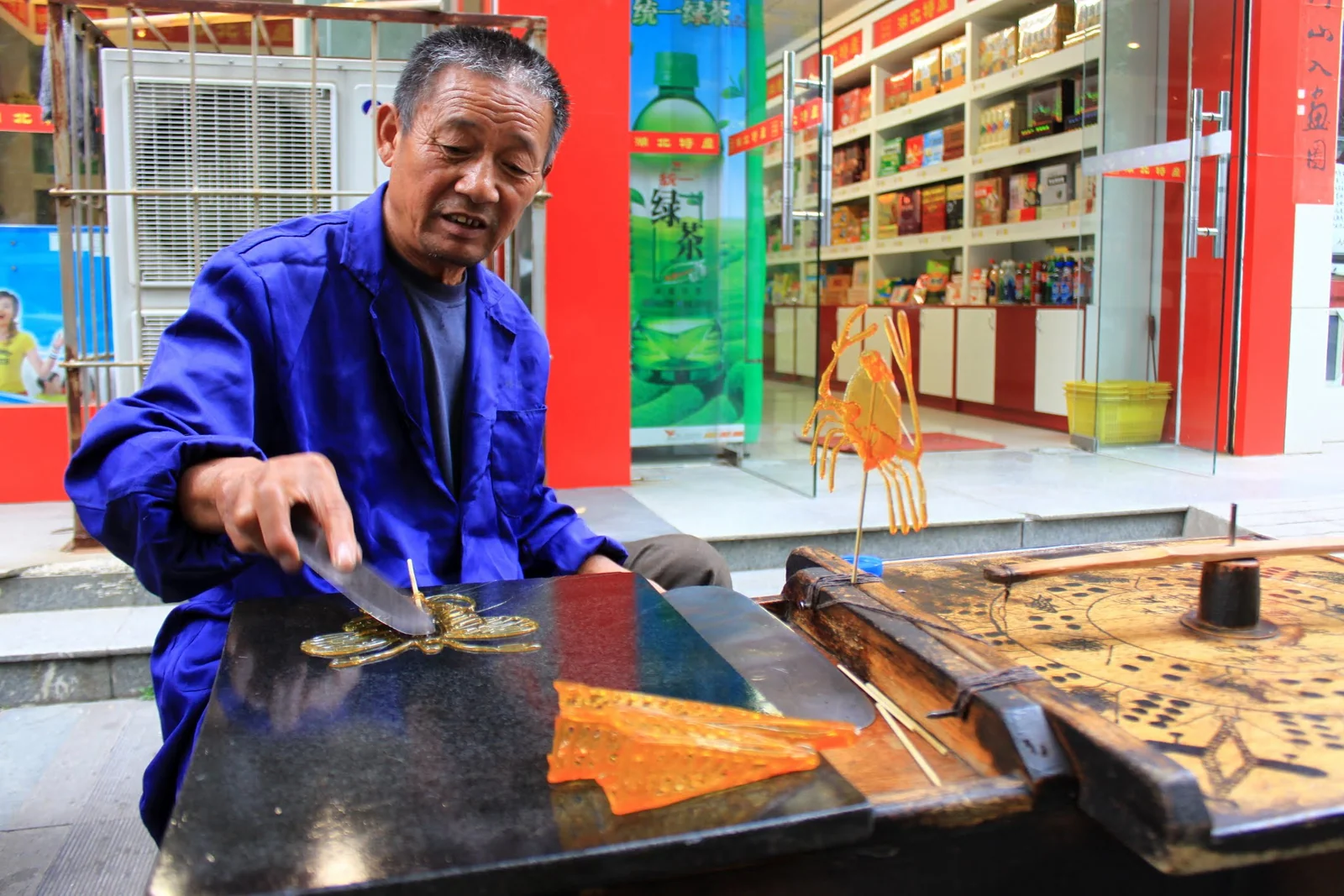
While waiting for the bus back, we saw a master making maltose candy nearby.
Ta-da! Because she behaved very well today, she received one butterfly fairy. ^.^
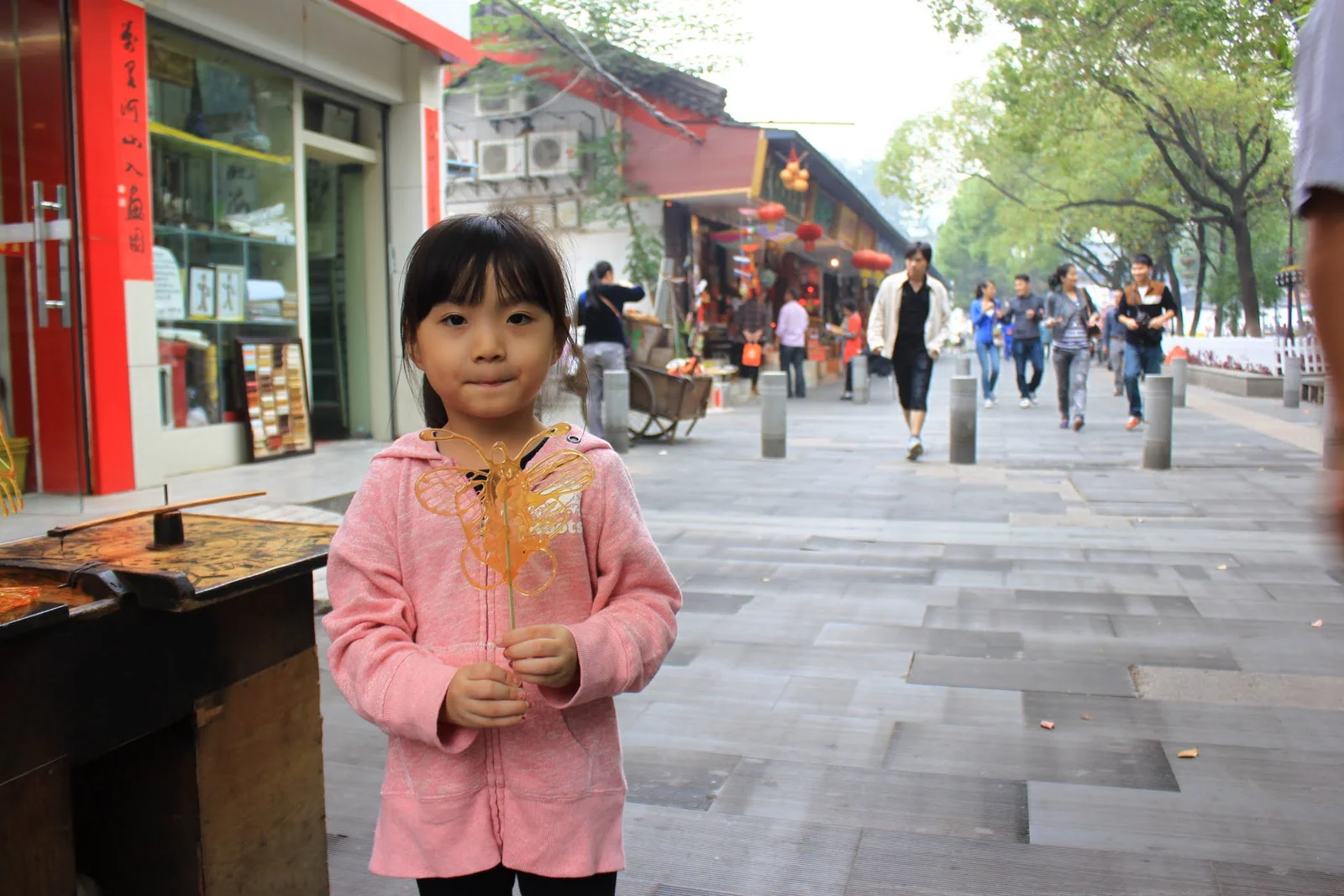
It was eaten immediately on the bus. ~.~'"
On the way back, we passed the Yangtze River Bridge.
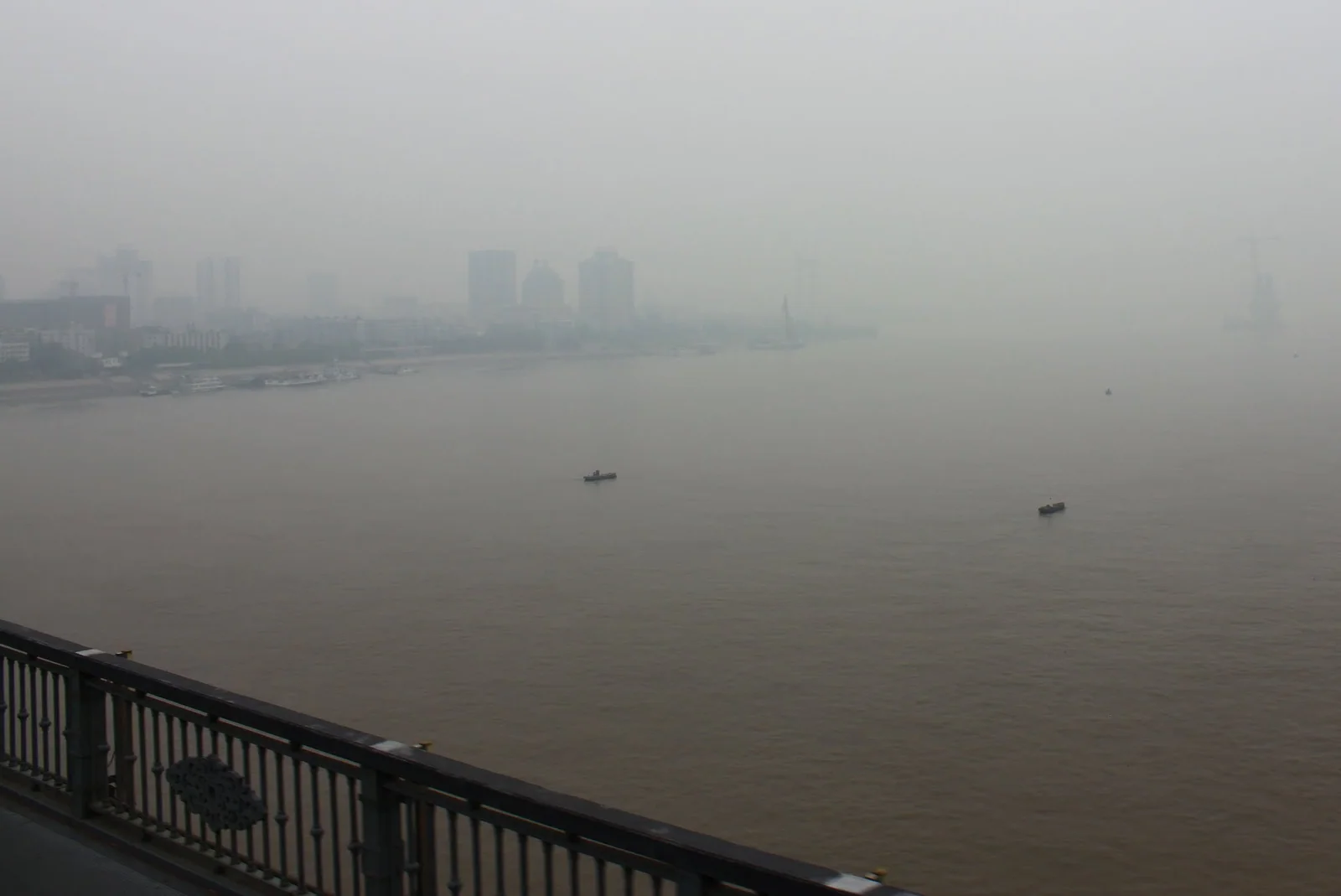
Let everyone see what it means for fog to lock down the Yangtze.
Yellow Crane Tower seen from the Yangtze River Bridge.
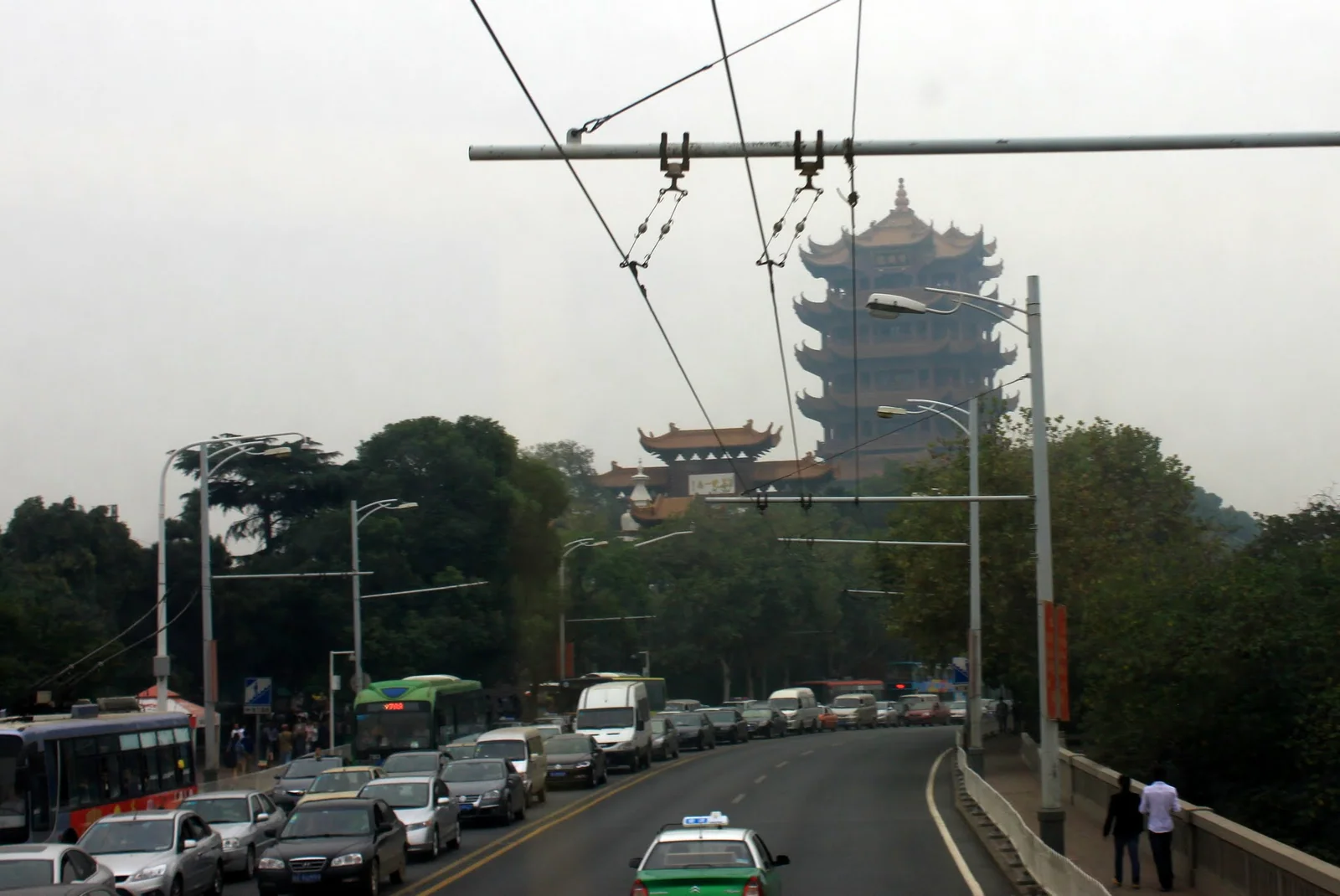
Next stop: Hubei Provincial Museum.
Related posts:
Three Days in Wuhan - Part 1: East Lake
Three Days in Wuhan - Part 2: Yellow Crane Tower
Three Days in Wuhan - Part 3: Guiyuan Temple
Three Days in Wuhan - Part 4: Hubei Provincial Museum
Full Photo Gallery
Previewing up to 8 album photos. Open the gallery to browse all photos.