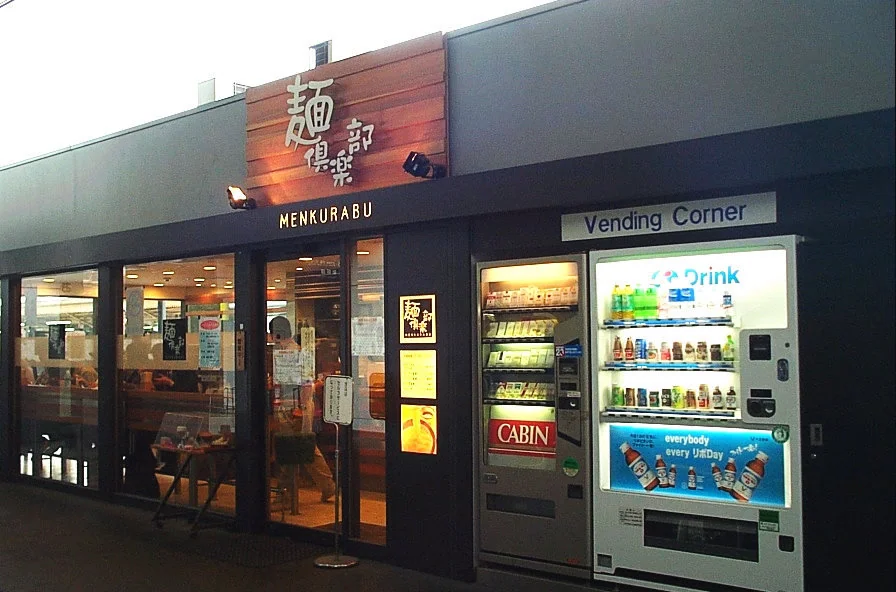
June 1, 2002: Kyoto, with Nishiki Market, Kiyomizu-dera, and Kinkaku-ji.
This travel journal is being written out of order. After buying a DSLR in early 2010, CH started wanting to rebuild old trips through photos, one post at a time. Some places had been visited more than once, so he tried to pick photos that would not repeat the same stories. Some memories had already become a little fuzzy, so please be patient with the gaps.
This 2002 Keihanshin trip was the first time my wife and I tried traveling independently in Japan, after work finally eased up for a while. Kyoto on day one was not a packed morning-to-night itinerary. We arrived at the hotel around three in the afternoon, warmed up with Nishiki Market, and left Kiyomizu-dera and Kinkaku-ji for the next day. Looking back now, what makes this day worth keeping is not how many sights we covered, but the fresh, slightly clumsy feeling of moving around Japan on our own for the first time.
I already wrote about the transportation from Kansai Airport to Kyoto, and the hotel we stayed at in Kyoto, in the later 2006 Kyoto autumn family trip, so I will not repeat that here...
Starting Kyoto Through Its Market
Taiwan and Japan are not that far apart, and we had taken an early flight. Still, with the one-hour time difference, it was already about three in the afternoon by the time we reached the hotel. After check-in, we decided not to force another big stop into the day. Instead, we walked to the famous traditional market near the hotel to see what local people bought in everyday life ^.^
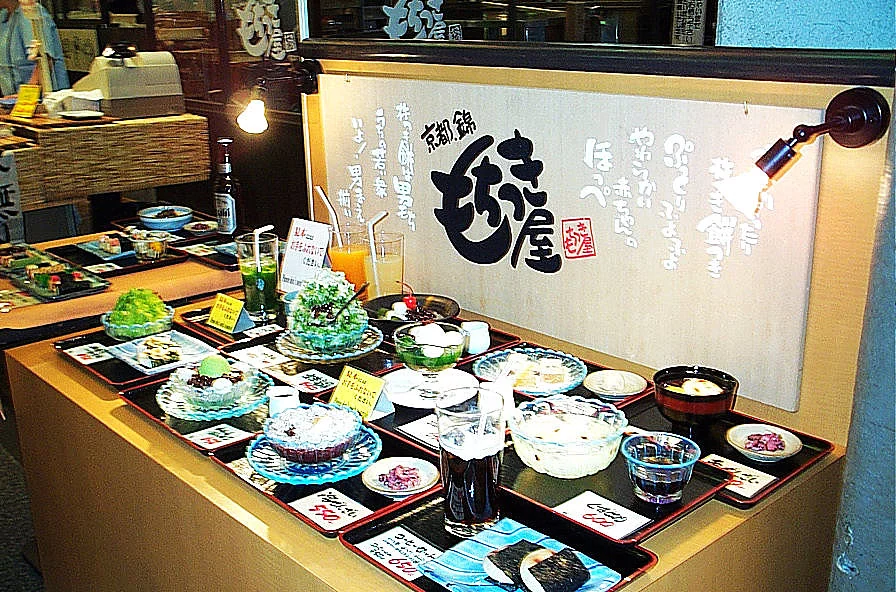
Nishiki Market is often called "Kyoto's kitchen." Fresh produce, poultry, fish, household goods, cosmetics, snacks, cookies... there seemed to be a little bit of everything. What impressed me most was how clean it was. It did not have the fishy smell I usually associated with traditional markets.
One shop sold soft serve, and the soy milk flavor was especially memorable and tasty ^.^ My impression was that it was only available on weekends, and one cone cost JPY 200 @.@'" No wonder this felt like a country with high income and high prices....
Nishiki Market gave us a lively taste of local daily life in 2002. That night, we kept the schedule light, had dinner around Shinkyogoku, then slowly walked back to the hotel through the Kamo River and Gion area.
Kiyomizu-dera Begins With the Wooden Stage
The next morning, the real first-day route began: Kiyomizu-dera and Kinkaku-ji. The previous afternoon had only helped us settle into Kyoto's rhythm. This was the morning when we really started walking into the old-city scenery from the photos.
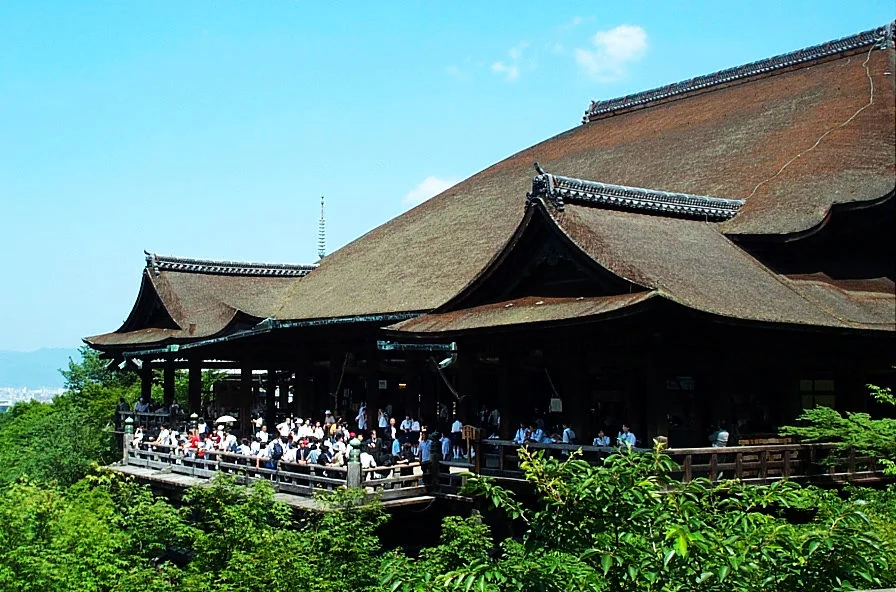
The most memorable part of Kiyomizu-dera is, of course, the famous wooden stage. The platform projects out from the main hall and is supported by tall timber columns. Standing there and looking out, it becomes obvious why this angle keeps appearing in Kyoto photos.
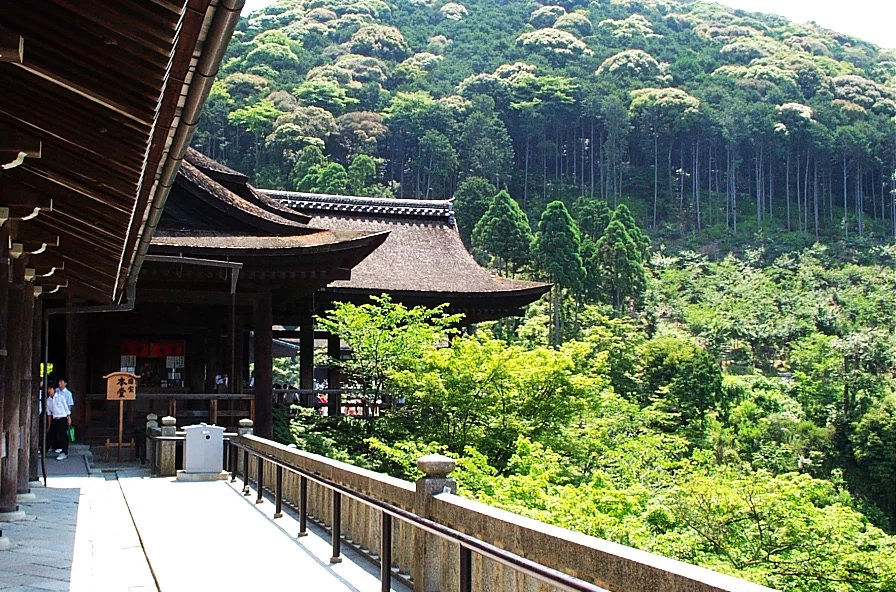
From the side, the temple's wooden structures, the green hillside, and the visitors all enter the frame together. The original notes especially remembered the story that the structure used no nails. Whatever the architectural details, for a first-time visitor the impact of seeing so much space held up by wood is very direct.
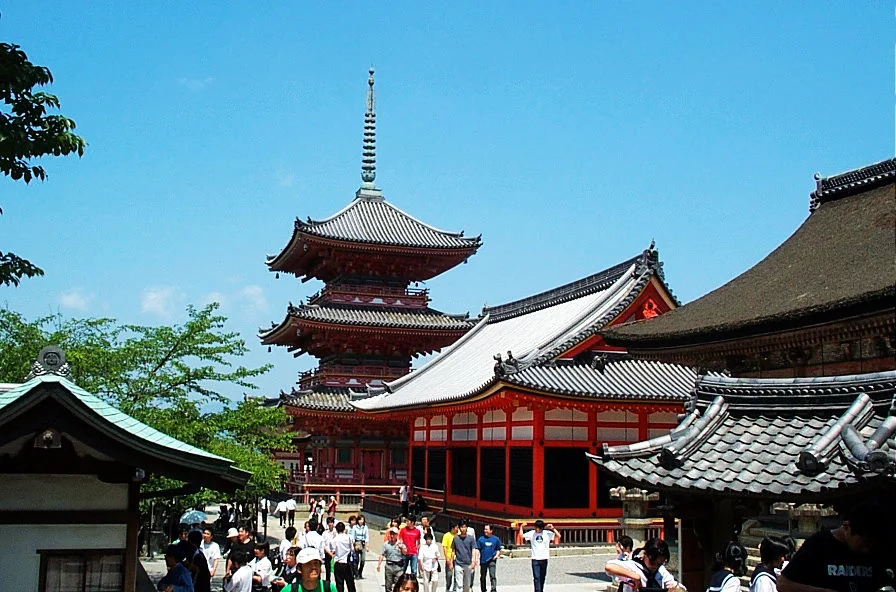
Another part of the grounds that invited more photos was the bright color of the pagoda and rooflines. The color in these early digital photos now carries a bit of period texture, but that is also part of what preserves the year of the trip.
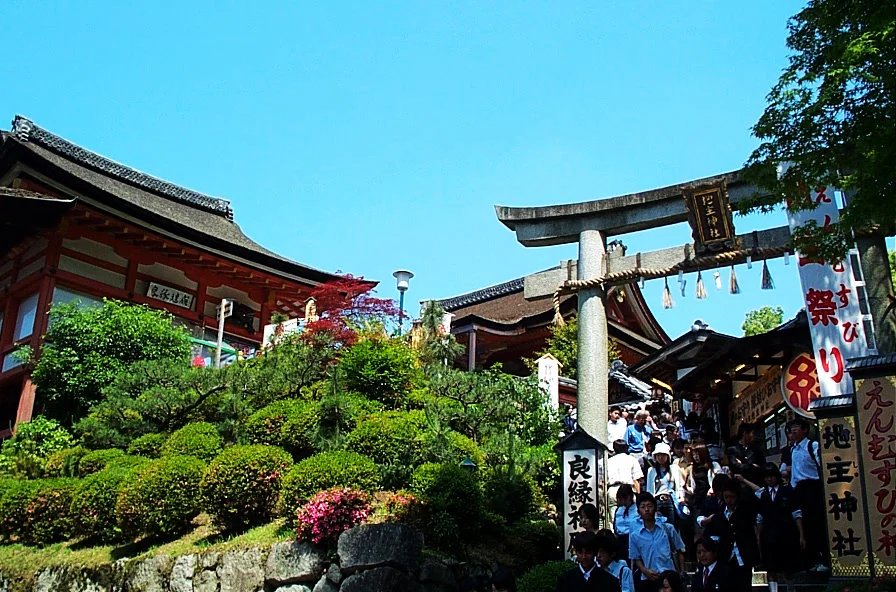
We then walked to Jishu Shrine. It is said to have originally worshipped the guardian deity of Kiyomizu-dera, and later became independent from the temple in the early Meiji period. For visitors, it is best known as a place to pray for good relationships, especially because of a pair of "love fortune-telling stones."
The story says that if you can walk from one stone to the other with your eyes closed, your romance will come true. If it takes some time to reach the other side, the relationship may also take time. If you need friends to guide you, then you may need help from others to find a good match. It is the kind of small legend that makes a travel day more playful.
Sannenzaka, Ninenzaka, and the Lunch Line
After leaving Kiyomizu-dera, the road downhill branches toward Sannenzaka and Ninenzaka. This section is not just a place to check off a sightseeing list. It is a street that rewards slow walking: stone pavement, old houses, signs, overhead wires, and small shops all crowd into the frame, giving the street an old-time atmosphere.
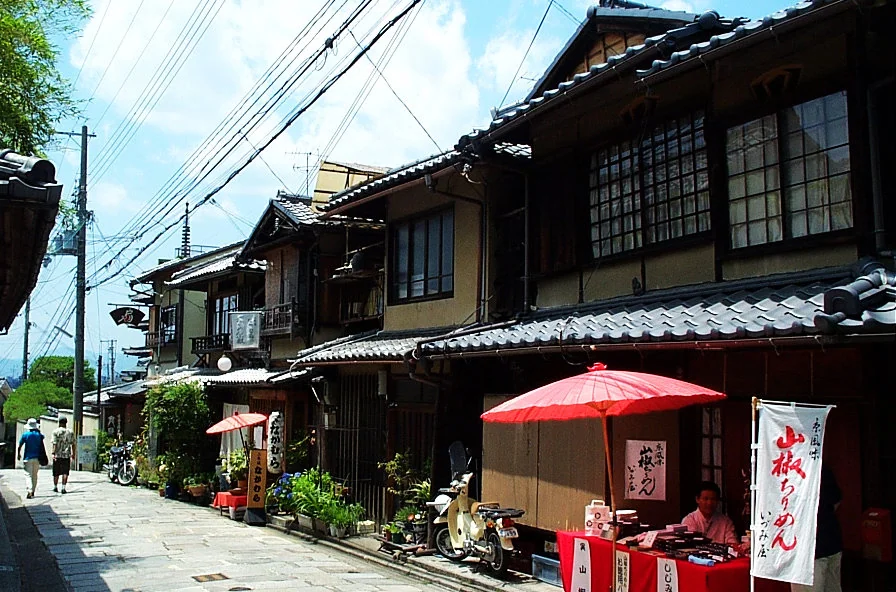
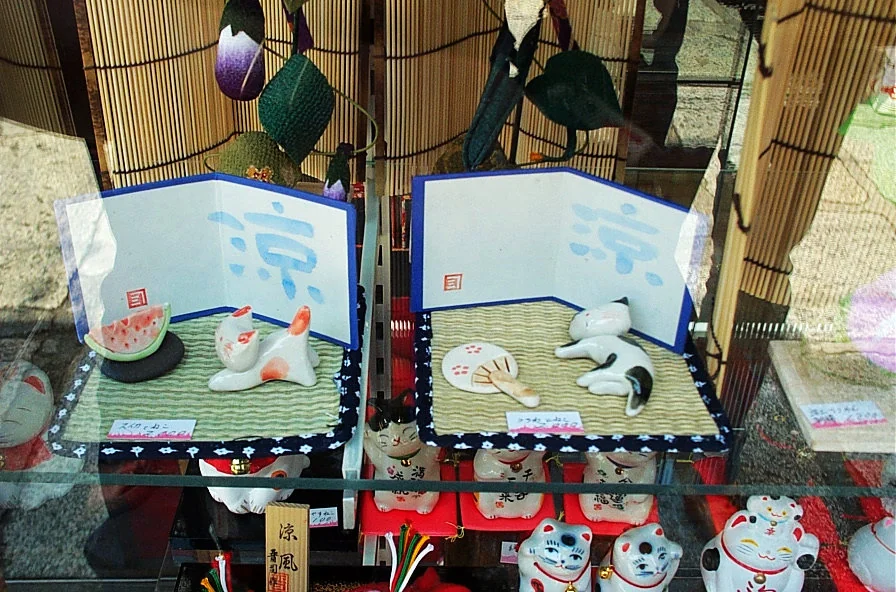
The shops along the way had their own charm. I may not know the exact names of every little item in the windows, but they were exactly the kind of things that make you stop for a moment. That is one of the pleasures of traveling independently.
At the bottom of the hill, we followed the map and found the small restaurant planned for lunch. I thought that since it was already past noon, we might be able to sit down smoothly. Instead, there was still a long line outside @.@'"
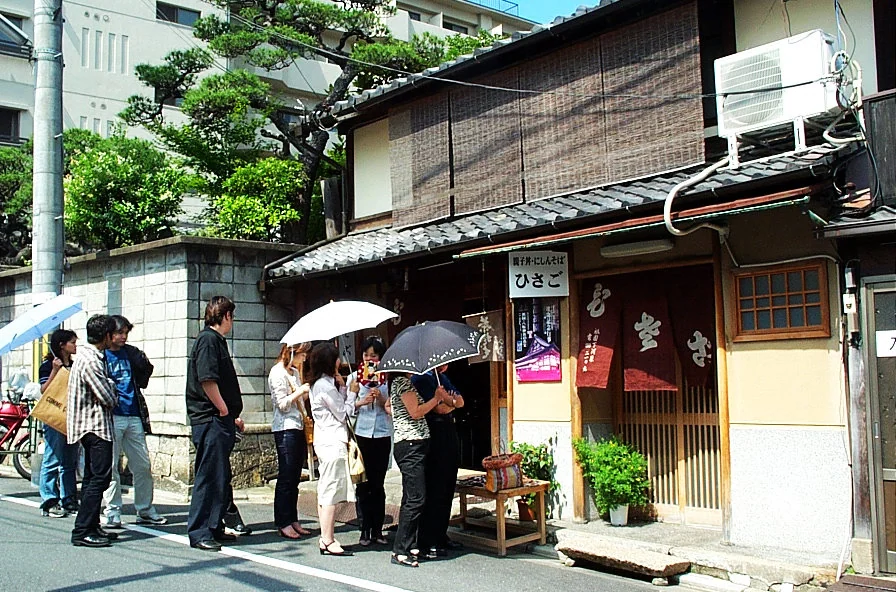
Since we had found the place, we joined the queue. Sigh... Japanese people really do love lining up. Wherever there is good food, just follow the line... heh...
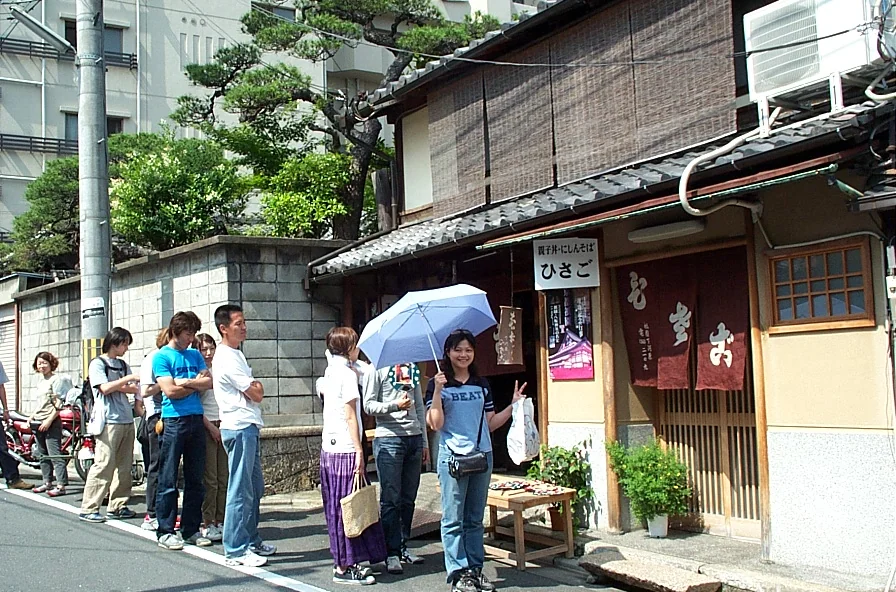
Looking at these two photos now, the queue feels more memorable than the food itself. One photo shows the line outside the shop; the other has my wife standing nearby with an umbrella, still smiling and giving a peace sign. After a whole morning of walking, that small "we finally get lunch, but still have to wait" collapse is also part of independent travel.
Kinkaku-ji, With a Few Corners I Had Not Posted Before
After lunch, we took the bus to Kinkaku-ji.
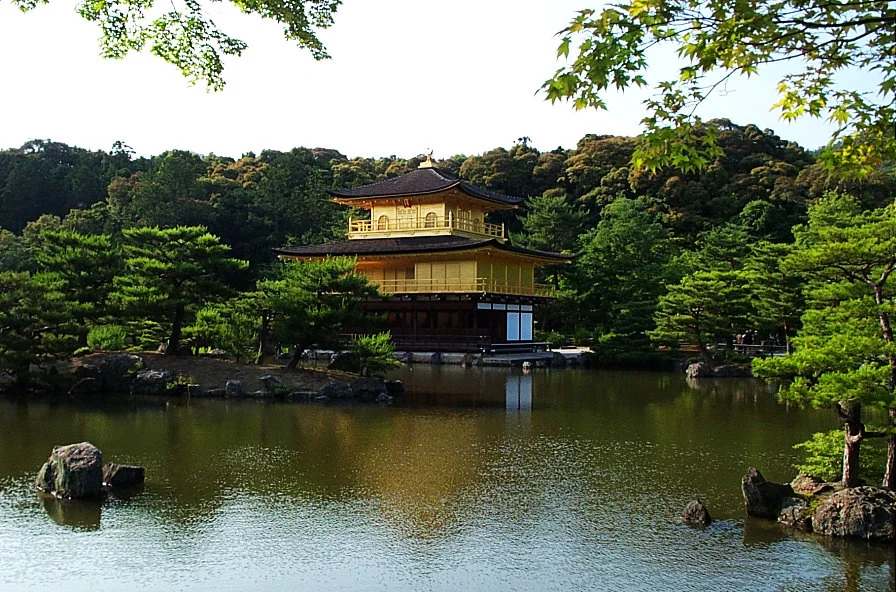
I later wrote about Kinkaku-ji in more detail in Kyoto Autumn Family Trip Day 2 (2006.11.29), so I will not repeat everything here. This time, I will just add a few corners I had not posted before~~~
The classic view is still the Golden Pavilion beside Kyoko-chi Pond. When the weather is good, the golden building, the water, and the trees come together so easily that it is obvious why this became one of Kyoto's signature images.
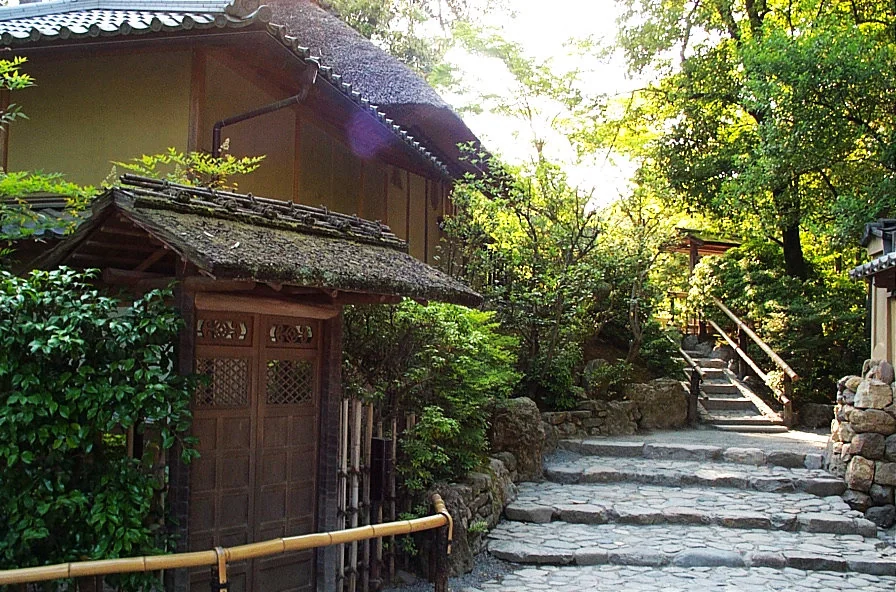
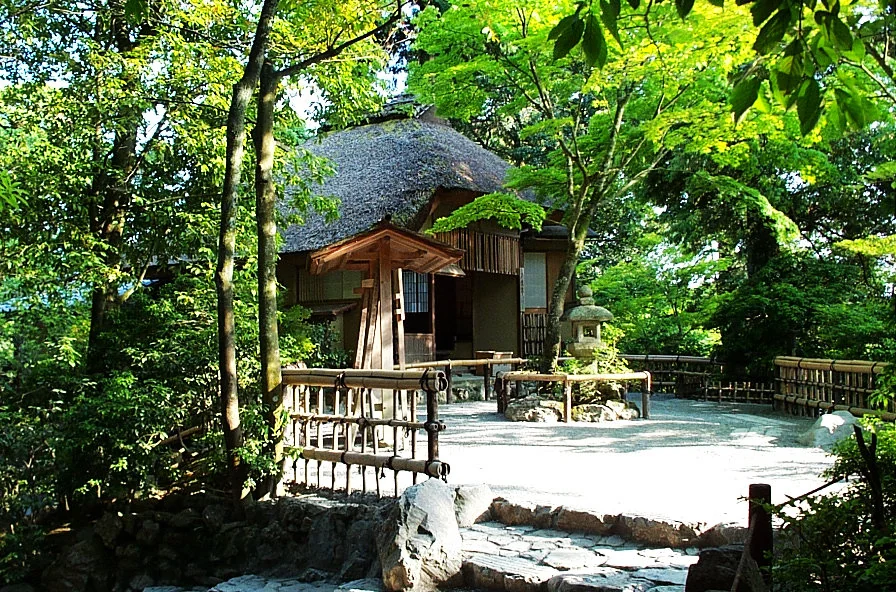
But the images I wanted to keep this time are not only the standard view. Some of the smaller buildings and paths tucked into the shade were quiet in a different way, a good contrast with the busy lunch line earlier in the day.
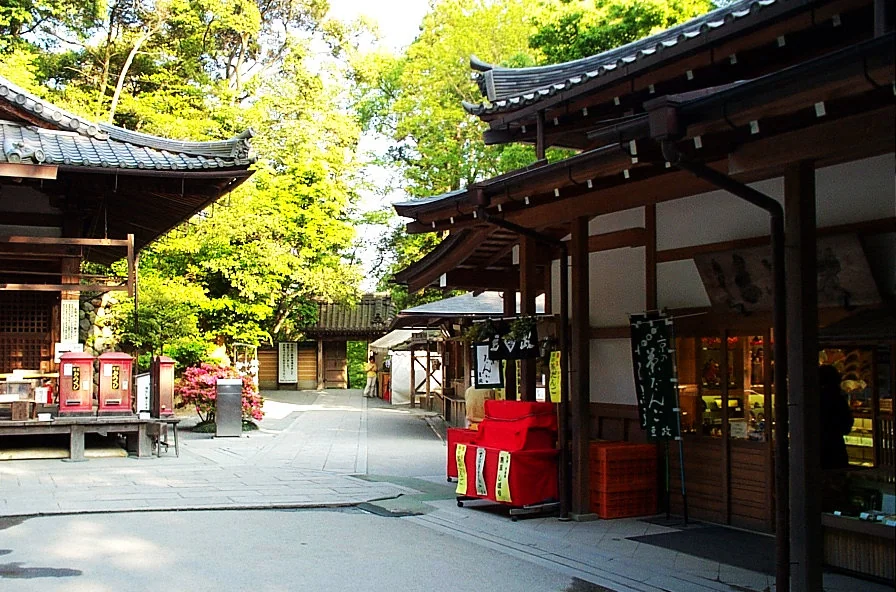
Toward the end of the walk, sunlight filtered through the leaves and softened the wooden buildings and stone steps. The first day moved from market, to temple, to old streets, and finally to the late-afternoon grounds of Kinkaku-ji. By then, we had slowly started to understand the pace of our first independent trip in Japan.
Related Posts:
Keihanshin Independent Trip, Day 1: Kyoto's Nishiki Market, Kiyomizu-dera, and Kinkaku-ji
Keihanshin Independent Trip, Day 2 Kyoto: Around Arashiyama and Tenryu-ji
Keihanshin Independent Trip, Day 3 Nara: Deer Park, Todai-ji, Nigatsu-do, and Kasuga Taisha
Keihanshin Independent Trip, Day 4 Osaka: Universal Studios Japan
Keihanshin Independent Trip, Day 5 Kobe: Nunobiki Herb Garden and Kitano Ijinkan
Keihanshin Independent Trip, Day 6 Himeji: Koko-en and Himeji Castle
Full Photo Gallery
Previewing up to 8 album photos. Open the gallery to browse all photos.
Originally published: 2010-08-22 Revised: 2026-07-18 View the original Blogger post