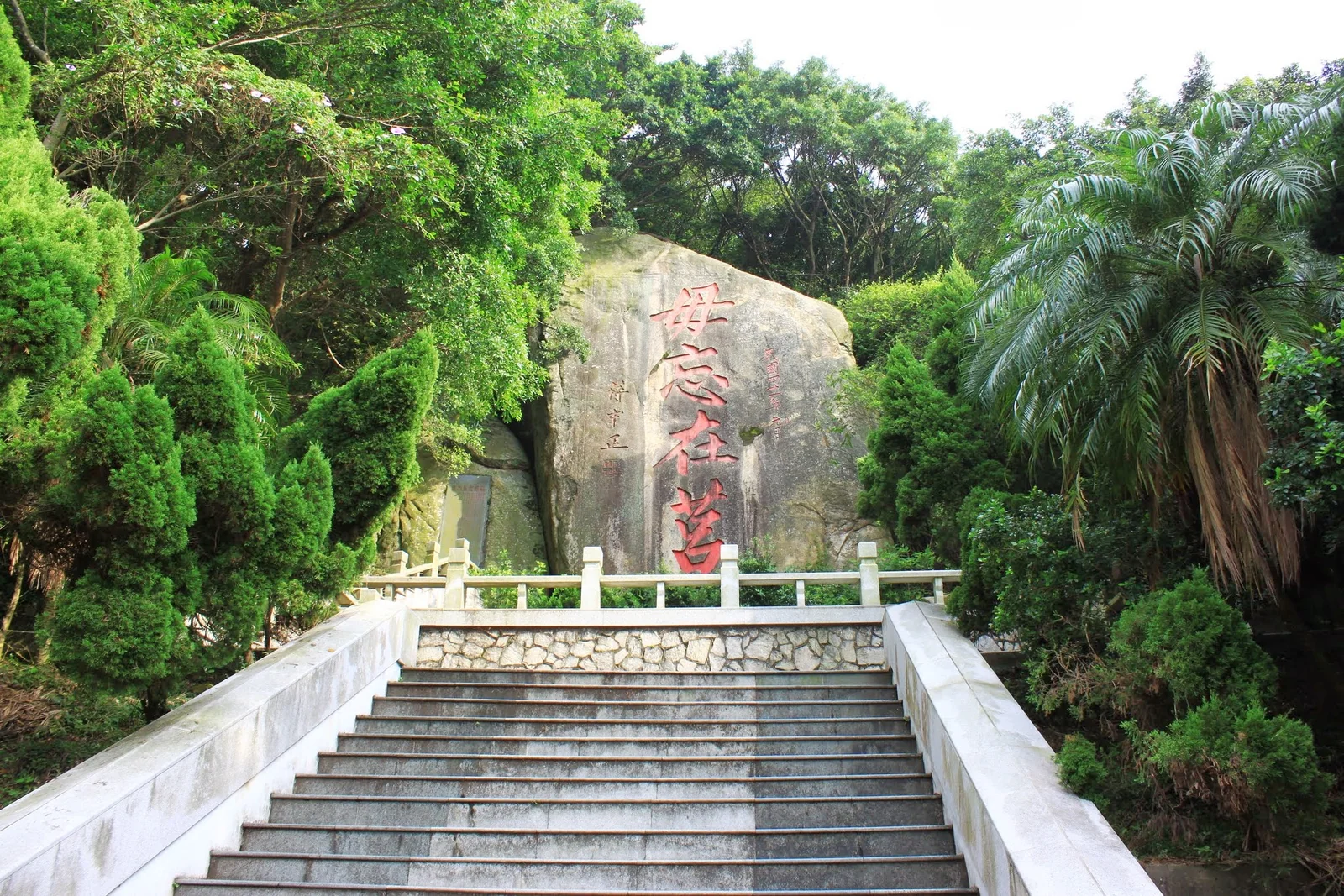
August 17, 2013 — Mount Taiwu, Kinmen
“To call yourself a hero without ever meeting Chen Jinnan would be absurd.” In the same spirit, how could I say I had visited Kinmen without climbing Mount Taiwu?
Does Chen Jinnan have anything to do with Kinmen? I have no idea. It just sounded good, ha~~ (flips table!!)
But Mount Taiwu—I really made it here ^.^
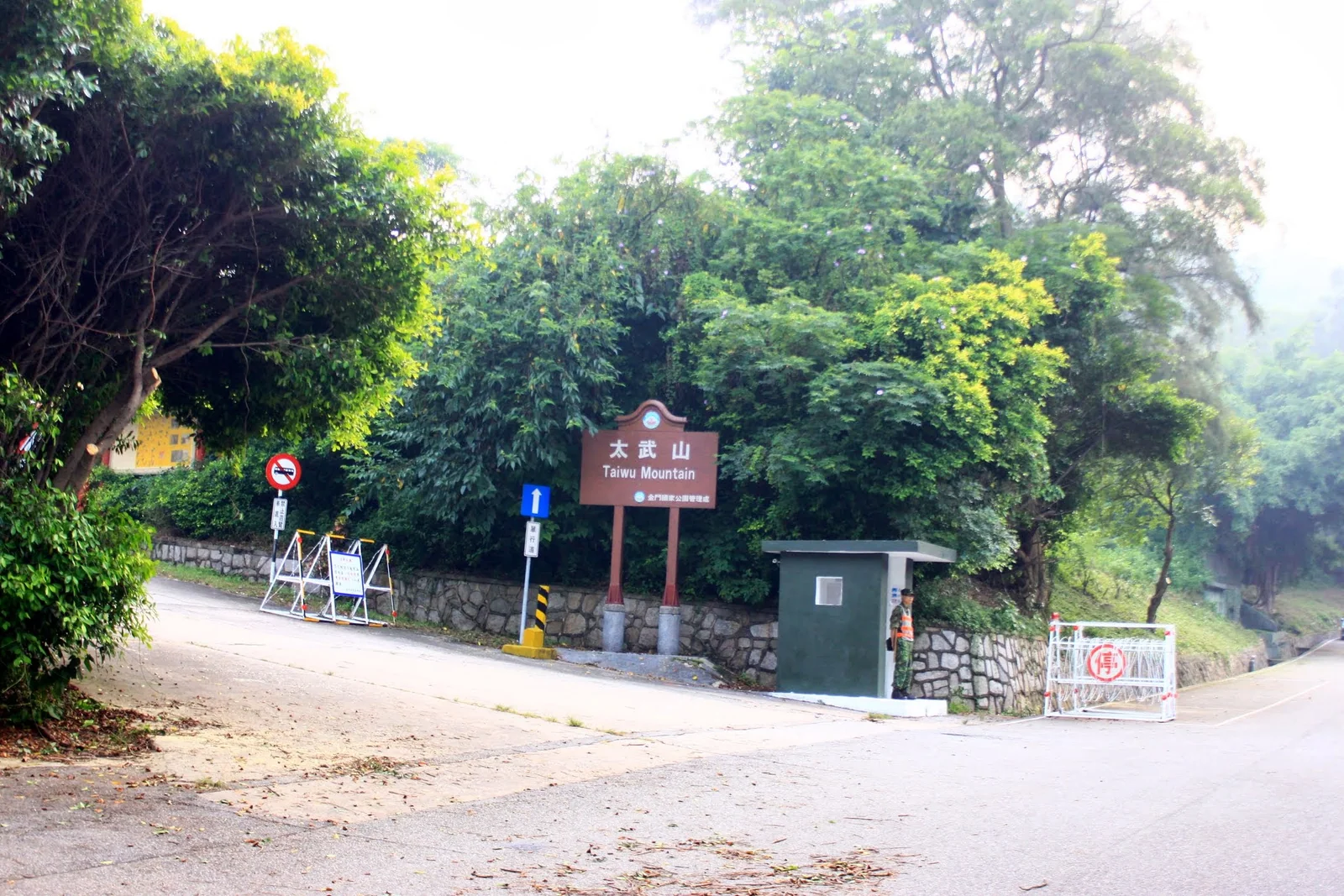
The military cemetery sits right at the foot of the mountain. Although the number of troops stationed in Kinmen had fallen, there were still plenty of guard posts nearby. Even before daybreak, the area did not feel scary at all XD
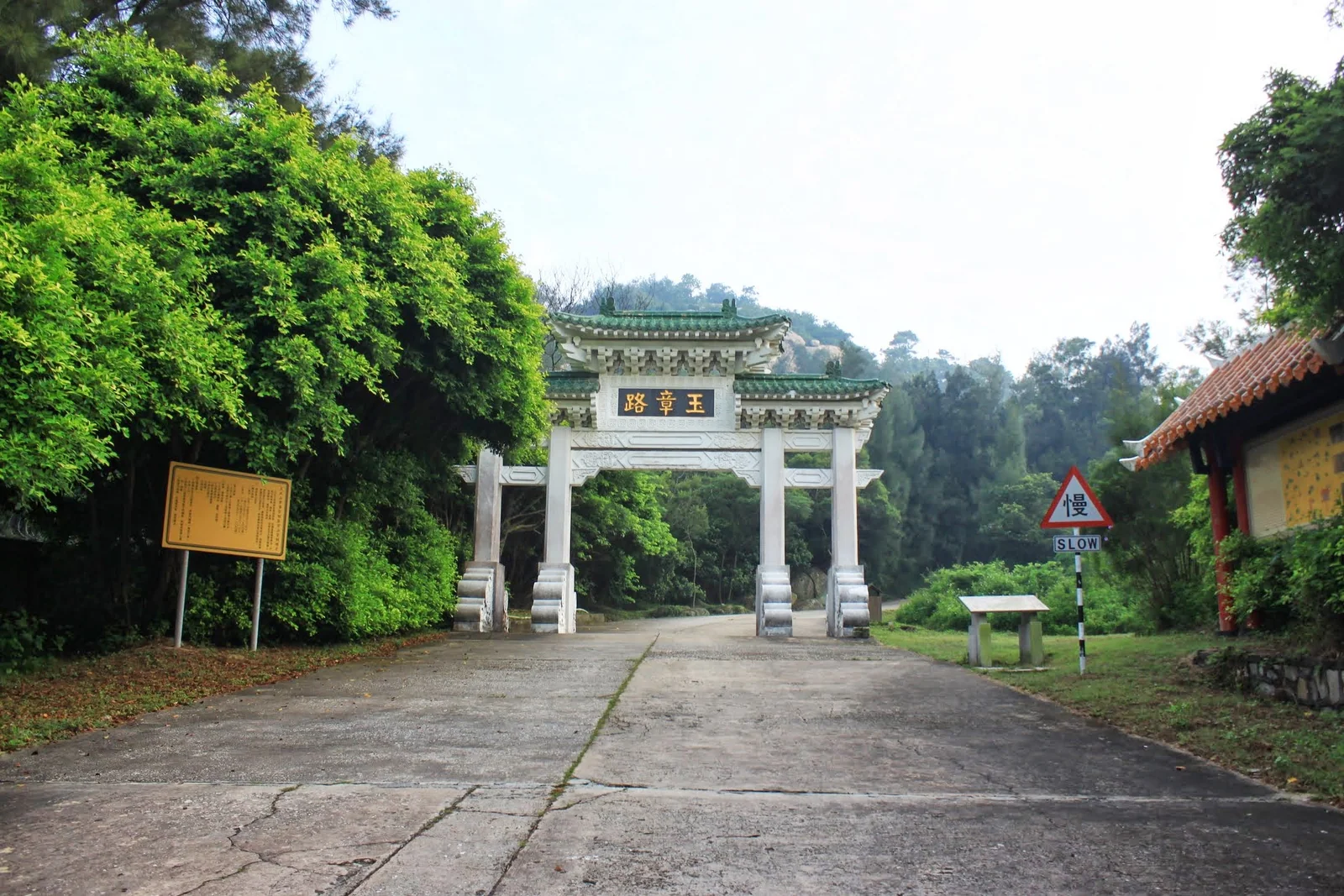
Once we got over this slope, it was time to charge!! The route had three climbs and three descents—three steep slopes up, followed by three stretches down. The catch was that the return journey also meant three climbs and three descents T.T
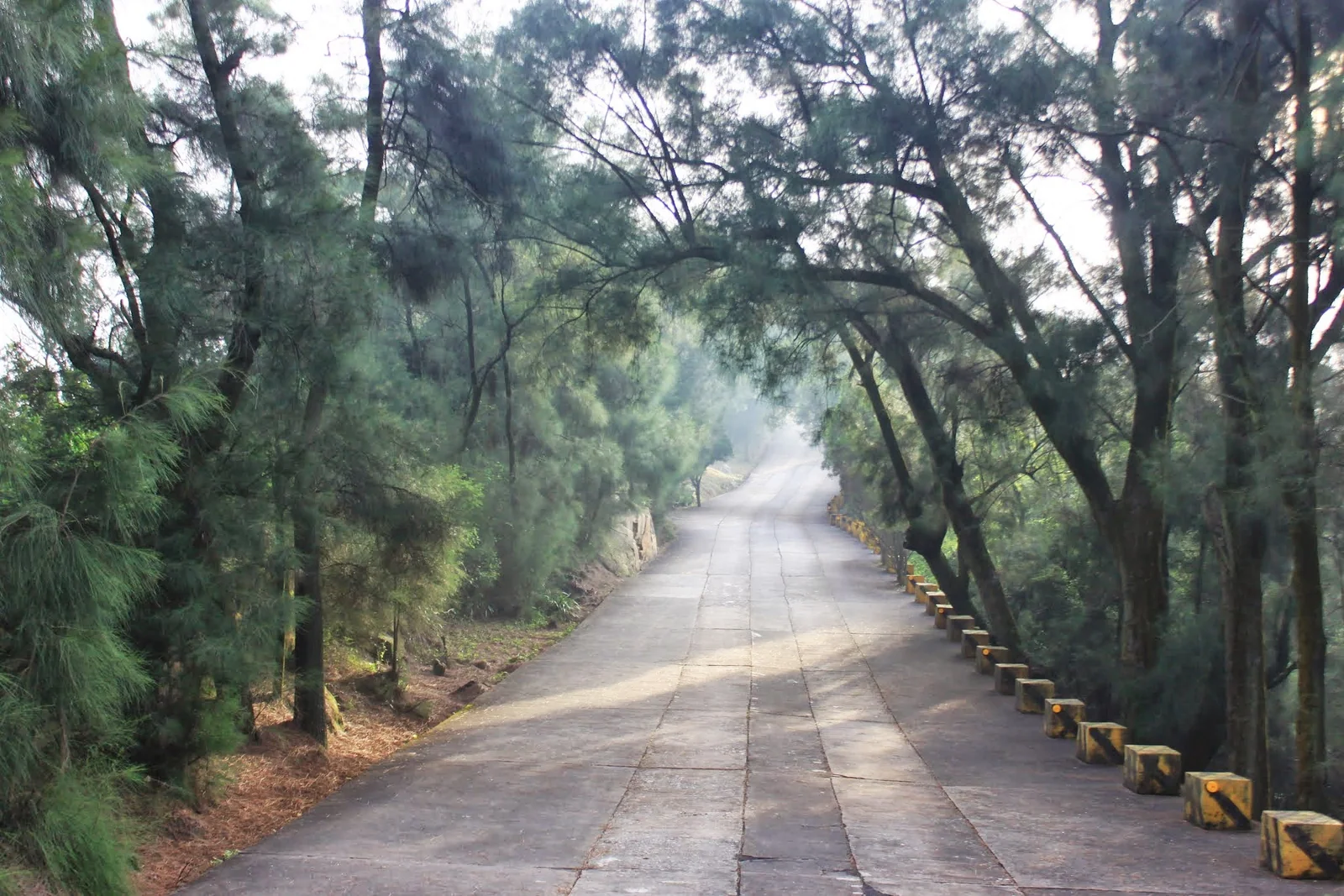
Fortunately, the entire route was paved with concrete. Even in the flip-flops I was wearing that day, the round trip was manageable ^.^
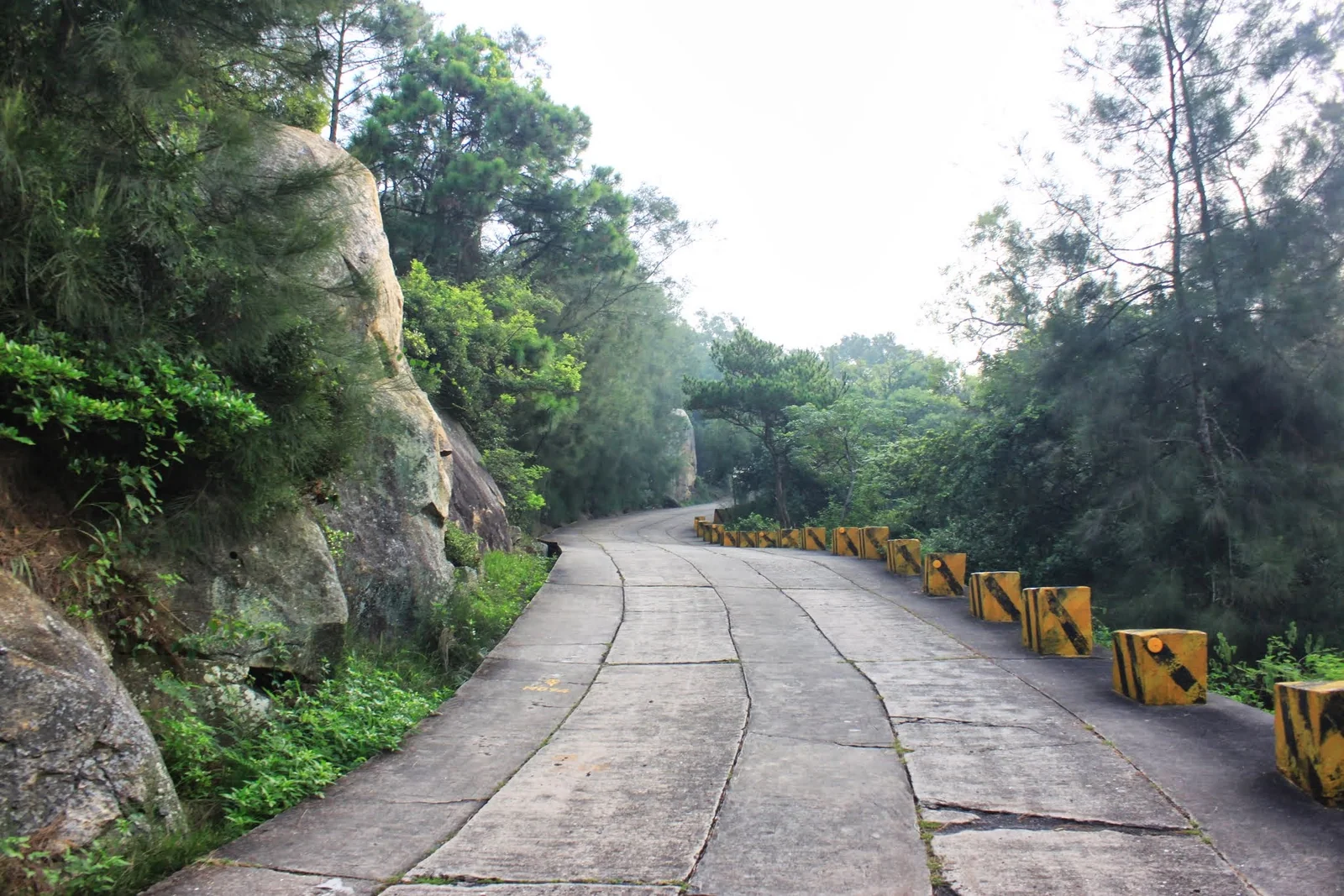
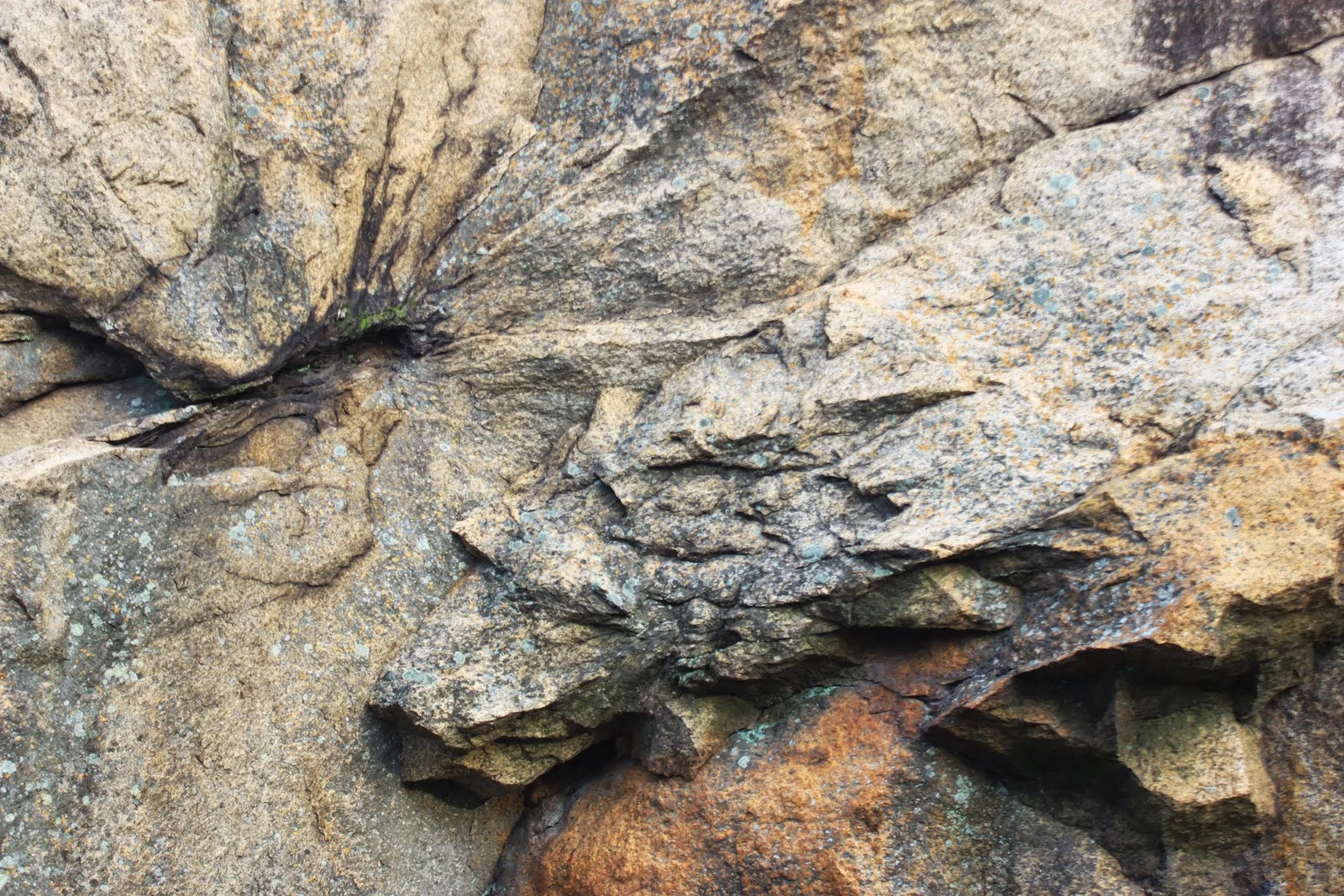
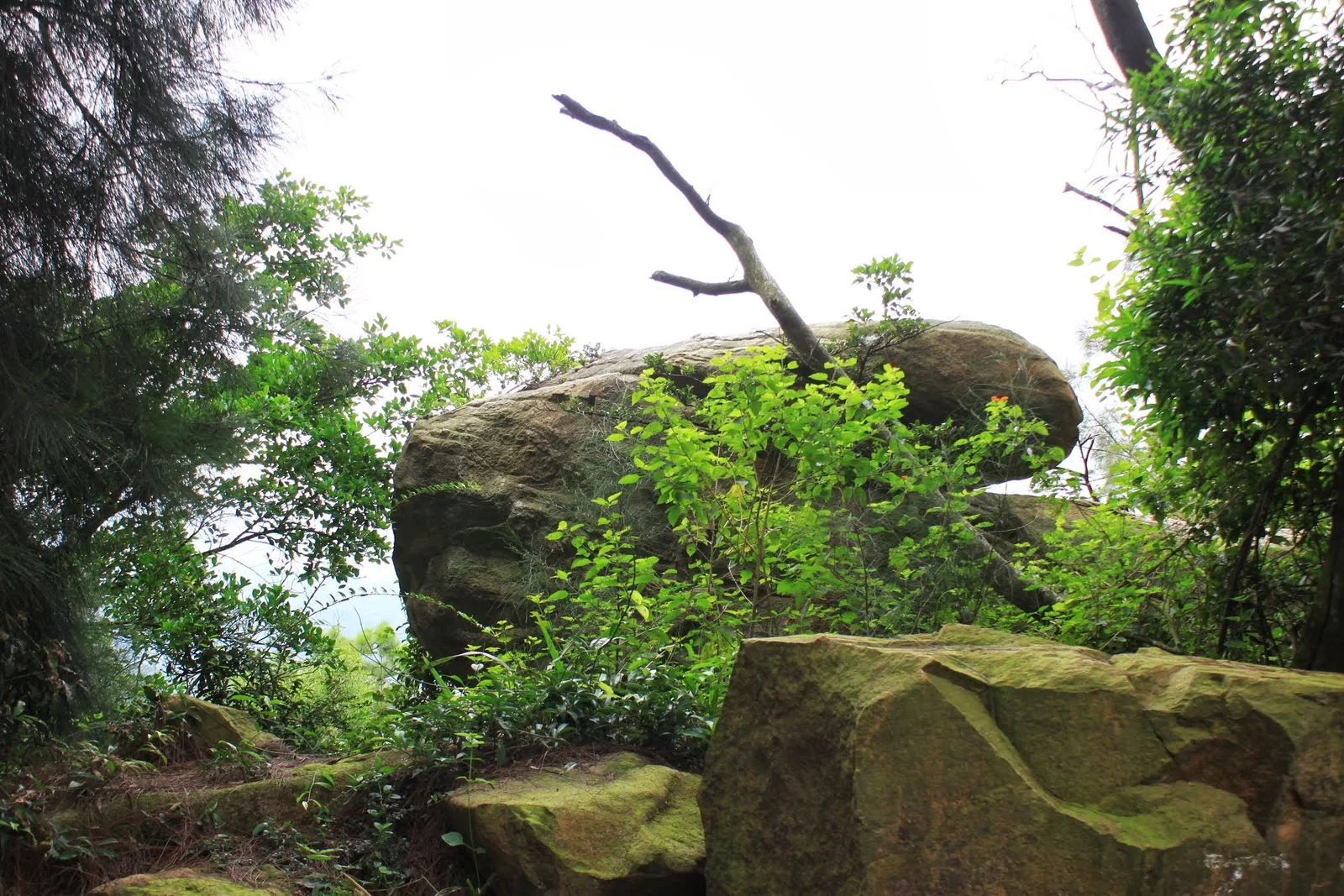
There were plenty of oddly shaped rocks along the way. This one looked like a fierce dragon diving toward the ground. What do you think?!
Early-morning light streamed through the gaps in the trees. The radar station on the opposite peak marked the direction we were heading.
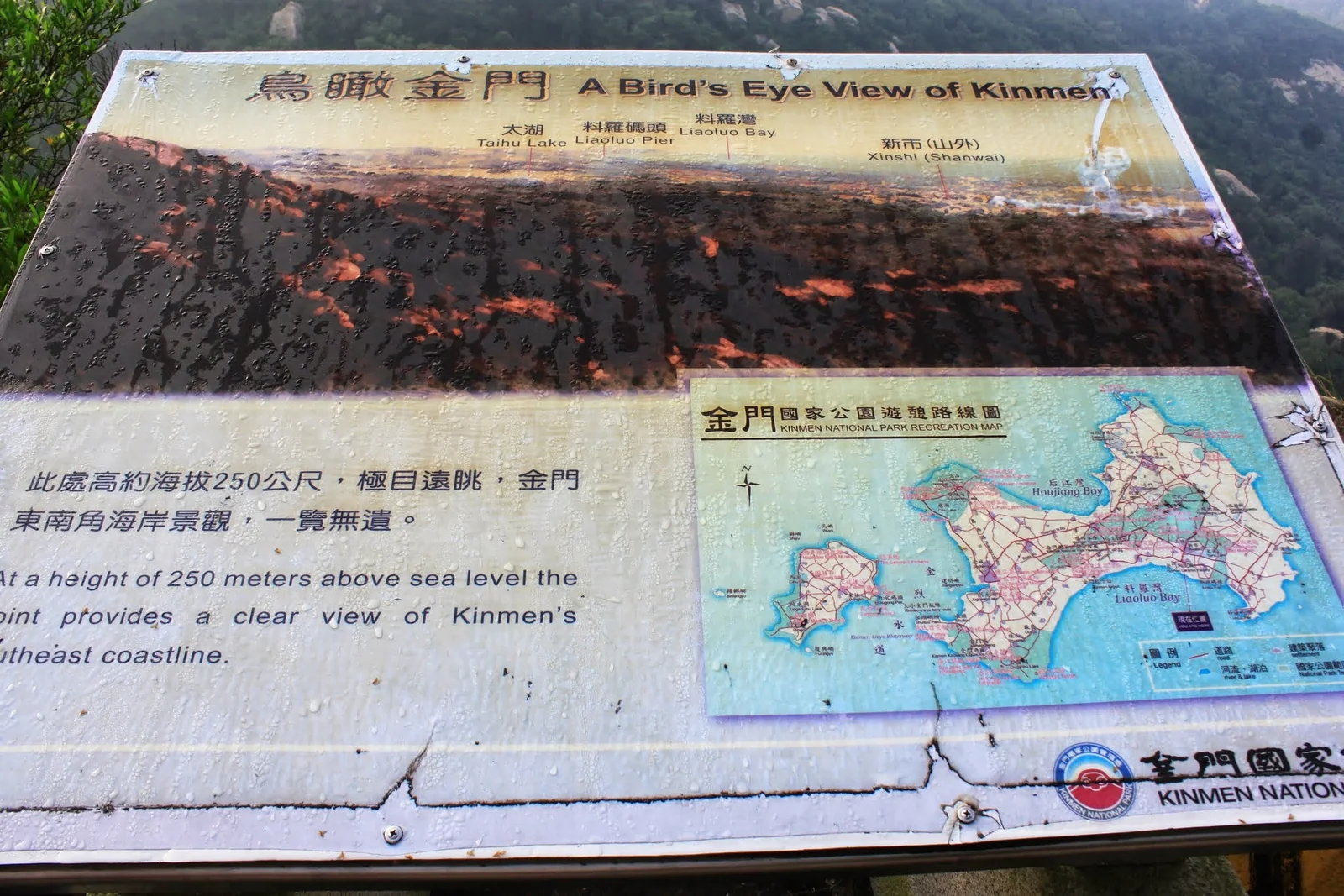
A weather-beaten information board stood beside the trail, but its photographs had faded badly in the sun and rain. Another image offered a clearer comparison.
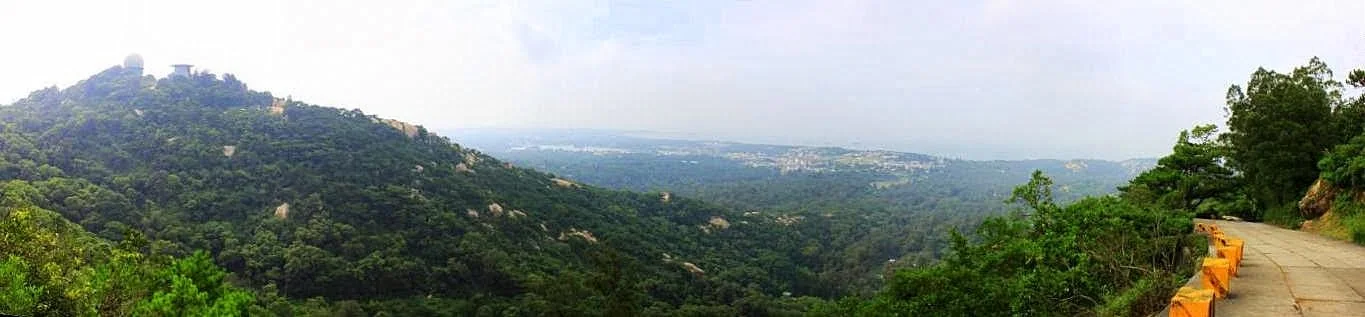
After a short rest, we continued uphill and reached Daoying Pagoda, a place also associated with Koxinga observing troops and playing chess.
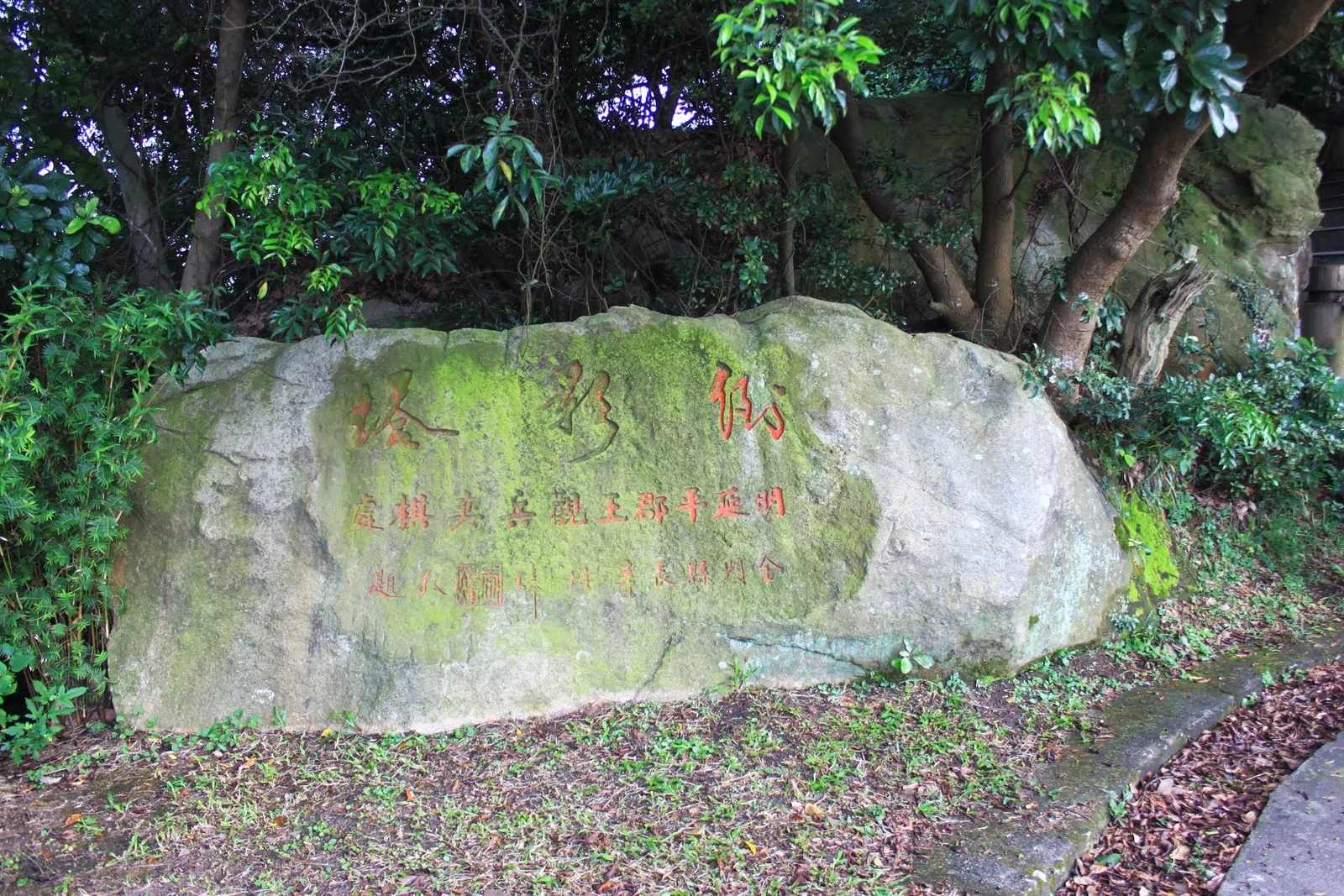
Daoying Pagoda is one of Kinmen’s three ancient pagodas; the other two are Maoshan Pagoda in Shuitou and Wentai Pagoda near the old walled city. Tradition holds that all three were built in 1387, when Zhou Dexing was constructing Kinmen’s defenses, and positioned according to the land and waterways as navigational markers.
It is said that at sunset, the pagoda casts such a long shadow that its reflection can be seen on the sea—hence the name Daoying, or “Reflected Shadow,” Pagoda.
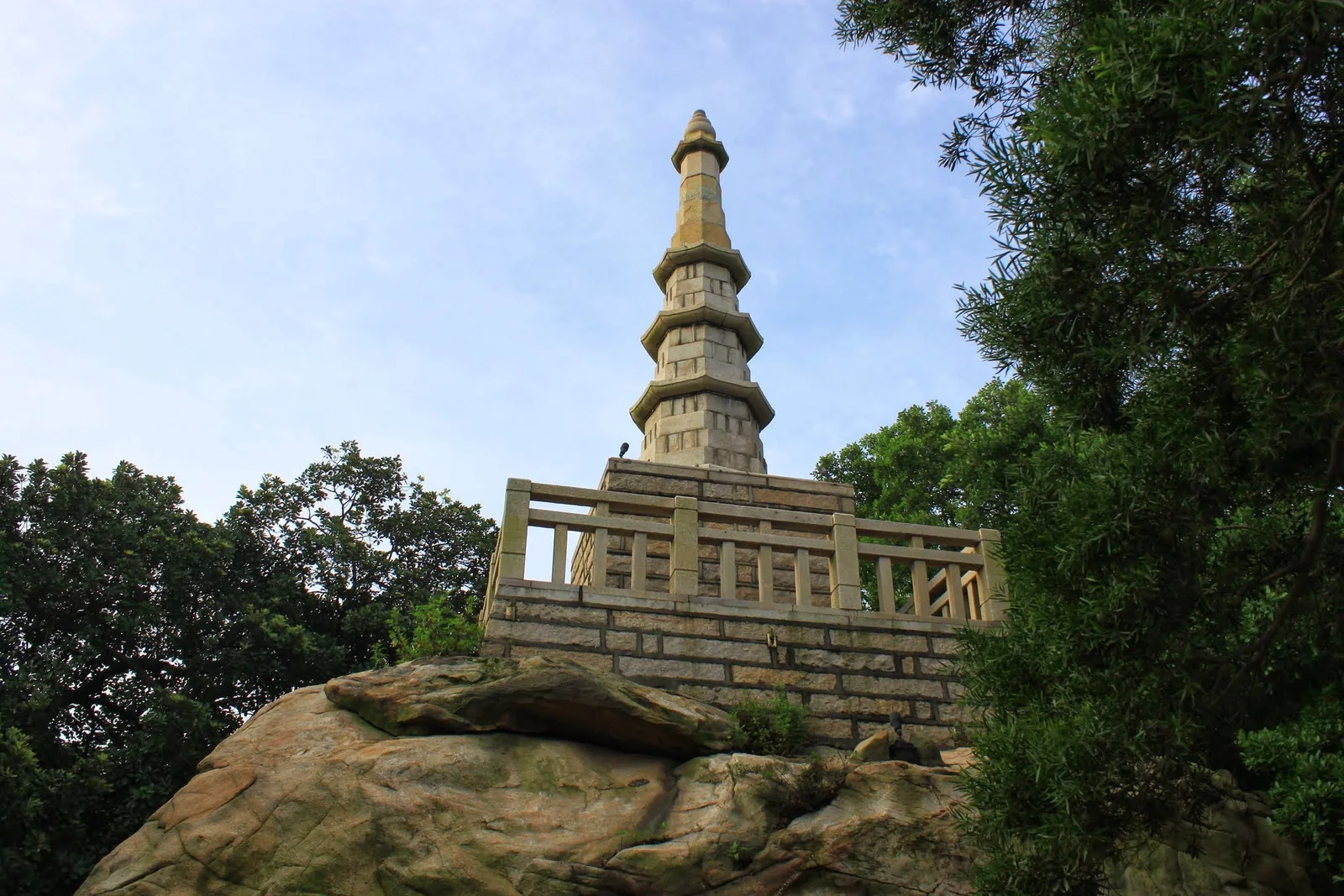
After seeing the pagoda, we set off again. Whew…after another long walk, we finally arrived in front of Haiyin Temple.
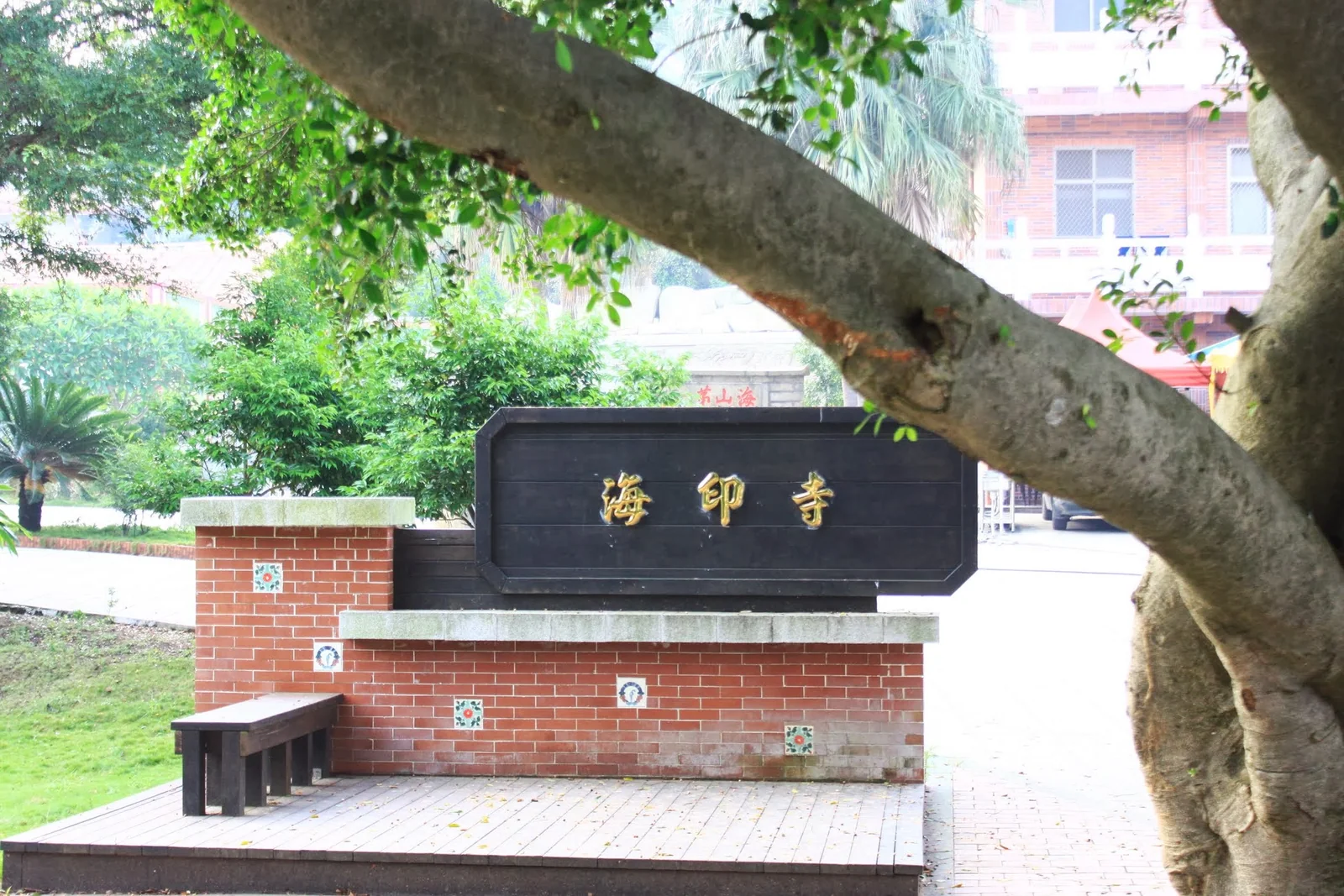
Before entering the gate, I spotted a sign pointing to “Crab-Eye Spring” @.@'" Was this something new that I had missed on my previous visit?! Since we were already there, of course we had to take a look.
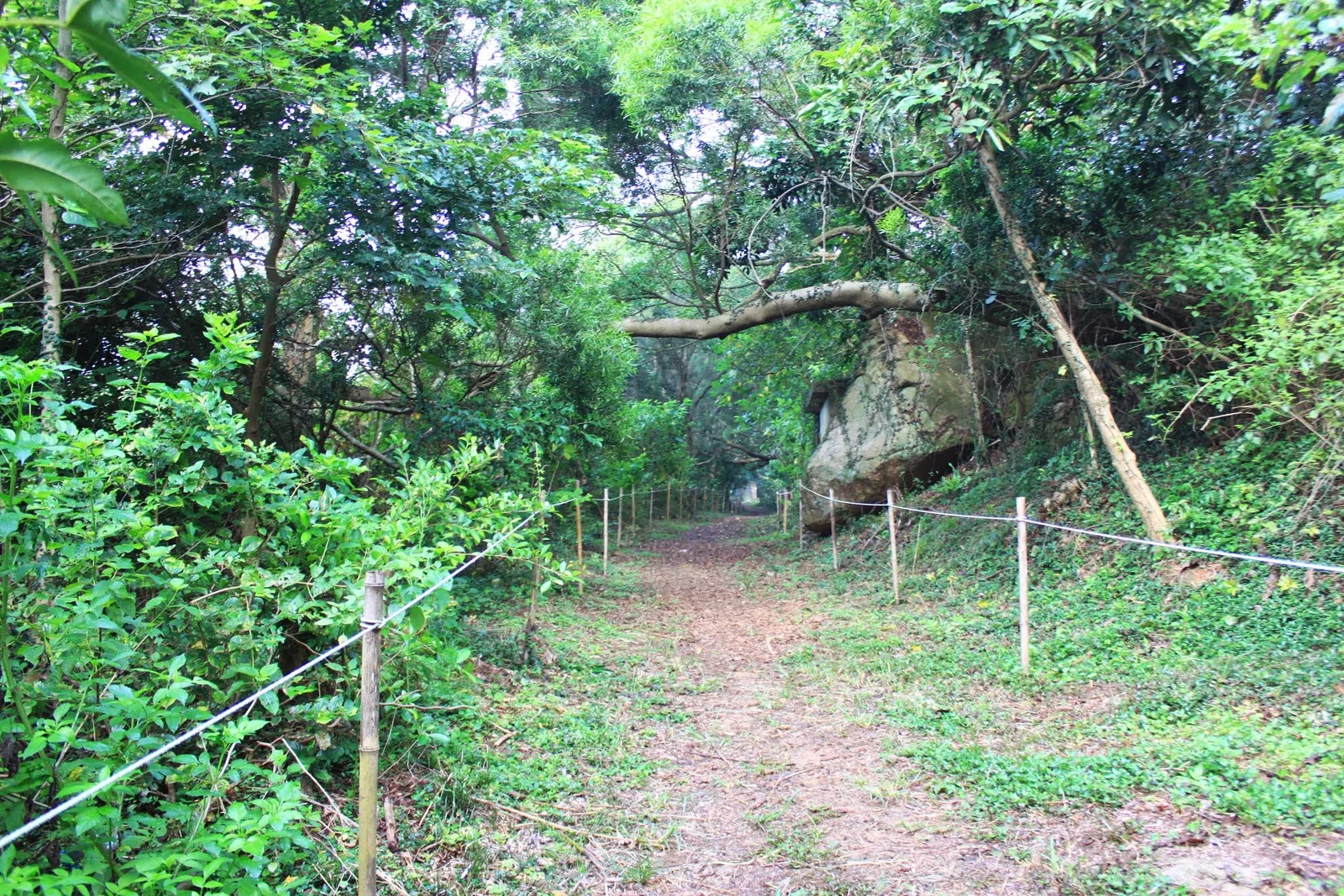
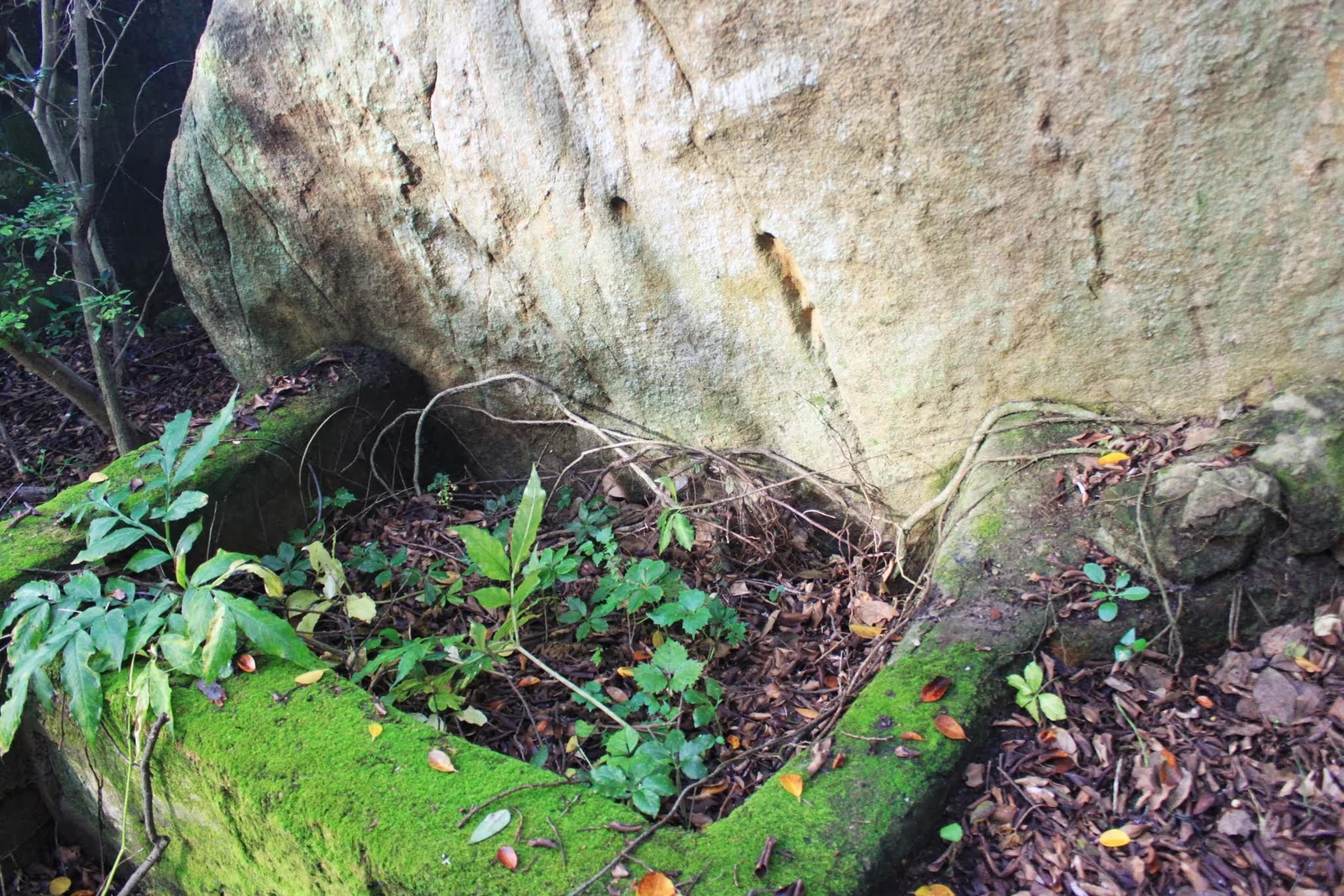
Following the sign led us to a large rock and a dry stone basin behind it—the elusive Crab-Eye Spring. Seriously, even that early in the morning, the tiny black mosquitoes gave me five or six bites while I was trying to see it T.T
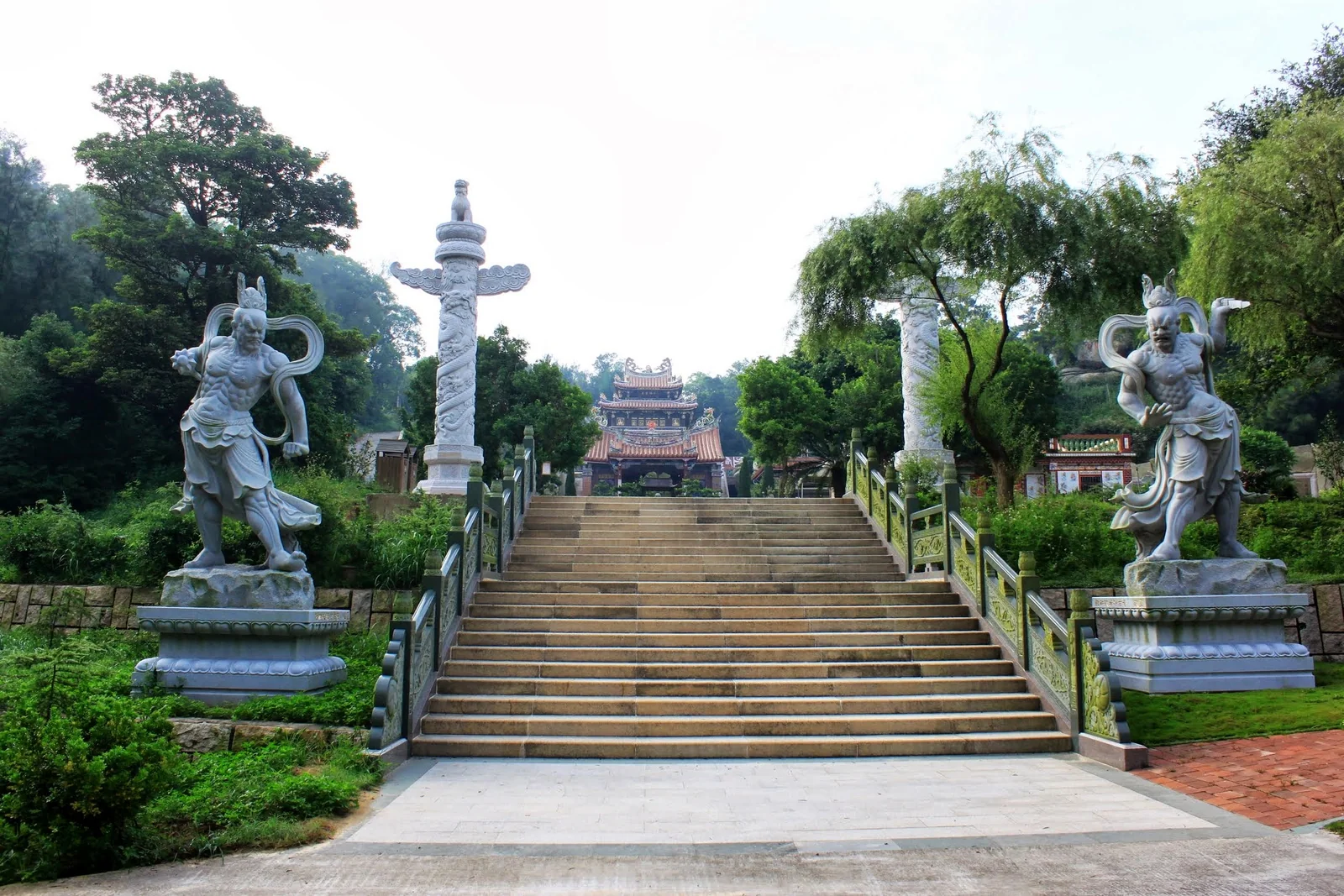
And finally, we reached our destination: Haiyin Temple.
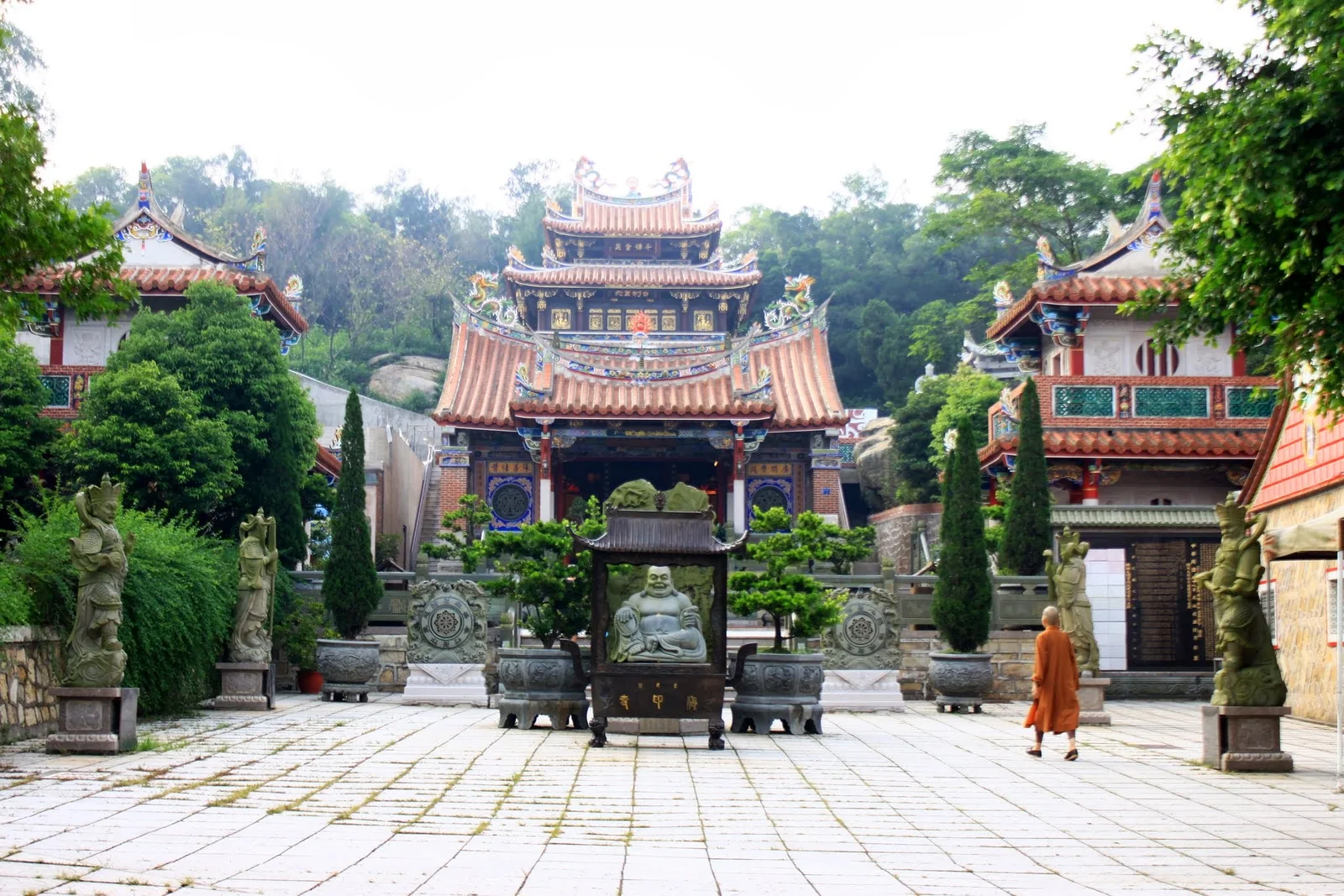
Haiyin Temple is an old Buddhist temple with a long history. It was later destroyed during the August 23 Artillery Bombardment. What we saw was the temple rebuilt after 1960; it had lost some of its antique character, but none of its solemn presence.
After walking through the temple grounds, we reached the stone gateway inscribed “First Between Sea and Mountain.” The calligraphy is said to be by Lu Ruoteng, a Kinmen-born minister of war from the late Ming period.
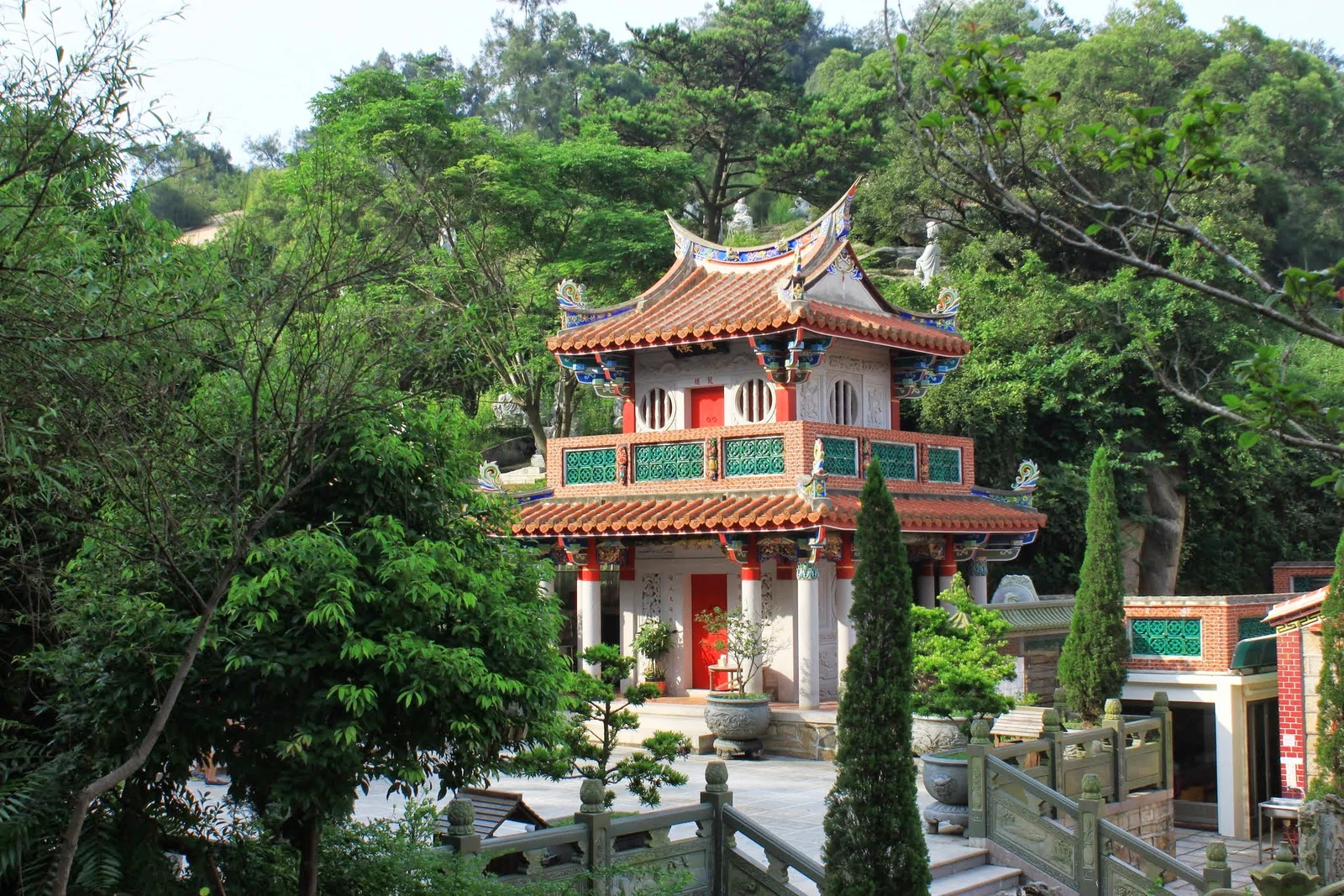
By the time we finished exploring Haiyin Temple, the sun was already high overhead. Time to head down for breakfast—and then crawl back into bed XD
On the descent, we kept finding more strangely shaped rocks, including this “stone rabbit.”
Small shrubs along the mountain were dotted with blobs of white stuff…saliva? Hmm, perhaps traces left by some kind of insect ~.~'"
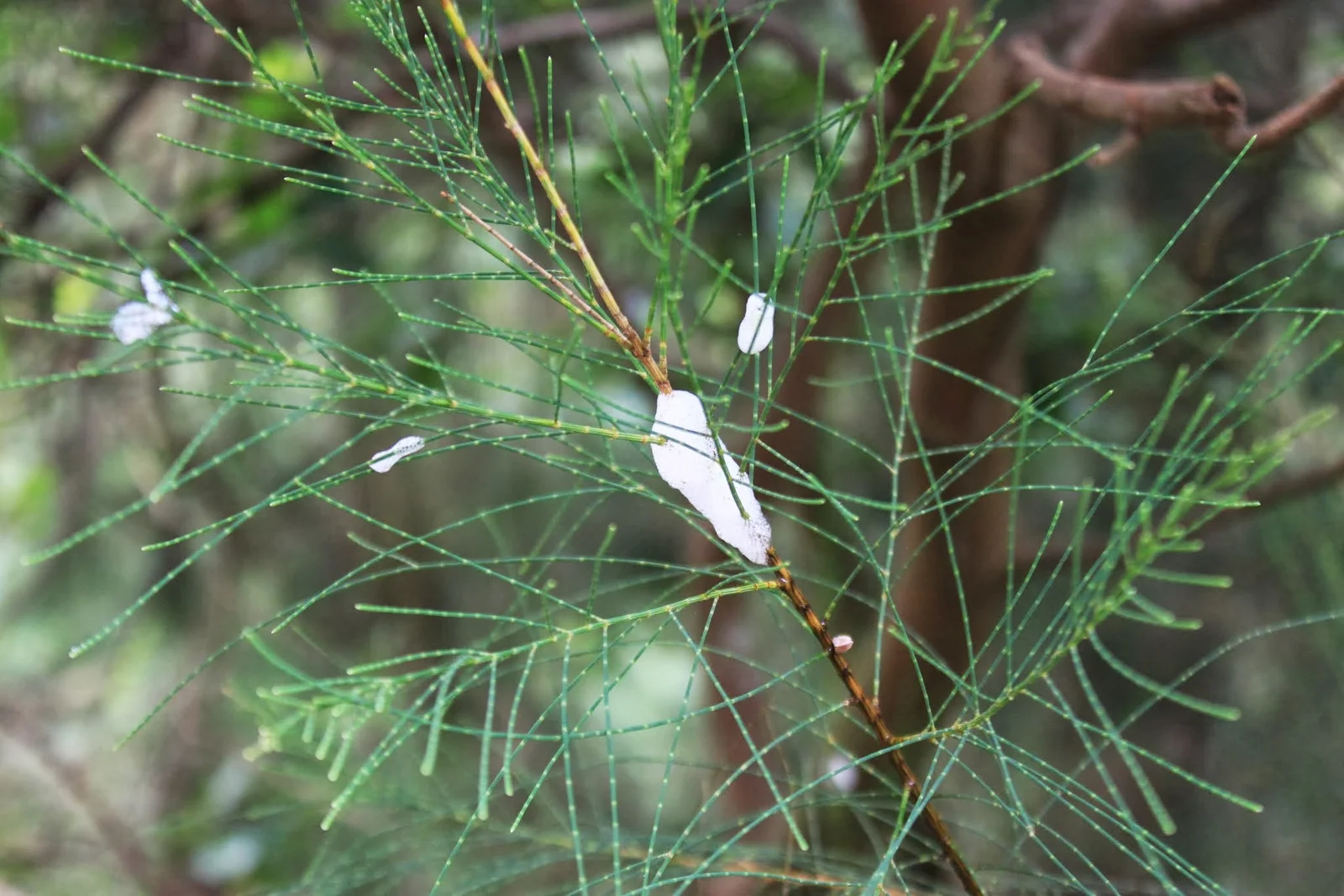
It really did look like…saliva ~.~'"
Related posts
2013 Kinmen Trip: Overview Kinmen Travelogue: OverviewHistoric sites
Qionglin Sixth- and Tenth-Generation Ancestral Halls Ming-Era Old StreetMilitary sites
Chenggong Tunnel、Jiangong Islet
Traditional houses and Western-style mansions
Qionglin Village、Shuitou Village、Chen Jinglan Western-Style House
Complete Photo Gallery
Previewing up to 8 album photos. Open the gallery to browse all photos.