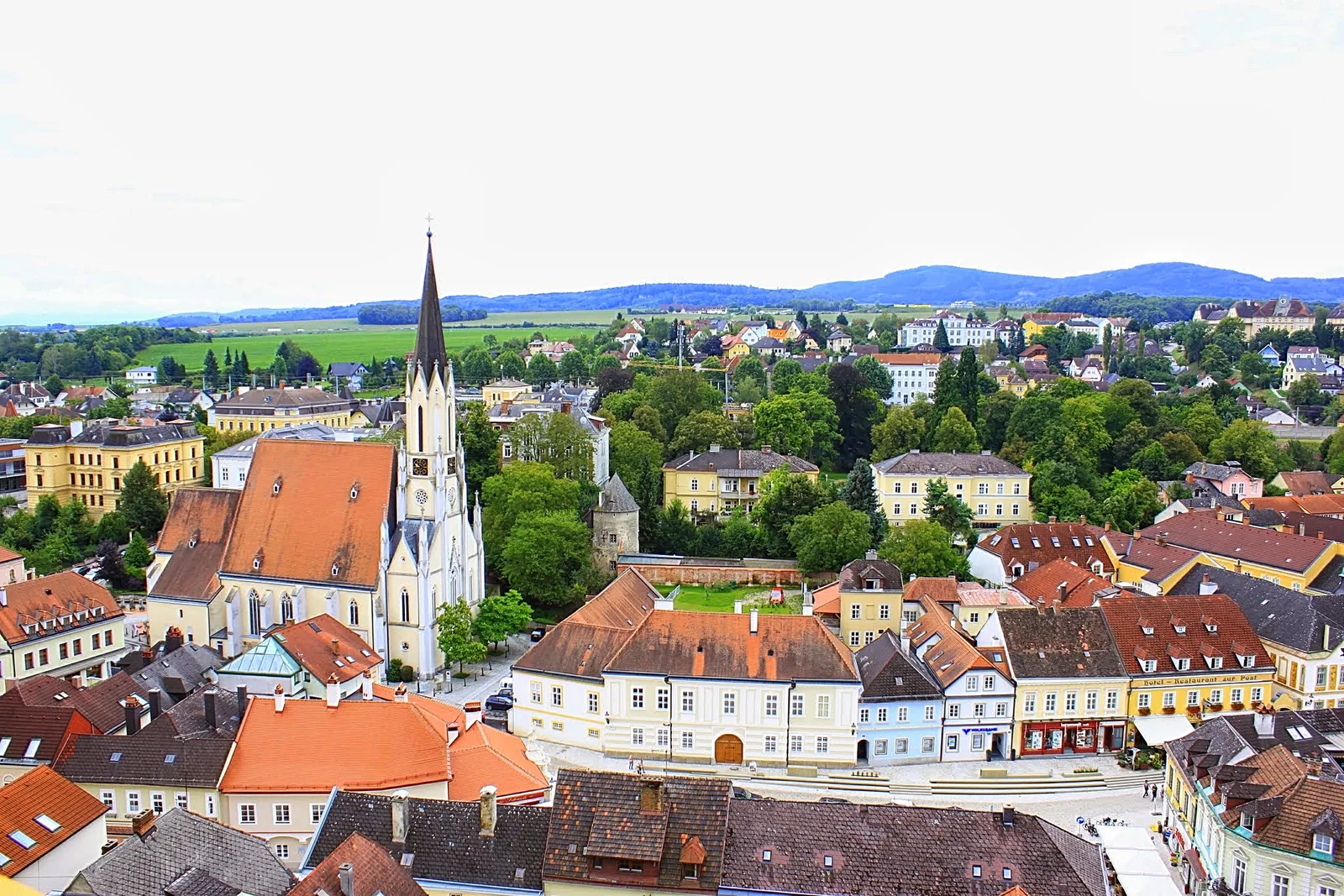
August 23, 2014. Off we went to chase a dream along the Wachau stretch of the Danube, starting with Melk Abbey.
It was only our second morning in Vienna, but even after a full night's rest, nobody was particularly eager to get out of bed. Unfortunately, today's plan involved catching a train to Melk and then cruising down the Danube. You know how it is: Time and tide wait for no man—and neither do trains.
Still, it was only Day 2, so I did my best to behave like a gentleman and waited for the young ladies of the family to take their sweet, sweet time.
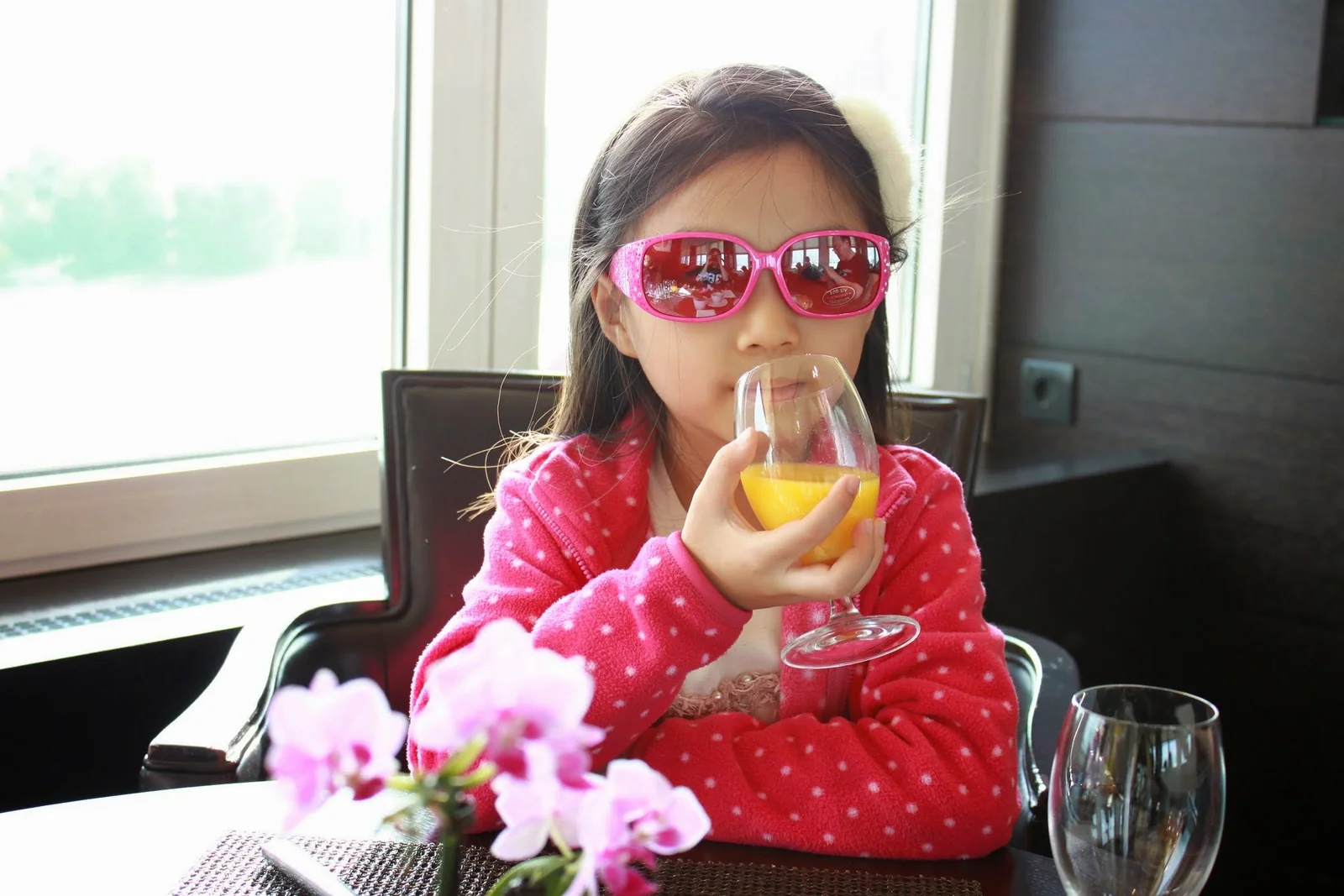
Dad wasn't anxious at all. Take your time over breakfast. We're on vacation; the important thing is to have fun. (Trembling~~~) After missing two trains, we finally made it aboard one.
The Danube outside the window was not actually blue. Shocking! Apparently “Blue” is simply part of the tune's title—rather like how a Taiwanese sun cake has very little to do with the sun. (Cold~~)
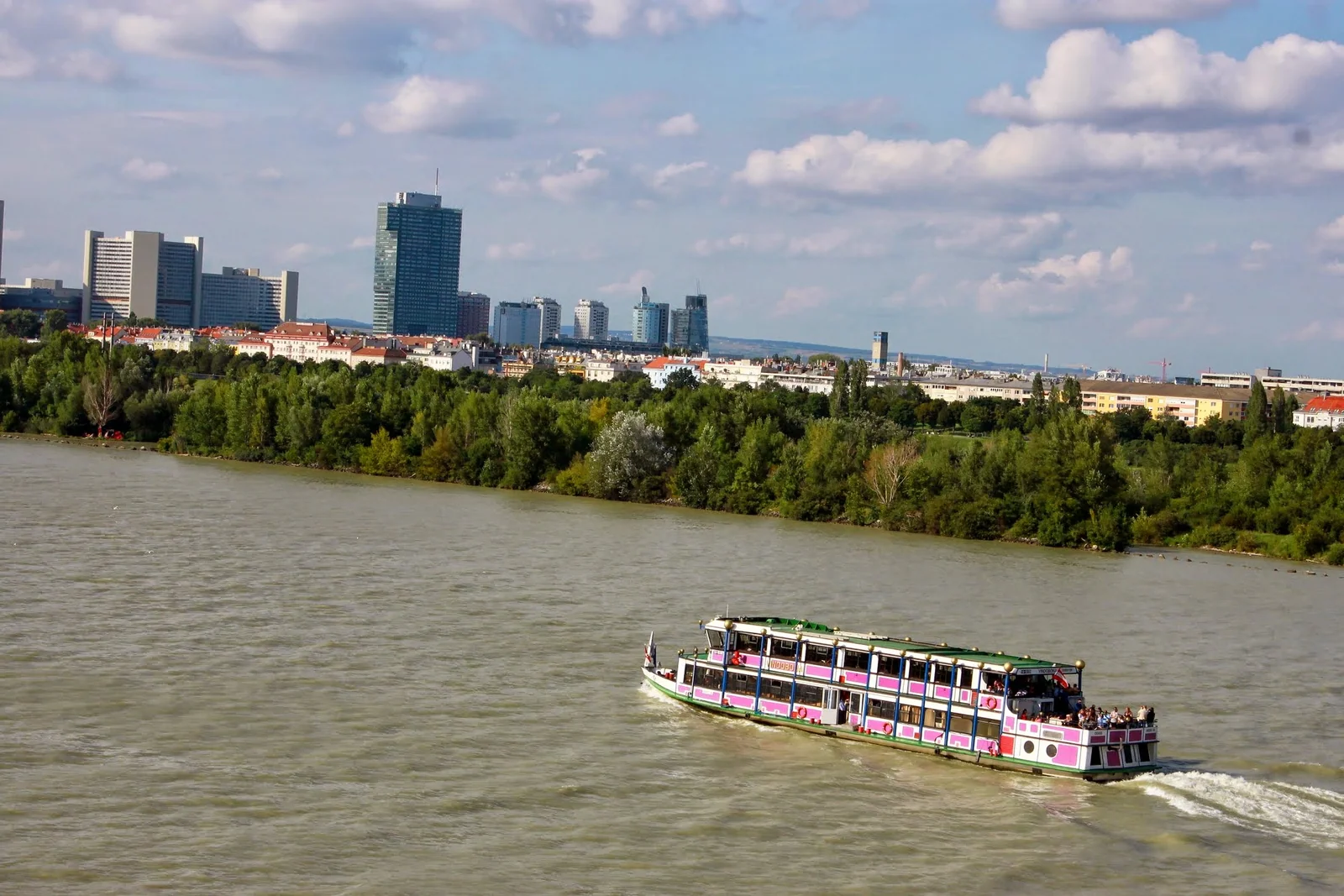
There were city cruises near our hotel, but we had planned to travel through the Wachau Valley: downstream from Melk toward Krems, with a stop at Dürnstein. The riverbanks were lined with abbeys, castles, ruins, villages, vineyards, and farms.
At Vienna Westbahnhof, we bought an ÖBB combination ticket covering the train to Melk, admission to Melk Abbey, the river cruise, and the return train from Krems to Vienna. In 2014, it cost €49 per adult and €17 per child.
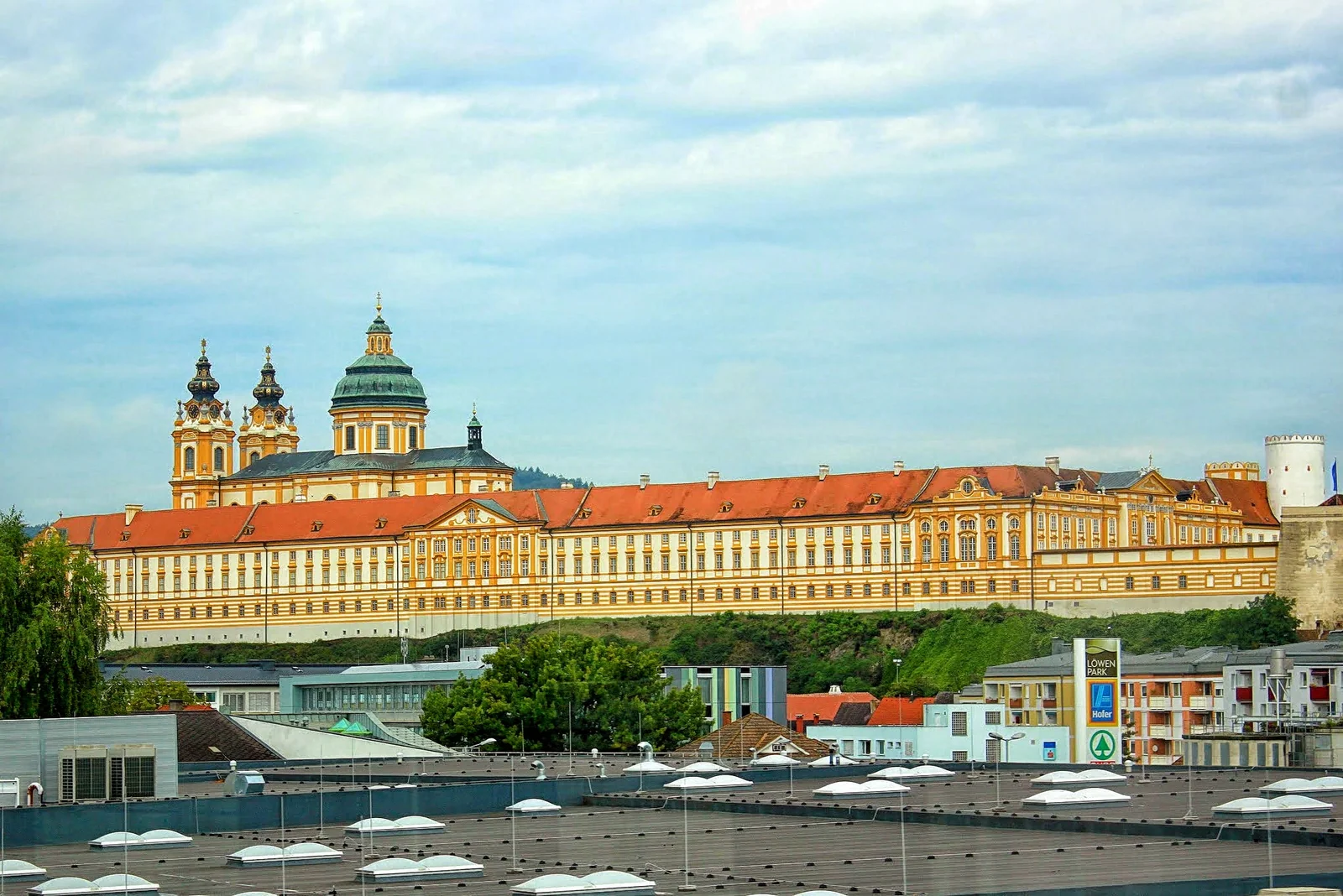
After roughly an hour on the train, we could see Melk Abbey rising on its rocky hill in the distance.
From the station, we walked through town toward the abbey. At one intersection stood a handsome building that, after about five minutes of careful research, I confidently identified as…a luxury home. Definitely. (Runs away.)
We crossed the little town and climbed a gentle slope. About fifteen minutes later, we reached the abbey gate.
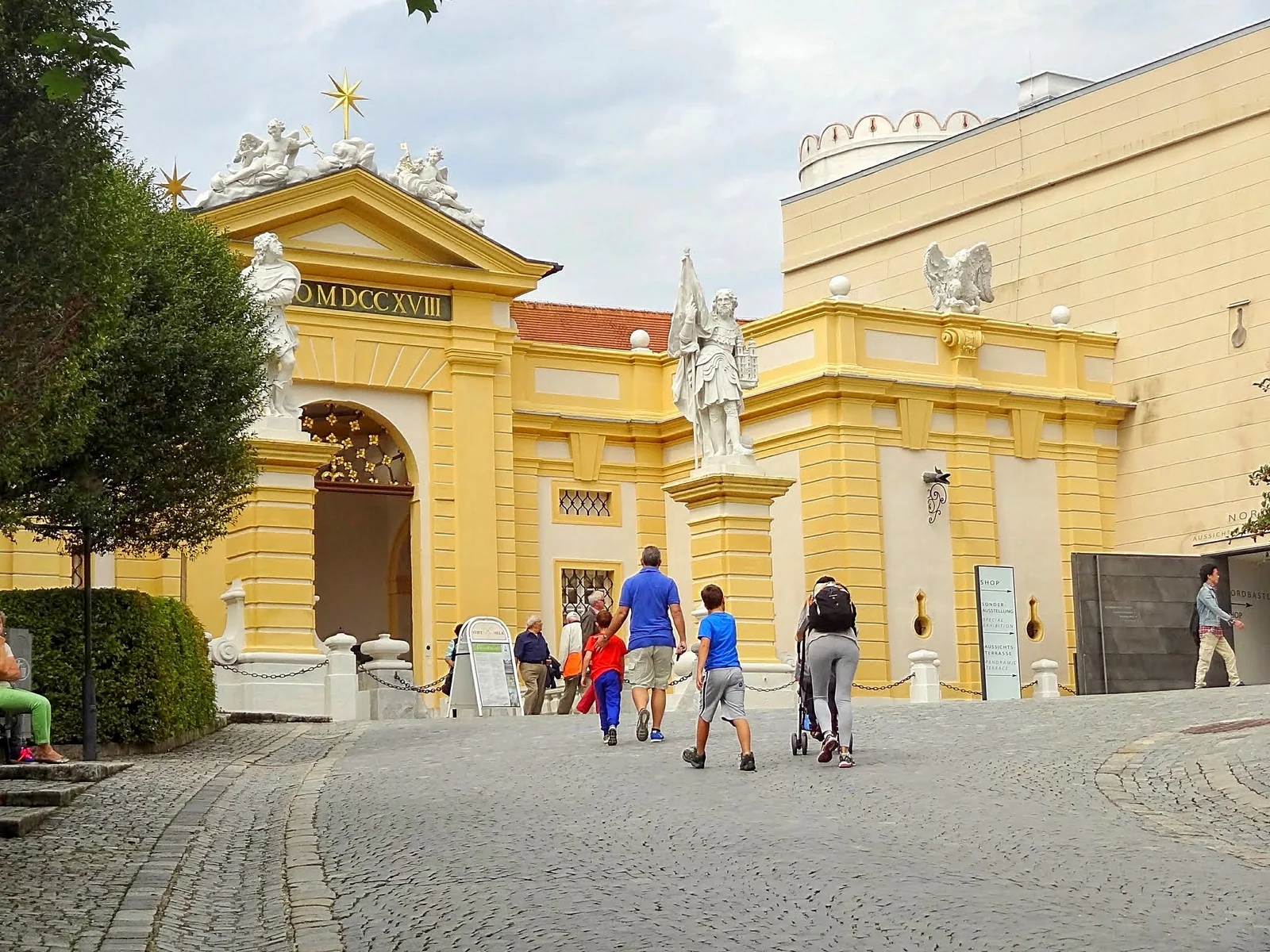
Inside was a large courtyard. We took our ÖBB voucher to the ticket office on the right and exchanged it for admission. A guided tour was included, but moving around with a crowd felt too restrictive, so we slipped away and explored on our own.
Upstairs, a sequence of interconnected exhibition rooms began on the left. The first large room contained only a long table symbolizing the Last Supper. The rooms beyond displayed religious objects and priceless “treasures”—I mean, works of art.
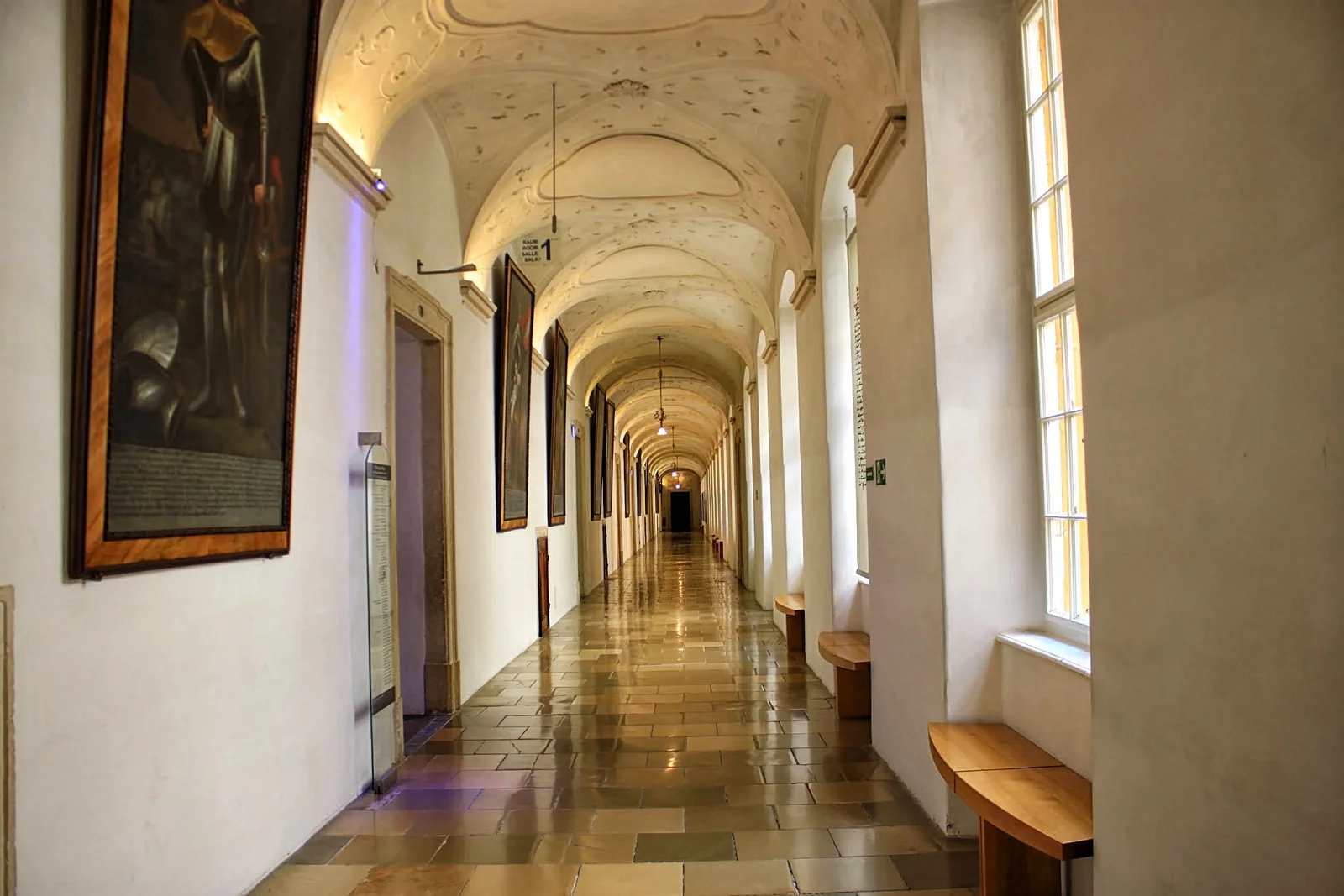
One gallery contained an ancient cross. Although photography was not completely prohibited in the exhibition, I chose not to photograph certain religious objects. The visit also confirmed that a little reading beforehand makes it much easier to appreciate what is in front of you.
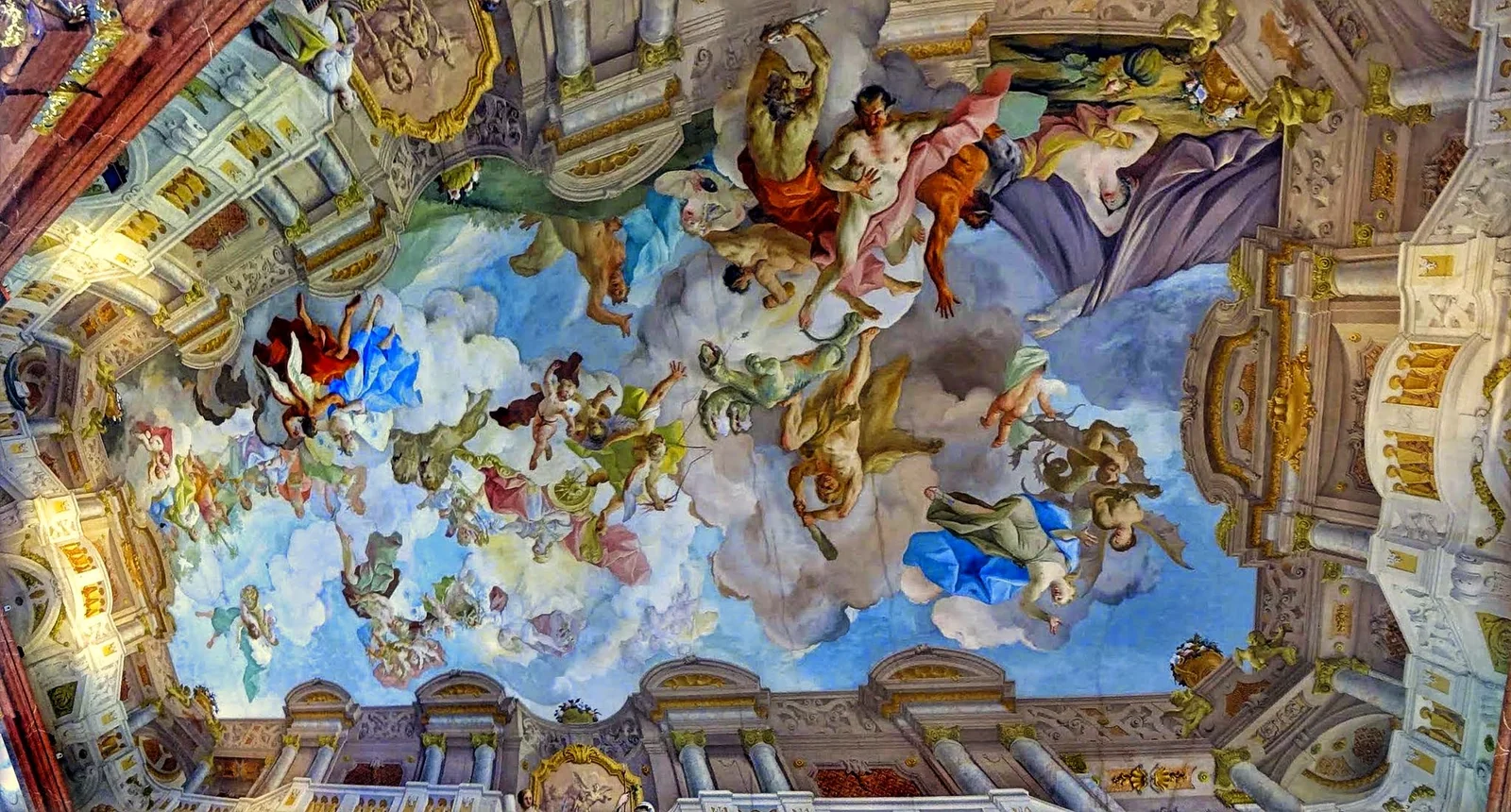
Beyond the long galleries was the Marble Hall. Its ceiling fresco immediately drew every eye upward.
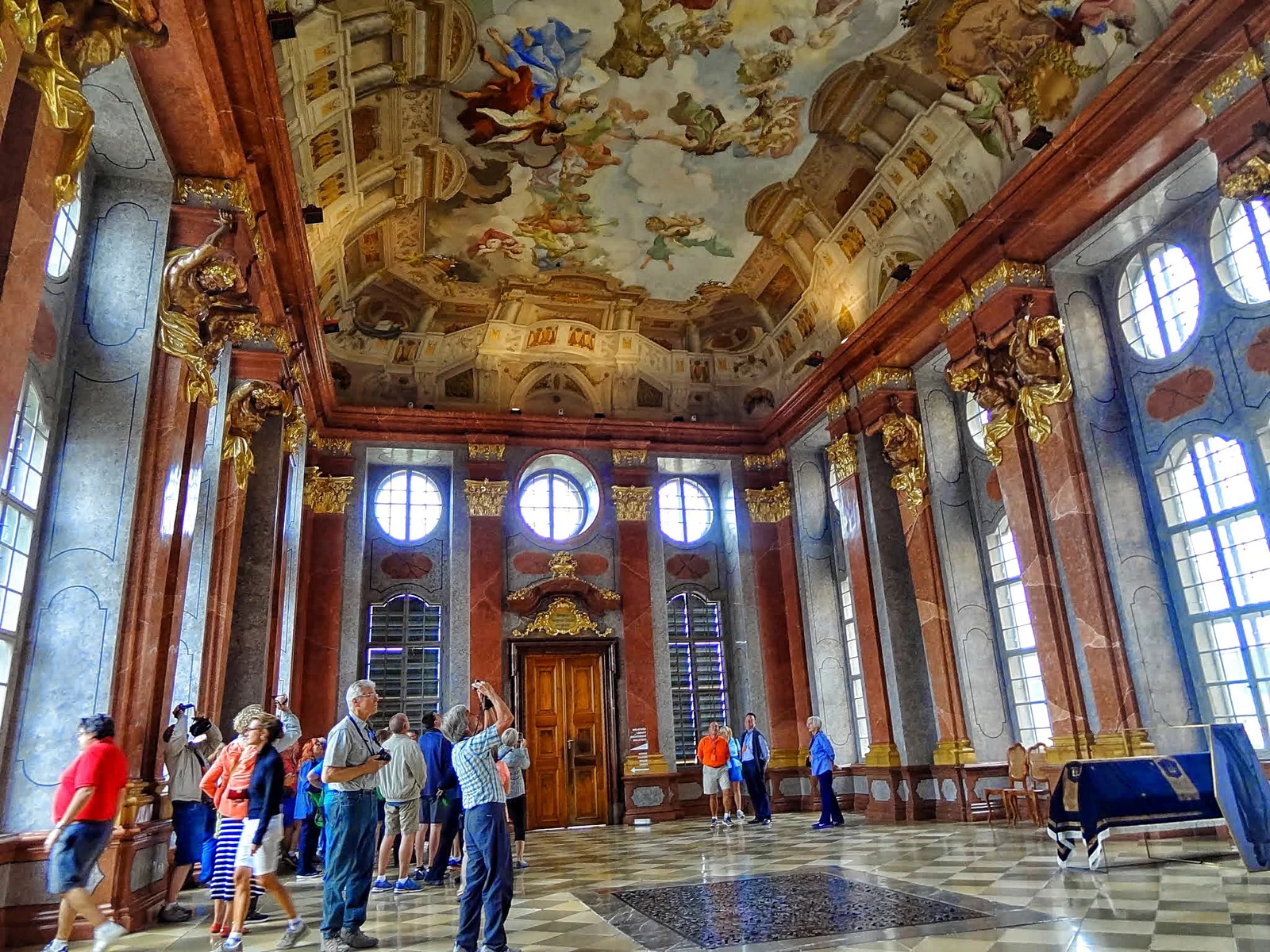
But why was there a coffin in the hall? It gave me chills on the spot @.@'"
The explanation we found after the trip suggested that it might have been a reusable coffin whose bottom could be opened after a funeral. Better to look back up at the frescoes…
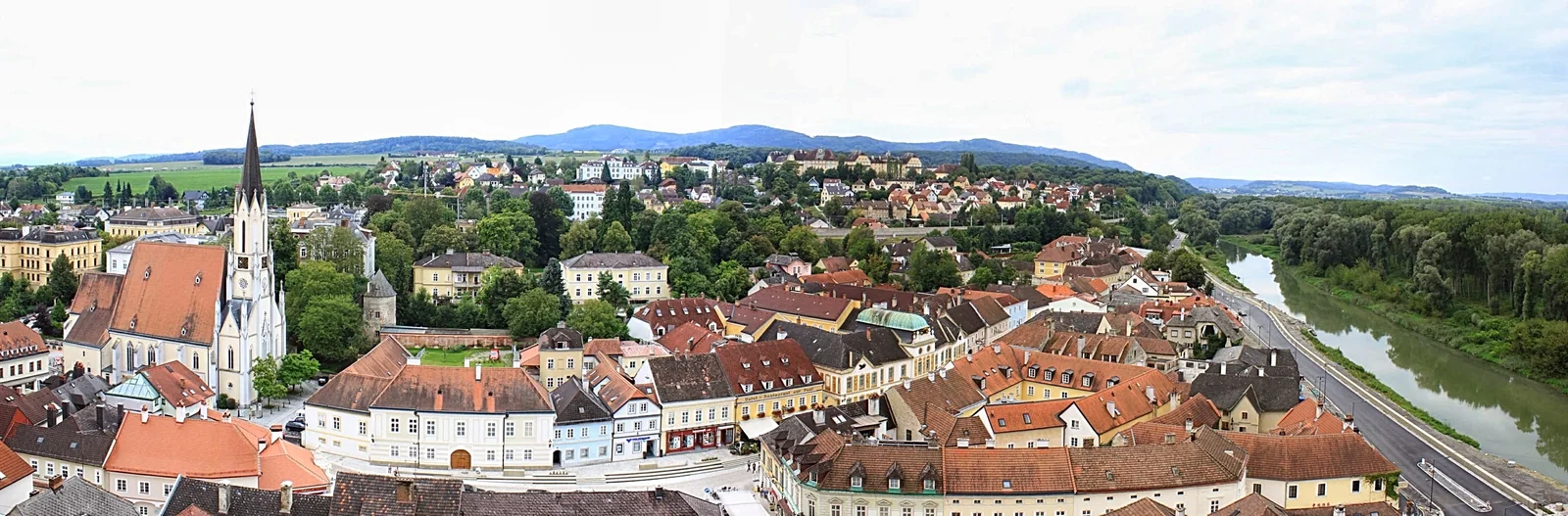
Or out the window. Beyond the interior rooms was a broad terrace overlooking the town and the Melk River. On the other side stood the abbey's elaborate towers.
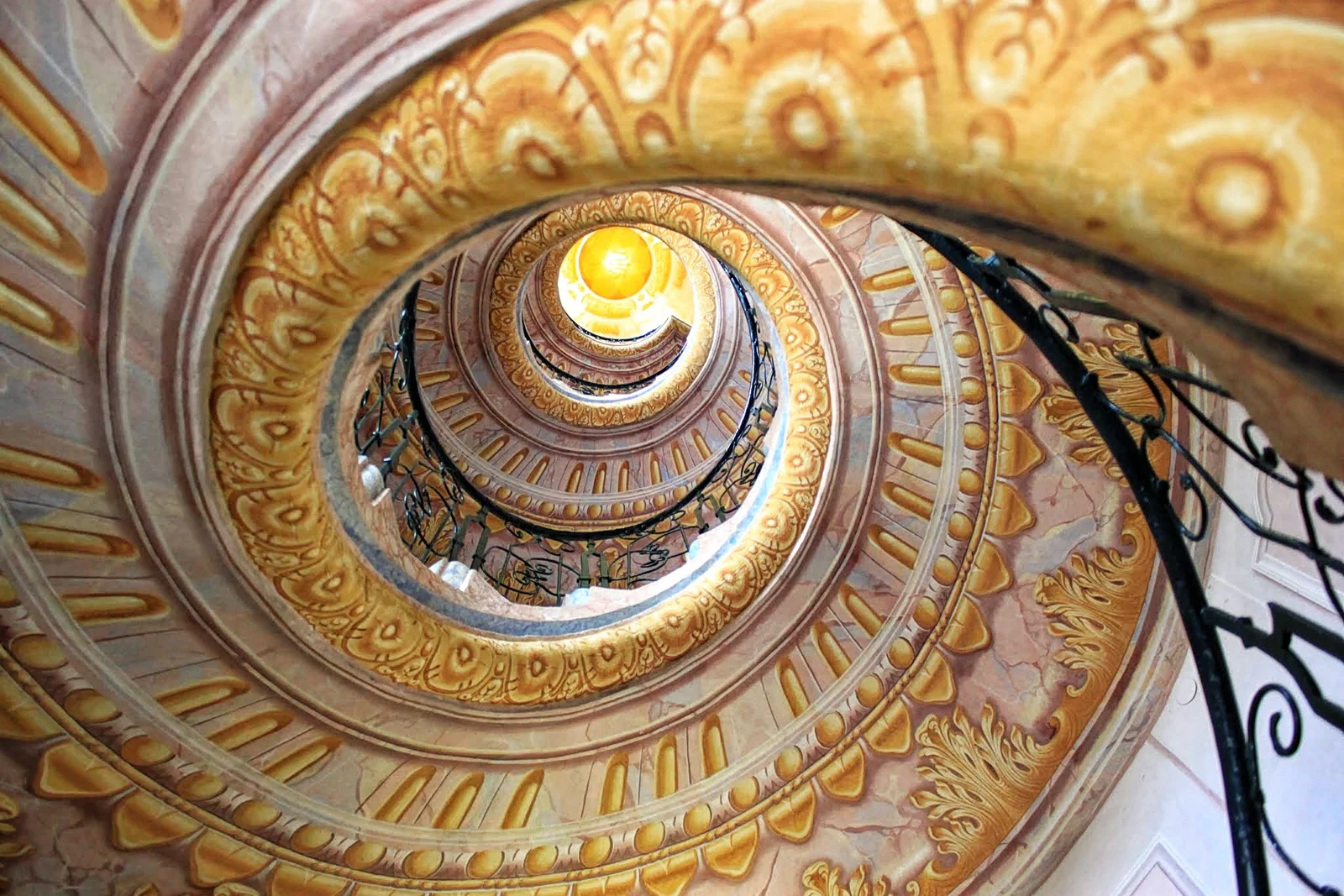
Even the spiral staircase inside the tower demanded attention. I had never seen one decorated so beautifully.
The abbey library came next, with its vast collection of books and old manuscripts. Photography was not permitted during maintenance, so you will have to imagine the library at Hogwarts instead~
From there we entered the glittering church. The boxes on the upper level were said to have been reserved for nobles and other VIPs.
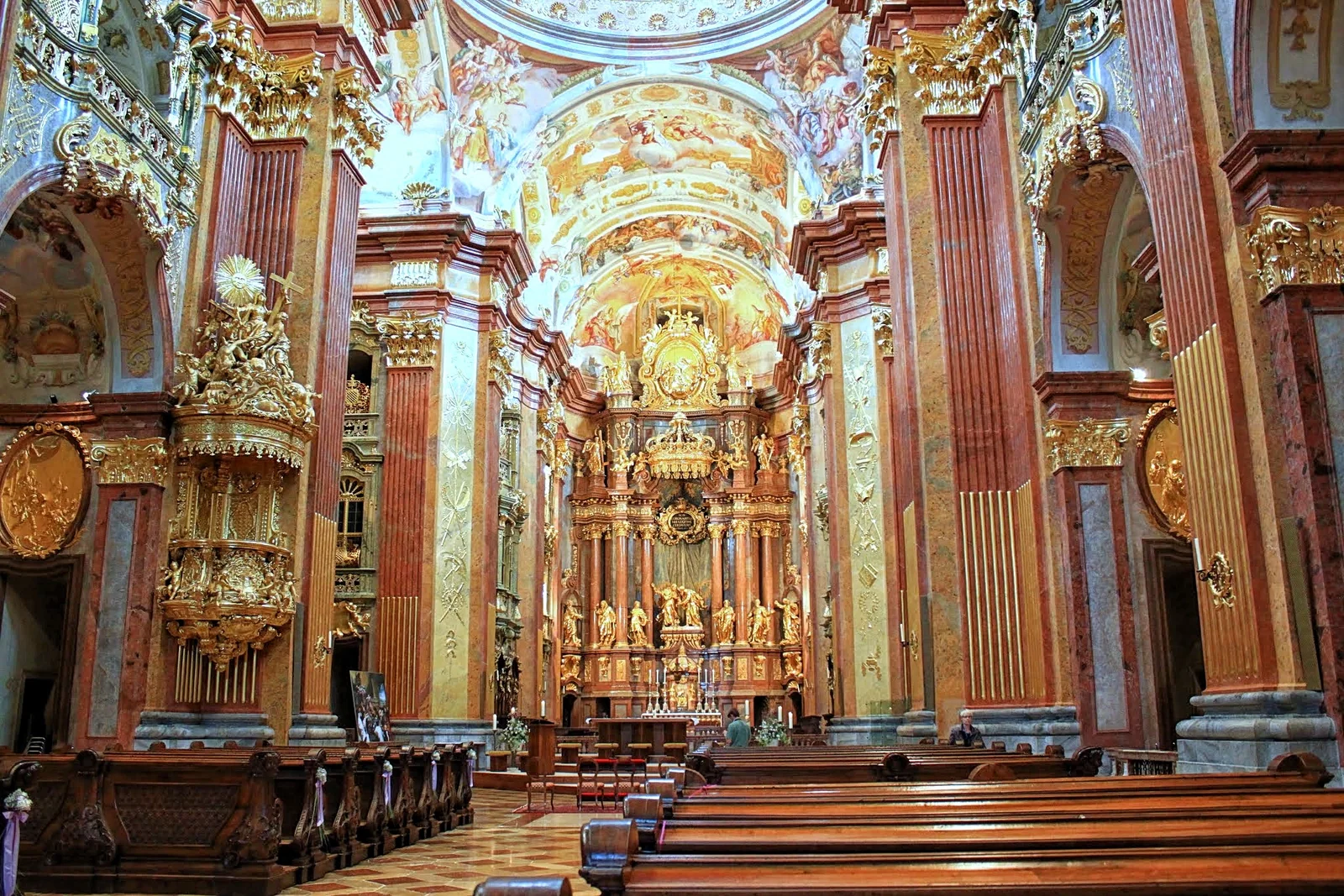
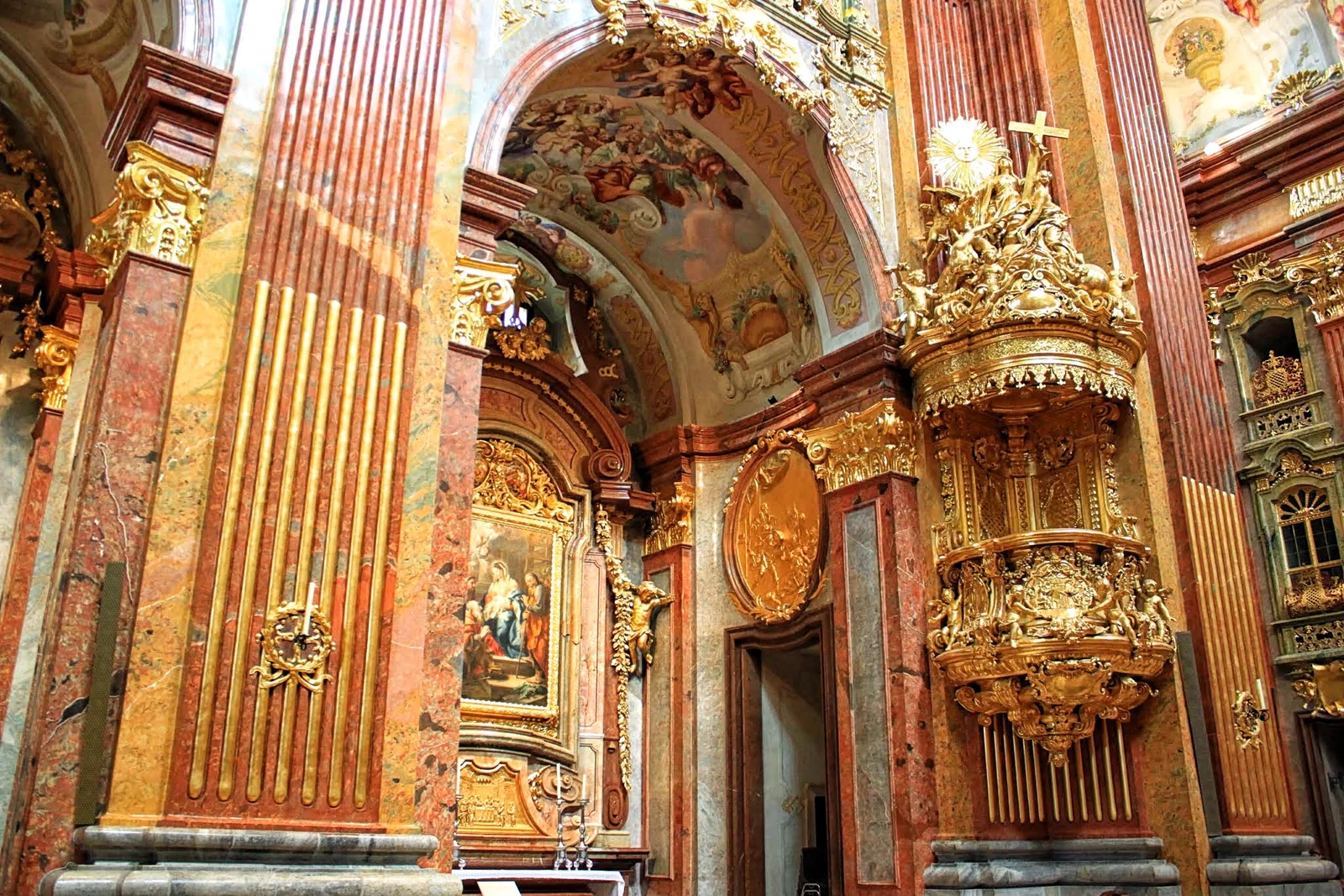
We had seen many imposing churches, and plenty of carvings and frescoes worthy of a long “Woooow~~.” But this was the first one that seemed to sparkle everywhere. It made you want to keep going…whoa…walking very carefully along the side…
After all that visual overload, we somehow wandered into the gift shop. We bought two postcards to console ourselves over the gloomy weather. The shop also carried the abbey's wine, a fitting preview of the vineyards we would soon see from the river.
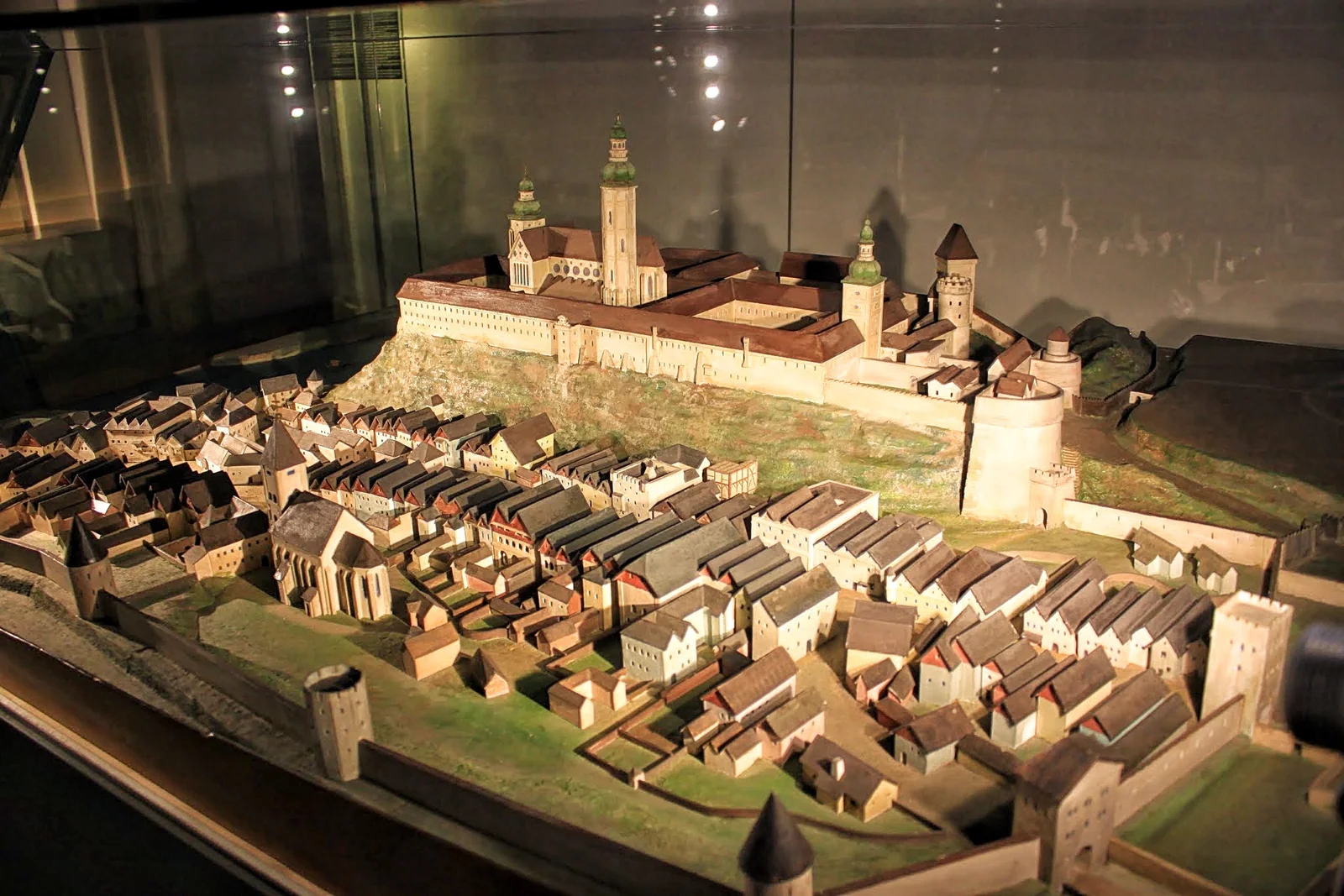
Before leaving, we stopped at a model of medieval Melk.
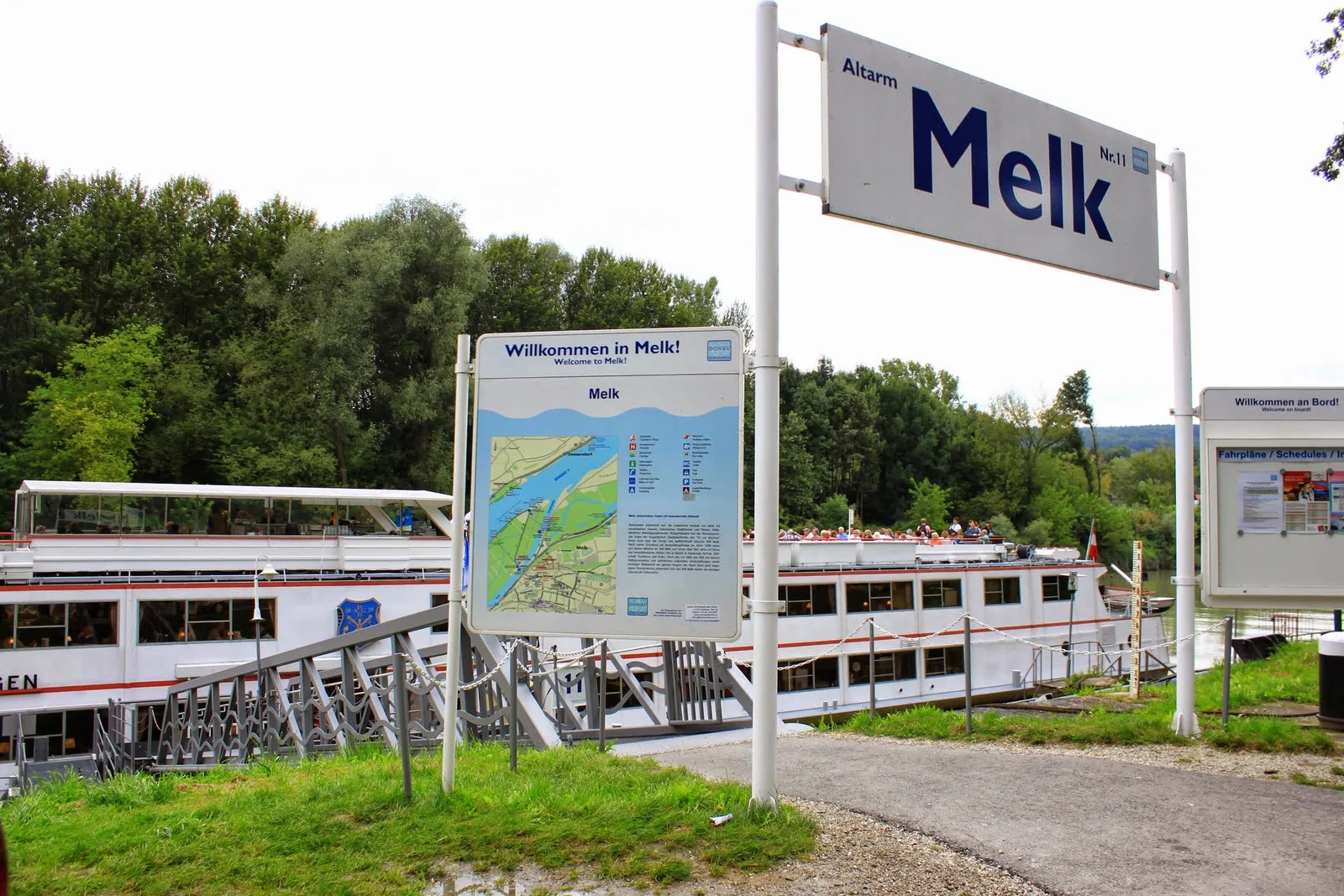
Our abbey visit ran well beyond the two hours we had planned. To catch the boat, we had to give up the leisurely lunch we had imagined in town and hurry toward the landing. A travel blog had said to take the path on the right side of the iron bridge, but on the ground the easiest solution was simply to follow the crowd.
At the landing, we still had to exchange our voucher at the ticket booth before boarding.
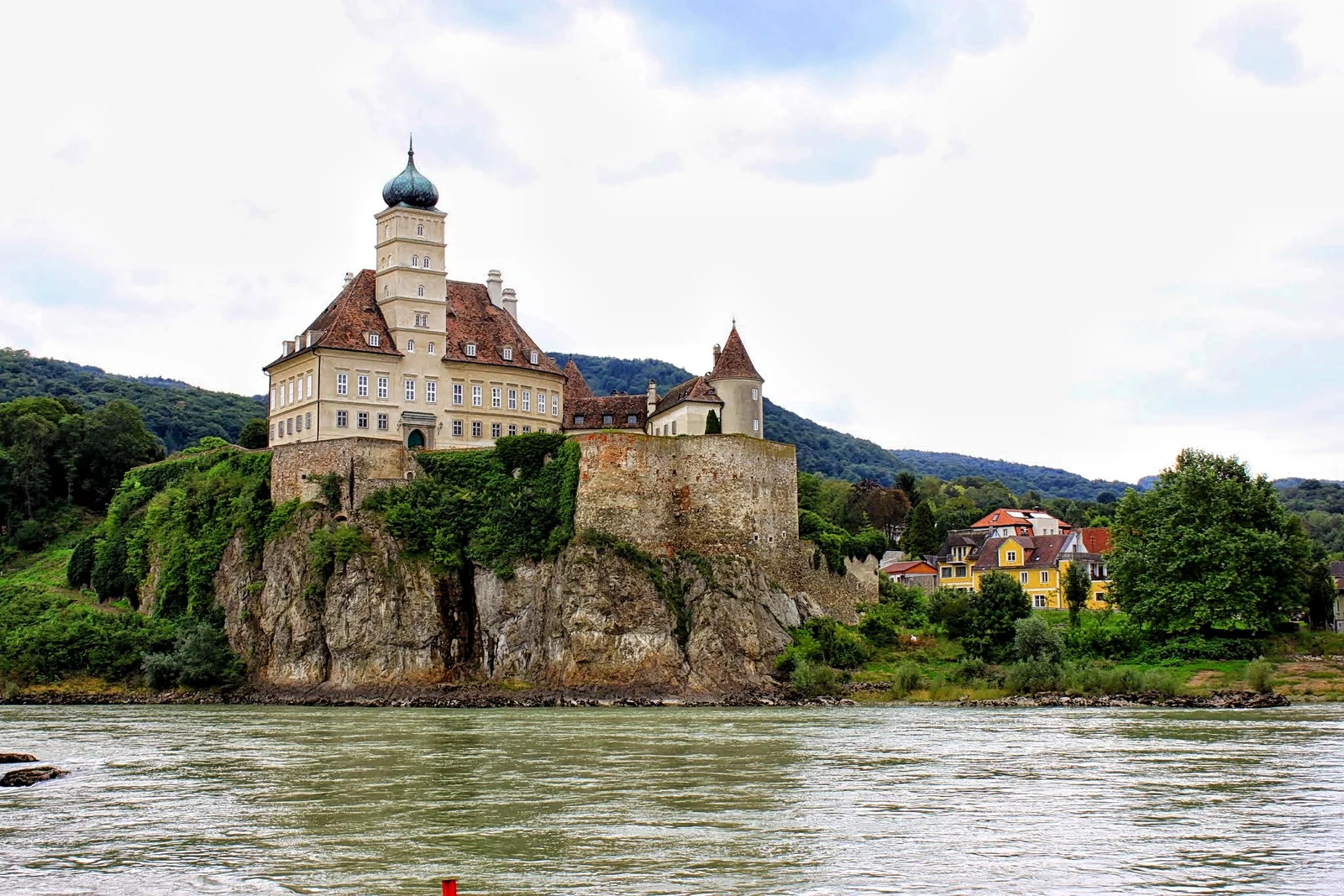
The boat carried us past castles, villages, and vineyard after vineyard. The most striking riverside castle was Schloss Schönbühel. It took me ages to track down the name. And…that is all I have to report.
Somewhere between the river views and the vineyards, I suddenly remembered: Oh, right. We had skipped lunch @.@'"
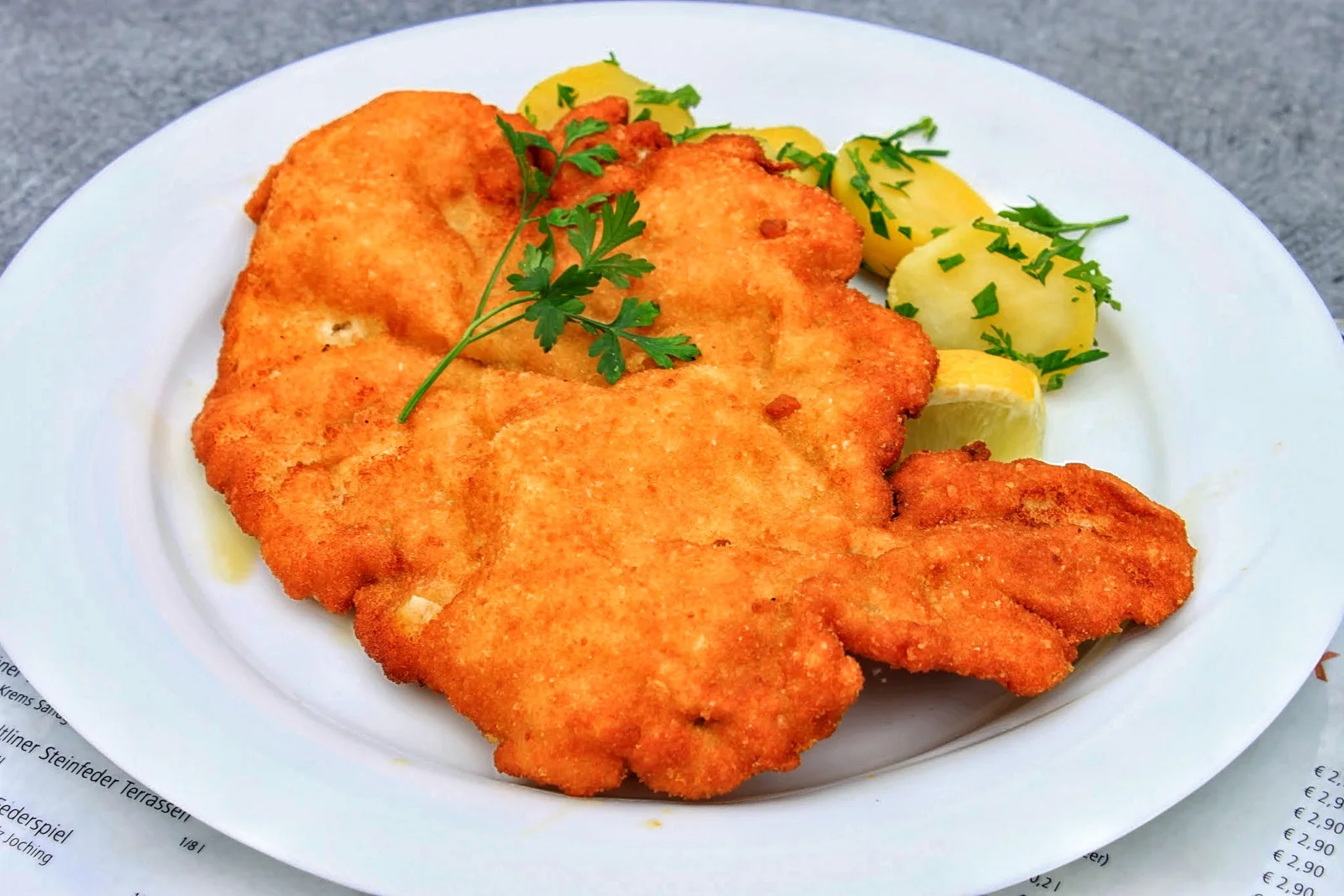
The lower deck contained a restaurant and indoor seating, and food ordered there could be carried upstairs. I spoke no German and had no idea how to pronounce anything on the menu, so I stood by the kitchen, pointed at a plate in a server's hands, and asked, “What's that?”
The server replied, “x@#$%…” (Wiener Schnitzel.)
“Okay. I order this one and a sandwich.”
That was how I accidentally ordered a famous Viennese schnitzel. Hahaha~
As I carried the plate past another passenger, he jokingly called, “Here, here~~”
I answered, “OK, OK. Fifty bucks~”
And then he…
By the time we had eaten, the boat was nearing our next destination: Dürnstein.
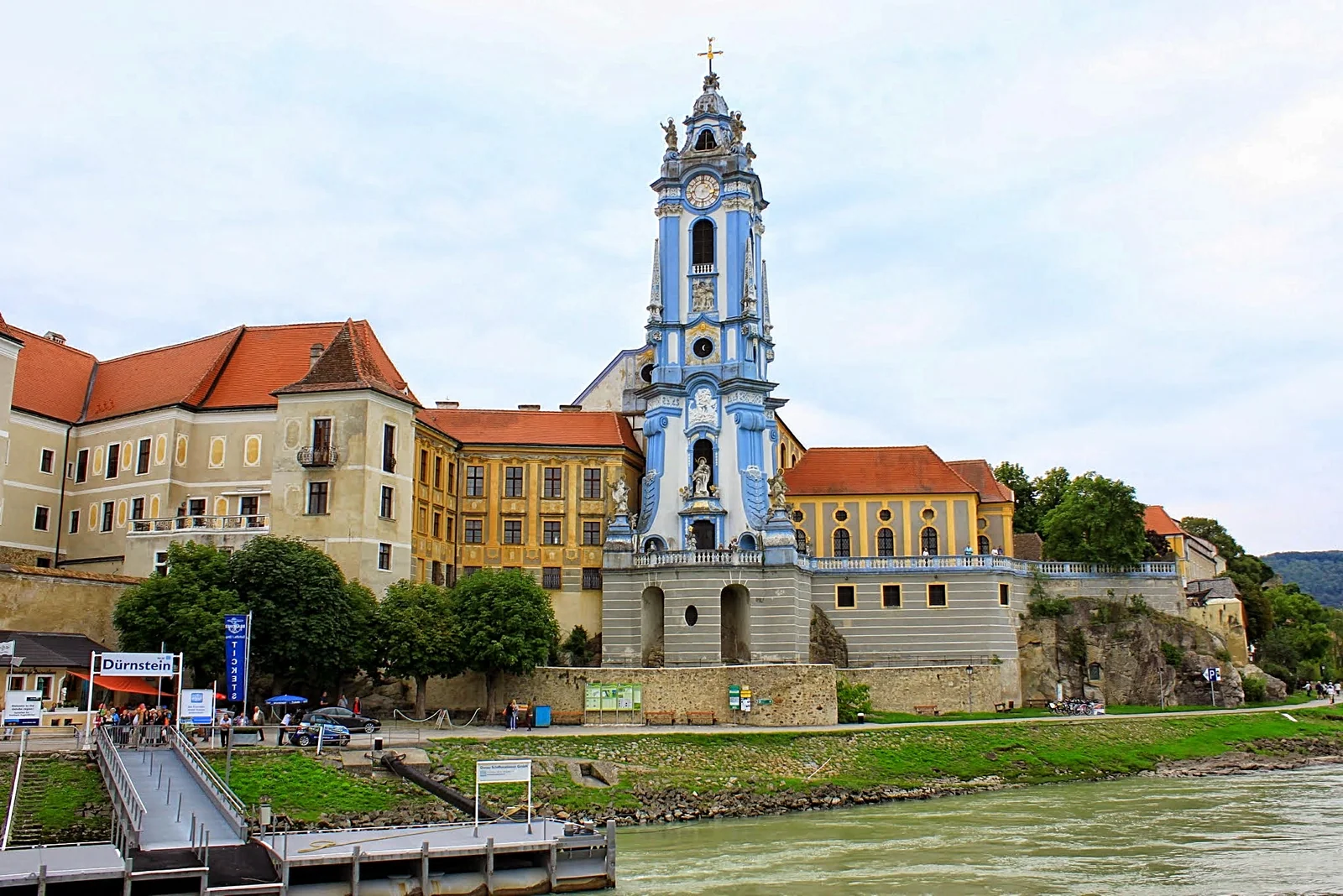
Ending
The day began with two missed trains and continued with an abbey visit that ran long, a dash for the boat, and a belated lunch ordered almost entirely by pointing. It was not our most elegant day of travel, but the whole family made it onward together.
Complete Photo Gallery
Previewing up to 8 album photos. Open the gallery to browse all photos.