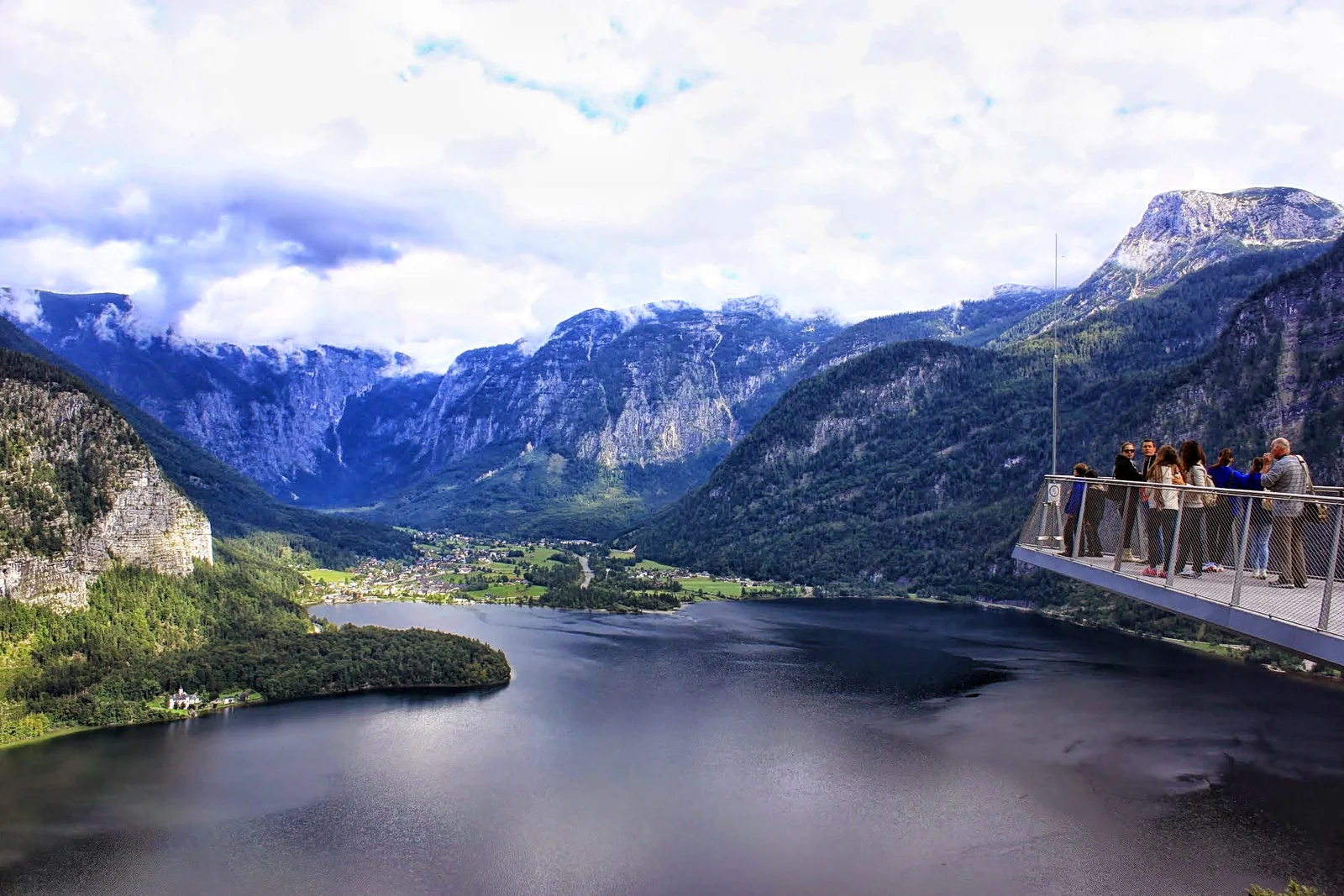
August 24, 2014 — Traveling toward a dream: Hallstatt, a World Heritage cultural landscape, and its old salt mine.
Google Maps estimated that the drive from Vienna to Hallstatt would take about three hours. The train would have taken roughly three to four hours as well, but with the whole family and all our luggage, driving still seemed easier.
We left at around 10 a.m., stopped for lunch at a highway rest area, and reached Hallstatt at about 2 p.m.
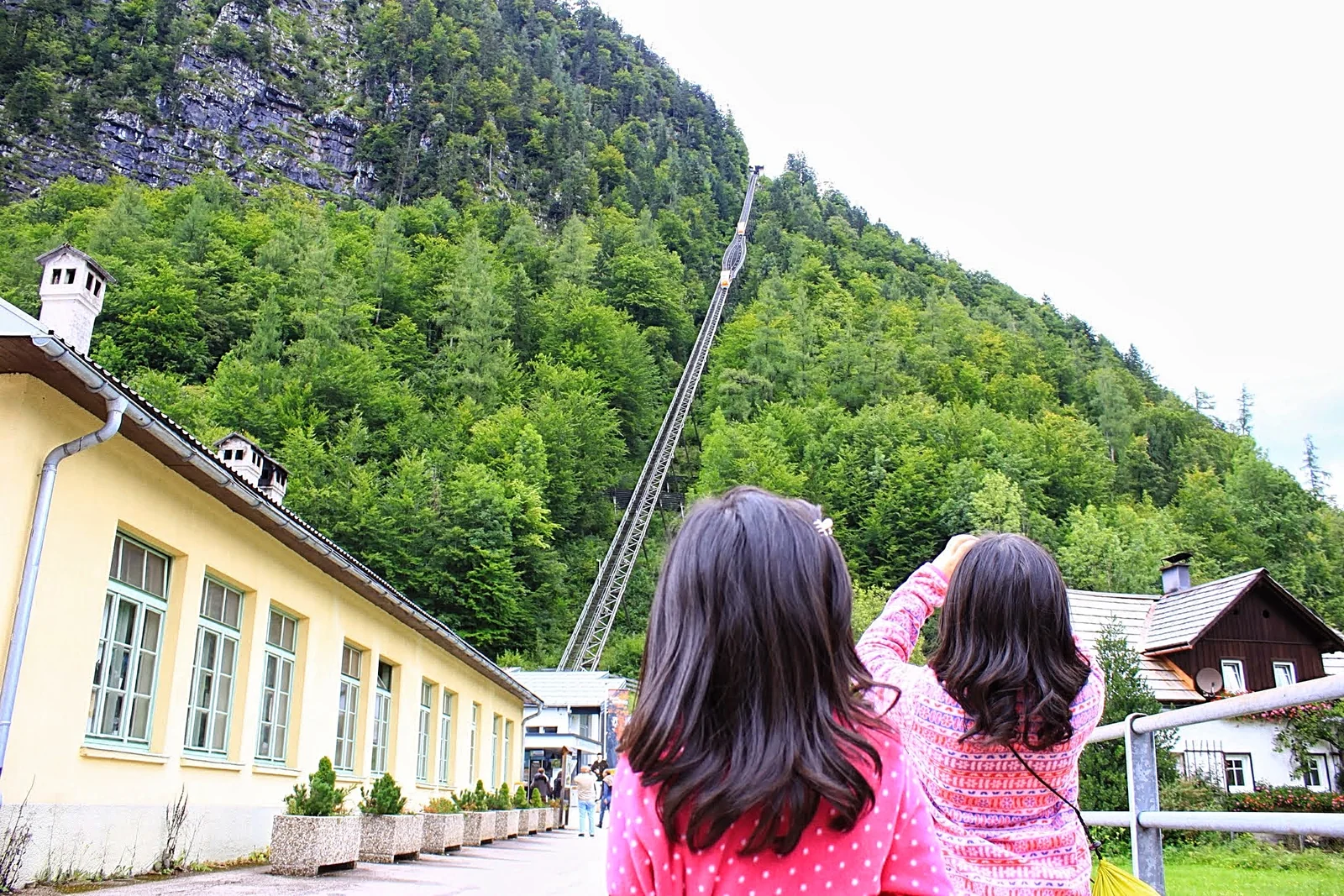
Space inside the village was limited. Only a few hotels had parking, and cars were not allowed into the village during the day. Most visitors left their cars in the lots outside town, conveniently close to the salt-mine funicular station.
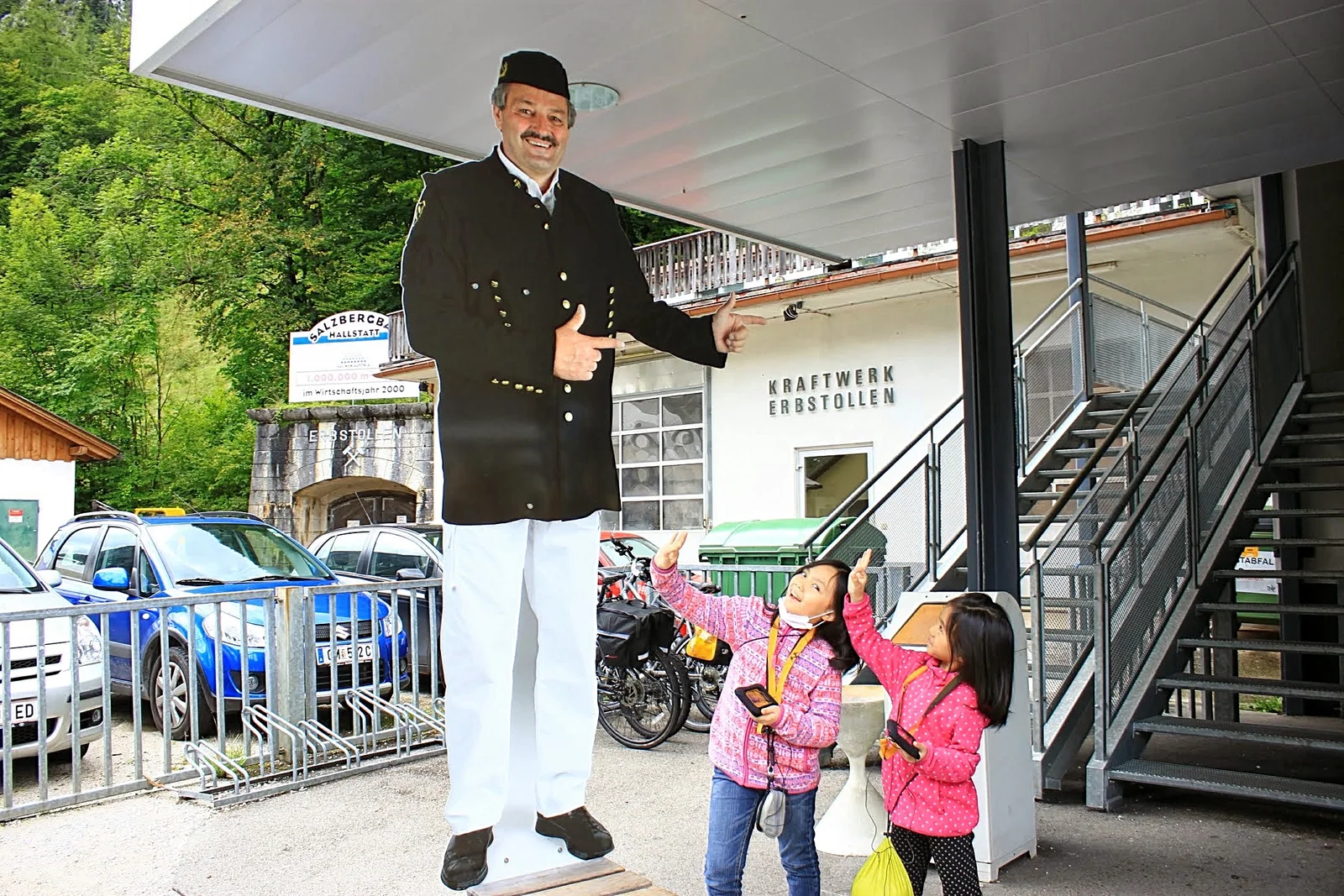
The salt mine's mascot... ha. Starting at the entrance, this human-shaped sign seemed to be everywhere.
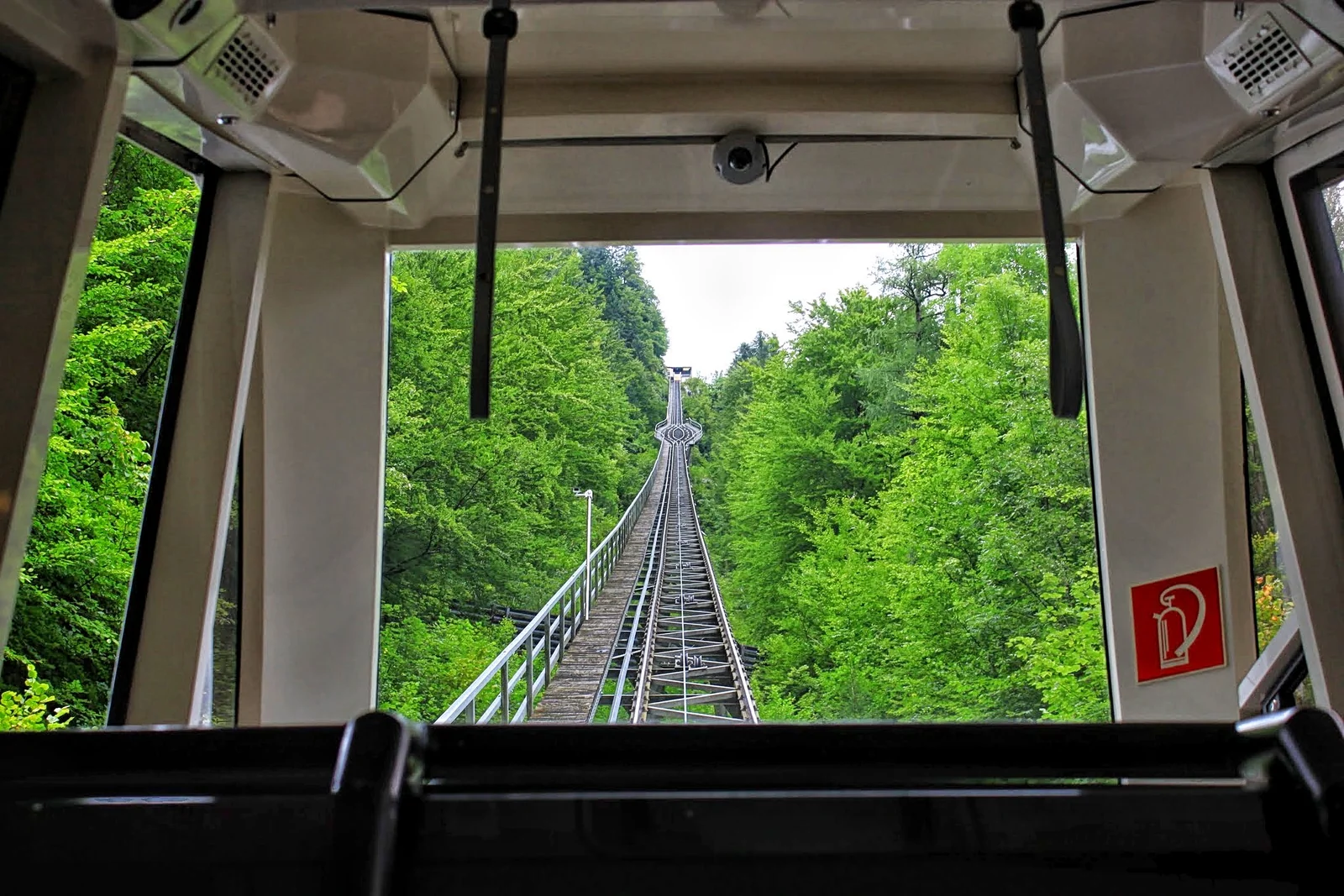
Onto the funicular and up the mountain we went ~~
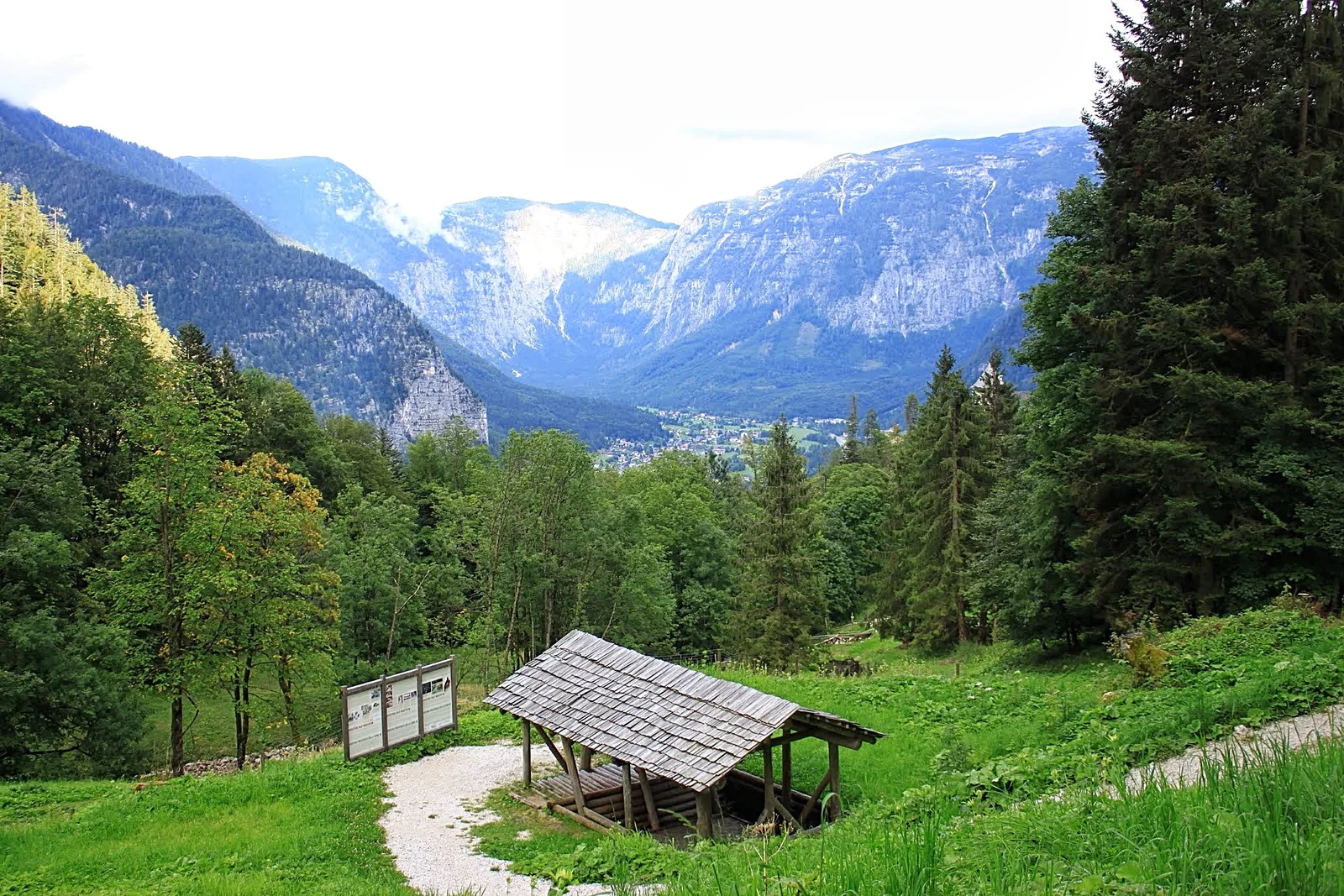
Once at the top, we stopped at the restaurant for something to eat and took in Hallstatt's lake and mountain scenery. From there, one side looked toward the far end of the village, while the other offered a bird's-eye view of the busy Market Square.
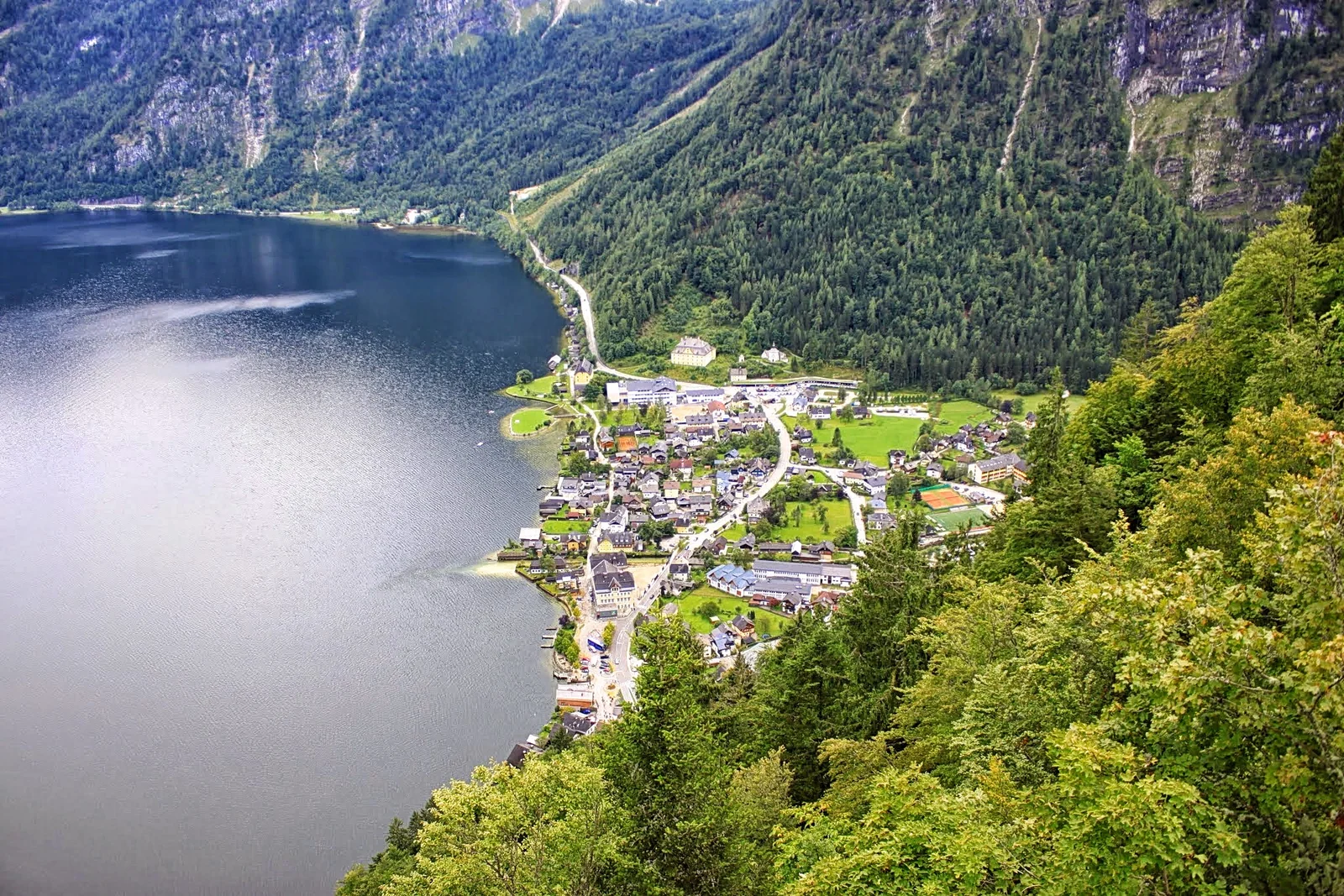
This was the restaurant where we had just eaten while enjoying the view.
We were running short on time. The mine closed at six, and we made it into the final tour group.
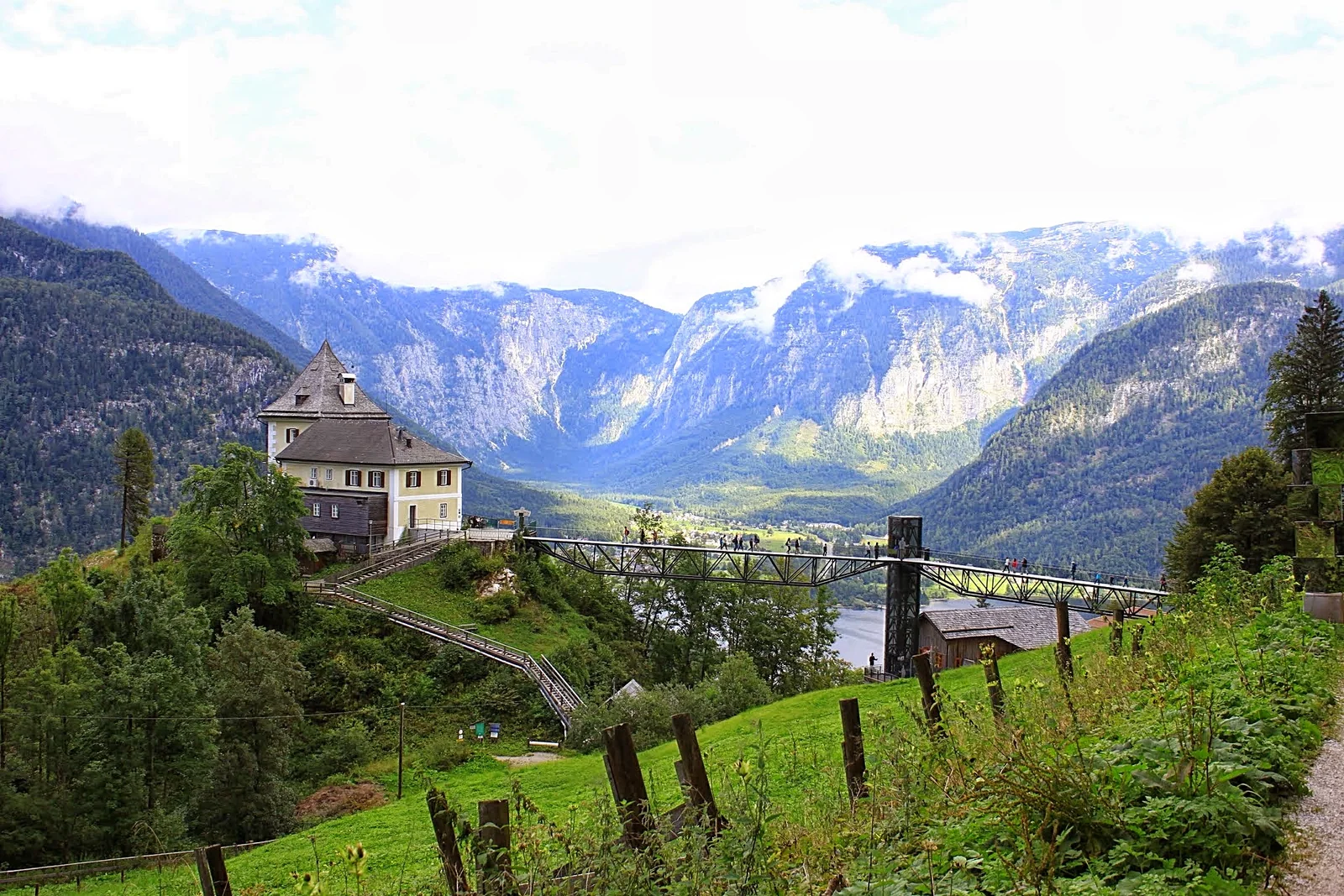
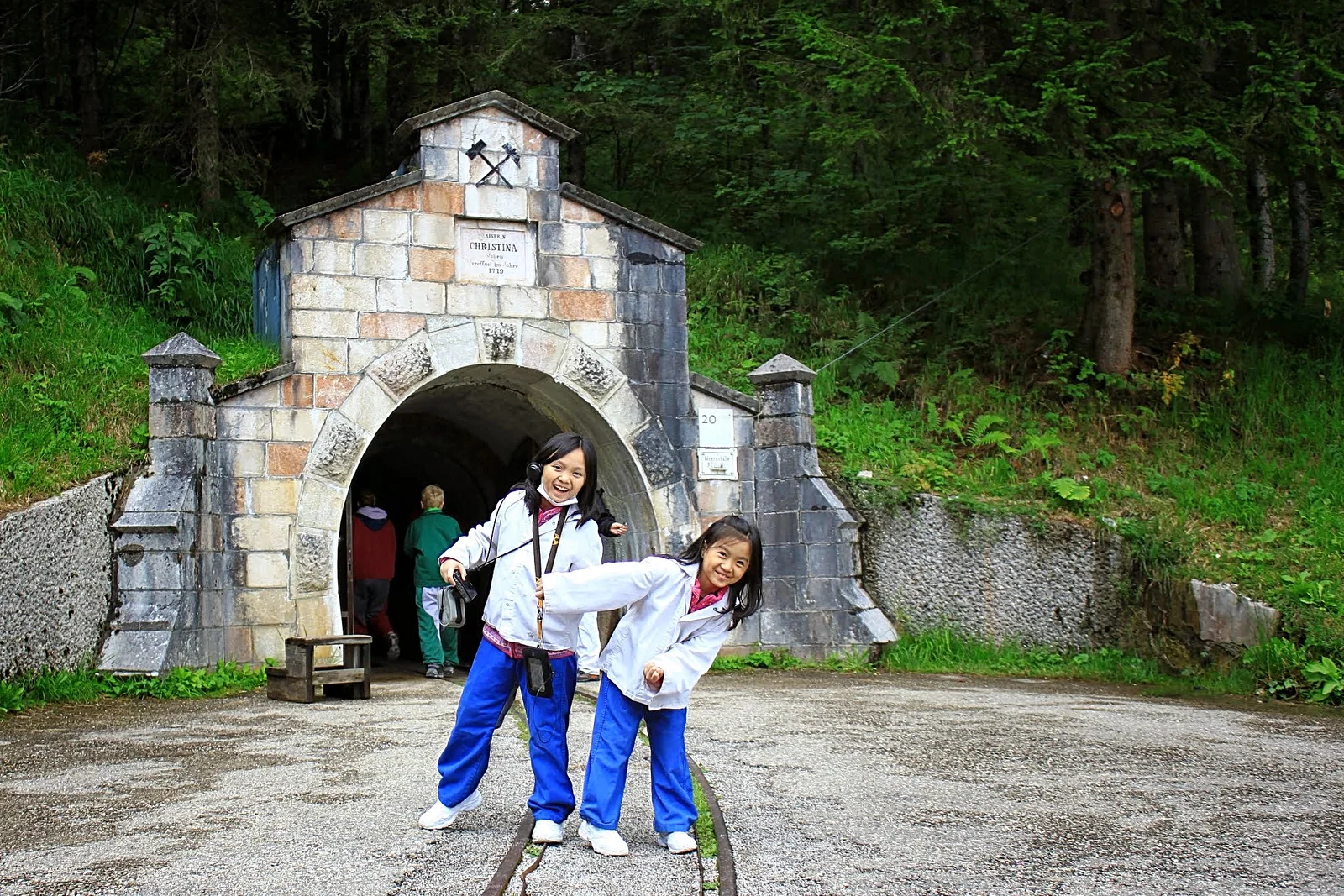
We changed into miners' overalls and headed into the tunnel ~~
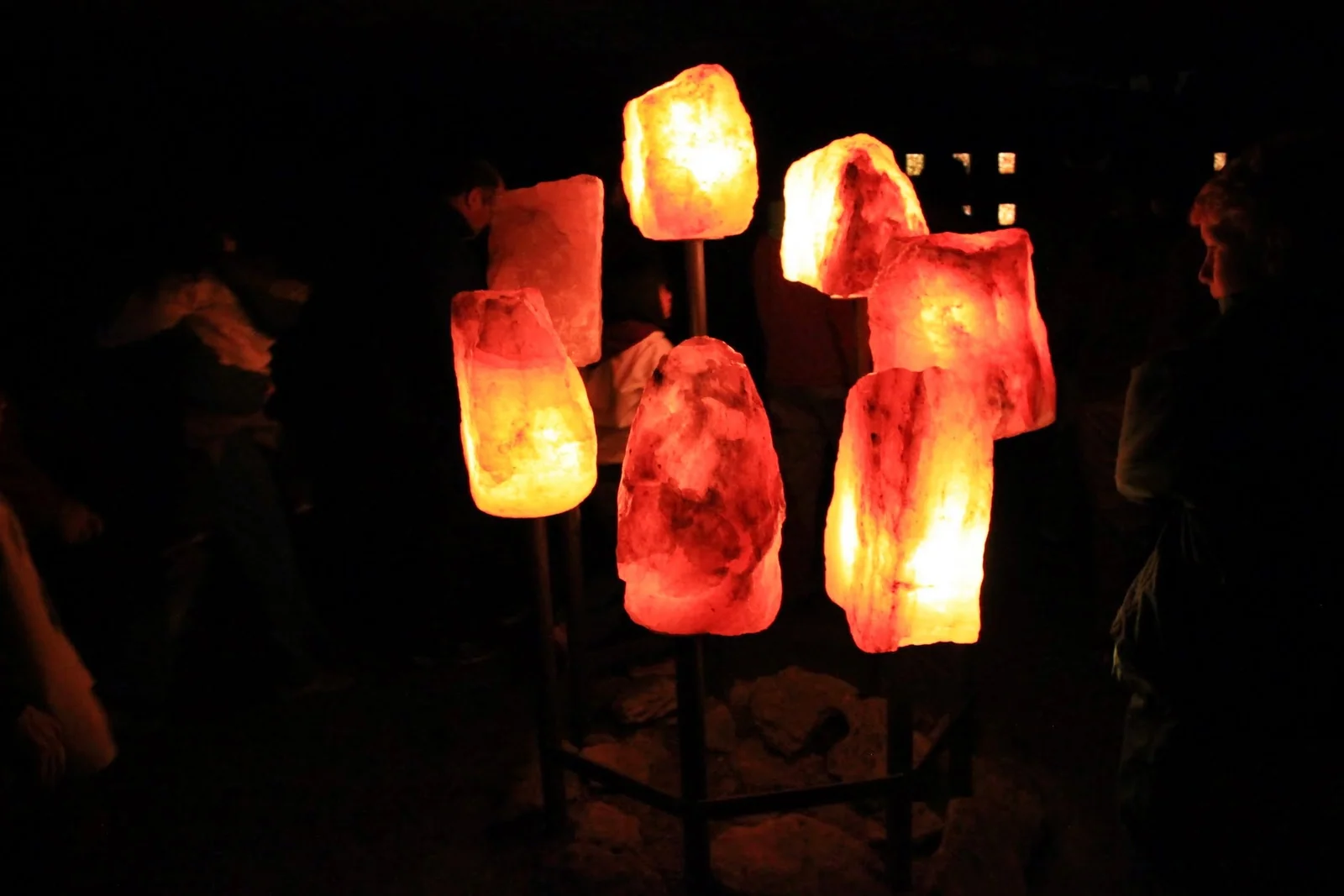
Inside, we could see layers of salt in the walls up close. Our guide explained that salt crystals were naturally pale and that the pink areas had been colored by other minerals.
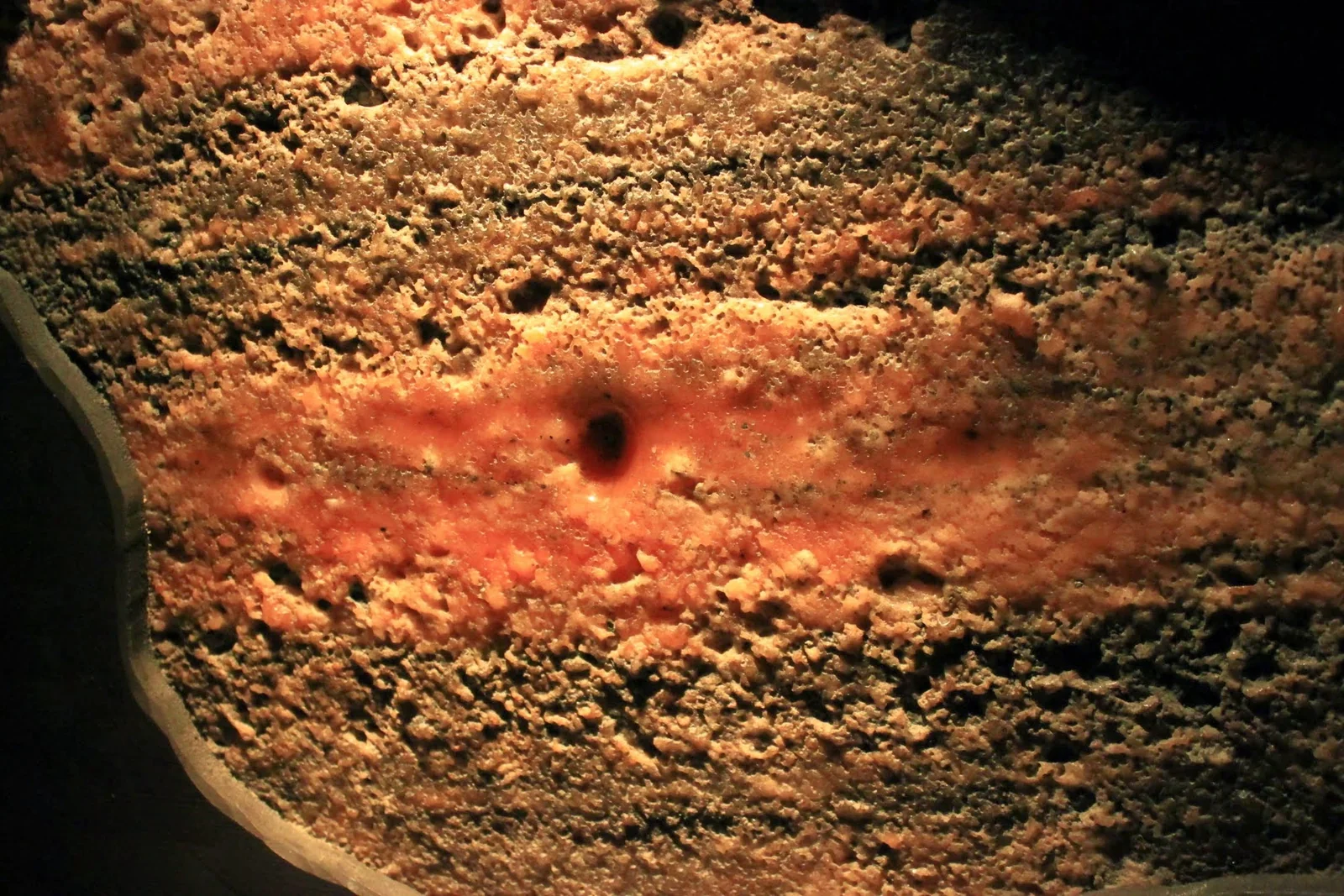
The moment I saw that hollow, my first thought was... how many people's saliva would it take to lick out a hole that big? @.@'"
We stopped in a large cavern to watch a projection about how the salt deposits formed. According to the presentation, ancient geological movements raised this region, while salt accumulated, was buried, and was eventually discovered and mined. It became our quick geology lesson before we ventured farther underground.
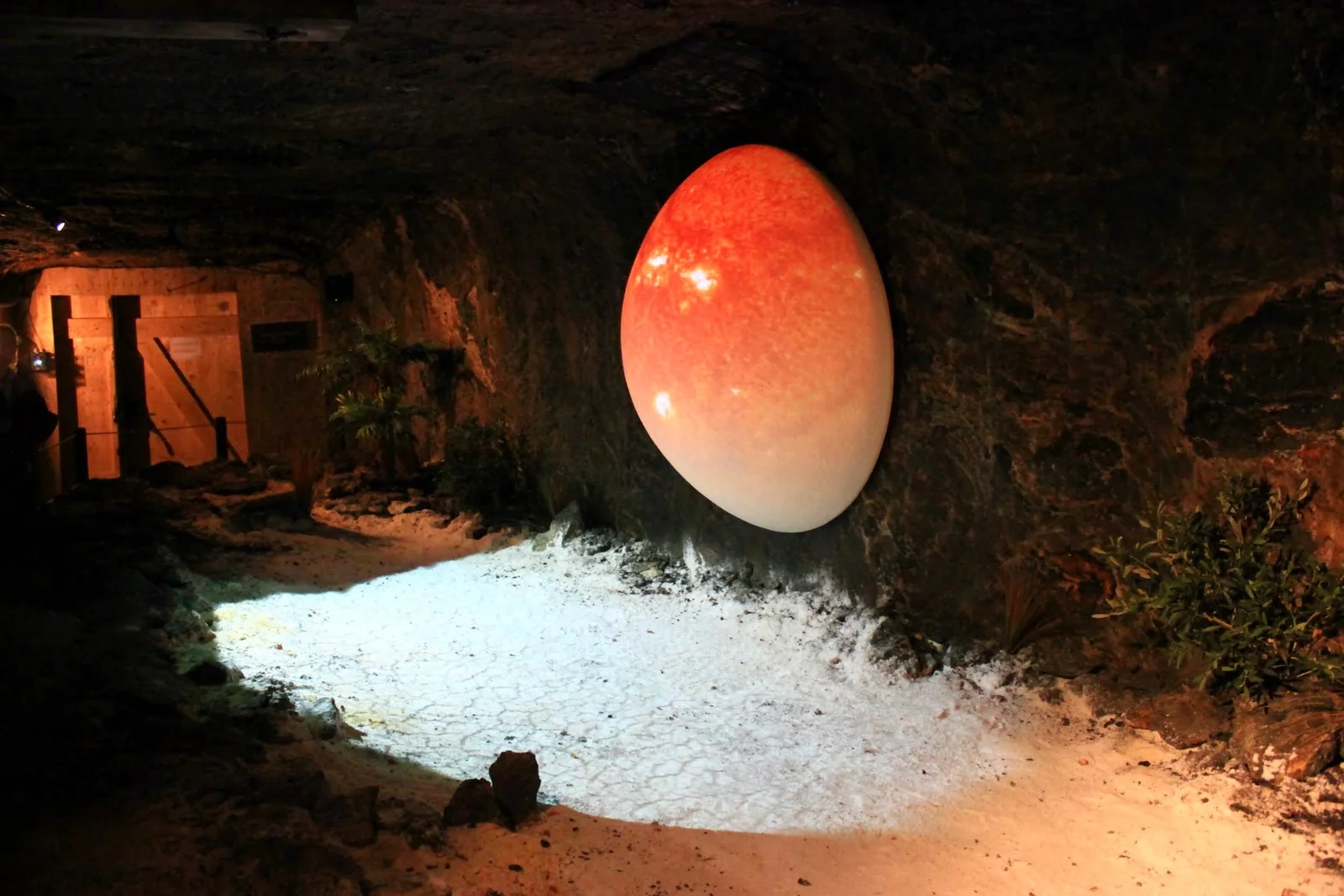
After the story, we moved on and prepared to head deeper into the mine.
Miners once used tall wooden slides, built along the natural slope, to move quickly through the tunnels. By the time of our visit, those slides had become one of the tour's biggest attractions.
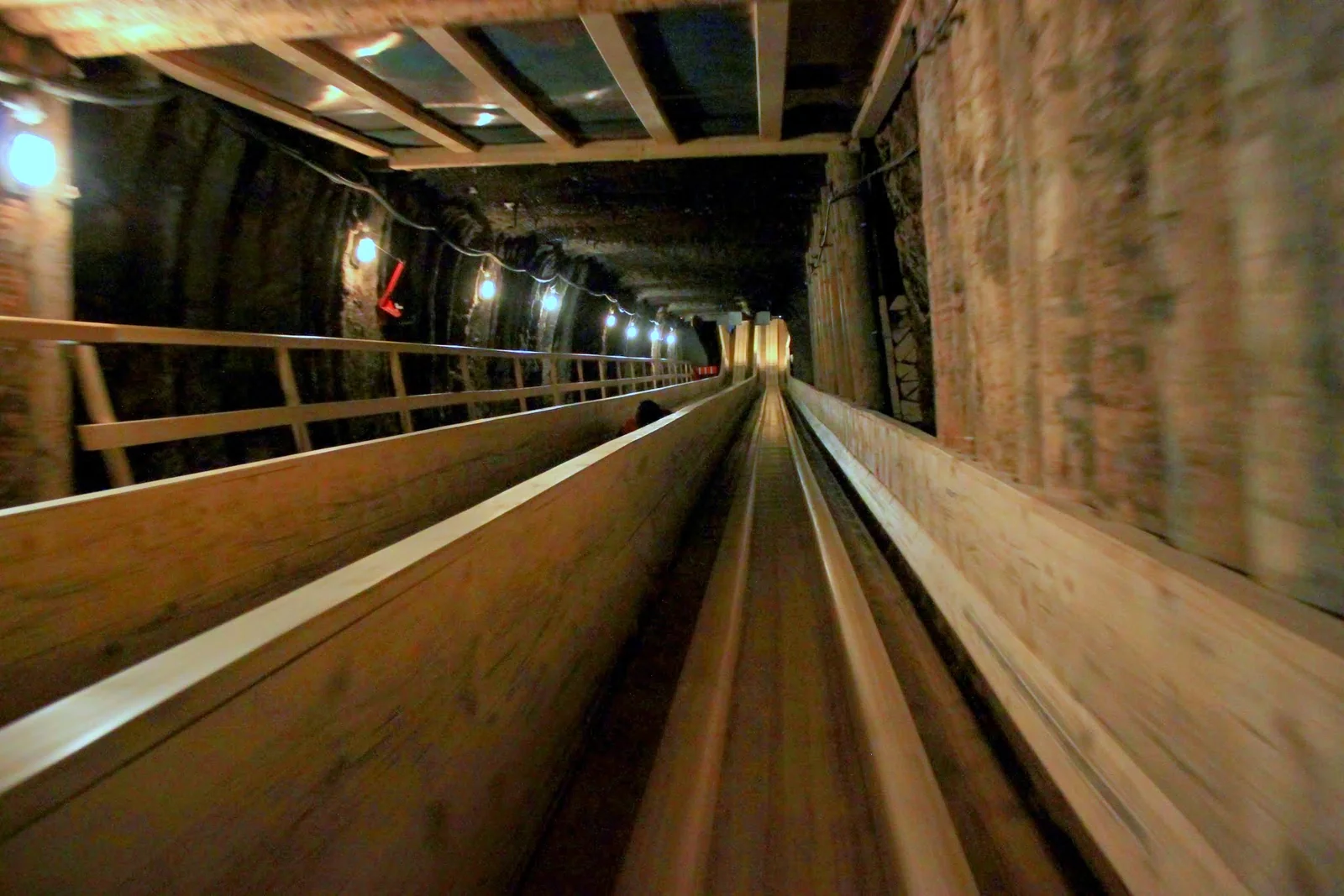
So the miners' uniforms were not just there to make the experience feel more authentic. Their main purpose was to protect our clothes on the slide XD
Our speed was honestly a little embarrassing... On the way out, we saw that someone had reached 35 km/h.
Then it was back to story time. The next part of the tour covered the salt-production process: pumping in water, drawing out the brine, filtering it, and separating the salt.
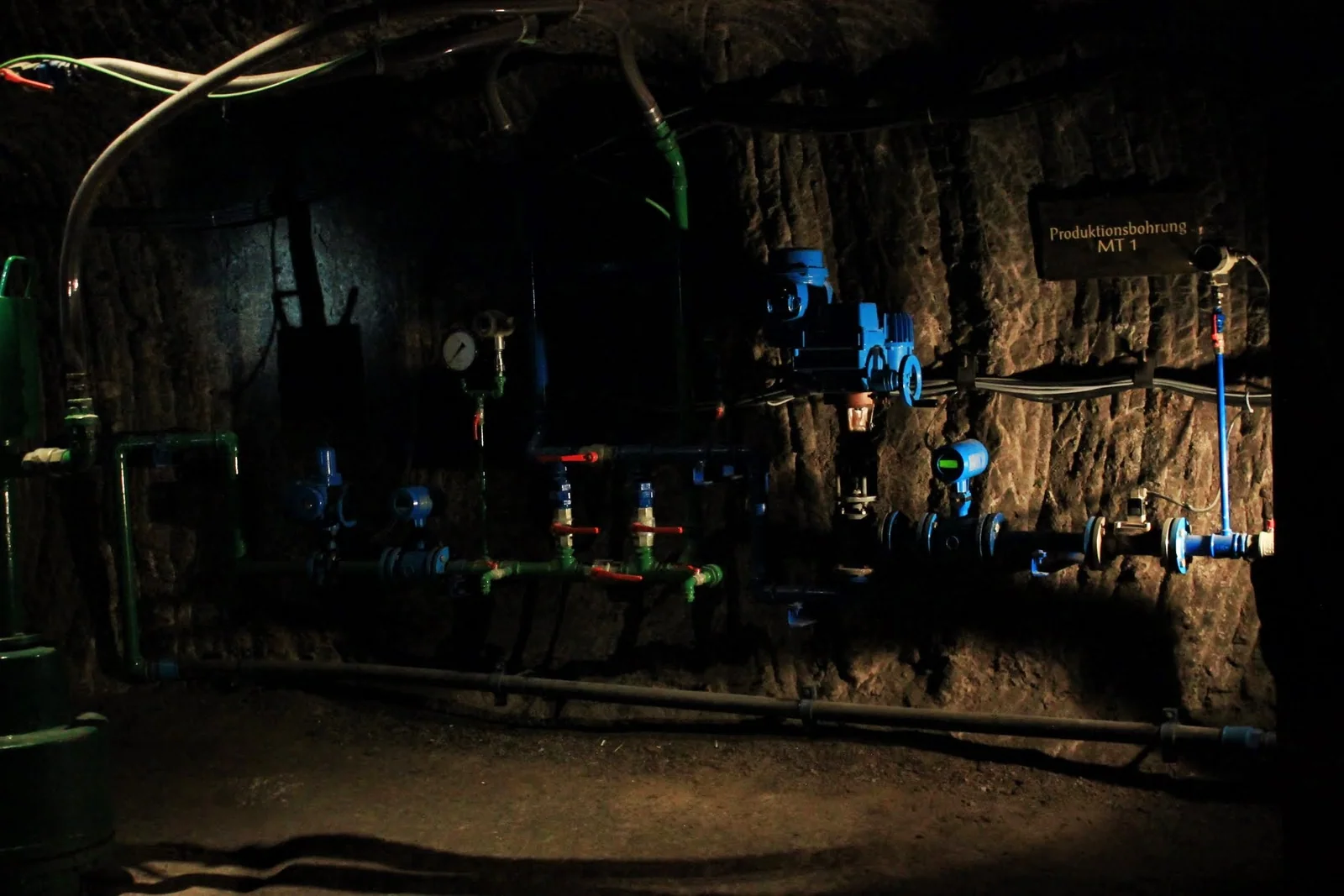
At the final stop, we naturally ended up buying a pile of salt to take home ~.~'" We were not even going to eat it, so I had no idea what we would do with it... ha.
We spent far too long in the gift shop. The mine was still some distance from the funicular station, and we had to get back before the final six o'clock departure. Otherwise, we would be walking all the way down the mountain. (Gasp!!)
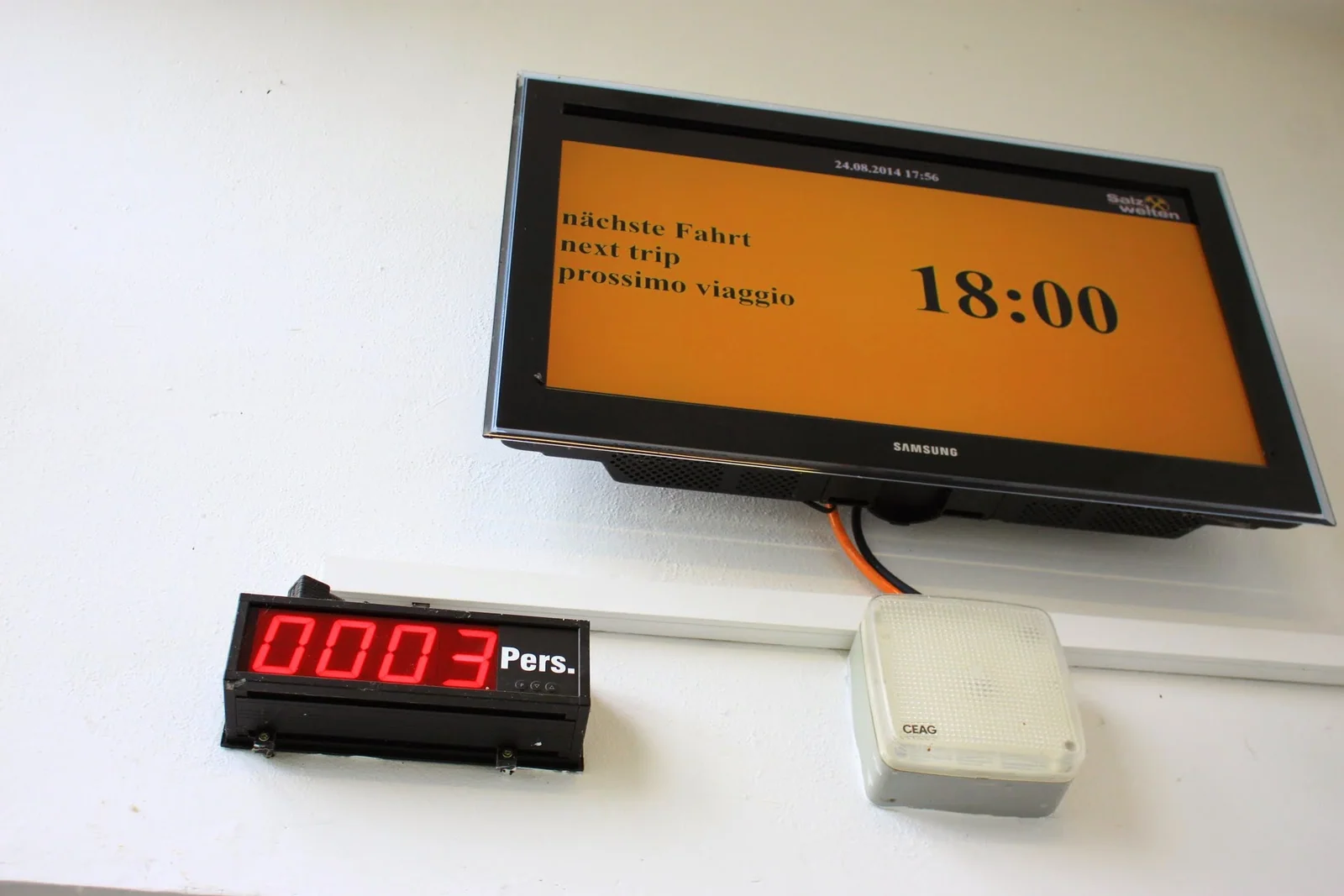
Phew ~~ We ran back completely out of breath and just made the last car. Only three places remained. Everyone behind us would have to walk... hahaha!!!
Back at the parking lot below, we called the hotel and asked them to send a shuttle into the village for us. It was already after six, but the sky was still bright. That is one of the best things about traveling in summer ^.^
Looking back, the day had everything: lake and mountain views, walls of salt, underground slides, and a very close call with the last funicular. Our Hallstatt salt-mine adventure ended with plenty of breathless running and laughter.
Traveling Toward a Dream — Austria with Kids
Planning Our Family Trip to Austria
Part 1. Café Central, the Hofburg Palace, and St. Stephen's Cathedral
Part 2. The Wachau Valley World Heritage landscape: Melk Abbey
Part 3. The Wachau Valley World Heritage landscape: The Medieval Town of Dürnstein
Part 4. The Hallstatt World Heritage landscape: Hallstatt in 24 Hours
Part 5. The Hallstatt World Heritage landscape: Exploring an Old Salt Mine
Part 6. The Hallstatt World Heritage landscape: The Dachstein Ice Cave
Part 7. The Hallstatt World Heritage landscape: Lake Gosau
Part 8. Hohensalzburg Fortress and Salzburg's Old Town
Part 9. Tired, rain in the morning, sleeping at the hotel, and shopping in the Old Town in the afternoon (tears)
Part 10. Hellbrunn Palace, St. Wolfgang, and the Schafberg Railway
Part 11. Ramsau in Germany, the Magic Forest, and Königssee
Part 12. Heiligenblut and its church said to hold the Holy Blood
Part 13. Venice and Murano (but no Burano for us T.T)
Part 14. Café Landtmann in Vienna
Part 15. The Golden Hall at the Wiener Musikverein
Complete Photo Gallery
Previewing up to 8 album photos. Open the gallery to browse all photos.